Artwork
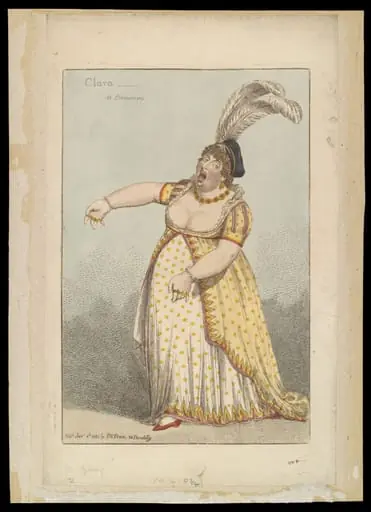
Mrs. Liston as Queen Dollalolla in Kane O'Hara's burletta <i>Tom Thumb</i>
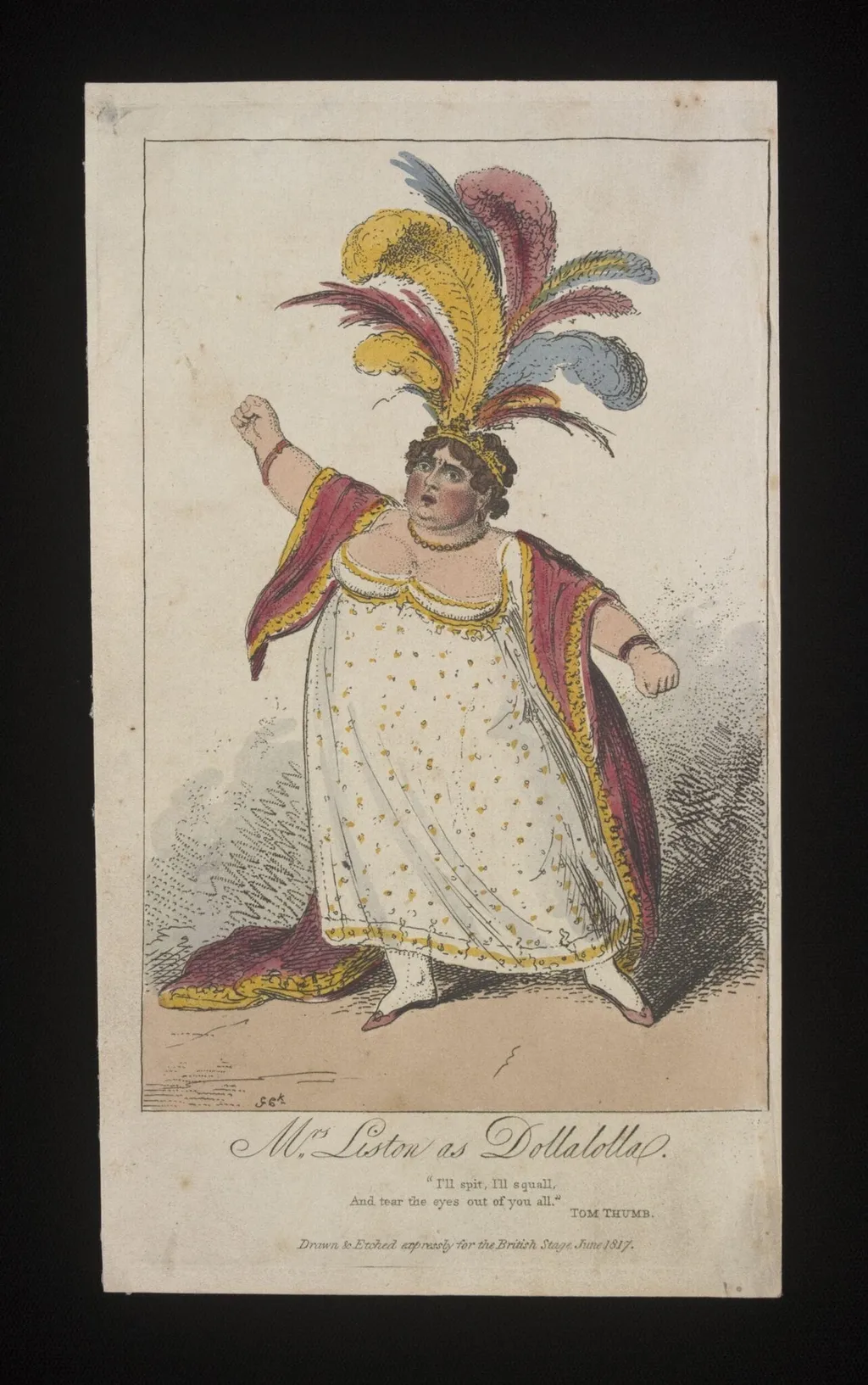
Mrs. Liston as Queen Dollalolla in Kane O'Hara's burletta <i>Tom Thumb</i> is a print by the Romanticist artist Unknown. It dates from 1817 and is held in the collection of the Victoria and Albert Museum.
About this work
Overview
The image reflects the popularity of satirical stage productions in early 19th-century Britain, where actors were celebrated as cultural figures.
This print captures Harriet Liston in the role of Queen Dollalolla from Kane O'Hara’s burletta Tom Thumb, a comedic musical adaptation of Henry Fielding’s 1730 play. Published in London in June 1817 by the British Stage, it belongs to the Harry Beard Collection, a significant archive of theatrical imagery. The image reflects the popularity of satirical stage productions in early 19th-century Britain, where actors were celebrated as cultural figures.
Subject & Meaning
Liston portrays Queen Dollalolla, a satirical royal figure in a farcical retelling of the Tom Thumb legend. The character exaggerates courtly grandeur, mocking aristocratic pretensions through absurdity. As a burletta, the play blended music, slapstick, and parody, and Liston’s performance embodied its playful subversion of traditional drama. Her costume and pose emphasize theatricality over realism, inviting audiences to laugh at the conventions of both theater and monarchy.
Technique & Style
The print employs line engraving with light washes to define form and texture, typical of theatrical portraiture of the period. Details in the queen’s elaborate attire—ruffles, jewels, and a crown—are rendered with precision, while the background remains minimal to focus attention on the figure. The composition follows the conventions of stage portraiture: frontal pose, expressive gesture, and costume as narrative device, designed for public circulation rather than private contemplation.
History & Provenance
Produced shortly after Liston’s performance at London’s Theatre Royal, Drury Lane, the print was distributed as a keepsake for theatergoers. It entered the Harry Beard Collection, assembled by a 19th-century theater enthusiast, and later became part of the Victoria and Albert Museum’s holdings. The print’s survival reflects the era’s growing market for ephemeral theatrical memorabilia and the institutional recognition of stage culture as worthy of preservation.
Context
Tom Thumb burlettas were a staple of London’s popular theater in the early 1800s, offering accessible satire to middle-class audiences. O’Hara’s version, building on Fielding’s original, used absurdity to critique social hierarchies. Such productions thrived in an age before mass media, where live performance and printed images were primary means of cultural engagement. The print thus functions as both artifact and advertisement, linking performance to public memory.
Legacy
This print preserves a fleeting theatrical moment that would otherwise be lost to time. It contributes to the historical record of British stage comedy and the role of women performers in shaping popular taste. As part of the V&A’s collection, it continues to inform scholarship on 19th-century entertainment, illustrating how theater intersected with print culture and public identity in the pre-photographic era.
Artist & collection

 Domestic Scene
 Giacomo and Cardinal Marco, investing Andrea, Abbot of San Zeno, with his Benefice
 The Nymph of Fontainebleau
 Portrait of a Woman
 Madonna and Child with Saints in the Enclosed Garden
 Venus and Minerva
 Family Group of Four on Sofa
 Wall painting from Room H of the Villa of P. Fannius Synistor at Boscoreale