Artwork
Nabin and Elokeshi
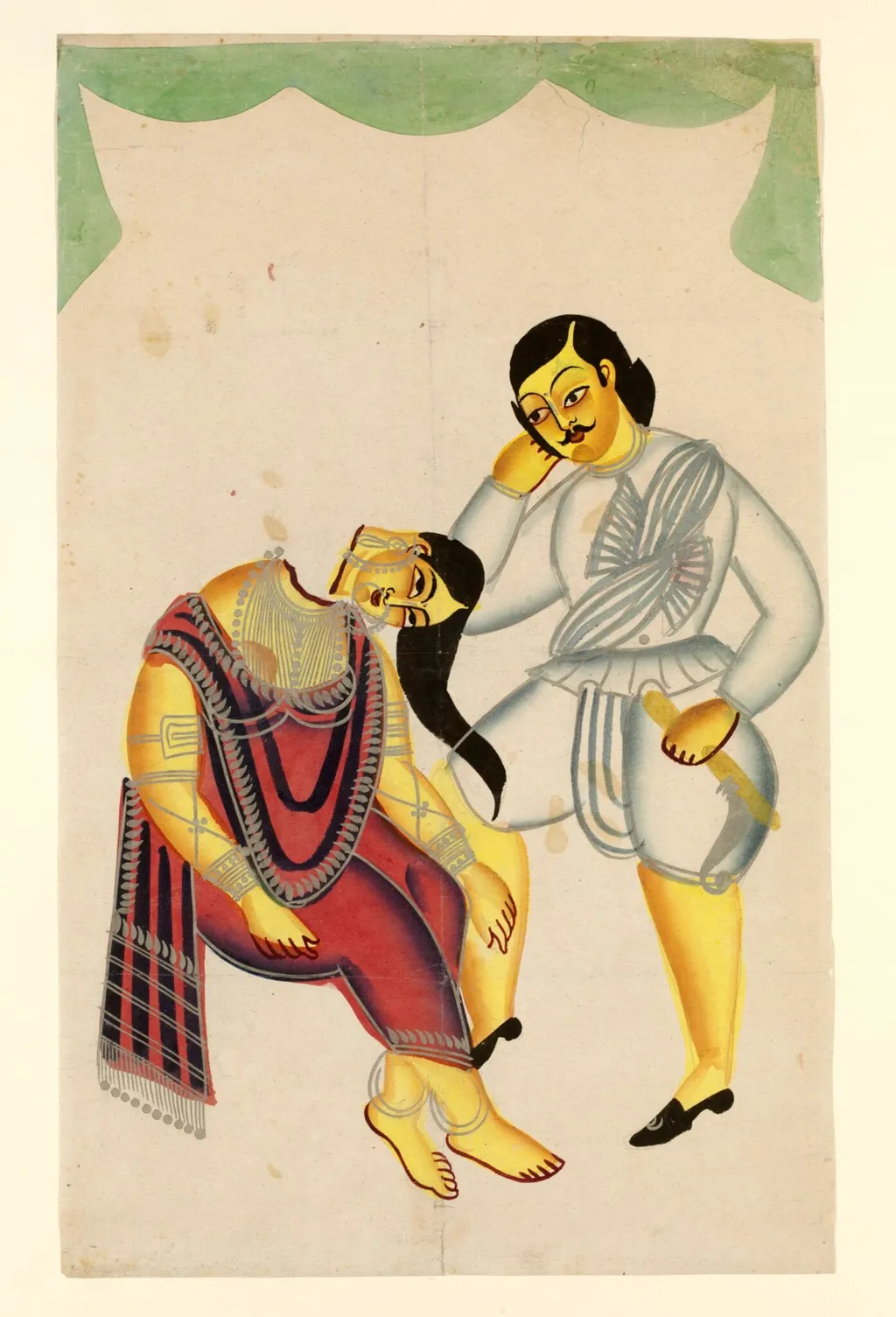
Nabin and Elokeshi is a paint painting by the Impressionist artist Unknown. It dates from 1875 and is held in the collection of the Victoria and Albert Museum.
About this work
Overview
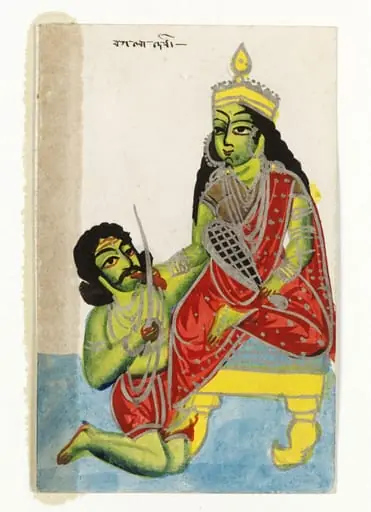
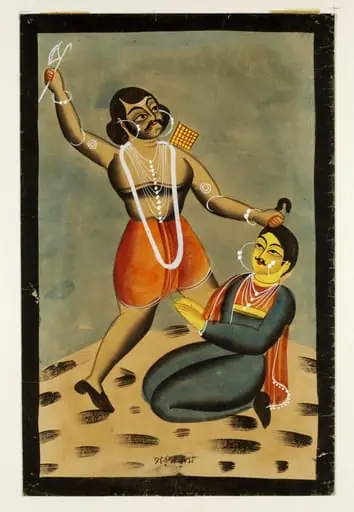
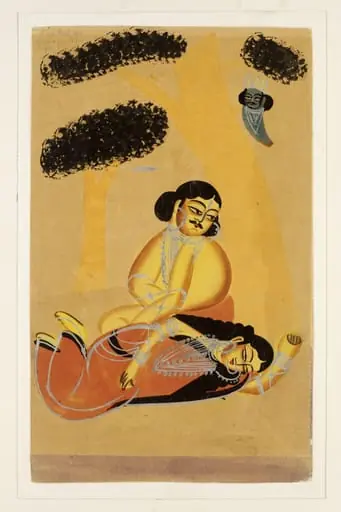
Nabin and Elokeshi is a watercolour and tin alloy painting on paper, depicting a dramatic episode from the infamous 1873 Tarakeshwar affair. The work showcases two central figures in a stark, flat-colored scene, characterized by bold outlines and minimal background.
Subject & Meaning
The painting illustrates a pivotal moment in the scandal: Nabin supports the severed head of his wife, Elokeshi, while clutching a fish knife. This gruesome scene stems from Elokeshi's extramarital affair with the Tarakeshwar Shiva temple's chief priest, culminating in Nabin's fatal act of vengeance.
Technique & Style
Executed in the Kalighat style (c. 1875-1880), the painting features bright, flat colors, bold outlines, and a lack of shading. The composition prioritizes clean shapes over depth, with a simple green arch background that emphasizes the two main figures.
History & Provenance
Part of a series of Kalighat images reinterpreting the Tarakeshwar affair, the painting's specific provenance details are not provided in the available information.
Context
Created in the late 19th century, the work reflects the Kalighat school's tendency to depict contemporary events and scandals, often with sensational and emotive flair. The style itself emerged as a fusion of traditional Indian and Western influences.
Legacy
As a representative of the Kalighat style, Nabin and Elokeshi contributes to the understanding of 19th-century Indian art's adaptation to modern themes and its distinctive visual language. The painting's subject also highlights the enduring fascination with the Tarakeshwar affair in Indian cultural memory.
Artist & collection

 Domestic Scene
 Giacomo and Cardinal Marco, investing Andrea, Abbot of San Zeno, with his Benefice
 The Nymph of Fontainebleau
 Portrait of a Woman
 Madonna and Child with Saints in the Enclosed Garden
 Venus and Minerva
 Family Group of Four on Sofa
 Wall painting from Room H of the Villa of P. Fannius Synistor at Boscoreale