Artwork
Narasinha, the fourth avatar of Vishnu
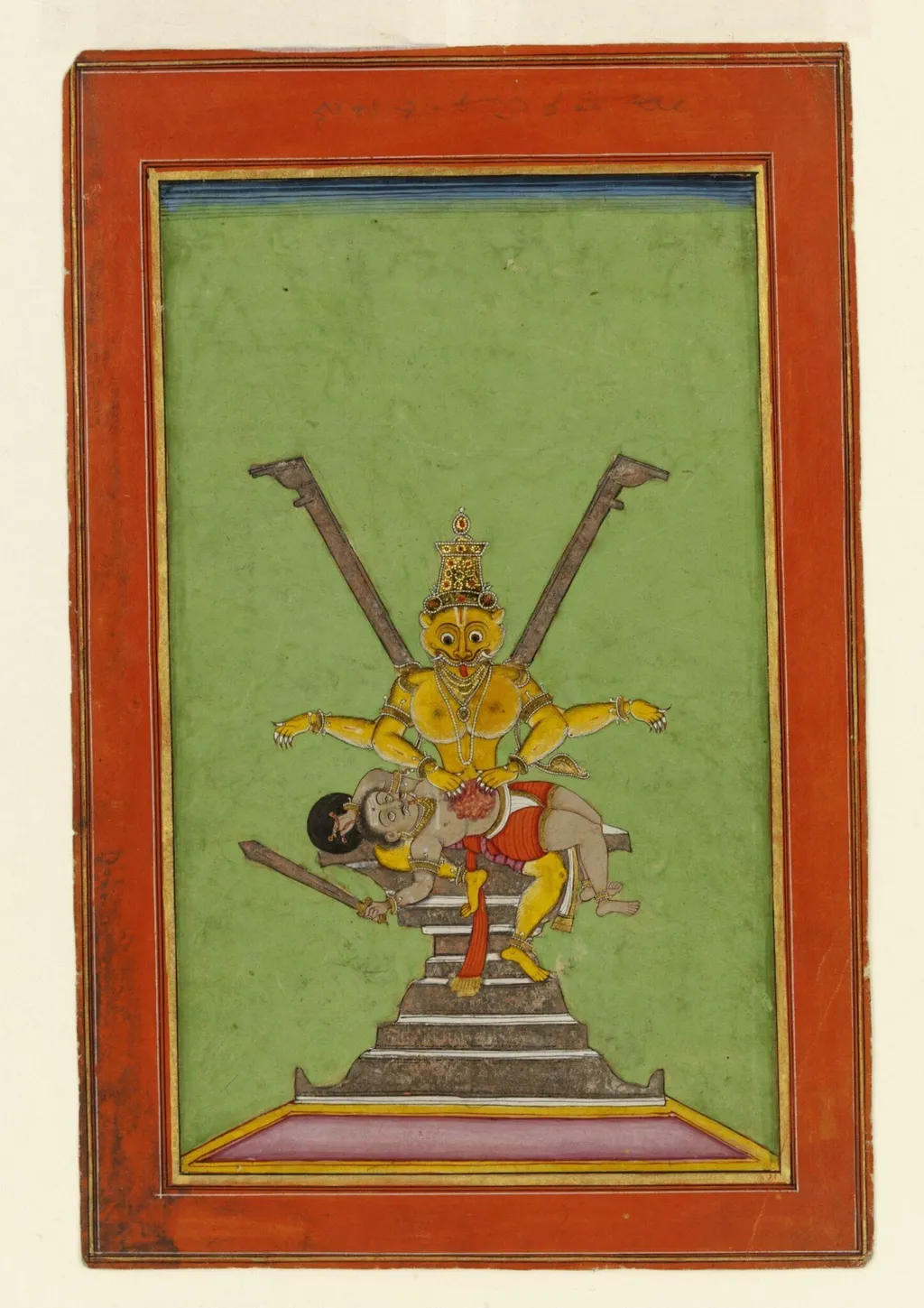
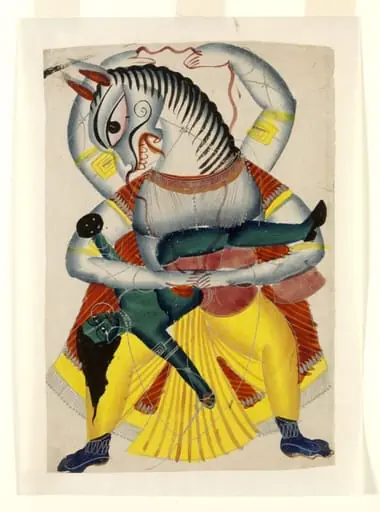
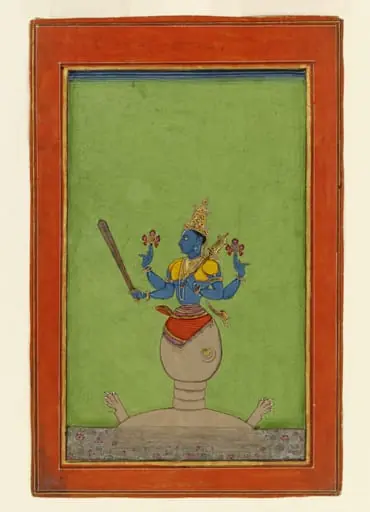
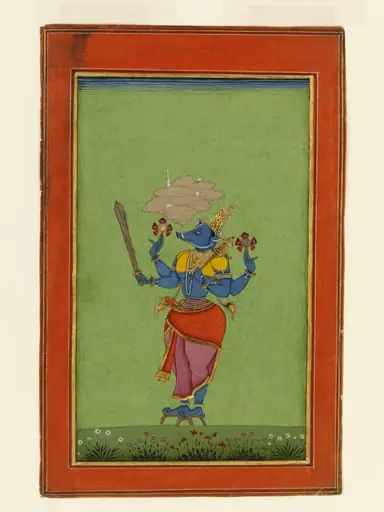
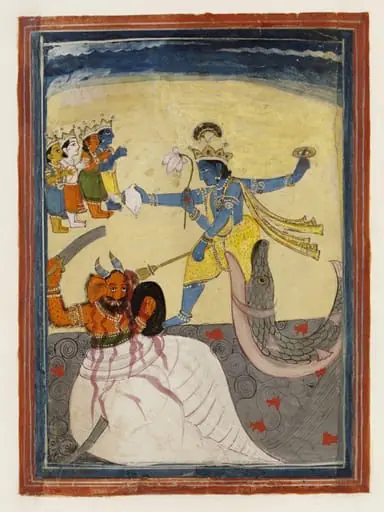
Narasinha, the fourth avatar of Vishnu is a paint painting by the Mughal Painting artist Unknown. It dates from 1780 and is held in the collection of the Victoria and Albert Museum. This 1780 painting depicts Narasinha, the fourth incarnation of the Hindu deity Vishnu, rendered in opaque watercolour on paper.
About this work
Overview
It is part of the Victoria and Albert Museum’s collection, where it is preserved as an example of pre-colonial Indian miniature painting.
This 1780 painting depicts Narasinha, the fourth incarnation of the Hindu deity Vishnu, rendered in opaque watercolour on paper. The scene captures the moment Narasinha, in his half-lion, half-human form, kills the demon king Hiranya-kasipu. The work originates from the Indian subcontinent and reflects regional devotional traditions rather than European artistic movements. It is part of the Victoria and Albert Museum’s collection, where it is preserved as an example of pre-colonial Indian miniature painting.
Subject & Meaning
Narasinha appears as a fearsome hybrid—human torso and limbs with a lion’s head—embodying divine intervention to restore cosmic order. He stands atop Hiranya-kasipu, a tyrant who believed himself invincible, tearing him apart to fulfill a prophecy that spared neither man nor beast. The scene illustrates Vishnu’s role as protector of dharma, intervening when conventional means fail. The composition emphasizes divine justice over brute force, rooted in Puranic narratives of cosmic balance.
Technique & Style
Executed in opaque watercolour on paper, the painting employs bold outlines and vivid pigments, including gold accents to highlight divine attributes. The background is a flat, pale green, directing focus to the central figures. Details in the lion’s mane, weaponry, and drapery are rendered with fine brushwork, typical of regional Indian miniature traditions. The lack of perspective and stylized proportions reflect devotional conventions rather than naturalistic representation.
History & Provenance
Created in 1780, the painting likely emerged from a courtly or temple workshop in North India, possibly linked to Rajput or Pahari traditions. It entered the Victoria and Albert Museum’s collection through colonial-era acquisitions, though its exact prior ownership remains undocumented. Its preservation reflects 19th-century British interest in South Asian religious art, though its original context was devotional rather than aesthetic.
Context
This image belongs to a broader tradition of illustrating Vishnu’s avatars in Indian art, particularly during periods of religious revival. Such paintings were used in ritual settings or as aids for storytelling, reinforcing theological narratives among devotees. The emphasis on dramatic confrontation aligns with Bhakti movement ideals, where divine power is both awe-inspiring and personally accessible. The style contrasts with later colonial-era reinterpretations of Indian themes.
Legacy
The painting endures as a representative example of 18th-century Indian devotional art, valued for its adherence to iconographic norms and expressive intensity. It contributes to scholarly understanding of how Hindu mythology was visually codified across regions. While no longer used in worship, it remains a key reference in studies of South Asian miniature painting and the transmission of religious imagery through material culture.
Artist & collection

 Domestic Scene
 Giacomo and Cardinal Marco, investing Andrea, Abbot of San Zeno, with his Benefice
 The Nymph of Fontainebleau
 Portrait of a Woman
 Madonna and Child with Saints in the Enclosed Garden
 Venus and Minerva
 Family Group of Four on Sofa
 Wall painting from Room H of the Villa of P. Fannius Synistor at Boscoreale