Artwork
Vishnu as Narasinha
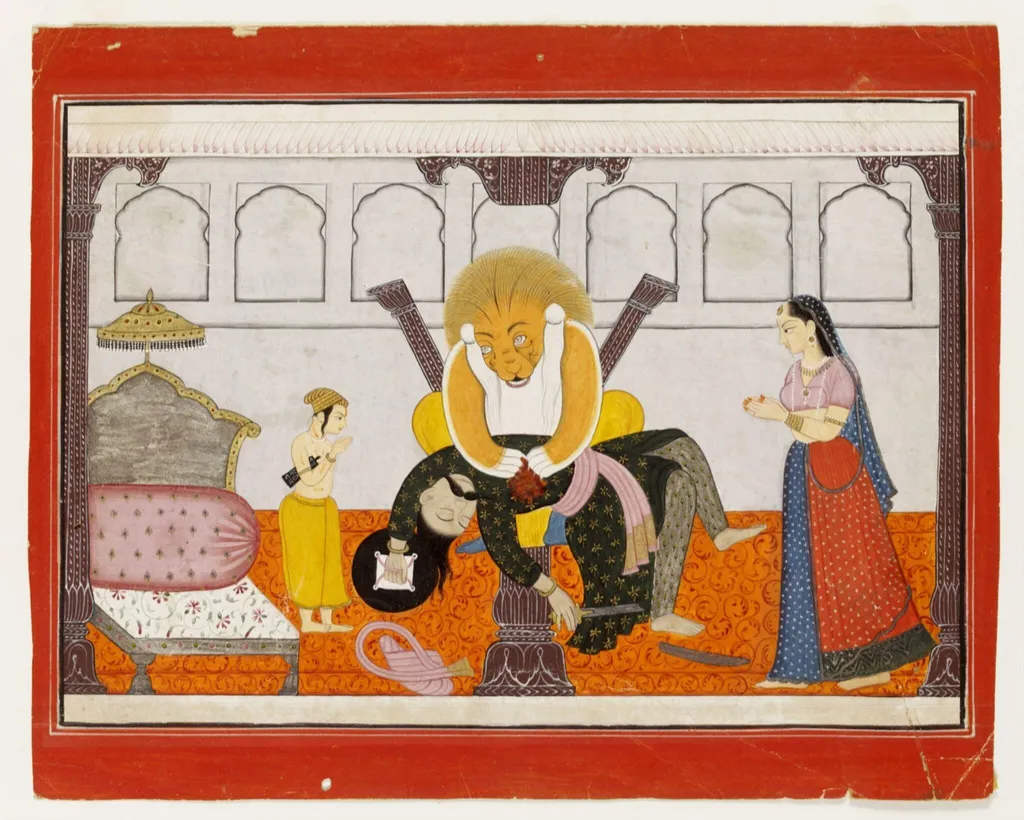
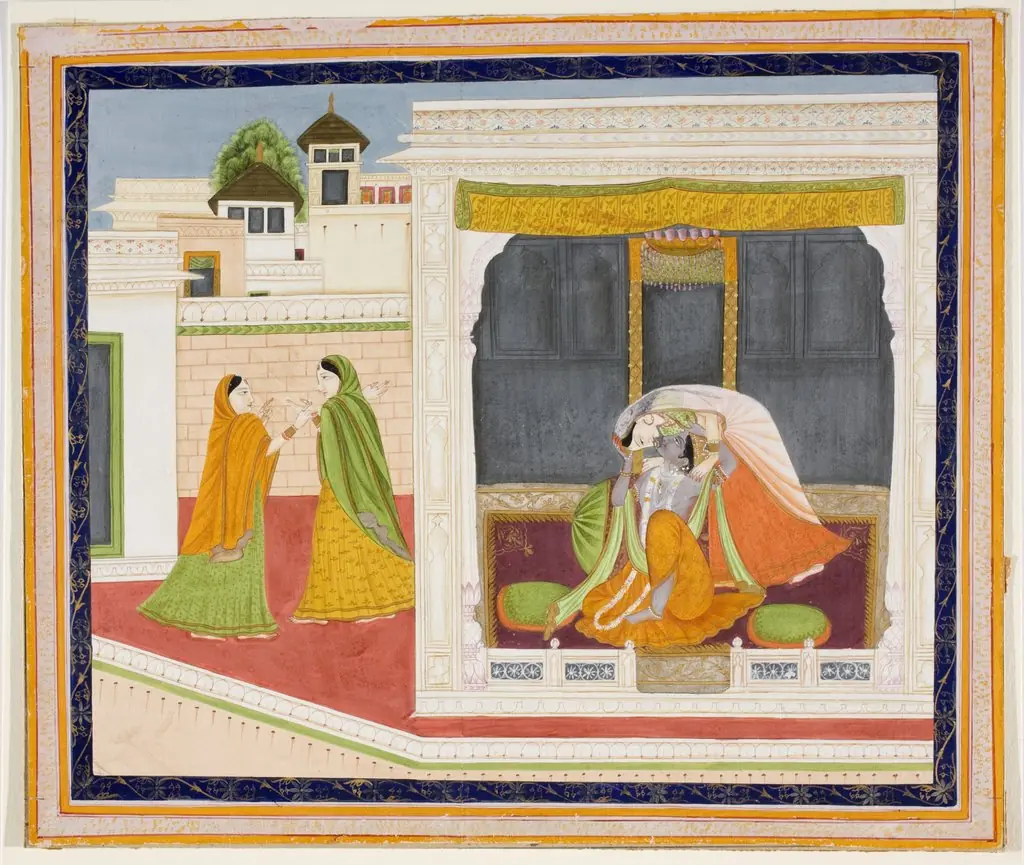
Vishnu as Narasinha is a paint painting by the Mughal Painting artist Unknown. It dates from 1770 and is held in the collection of the Victoria and Albert Museum. Painted in 1770, this work is an opaque watercolour on paper depicting Vishnu in his Narasinha avatar, a hybrid form of man and lion.
About this work
Overview
The piece reflects the devotional painting traditions of northern India, where divine narratives were rendered with intricate detail and symbolic colour.
Painted in 1770, this work is an opaque watercolour on paper depicting Vishnu in his Narasinha avatar, a hybrid form of man and lion. Created in the Pahari style, it belongs to a group of eleven paintings acquired by the Victoria and Albert Museum in 1954 from Maggs Bros. for £150. The piece reflects the devotional painting traditions of northern India, where divine narratives were rendered with intricate detail and symbolic colour.
Subject & Meaning
Narasinha, the fourth incarnation of Vishnu, is shown in the act of slaying the demon Hiranyakashipu. The figure’s lion-like features—sharp claws, wild mane, and intense gaze—embody divine fury against tyranny. A woman in red, possibly the demon’s wife, and a kneeling figure with a small form may represent the aftermath of the divine intervention, symbolizing the restoration of cosmic order through righteous violence.
Technique & Style
The painting employs opaque watercolour with fine brushwork to render textures of fabric, jewelry, and fur. Bold hues of gold, crimson, and cobalt blue dominate, contrasting against the orange geometric floor pattern. The throne and arched background suggest architectural space without perspective, consistent with regional conventions. Details in the lion’s mane and the figures’ garments reveal meticulous attention to ornamentation and surface rhythm.
History & Provenance
The painting was part of a collection of eleven works purchased by the Victoria and Albert Museum in 1954 from the London dealers Maggs Bros. The group, catalogued as IS. 90 to 128-1954, originated from a private Indian collection, likely from a Pahari court. Its acquisition marked an early institutional effort to preserve South Asian miniature painting, though its specific provenance prior to the 20th century remains undocumented.
Context
Produced during the late 18th century in the Himalayan foothills, this work reflects the flourishing of Hindu devotional art under regional rulers who patronized illustrated manuscripts. Narasinha’s depiction aligns with textual accounts from the Bhagavata Purana, popular in Pahari courts. Artists adapted narrative conventions from earlier Mughal and Rajasthani styles, blending them with local aesthetics to serve religious and courtly audiences.
Legacy
This painting contributes to a broader corpus of Pahari miniature art preserved in major collections, offering insight into how Hindu theology was visually codified in pre-colonial India. Its inclusion in the V&A’s holdings helped establish the scholarly recognition of regional Indian painting traditions. Though not widely exhibited, it remains a reference for studies on iconography, patronage, and the material culture of devotional art in the 18th century.
Artist & collection

 Domestic Scene
 Giacomo and Cardinal Marco, investing Andrea, Abbot of San Zeno, with his Benefice
 The Nymph of Fontainebleau
 Portrait of a Woman
 Madonna and Child with Saints in the Enclosed Garden
 Venus and Minerva
 Family Group of Four on Sofa
 Wall painting from Room H of the Villa of P. Fannius Synistor at Boscoreale
 Untitled
 Vinoda Ragini
 Hero enjoying the bathing beauty
 Untitled
 Krishna and Balarama Touching the Feet of Vasudeva and Devaki
 An Amorous Couple, Probably Raja Mahendra Pal of Basohli (r. 1806–13) with a Favorite Queen
 Nala and Damayanti
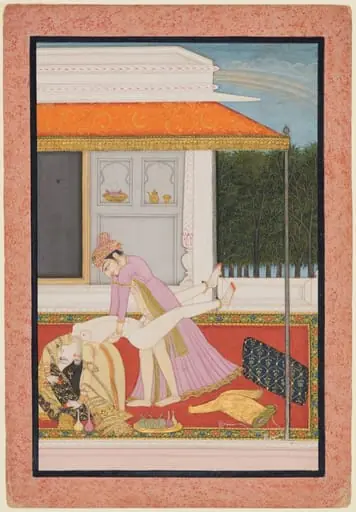 An amorous couple, probably Raja Mahendra Pal of Basohli with a favorite queen
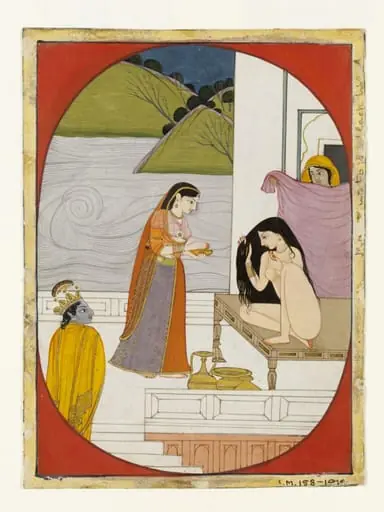 Krishna and Radha
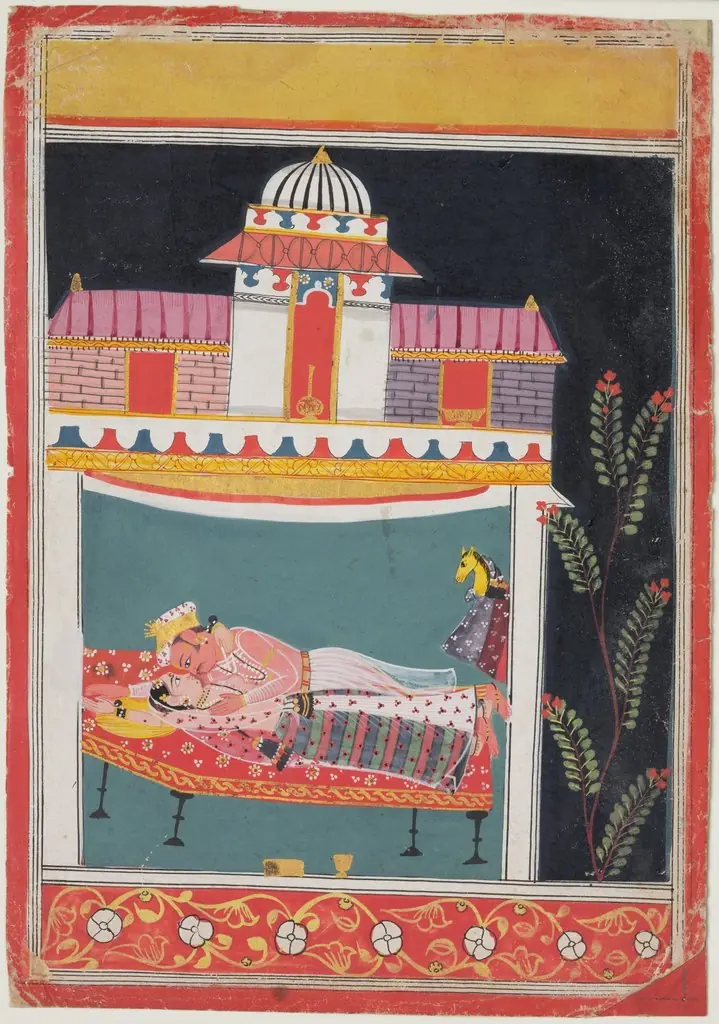 A Musical Mode: Lovers
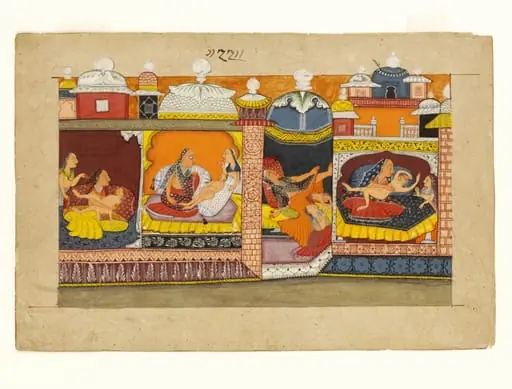 Untitled
 Radha and Krishna in Dalliance