Artwork
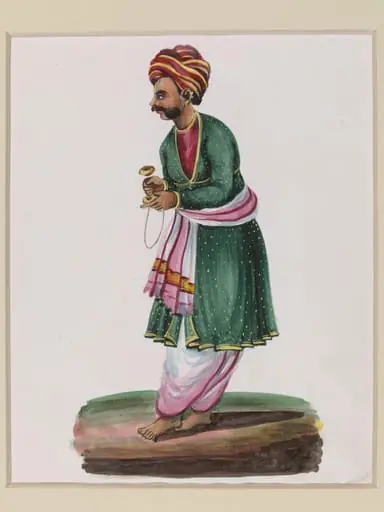
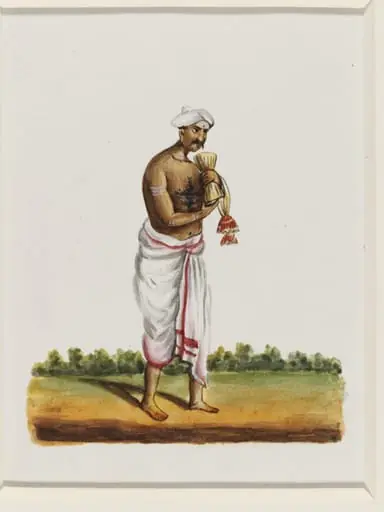
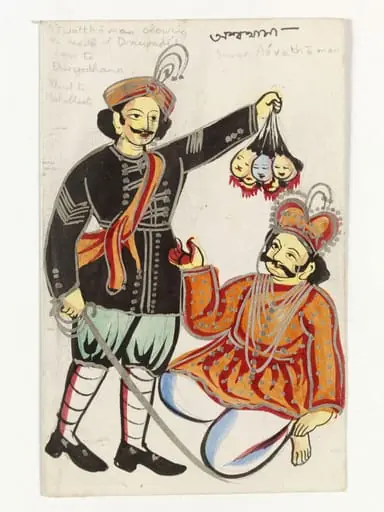
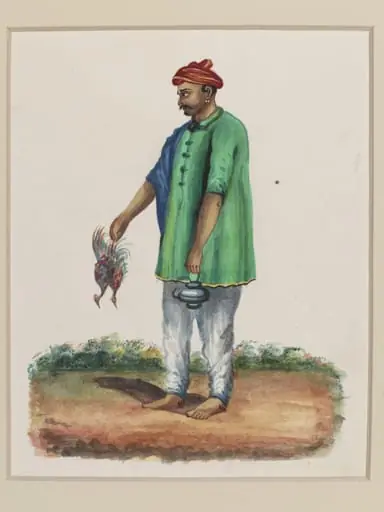
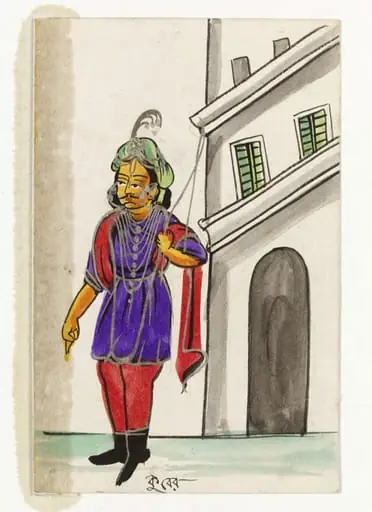
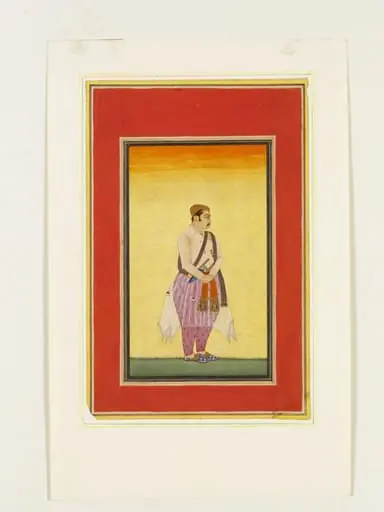
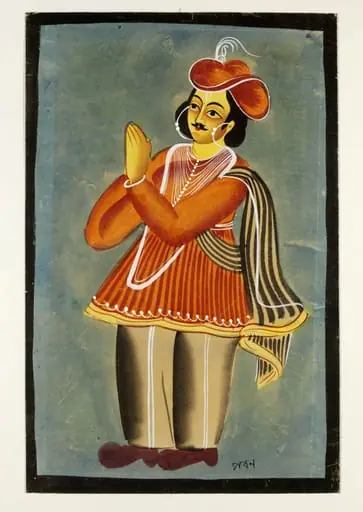
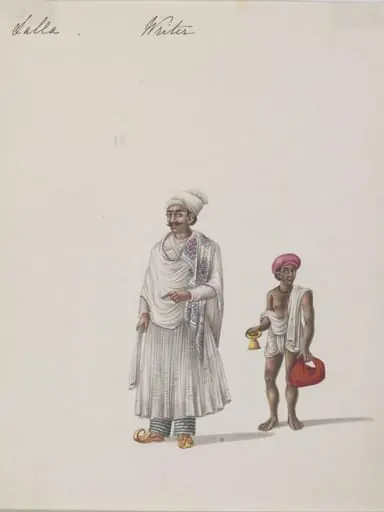
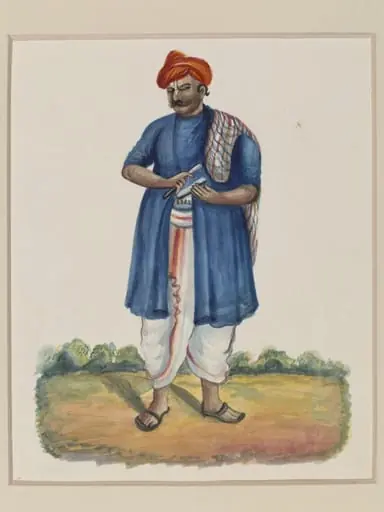
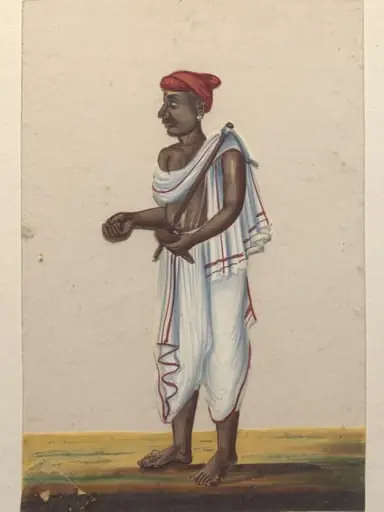
One of seven drawings of people and occupations and a lion.
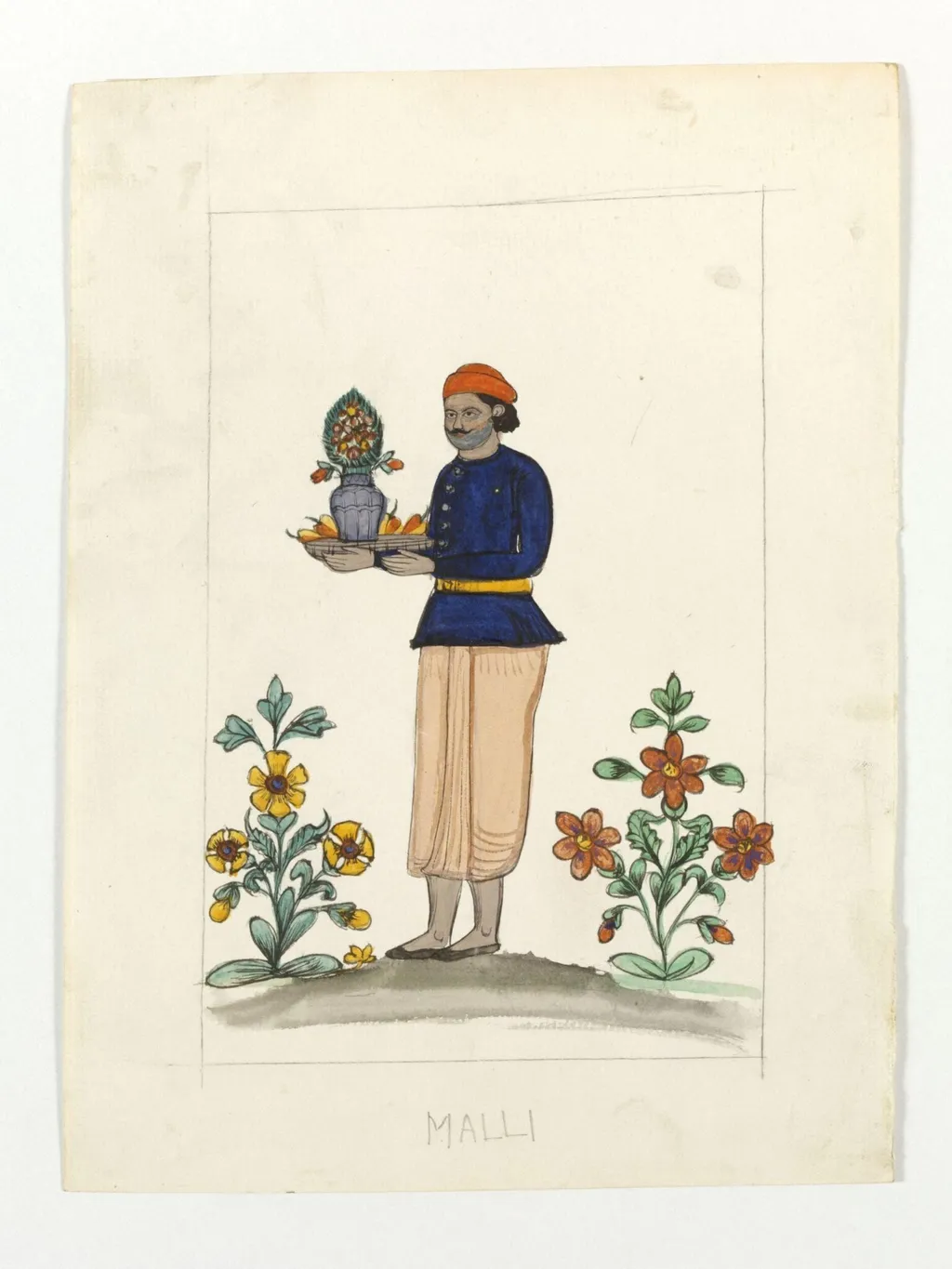
One of seven drawings of people and occupations and a lion. is a paint painting by the Patna School of Painting artist Unknown. It dates from 1870 and is held in the collection of the Victoria and Albert Museum.
About this work
Overview
This small-scale work, executed in paint, belongs to the genre known as Company painting—a style created by Indian artists for British residents and officials in colonial India. Dated to the early 1870s, the piece shows a turbaned figure in a long coat holding a restrained lion, set against a dark, unadorned backdrop that concentrates attention on the pair.
Subject & Meaning
The central figure represents a gardener (mali) or similar occupational role, a common theme in Company paintings that documented native professions for European audiences. The calm, leashed lion serves as a visual curiosity, illustrating the exotic fauna encountered in the subcontinent and suggesting a degree of control or familiarity between the local worker and the animal.
Technique & Style
The artist blends traditional Indian decorative conventions with Western techniques such as chiaroscuro and realistic modeling. Fine brushwork renders the textures of the lion’s fur and the fabric of the coat, while the overall composition retains the flatness and ornamental detail typical of Indian miniature traditions.
History & Provenance
The painting was acquired by John Lockwood Kipling while he directed the Mayo School of Art in Lahore between 1875 and 1893. In 1917 his son, the writer Rudyard Kipling, donated the work to the Victoria and Albert Museum, where it remains in the collection.
Context
Company paintings emerged after the British East India Company established a territorial presence, providing visual records of Indian society for officials eager to catalogue local customs, castes, trades, and wildlife. Though the style developed later in the Punjab region—following the British annexation of the area in 1849—by the 1870s it had become a familiar genre among colonial patrons.
Artist & collection

 Domestic Scene
 Giacomo and Cardinal Marco, investing Andrea, Abbot of San Zeno, with his Benefice
 The Nymph of Fontainebleau
 Portrait of a Woman
 Madonna and Child with Saints in the Enclosed Garden
 Venus and Minerva
 Family Group of Four on Sofa
 Wall painting from Room H of the Villa of P. Fannius Synistor at Boscoreale