Artwork
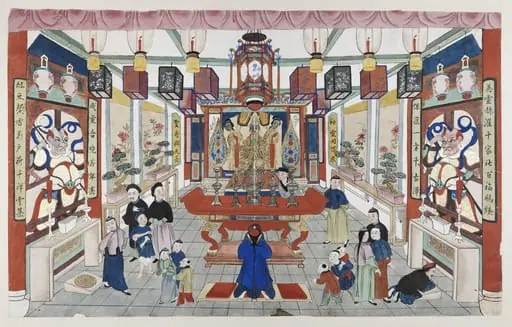
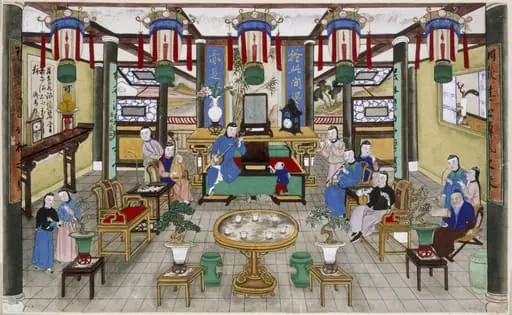
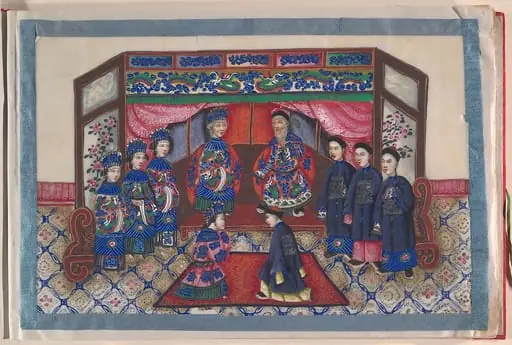
One scene of a wedding: bride and groom paying respect to the ancestors
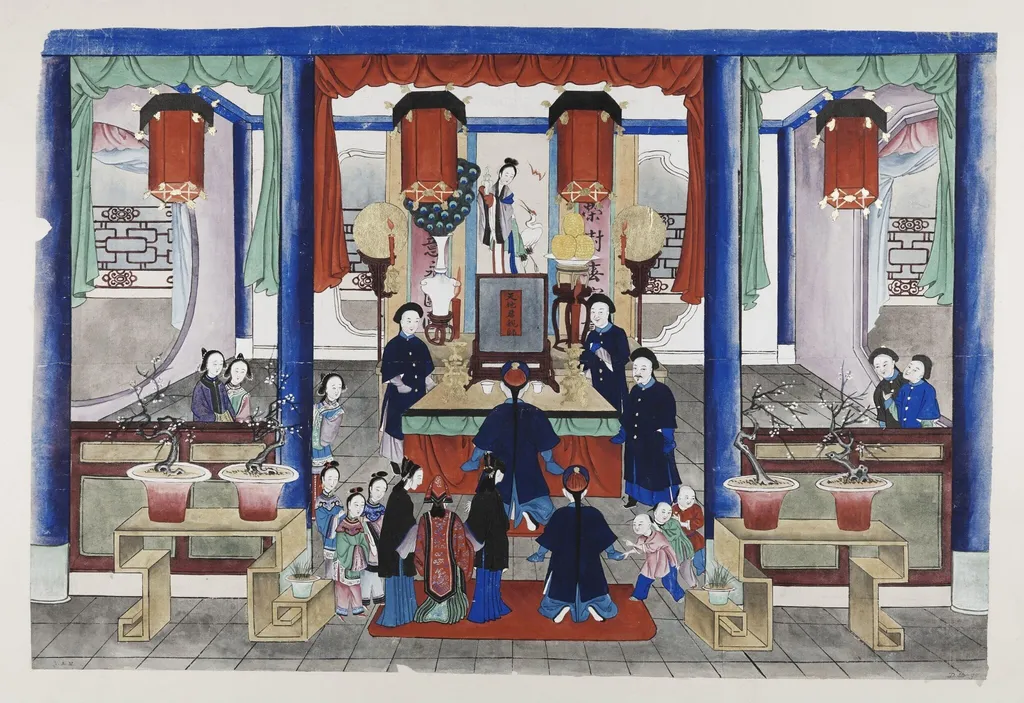
One scene of a wedding: bride and groom paying respect to the ancestors is a paint painting by the Patna School of Painting artist Unknown. It dates from 1880 and is held in the collection of the Victoria and Albert Museum. The work portrays a ceremonial wedding interior where the newlyweds kneel before an elaborately decorated altar.
About this work
Overview
The work portrays a ceremonial wedding interior where the newlyweds kneel before an elaborately decorated altar. Surrounding them are numerous participants—some in prayer, others standing or conversing—arranged around a gold‑trimmed platform. The space is defined by vivid architectural elements, including blue columns, red drapery, and hanging lanterns, creating a bustling yet orderly atmosphere.
Subject & Meaning
The central act of the bride and groom paying homage to their ancestors reflects the traditional Confucian emphasis on filial piety within marital rites. By positioning the couple in a kneeling posture before the altar, the scene underscores the ritual’s role in linking the new household to its lineage and communal heritage.
Technique & Style
The artist employs a bright palette dominated by reds, blues, and gold, rendering details with crisp outlines and minimal chiaroscuro. The composition is densely populated, yet each figure is individually delineated, allowing the viewer to discern gestures and attire. The overall effect is one of clear, narrative illustration rather than atmospheric modeling.
History & Provenance
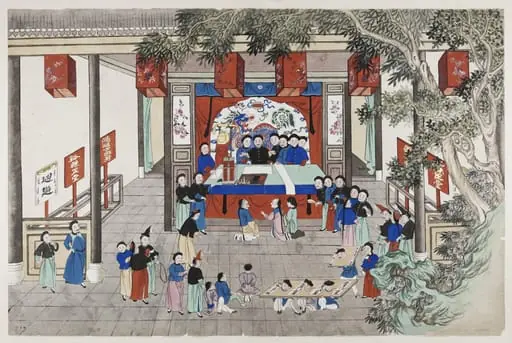
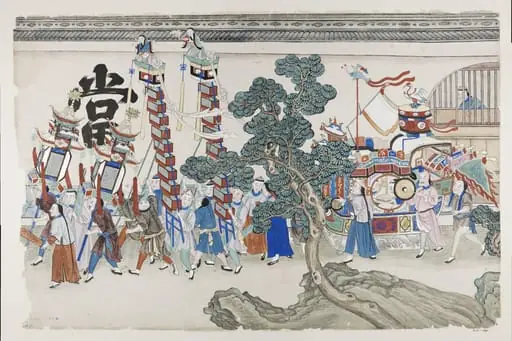
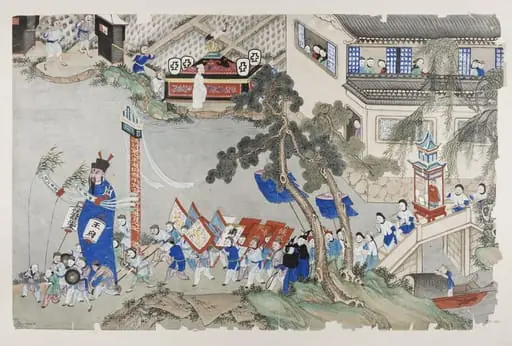
Originally one of thirty‑five panels illustrating processional ceremonies, this painting entered the museum’s collection in 1898 as part of a numbered series. The album format suggests it was intended for a sequential visual record of ritual practices, likely commissioned for a private or institutional archive.
Context
The piece belongs to a broader visual tradition that documented Chinese ceremonial life during the late imperial period. Such works served both as instructional guides for participants and as cultural preservation, capturing the formalities of marriage rites amid evolving social customs.
Artist & collection

 Domestic Scene
 Giacomo and Cardinal Marco, investing Andrea, Abbot of San Zeno, with his Benefice
 The Nymph of Fontainebleau
 Portrait of a Woman
 Madonna and Child with Saints in the Enclosed Garden
 Venus and Minerva
 Family Group of Four on Sofa
 Wall painting from Room H of the Villa of P. Fannius Synistor at Boscoreale