Artwork
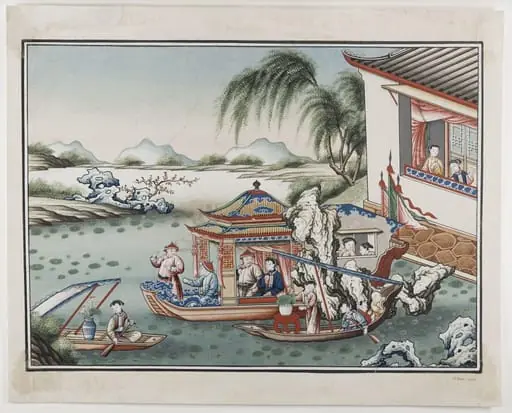
Pavilions in lake area
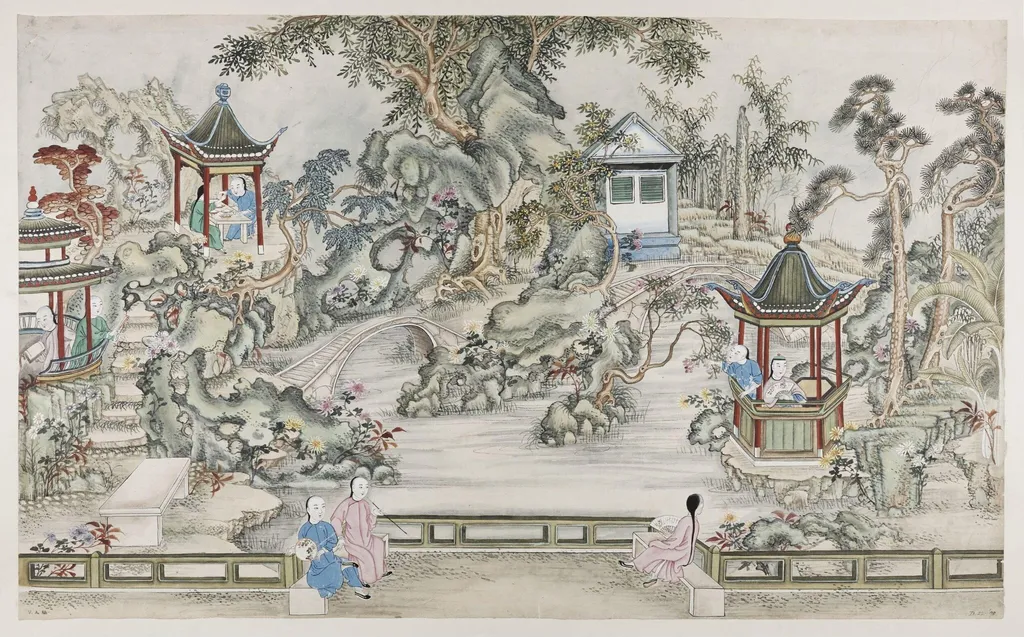
Pavilions in lake area is a paint painting by the Impressionist artist Unknown. It dates from 1880 and is held in the collection of the Victoria and Albert Museum.
About this work
Overview
Dense foliage frames the composition, creating a layered depth that draws the eye from the immediate foreground to the hazy background.
This rectangular painting depicts a tranquil lakeside scene with three figures seated in the foreground, gazing toward distant pavilions on islands connected by slender bridges. Dense foliage frames the composition, creating a layered depth that draws the eye from the immediate foreground to the hazy background. The work was once one of thirty-five scenes in a bound album, each capturing ceremonial or domestic moments from daily life.
Subject & Meaning
The figures, dressed in contrasting hues of blue and pink, appear engaged in quiet contemplation, their posture suggesting leisure or reflection. The pavilions, nestled among islands and trees, imply a retreat from urban life, possibly symbolizing scholarly or aristocratic retreats common in literati culture. The inclusion of tiny figures, birds, and blossoms reinforces a sense of harmony between human presence and the natural world.
Technique & Style
Brushwork is refined and deliberate, with smooth transitions between colors that enhance realism without overt texture. Greens, blues, and reds dominate the palette, applied with precision to distinguish foliage, water, and architectural elements. Details such as individual flowers, distant pedestrians, and bird forms are rendered with care, demonstrating an emphasis on observational accuracy over expressive abstraction.
History & Provenance
The painting originated as part of a bound album of thirty-five scenes, compiled to document processions and rituals including weddings, funerals, and court proceedings. It entered a public collection in 1898 through acquisition from Parsons & Sons, cataloged under the series D.2–1898 to D.36–1898. Its original context as a sequential album suggests it was intended for private viewing rather than public display.
Context
Created within a tradition of album painting common in late imperial China, this work reflects the literati ideal of retreat into nature as a space for moral and aesthetic contemplation. The inclusion of ceremonial themes across the full album indicates a broader cultural interest in documenting social rituals, blending documentary observation with poetic sensibility in a format designed for intimate, sequential engagement.
Legacy
As one of a series documenting everyday ceremonial life, the painting contributes to a historical record of social customs and spatial aesthetics in its period. Its preservation within a bound album format highlights the value placed on curated visual narratives in pre-modern collecting practices. It remains a representative example of how landscape and human activity were interwoven in artistic expression.
Artist & collection

 Domestic Scene
 Giacomo and Cardinal Marco, investing Andrea, Abbot of San Zeno, with his Benefice
 The Nymph of Fontainebleau
 Portrait of a Woman
 Madonna and Child with Saints in the Enclosed Garden
 Venus and Minerva
 Family Group of Four on Sofa
 Wall painting from Room H of the Villa of P. Fannius Synistor at Boscoreale
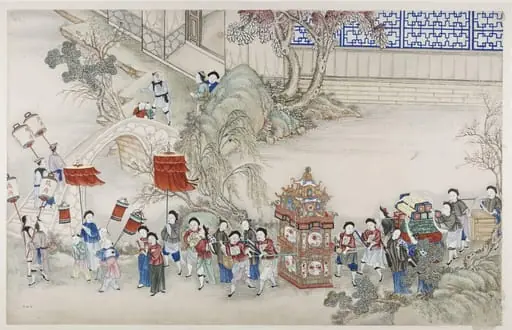 One scene of a wedding: the bride and her dowry on her way to her new home
 清 佚名 臨袁江瞻園圖 卷|View of a Garden Villa
 Bamboo Pavilion, Tiger Hill, from Twelve Views of Tiger Hill, Suzhou
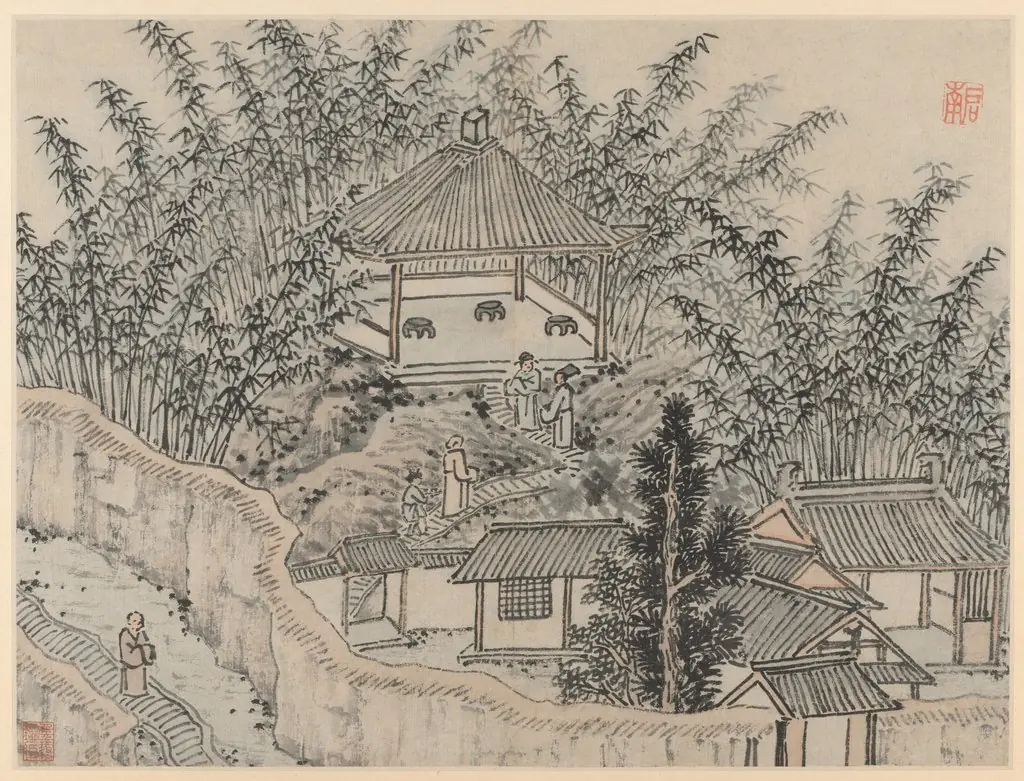 Bamboo Pavilion, Tiger Hill, from Twelve Views of Tiger Hill, Suzhou
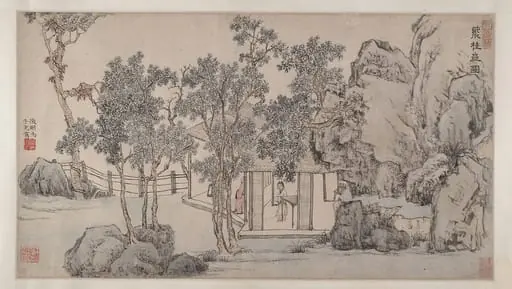 明 文徵明 叢桂齋圖 卷|The Cassia Grove Studio
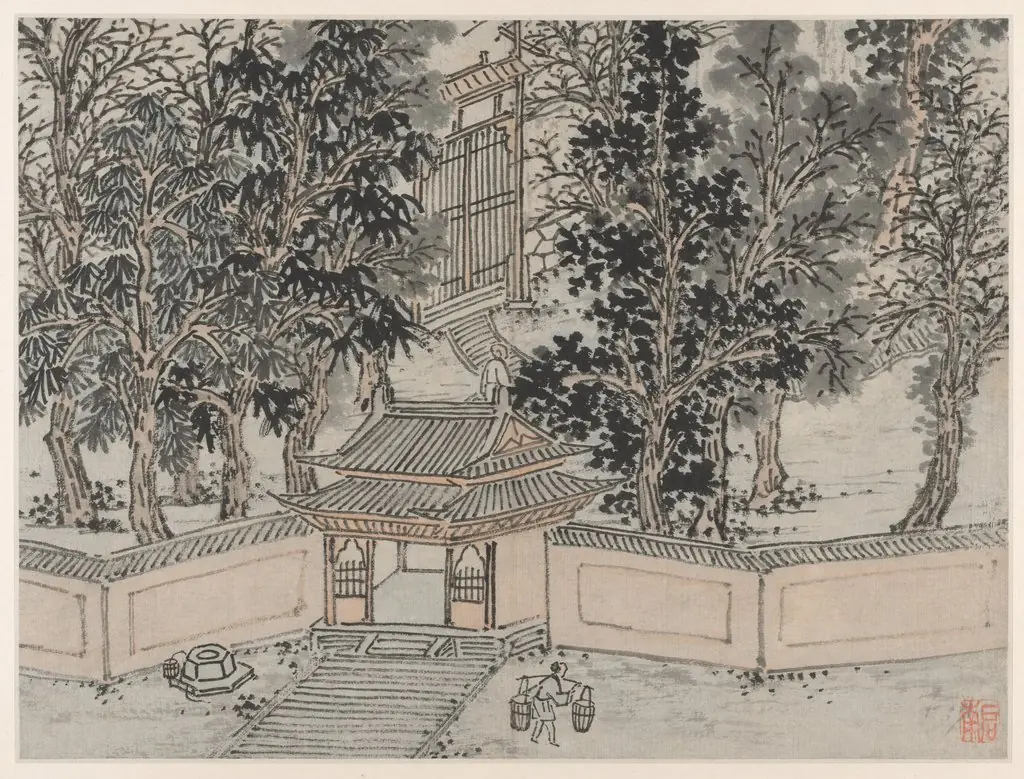 Tiger-Flight Spring at the Back Gate, from Twelve Views of Tiger Hill, Suzhou
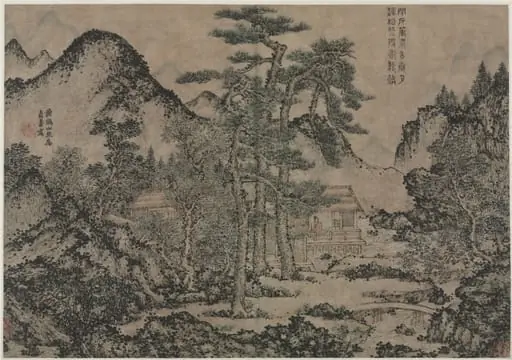 Writing Books under the Pine Trees
 Mansion by the River
 Tiger-Flight Spring at the Back Gate, from Twelve Views of Tiger Hill, Suzhou
 元 錢選 王羲之觀鵝圖 卷|Wang Xizhi watching geese
 Funeral procession of a woman
 Outing on a Lake