Artwork
Osman Pasha
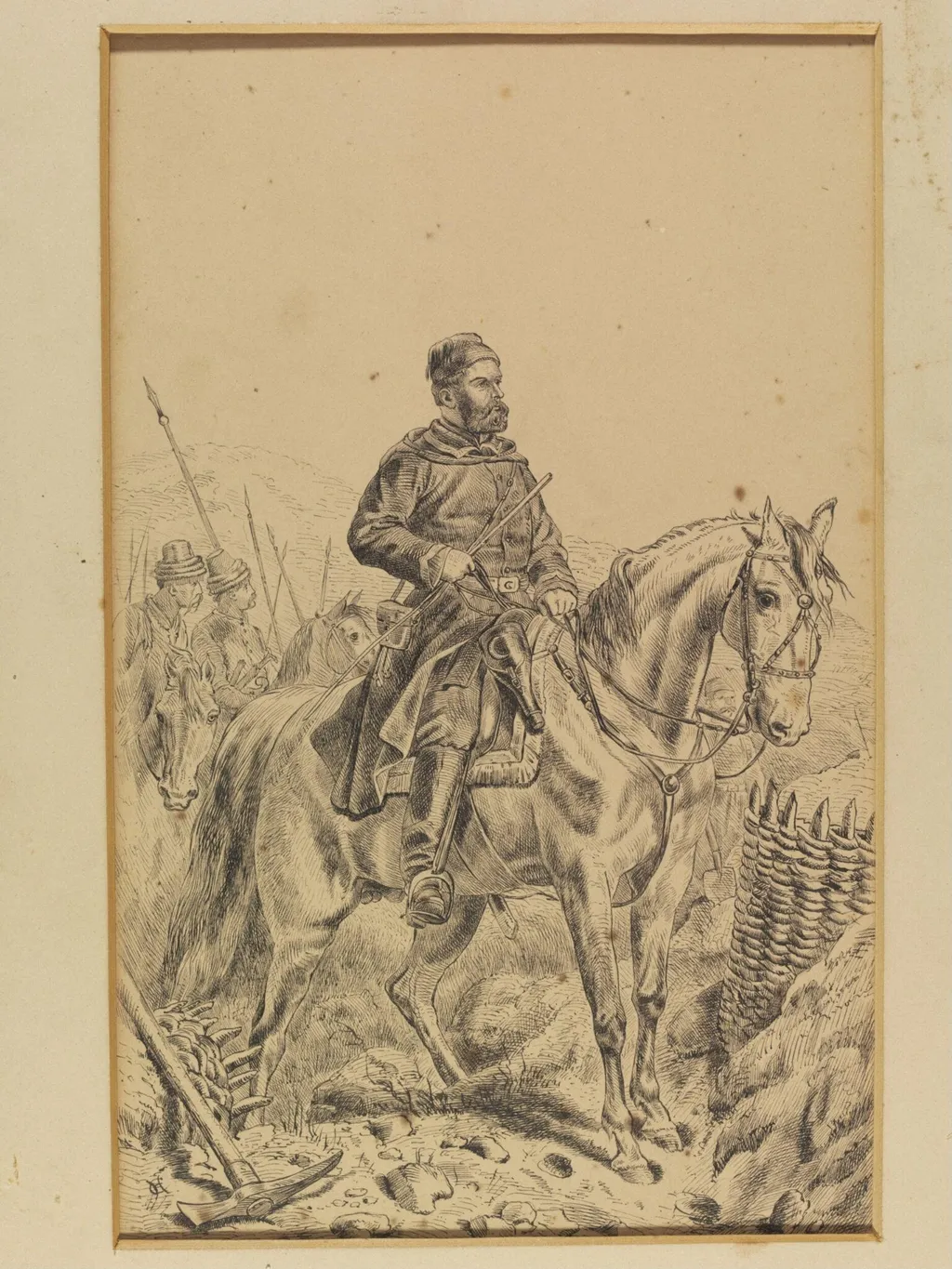
Osman Pasha is a watercolor work on paper by the Impressionist artist Unknown. It dates from 1878 and is held in the collection of the Victoria and Albert Museum.
About this work
Overview
The work is attributed to an anonymous artist, possibly one of several illustrators employed by the *Illustrated London News* to record wartime events.
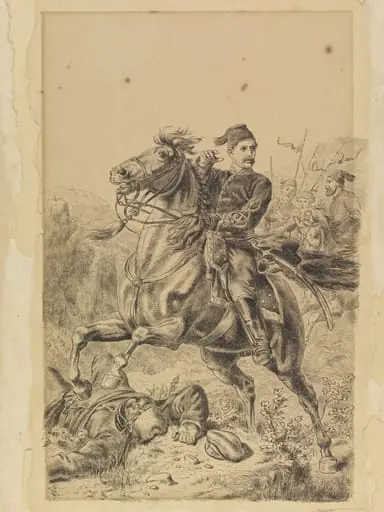
Created in 1878, this watercolour depicts Osman Pasha, a Turkish military commander during the Russo-Turkish War. The work is attributed to an anonymous artist, possibly one of several illustrators employed by the *Illustrated London News* to record wartime events. The piece entered a public collection in 1967 after being acquired from Lucy Hoare. Its informal, rapid execution reflects its function as a field sketch rather than a finished portrait.
Subject & Meaning
The figure of Osman Pasha, mounted and armed, dominates the composition, conveying authority amid the chaos of war. Two infantrymen march behind him, reinforcing his role as a leader. The barren landscape and crude fence suggest a harsh, contested terrain. The image does not idealize its subject but instead captures a moment of military presence, emphasizing command under difficult conditions rather than ceremonial grandeur.
Technique & Style
The artist employed loose, fluid watercolour strokes to suggest movement and texture without detailed refinement. The horse’s posture, the soldiers’ strides, and the spiky fence are rendered with economical lines, prioritizing immediacy over polish. Washes of diluted pigment define shadow and ground, while the absence of fine detail enhances the sense of spontaneity. This approach aligns with journalistic sketching practices of the time.
History & Provenance
The drawing was likely made during the artist’s assignment covering the 1877–78 conflict. A monogram, possibly 'C. H.' or 'H. C.', appears on related sketches from the same period, linking it to a known group of war illustrators. It remained in private hands until 1967, when it was purchased from Lucy Hoare and added to the collection, preserving its connection to wartime visual documentation.
Context
During the Russo-Turkish War, European publications relied on embedded artists to supply visual reports for illustrated newspapers. These sketches served as primary visual records for audiences unfamiliar with the conflict’s geography and participants. The depiction of Osman Pasha reflects the Western media’s interest in Ottoman leadership, though often without deep cultural insight, focusing instead on military imagery.
Legacy
This watercolour contributes to a broader archive of 19th-century war illustration, offering insight into how conflict was visually communicated to the public before photography became dominant. Its unpolished quality underscores the urgency of its creation. Though the artist remains unidentified, the work stands as a tangible record of journalistic practice during a pivotal moment in Ottoman military history.
Artist & collection

 Domestic Scene
 Giacomo and Cardinal Marco, investing Andrea, Abbot of San Zeno, with his Benefice
 The Nymph of Fontainebleau
 Portrait of a Woman
 Madonna and Child with Saints in the Enclosed Garden
 Venus and Minerva
 Family Group of Four on Sofa
 Wall painting from Room H of the Villa of P. Fannius Synistor at Boscoreale
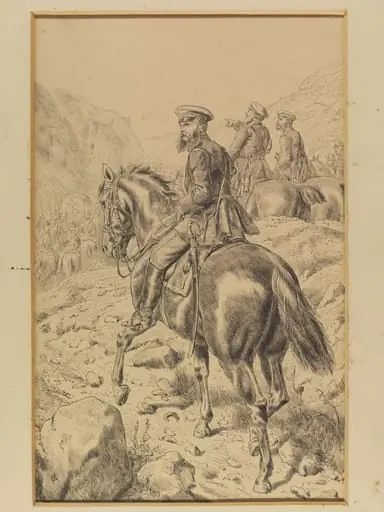 Portrait of Field Marshal Joseph Vladimirovich Gourko
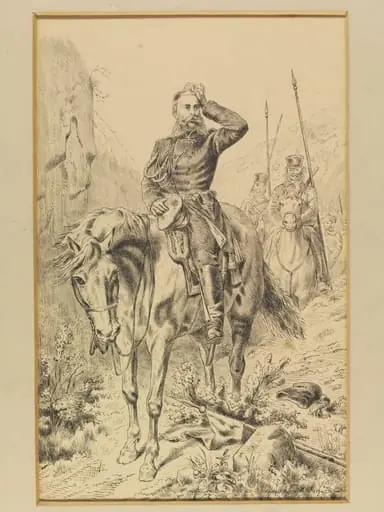 Portrait of General Mikhail Dmitrievich Skobelev
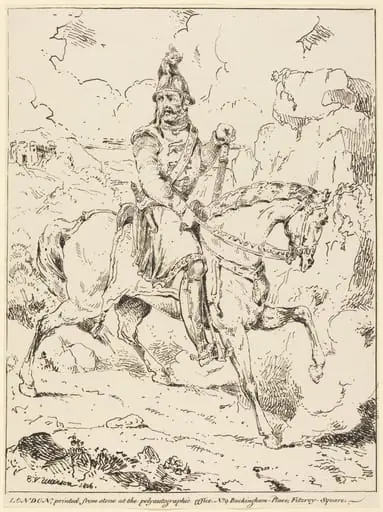 Knight in Armor on Horseback
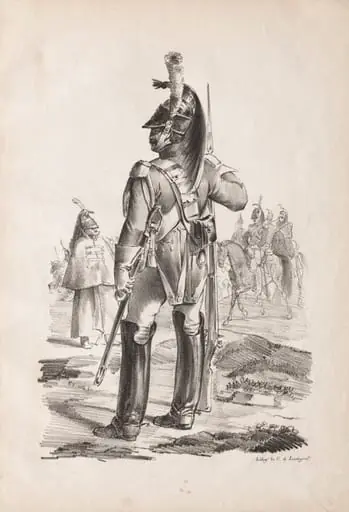 Military Costumes: Grenadier of the Royal Guard
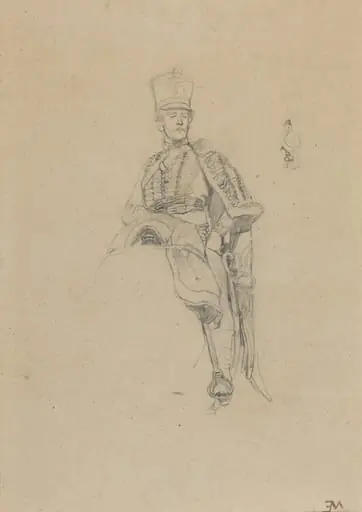 A French Hussar
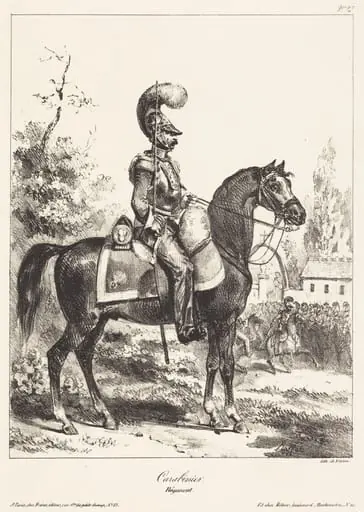 Carabinier
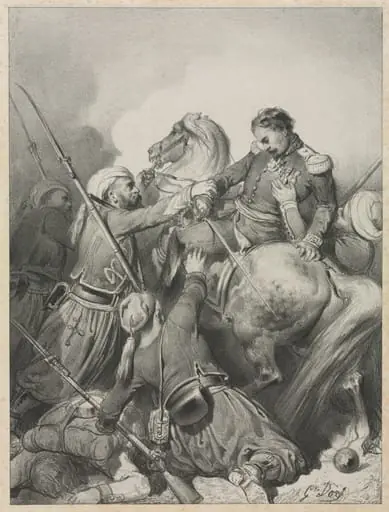 Sardinian Officer
 Dragoon with His Charger
 Horseman
 A Dragoon on Horseback
 A French Hussar Leading a Horse
 Portrait of Süleyman Pasha