Artwork
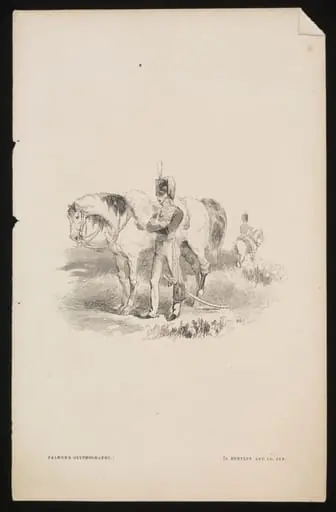
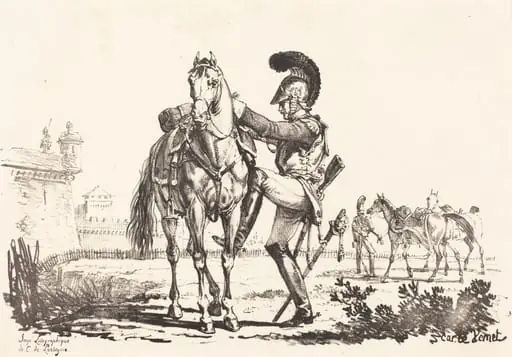
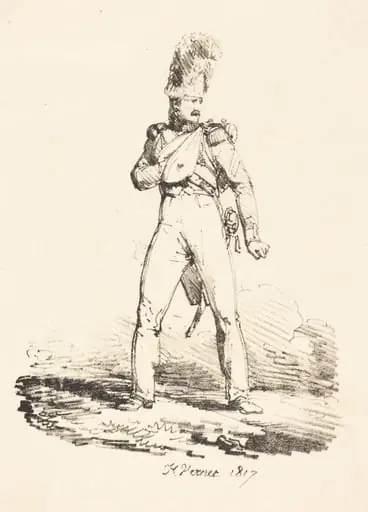
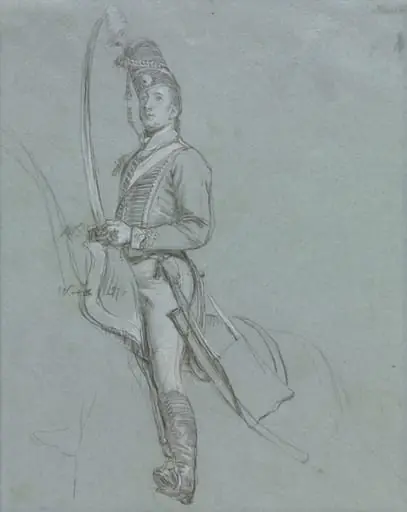
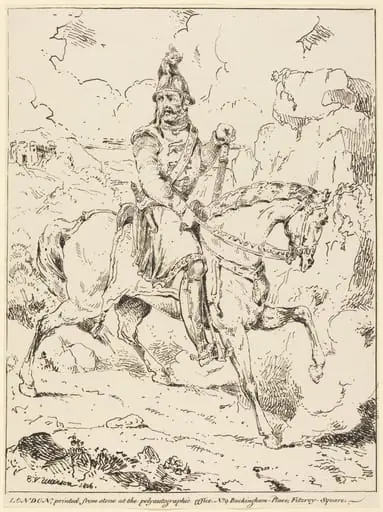
Dragoon with His Charger
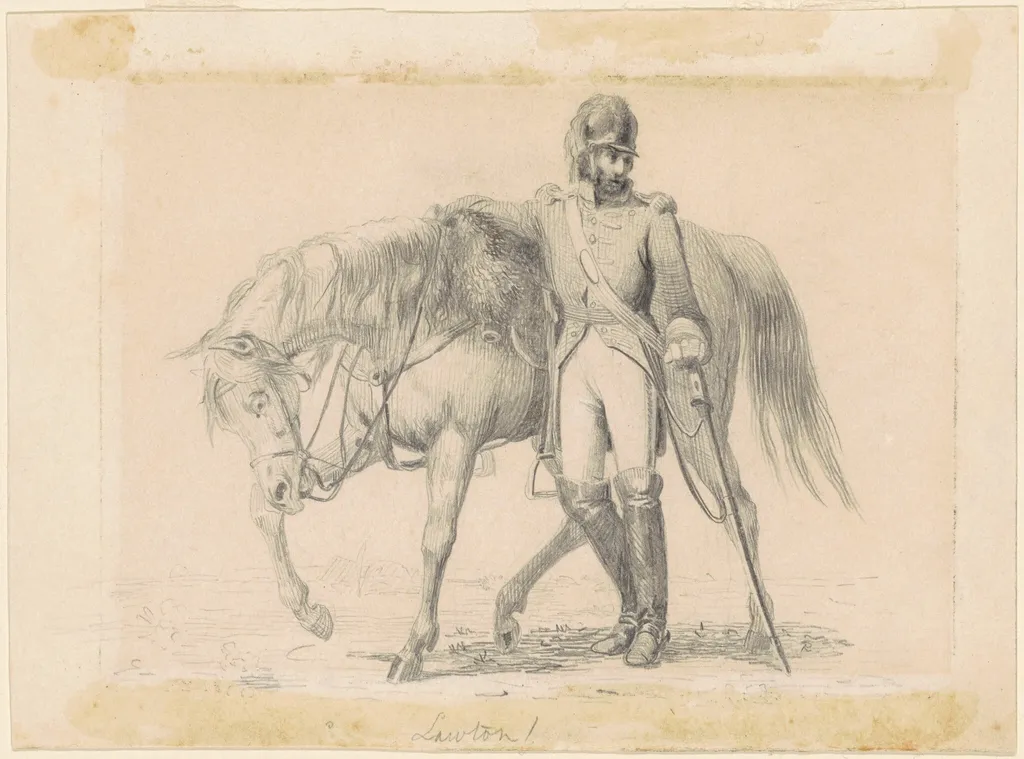
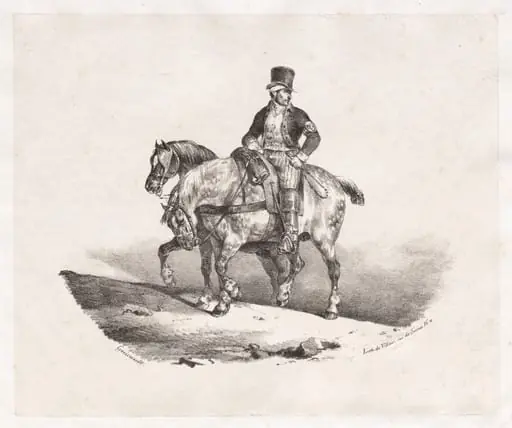
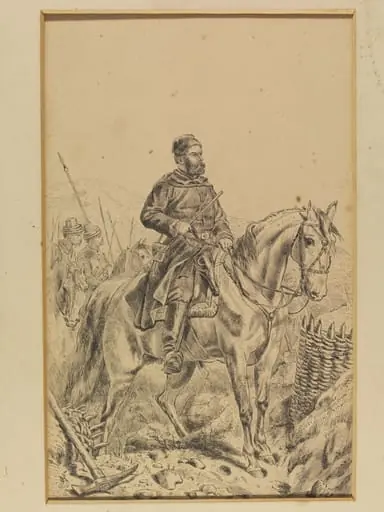
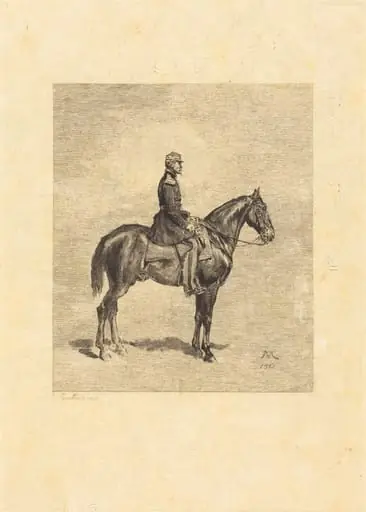
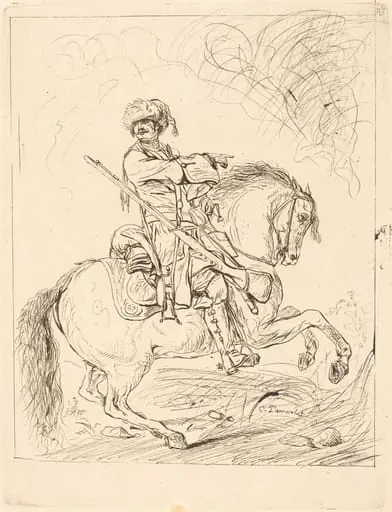
Dragoon with His Charger is a graphite drawing by the Romanticist artist William Tylee Ranney. It dates from 1835 and is held in the collection of the National Gallery of Art.
About this work
Overview
Created around 1835, this graphite drawing by William Tylee Ranney captures a dragoon and his horse in a spontaneous, unpolished manner. Executed on light wove paper, the work conveys immediacy through loose, energetic lines. It lacks the finish of a formal composition, instead appearing as a direct observational study, likely made in the field or from life.
Subject & Meaning
The figure is a mounted infantry soldier, identified by his tall hat, fur-lined collar, and heavy boots. He stands beside his horse, posture weary, staff loosely held—suggesting a moment of pause amid duty. The horse, powerfully built with a thick mane, mirrors the soldier’s quiet endurance. Together, they embody the quiet gravity of military life, not heroism but persistence.
Technique & Style
Ranney employed rapid, sketchlike strokes in graphite, emphasizing form over detail. The paper’s texture interacts with the medium, allowing for subtle tonal variations without shading. Contours are suggestive rather than defined, capturing movement and weight through economy of line. The absence of background focuses attention entirely on the figures and their physical presence.
History & Provenance
The drawing originates from Ranney’s early career, likely made during his time observing military life in the northeastern United States. It predates his more famous painted narratives and reflects his practice of studying subjects firsthand. Its survival as a standalone sketch suggests it was valued for its authenticity rather than as a preparatory piece.
Context
In the 1830s, American artists increasingly turned to contemporary subjects, including military and frontier life. Ranney’s sketch aligns with this trend, though it avoids theatricality. Unlike Romantic-era European works that dramatized conflict, this drawing favors quiet realism, reflecting a distinctly American interest in the ordinary aspects of service.
Legacy
This drawing illustrates Ranney’s foundational skill in observing human and animal form, a trait that later informed his narrative paintings. Though not widely exhibited, it remains a key example of early American draftsmanship—unadorned, attentive, and grounded in direct experience. It offers insight into the artist’s process before he turned to large-scale historical scenes.
Artist & collection