Artwork
Painitng
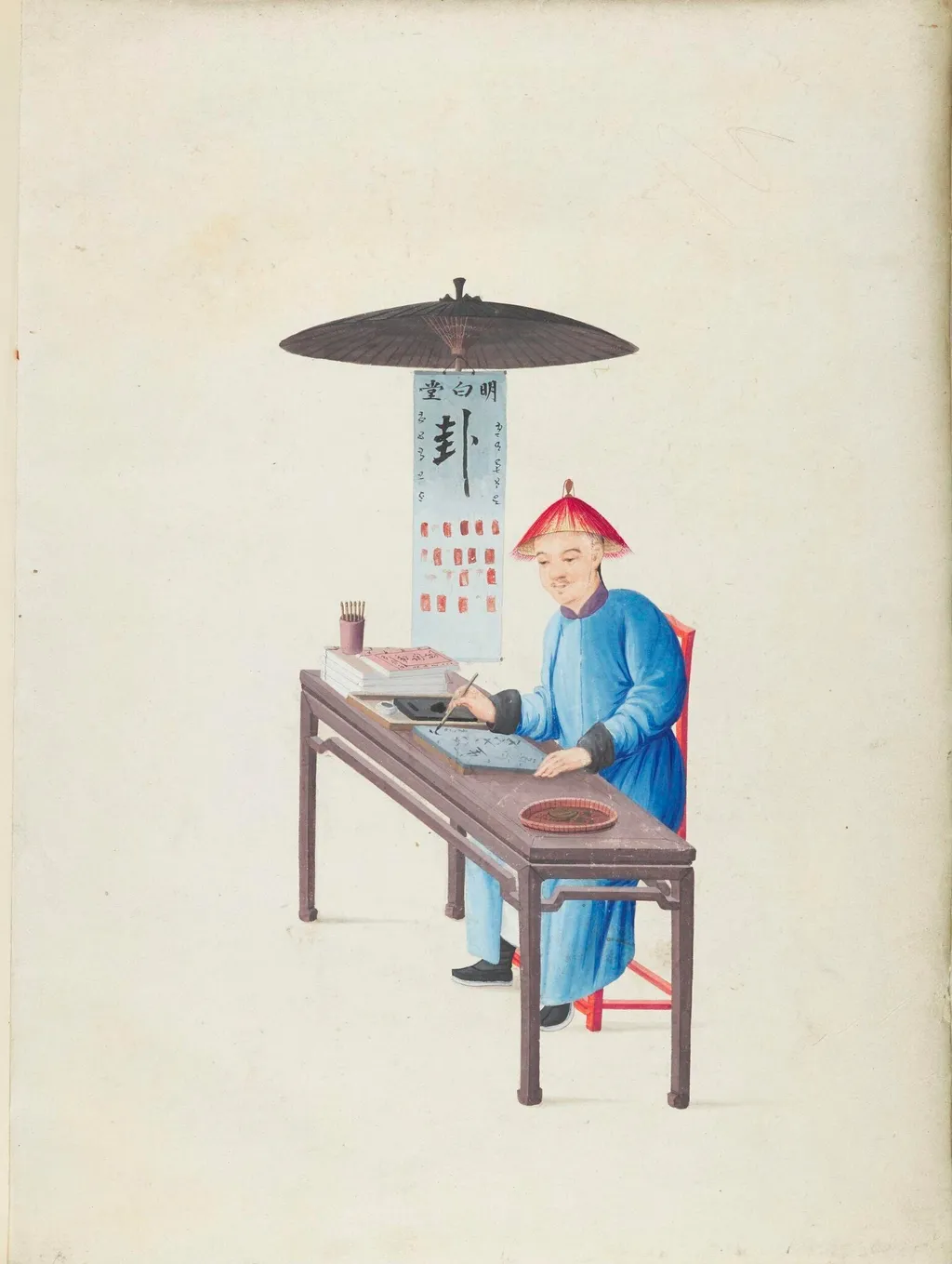
Painitng is a paint painting by the Romanticist artist Unknown. It dates from 1800 and is held in the collection of the Victoria and Albert Museum. This work is one of twenty-four illustrations in a serialized album documenting occupational roles, cataloged as D.
About this work
The use of bold colors and the attention to detail in the man's clothing and the objects on his desk are characteristic of the Romanticism movement.
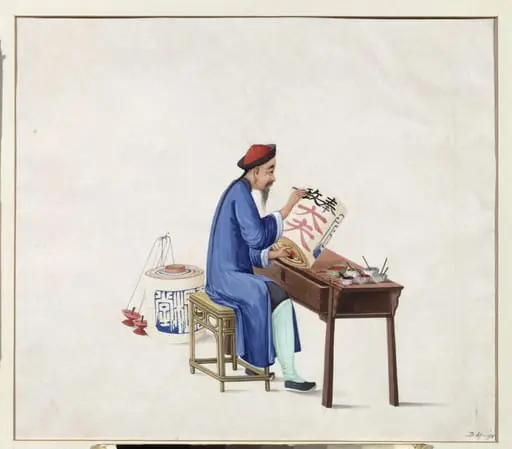
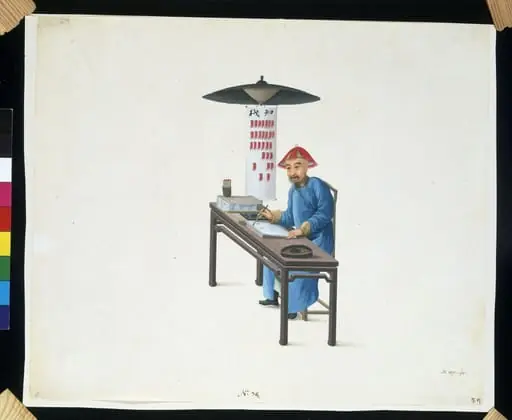
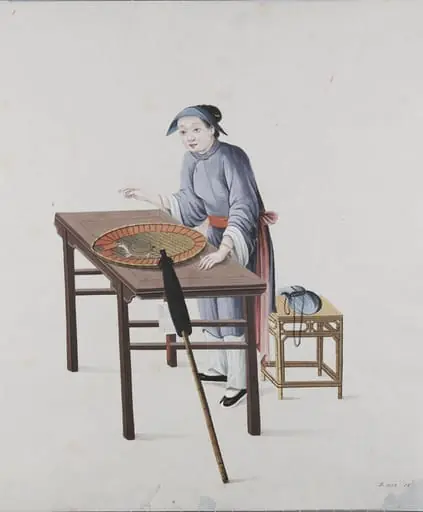
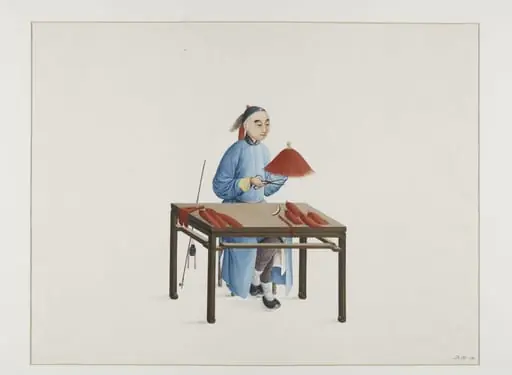
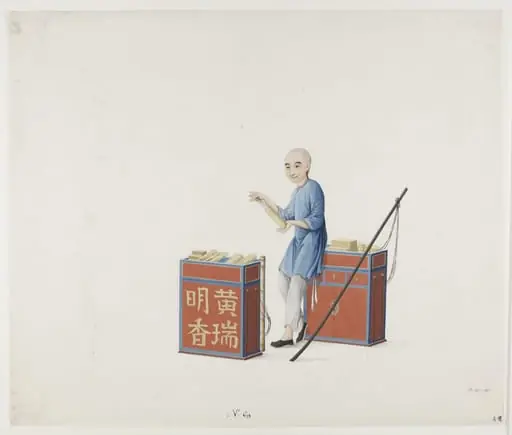
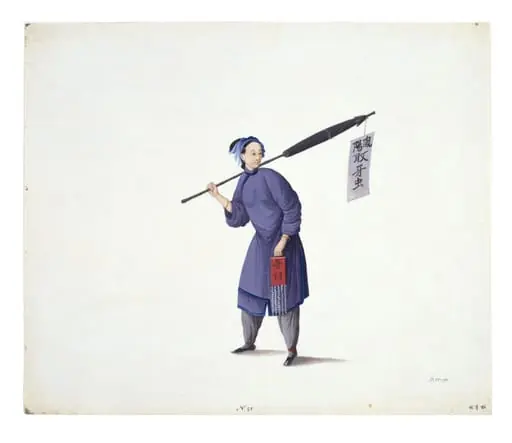
This painting depicts a man sitting at a desk, engaged in writing with a brush. He is dressed in a blue robe and wears a red hat, and his desk is adorned with various items such as a plate, a cup, and a scroll. The background of the painting is a plain off-white color.
The man's attire and the style of the painting suggest that it may be from the early 19th century. The use of bold colors and the attention to detail in the man's clothing and the objects on his desk are characteristic of the Romanticism movement.
For more information on this style of painting, you can explore the Romanticism movement.
Overview
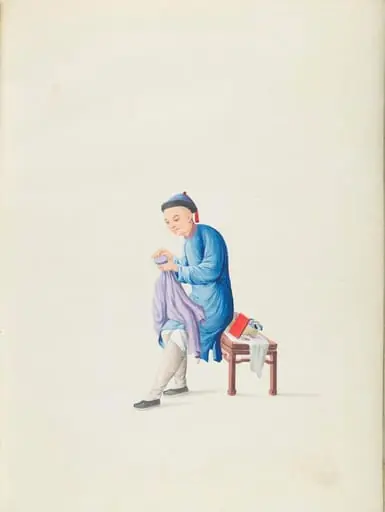
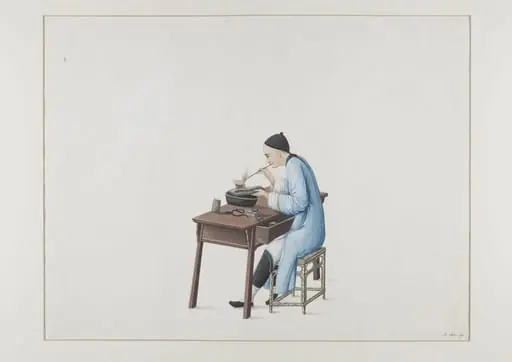
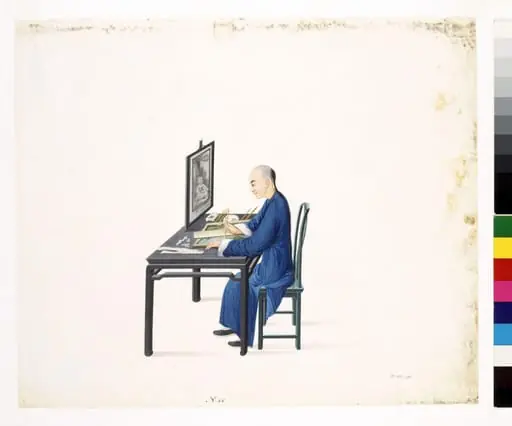
This work is one of twenty-four illustrations in a serialized album documenting occupational roles, cataloged as D.322–D.345-1894. It portrays a solitary figure seated at a desk, absorbed in writing with a brush. The composition is minimal, with no architectural or environmental details beyond a plain off-white background, focusing attention entirely on the subject and his tools.
Subject & Meaning
The figure, identified as a scribe or clerk, is depicted in the act of composition, suggesting the quiet labor of record-keeping or literary production. His blue robe and red hat indicate a status beyond manual labor, possibly a literate official or scholar. The hanging scroll and scattered writing implements imply a space of intellectual routine, emphasizing dignity in administrative work rather than grandeur.
Technique & Style
The painting employs flat, unmodulated color fields and precise linear detail, particularly in the folds of the robe and the arrangement of objects on the desk. Brushwork is controlled, with attention to texture in fabric and ceramic. The absence of shading or perspective aligns with traditional East Asian album painting conventions, prioritizing clarity and symbolic representation over illusionistic depth.
History & Provenance
The album was acquired by the Victoria and Albert Museum in 1894, with each sheet individually numbered. Its origin is likely early 19th-century China, though the exact artist and region remain undocumented. The series was probably compiled for private or institutional use, serving as a visual catalog of societal roles rather than a commissioned portrait series.
Context
Produced during the Qing dynasty’s later period, these illustrations reflect a growing interest in documenting everyday professions, possibly influenced by bureaucratic record-keeping traditions. Unlike Western Romantic depictions of individual genius, this work presents labor as orderly and anonymous, consistent with Confucian values that honored diligence within one’s social role.
Legacy
The album remains a rare surviving example of occupational illustration from early 19th-century China. Its preservation in a major Western collection has enabled comparative study with similar traditions in Japan and Europe. While not widely exhibited, it contributes to scholarly understanding of how non-Western cultures visually encoded social structure through serial imagery.
Artist & collection

 Domestic Scene
 Giacomo and Cardinal Marco, investing Andrea, Abbot of San Zeno, with his Benefice
 The Nymph of Fontainebleau
 Portrait of a Woman
 Madonna and Child with Saints in the Enclosed Garden
 Venus and Minerva
 Family Group of Four on Sofa
 Wall painting from Room H of the Villa of P. Fannius Synistor at Boscoreale