Artwork
Untitled
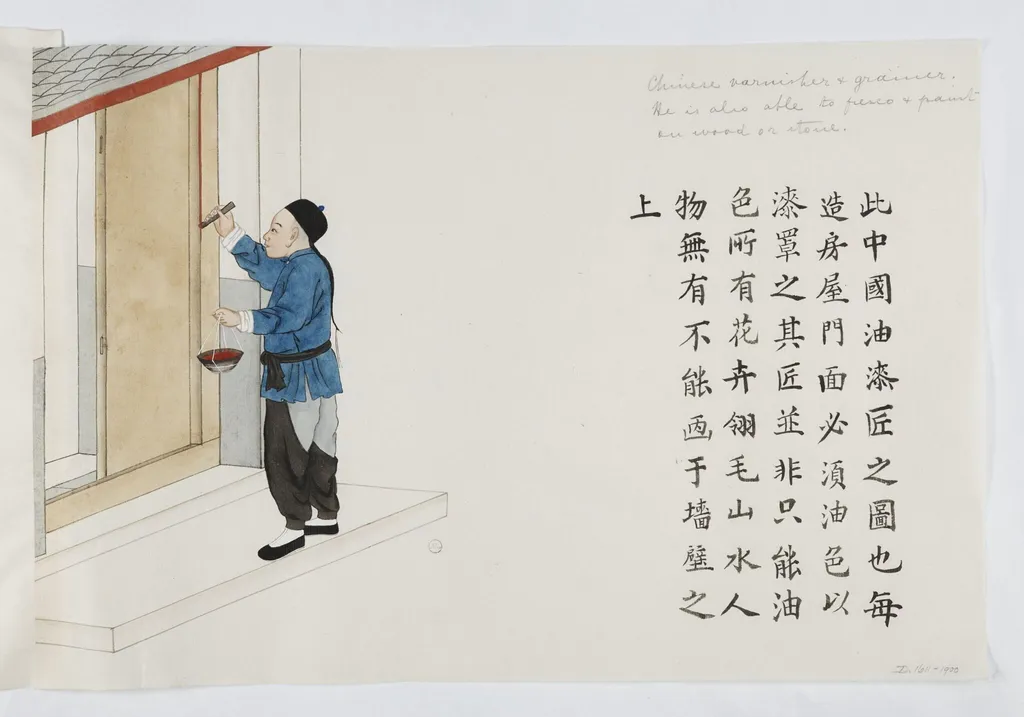
Untitled is a paint painting by the Impressionist artist Peichun Zhou. It dates from 1885 and is held in the collection of the Victoria and Albert Museum.
About this work
Overview
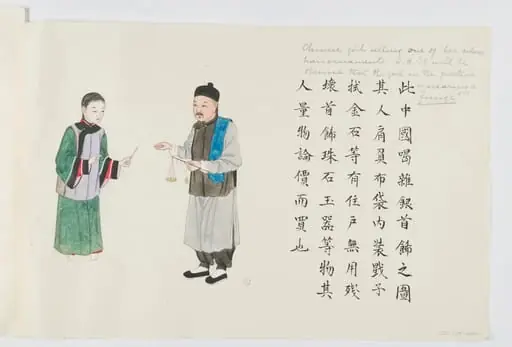
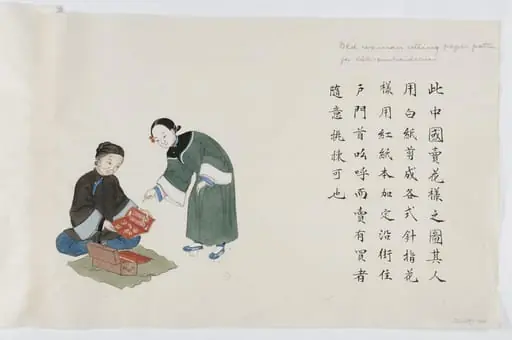
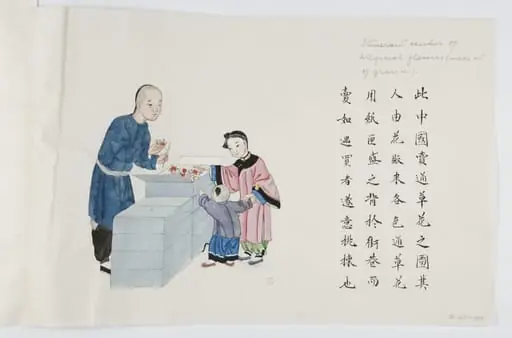
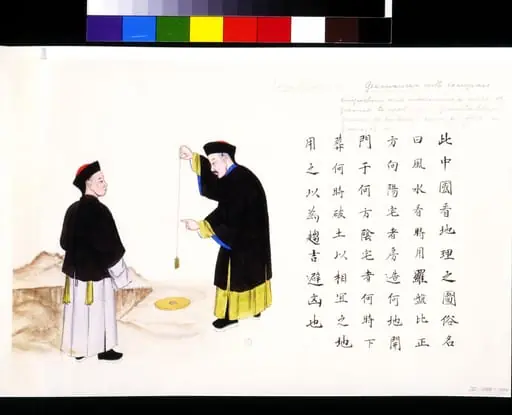
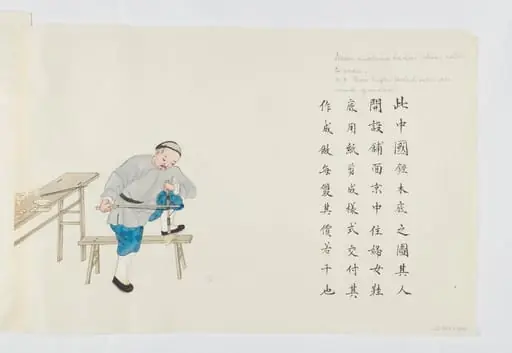
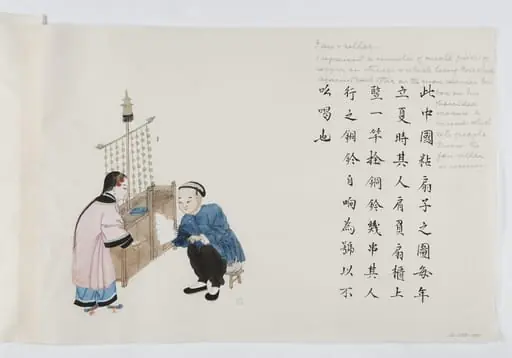
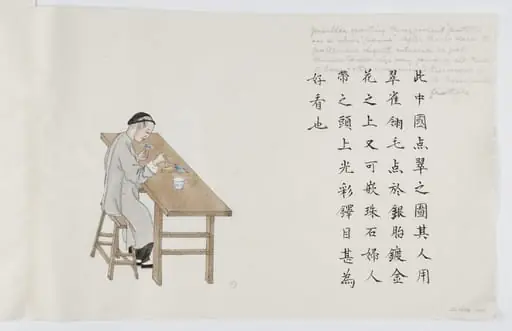
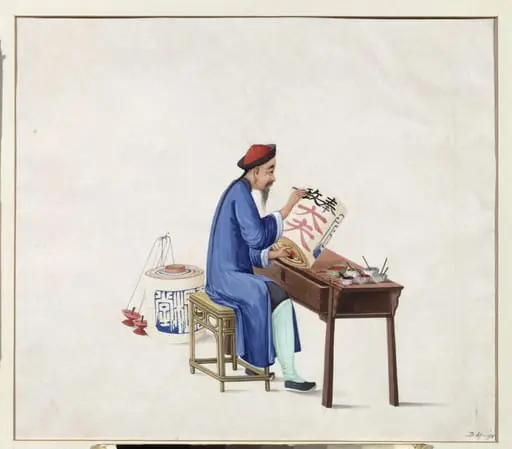
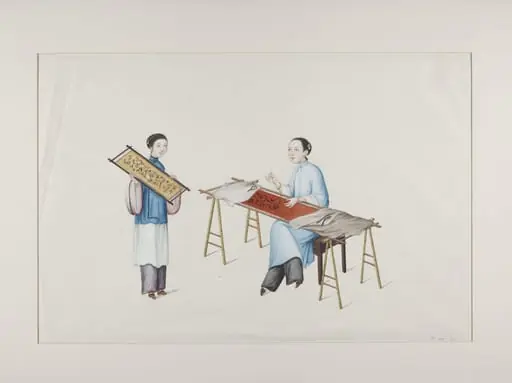
Each entry captures a solitary figure engaged in a specific activity, documenting aspects of daily life, dress, and social practice.
An untitled painting from 1885 by Zhou Peichun, this work is one of more than two hundred numbered illustrations in a bound album. Each entry captures a solitary figure engaged in a specific activity, documenting aspects of daily life, dress, and social practice. This particular image shows a person applying a red stripe to a doorway, set against a minimal ground. The album was acquired by the museum in 1900 from Maggs Bros., entering the Asia Department’s collection with minimal contextual documentation.
Subject & Meaning
The figure is depicted in the act of marking a doorway, a gesture that may reference ritual, ownership, or seasonal custom. The absence of architectural detail or narrative context invites interpretation grounded in material culture rather than storytelling. A Chinese inscription to the right describes the scene, with a pencil-written English translation of uncertain reliability. The focus on labor and bodily action aligns the image with ethnographic documentation rather than artistic idealization.
Technique & Style
Brushwork is restrained and deliberate, with soft edges and muted pigments that suggest quiet observation rather than dramatic expression. The rendering of the figure and surface is precise, yet the background remains deliberately sparse, emphasizing the subject’s action. While the handling of light and form shows awareness of naturalistic detail, the overall composition avoids Western conventions of perspective or shading, reflecting a localized visual language rooted in ink-and-wash traditions.
History & Provenance
The painting entered the museum’s collection in 1900 as part of a larger album purchased from Maggs Bros., a London-based dealer of manuscripts and prints. The album’s origin prior to acquisition remains undocumented, though its format and content suggest it may have been compiled for private or scholarly use in late Qing China. No records indicate the artist’s intent beyond the album’s systematic numbering and thematic variety.
Context
Created during a period of intense social and political change in late Qing China, the album reflects a growing interest in cataloging everyday life, possibly as a response to Western ethnographic practices or internal reformist impulses. Similar collections were produced by Chinese artists and officials to record customs, costumes, and punishments, often for administrative or curatorial purposes. This work belongs to a broader tradition of visual documentation that prioritizes observation over ornamentation.
Legacy
Though not widely exhibited or studied in its time, the album now serves as a rare visual archive of late 19th-century Chinese social practices. Its value lies in its systematic, unembellished approach to depicting labor and ritual. The absence of overt symbolism or emotional intensity makes it a quiet counterpoint to more celebrated artistic traditions, offering insight into the mundane rhythms of life during a transformative era.
Artist & collection
Artist
Peichun Zhou's tiny paintings feel like overheard gossip. Every inch of the page teems with someone’s daily hustle—silver hairpins, paper flowers, or a jeweler gluing kingfisher feathers onto a trinket. You can almost…