Artwork
Painting, Archaeological Fruit,
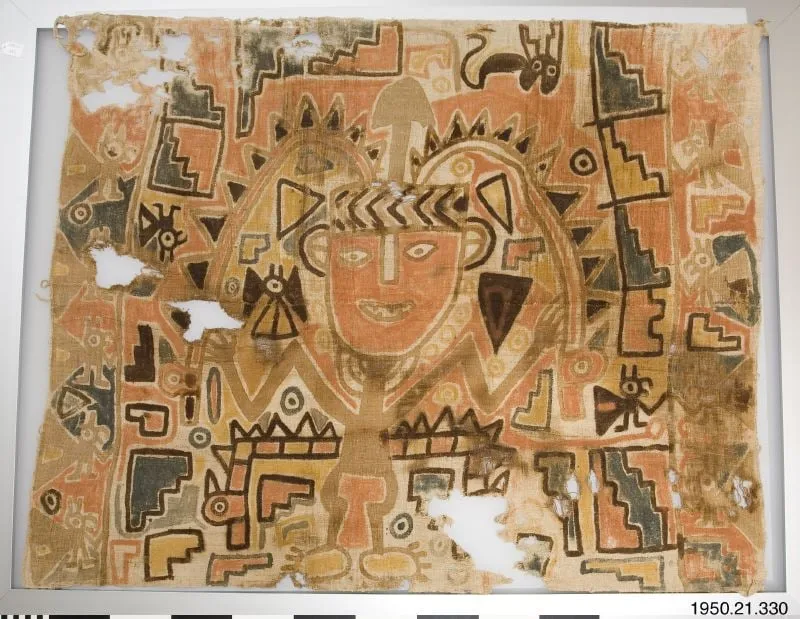
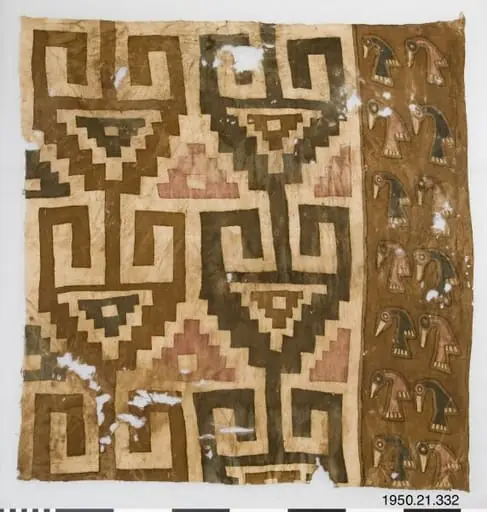
Painting, Archaeological Fruit, is a paint painting by Unknown. It dates from 1850 and is held in the collection of the ethnographic museum. This painting presents a stylized human face with pronounced angular contours and an exaggerated, open-mouthed expression.
About this work
Overview
The composition is dominated by abstract, jagged forms in muted earth tones—browns, oranges, and blacks—creating a dense, textured background.
This painting presents a stylized human face with pronounced angular contours and an exaggerated, open-mouthed expression. The composition is dominated by abstract, jagged forms in muted earth tones—browns, oranges, and blacks—creating a dense, textured background. The surface appears weathered, suggesting age or prolonged exposure, and the overall aesthetic conveys a sense of ritual or symbolic intent rather than naturalistic representation.
Subject & Meaning
The central figure bears a crown-like motif atop its head, possibly indicating status, spiritual role, or ceremonial identity. The surrounding symbols resist clear linguistic or iconographic interpretation, lacking resemblance to known scripts or natural forms. The intense smile and sharp features may convey a ritualistic expression, perhaps tied to ancestral veneration, myth, or communal performance, though no definitive narrative is established.
Technique & Style
The work employs a flat, non-perspectival approach with bold outlines and minimal shading. Pigments appear applied unevenly, with visible wear and pigment loss, contributing to an aged appearance. The abstract symbols are rendered with crude, hand-drawn precision, suggesting handmade origins. The color palette, though limited, is deliberately restrained, emphasizing texture and form over chromatic variation.
History & Provenance
The painting’s origins are undocumented, but its materials and stylistic traits align with early 20th-century ethnographic collections, possibly from a non-Western cultural context. Its condition suggests long-term storage or exposure, with no record of restoration. It was likely acquired during a period of colonial-era collecting, though its exact provenance remains unverified.
Context
The visual language resembles artifacts from indigenous or pre-literate societies where symbolic imagery served ritual or cosmological functions. Similar motifs appear in ethnographic holdings from regions such as Oceania, the Amazon, or parts of Africa, where abstraction and stylization conveyed spiritual concepts rather than literal representation. The absence of recognizable signs reinforces its role as a non-verbal cultural artifact.
Legacy
The painting contributes to broader discussions about the representation of non-Western visual traditions in museum collections. Its ambiguity invites interpretation but resists definitive classification, reflecting the challenges of contextualizing objects removed from their original cultural frameworks. It remains a quiet testament to the diversity of symbolic expression beyond dominant artistic canons.
Artist & collection
 Domestic Scene
 Giacomo and Cardinal Marco, investing Andrea, Abbot of San Zeno, with his Benefice
 The Nymph of Fontainebleau
 Portrait of a Woman
 Madonna and Child with Saints in the Enclosed Garden
 Venus and Minerva
 Family Group of Four on Sofa
 Wall painting from Room H of the Villa of P. Fannius Synistor at Boscoreale
 Mural Fragment with Elite Male and Maguey Cactus Leaves
 Cartoon for Textile Design
 Untitled
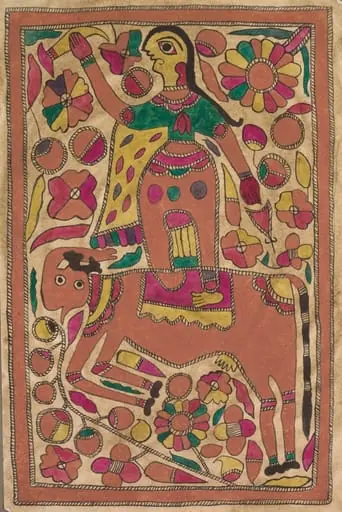 Rider and four-legged creature with floral motif
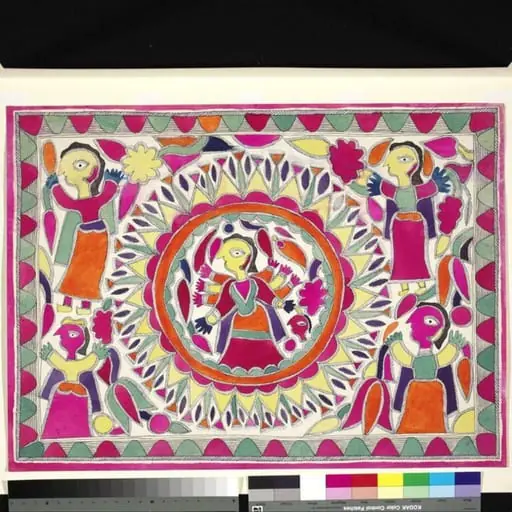 Untitled
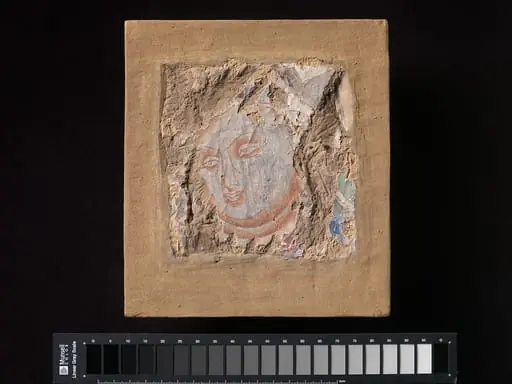 Untitled
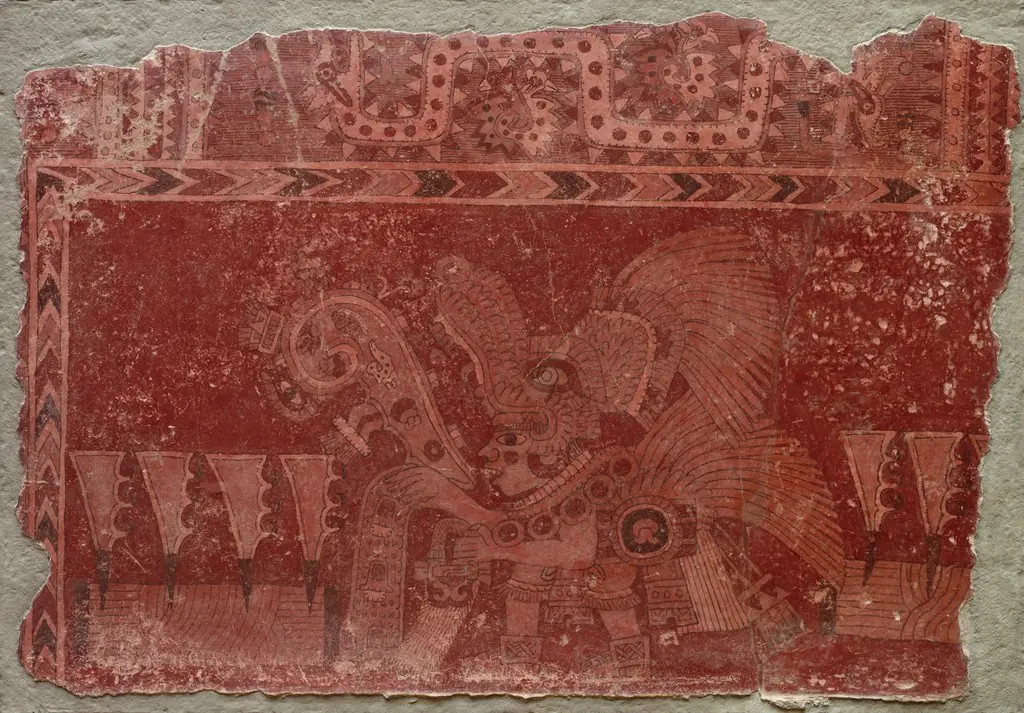 Mural Fragment with Elite Male and Maguey Cactus Leaves
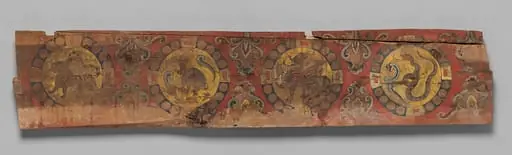 Untitled
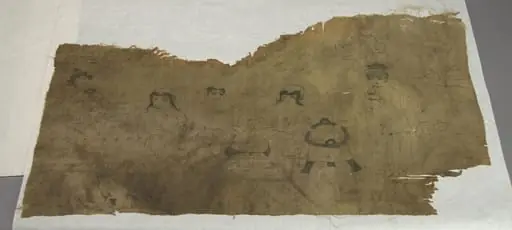 遼 宴飲圖(殘片)|Banquet Scene
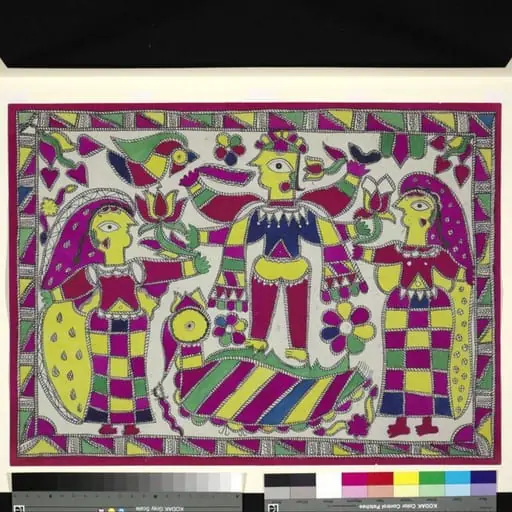 Skanda
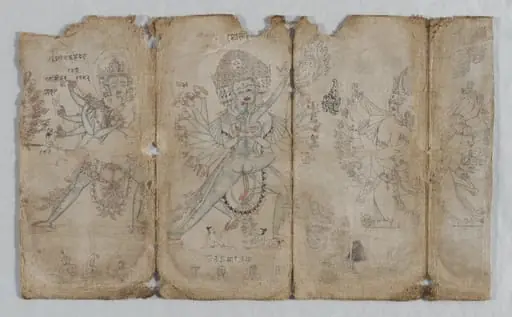 Iconographic Drawings: Chakrashamvara with Vajravarahi, Hevajra with Nairatmya, and Yamantaka (verso)
 archaeological fragment, painting,