Artwork
Painting Eleven from Illustrated Book of Flowers and Butterflies
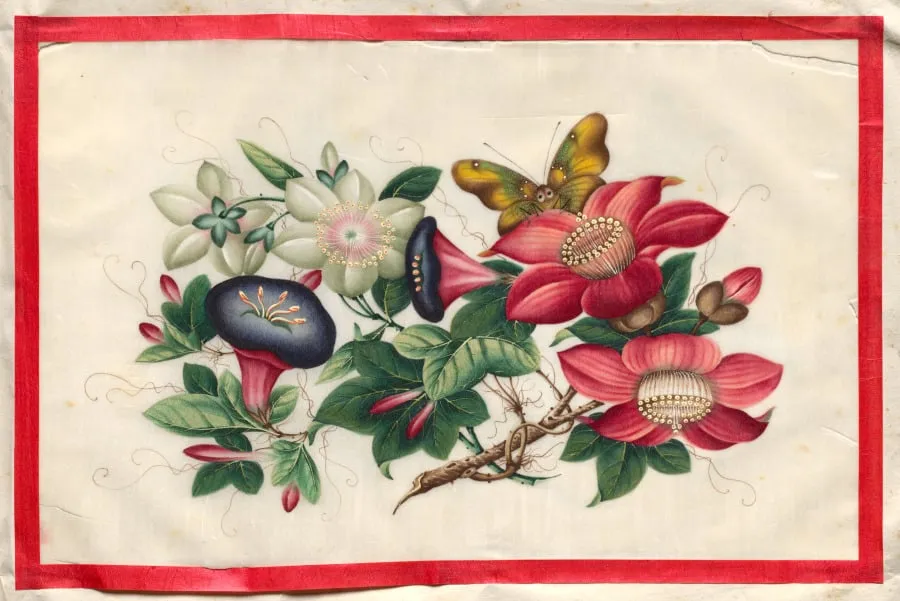
Painting Eleven from Illustrated Book of Flowers and Butterflies is an unspecified painting by the Qing dynasty painting artist Unknown. It dates from 1804 and is held in the collection of the Cleveland Museum of Art. This painting is one of a series from an illustrated book depicting flowers and butterflies, created in the 19th century.
About this work
Overview
This painting is one of a series from an illustrated book depicting flowers and butterflies, created in the 19th century.
This painting is one of a series from an illustrated book depicting flowers and butterflies, created in the 19th century. It features a single flower with delicate buds and leaves, accompanied by a yellow butterfly marked with black spots. The composition is centered against a plain white background, enclosed by a narrow red border. The work exemplifies a detailed, naturalistic style common in illustrated botanical texts of the period.
Subject & Meaning
The subject combines flora and fauna in a quiet, observational moment. The butterfly, perched on a bloom, suggests a transient interaction between species, emphasizing the fragility and interdependence of nature. No symbolic narrative is evident; instead, the focus lies in the quiet accuracy of the depiction, reflecting a scientific interest in natural forms rather than allegorical meaning.
Technique & Style
The artist employed fine, precise brushwork to render each petal and leaf with lifelike texture, using subtle gradations of color and fine lines that mimic stitching. The vivid reds, pinks, and blues contrast gently with the green foliage, while the butterfly’s wings are rendered with delicate spot detailing. The plain white background isolates the subject, enhancing its clarity and reinforcing the illustration’s function as a study in natural form.
History & Provenance
The painting originates from a mid-19th-century illustrated botanical volume, likely produced in China or East Asia, where such detailed naturalist illustrations were valued for both scholarly and aesthetic purposes. Its current location at The Cleveland Museum of Art indicates it entered a Western collection in the 20th century, possibly through academic or diplomatic channels, though its full provenance remains undocumented.
Context
During the 1800s, illustrated natural history books gained popularity across Asia and Europe as scientific inquiry and visual documentation advanced. This work aligns with a tradition of meticulous botanical art, often created for imperial or scholarly collections. Unlike Western botanical illustrations, which sometimes included scale or labeling, this piece prioritizes visual harmony and lifelike detail without textual annotation.
Legacy
The painting contributes to a broader legacy of East Asian naturalist illustration, preserving a visual record of species and artistic conventions from the 19th century. Its preservation in a major museum underscores its value as a cultural artifact, offering insight into how nature was observed, recorded, and appreciated in a pre-photographic era. It remains a quiet testament to the skill of anonymous artisans in the service of natural study.
Artist & collection

 Domestic Scene
 Giacomo and Cardinal Marco, investing Andrea, Abbot of San Zeno, with his Benefice
 The Nymph of Fontainebleau
 Portrait of a Woman
 Madonna and Child with Saints in the Enclosed Garden
 Venus and Minerva
 Family Group of Four on Sofa
 Wall painting from Room H of the Villa of P. Fannius Synistor at Boscoreale
 Painting Ten from Illustrated Book of Flowers and Butterflies
 Painting Eight from Illustrated Book of Flowers and Butterflies
 Painting Five from Illustrated Book of Flowers and Butterflies
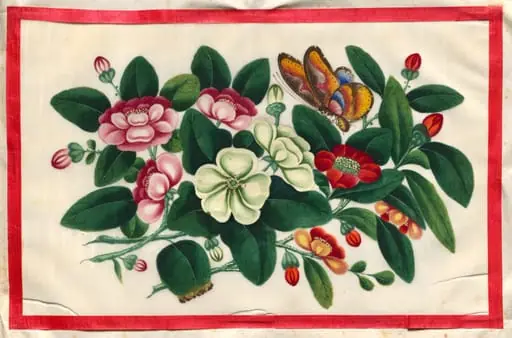 Painting Seven from Illustrated Book of Flowers and Butterflies
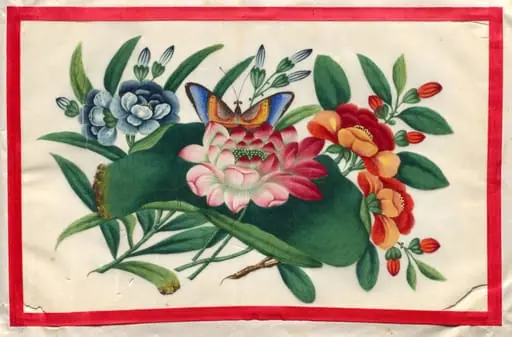 Painting Two from Illustrated Book of Flowers and Butterflies
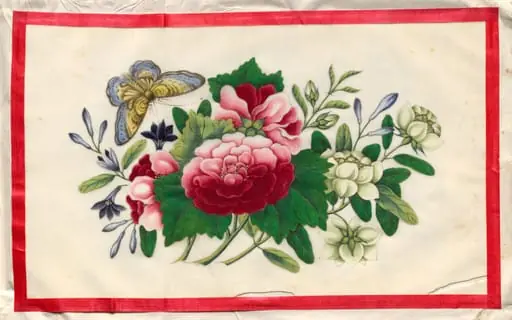 Painting Nine from Illustrated Book of Flowers and Butterflies
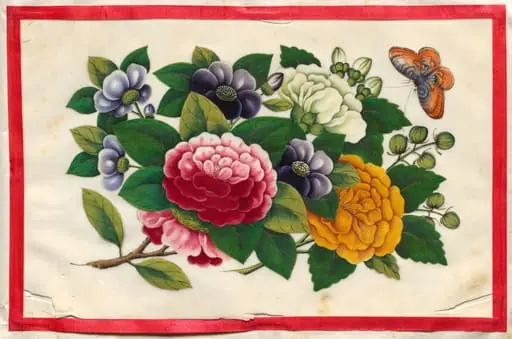 Painting Three from Illustrated Book of Flowers and Butterflies