Artwork
Pair of Portraits of Samurai-Officials: Hirai Kyosei and Hirai Rinsei
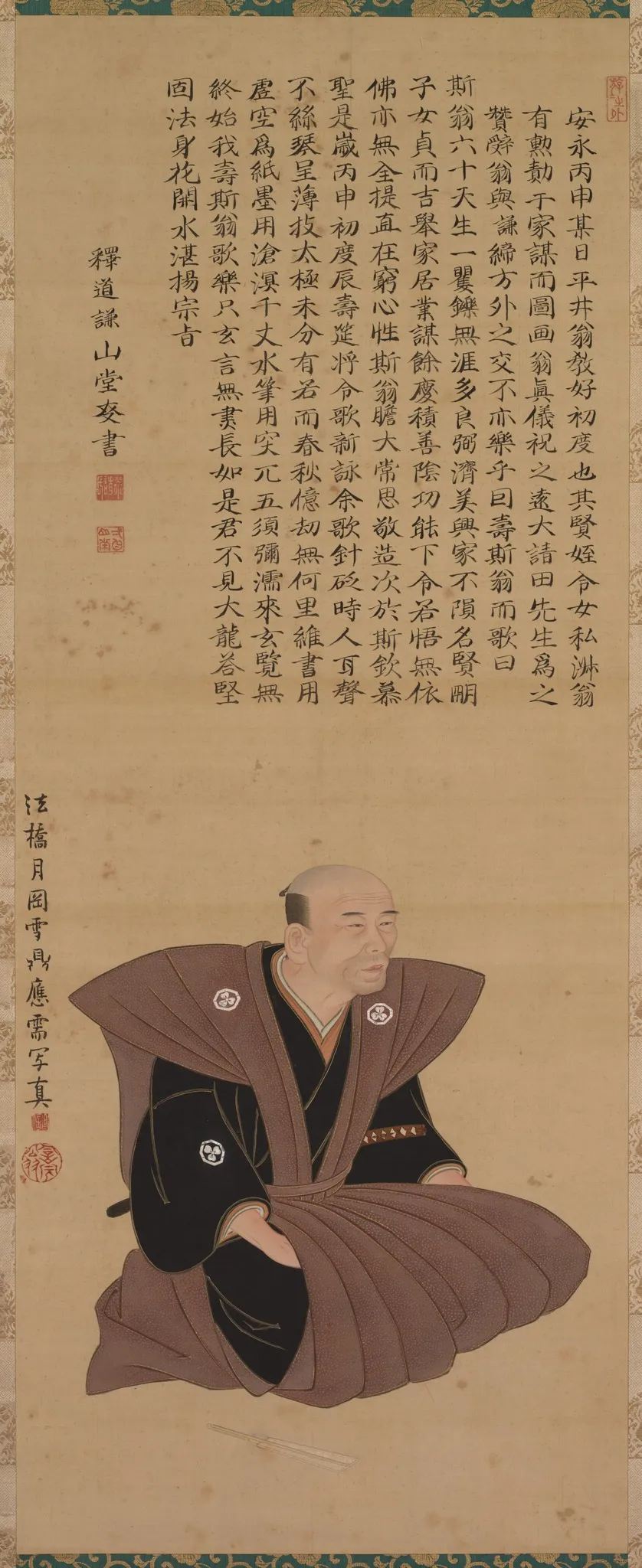
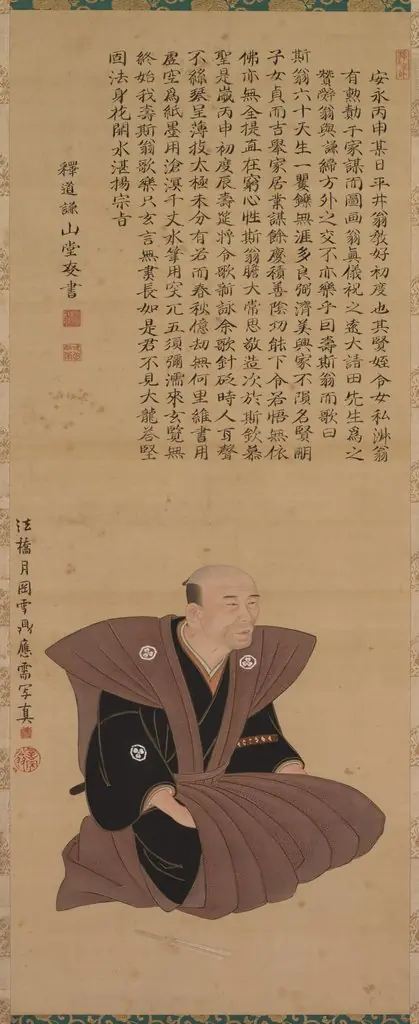
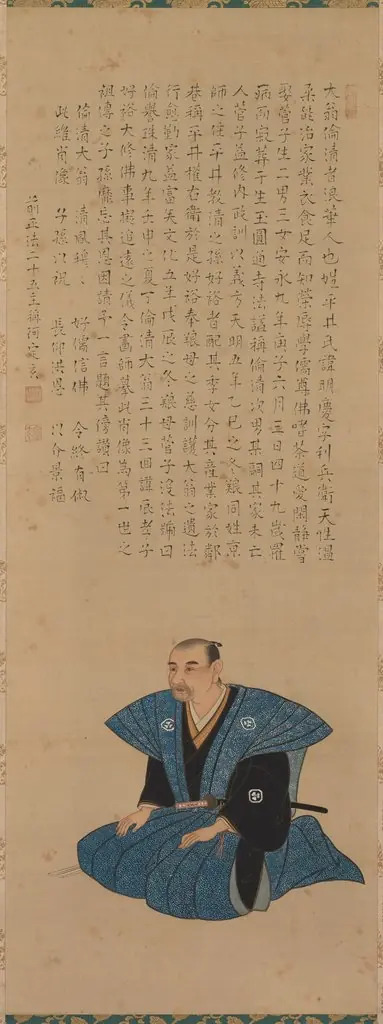
Pair of Portraits of Samurai-Officials: Hirai Kyosei and Hirai Rinsei is an unspecified painting. It dates from 1788 and is held in the collection of the Cleveland Museum of Art. The work consists of two portrait panels depicting samurai officials, Hirai Kyōsei and Hiri Rinsei.
About this work
Overview
Each figure is seated, hands folded in the lap, dressed in a dark robe with a brown mantle draped over the shoulders, and presented with a shaved head.
The work consists of two portrait panels depicting samurai officials, Hirai Kyōsei and Hiri Rinsei. Each figure is seated, hands folded in the lap, dressed in a dark robe with a brown mantle draped over the shoulders, and presented with a shaved head. The composition is set against a uniform light‑brown ground punctuated by subtle darker specks, and a vertical strip of Japanese calligraphy appears on the left edge of the panels.
Subject & Meaning
The portraits identify two members of the Hirai family, who served as high‑ranking samurai bureaucrats during the Edo period. Their solemn expressions and forward‑gazing pose convey the Confucian ideals of duty, restraint, and authority expected of officials. The inclusion of their names in calligraphic script reinforces their identity and status within the governmental hierarchy.
Technique & Style
Rendered with a restrained palette, the artist employs chiaroscuro to model the figures, using gradations of dark and light to suggest volume beneath the robes. The background’s muted earth tones and scattered darker marks create a subtle spatial depth without distracting from the subjects. Brushwork is precise, emphasizing the crisp lines of the clothing and the smooth, almost lacquered skin of the faces.
History & Provenance
The pair was likely commissioned in the early 19th century for a family shrine or administrative office, a common practice among samurai households to honor distinguished ancestors. The panels remained in the Hirai lineage until they entered a regional museum collection in the mid‑20th century, where they have been conserved and displayed as examples of official portraiture.
Context
During the Edo era, portraiture of samurai officials served both commemorative and didactic functions, reinforcing social order and lineage prestige. The austere aesthetic aligns with the Neo‑Confucian moral climate promoted by the Tokugawa shogunate, which emphasized modesty, loyalty, and the visual reinforcement of hierarchical roles.
Artist & collection