Artwork
Portrait of Sen no Rikyū with his Death Poem
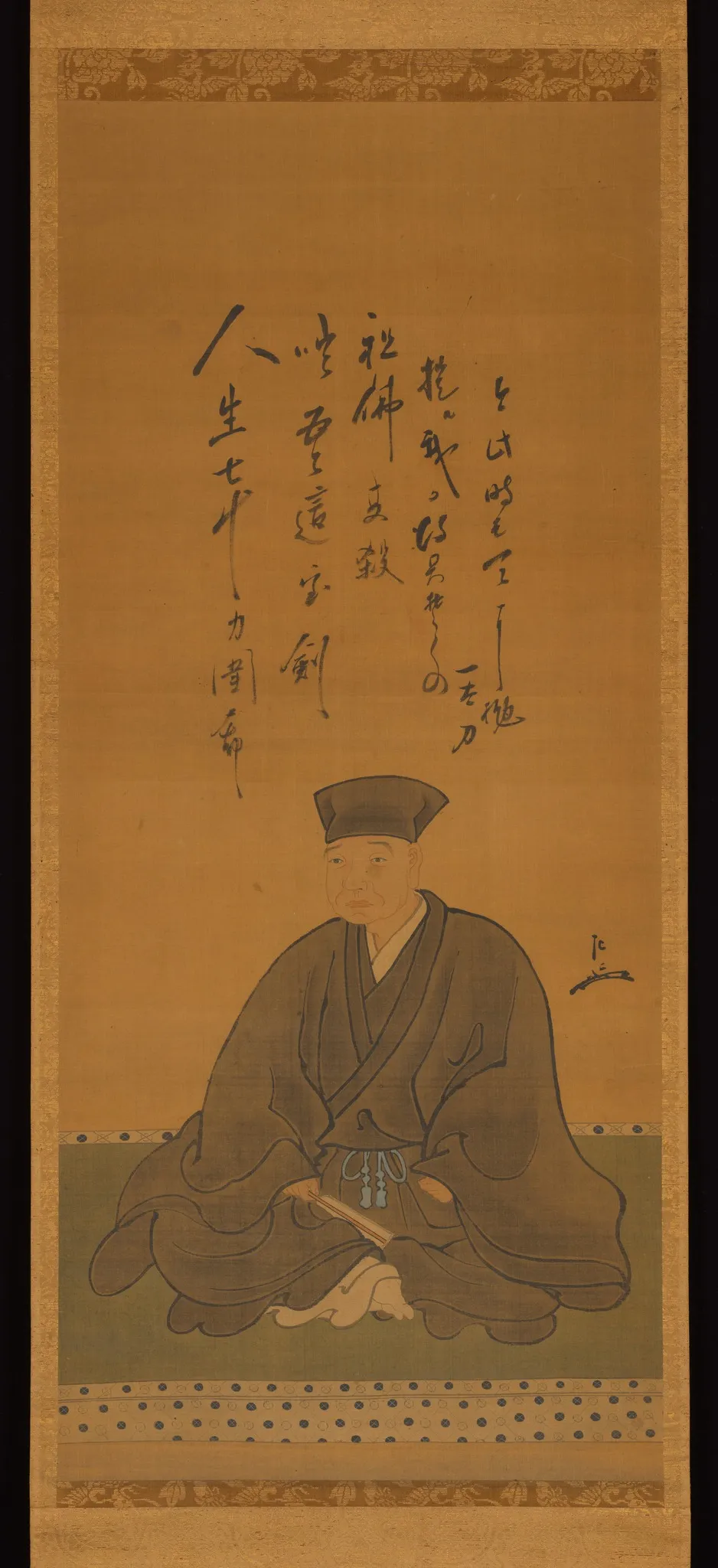
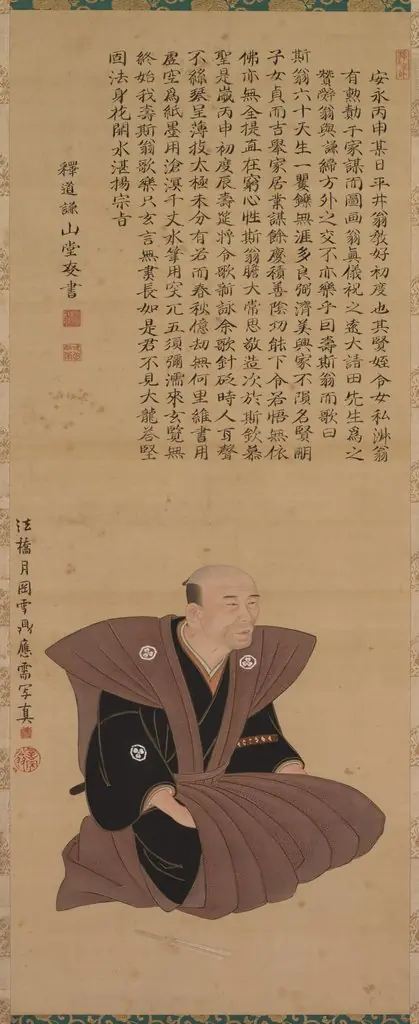
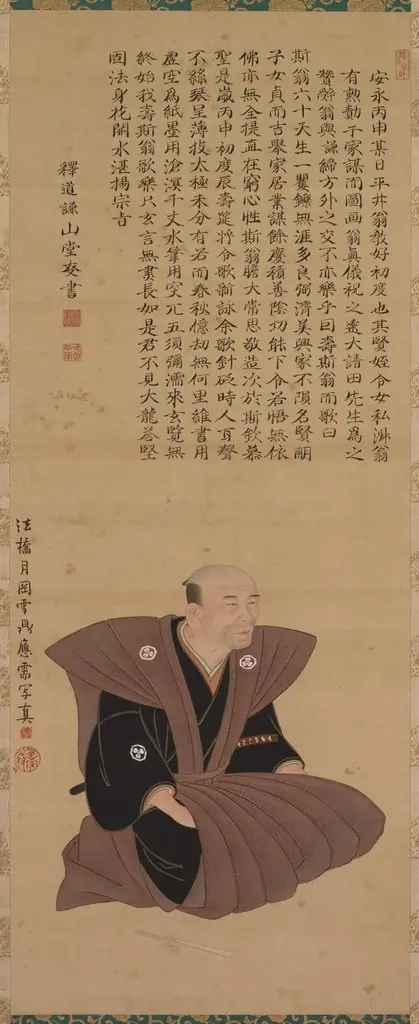
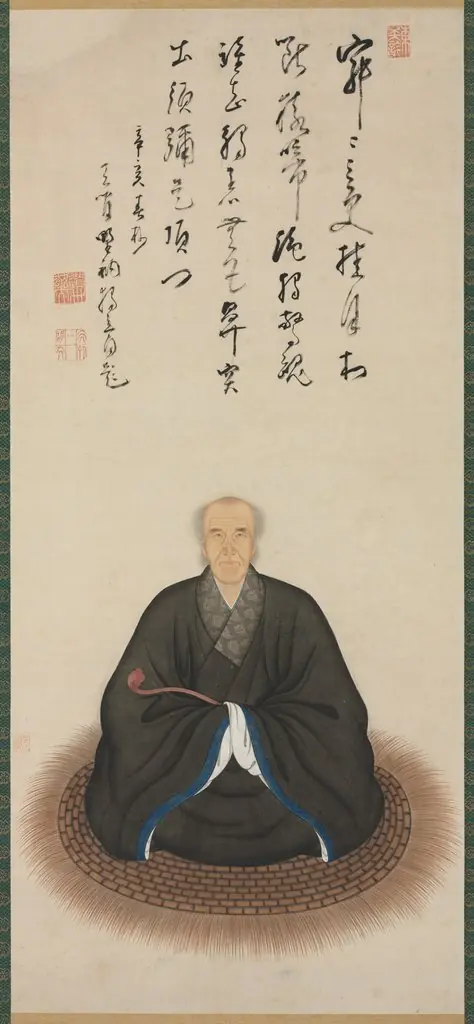
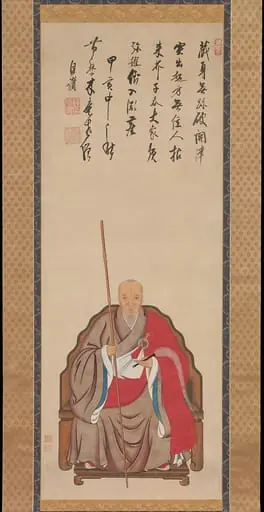
Portrait of Sen no Rikyū with his Death Poem is an unspecified painting. It dates from 1616 and is held in the collection of the Metropolitan Museum of Art. The work depicts a seated figure dressed in dark robes and a black cap, holding a scroll against a uniform golden‑brown backdrop.
About this work
Overview
The work depicts a seated figure dressed in dark robes and a black cap, holding a scroll against a uniform golden‑brown backdrop. A green mat lies beneath him, and vertical black calligraphy runs along the upper edge of the composition. The subject’s expression is restrained and contemplative, emphasizing the solemnity of the scene.
Subject & Meaning
The portrait represents Sen no Rikyū, the influential 16th‑century tea‑master, shown with the poem he composed shortly before his death. By pairing his likeness with the death verse, the image underscores Rikyū’s philosophical acceptance of mortality and his lasting impact on the aesthetics of Japanese tea ceremony.
Technique & Style
Executed in ink and color on paper, the painting employs a limited palette that accentuates the figure’s dark clothing against the warm background. The brushwork is precise in the rendering of the robes and scroll, while the calligraphic inscription is rendered in a traditional vertical format, reflecting the conventions of Japanese portraiture of the period.
History & Provenance
The piece is attributed to an early Edo‑period school of painters who specialized in biographical portraits of cultural figures. It has been held in several private collections before entering a museum repository in the late 20th century, where it is displayed as part of a series on tea‑culture icons.
Context
Created during a time when reverence for historic tea masters was expressed through visual and literary homage, the portrait aligns with contemporary practices of commemorating scholars and artists by depicting them alongside their written works. The inclusion of Rikyū’s death poem reflects the broader Edo‑era interest in the integration of poetry, calligraphy, and painting.
Artist & collection