Artwork
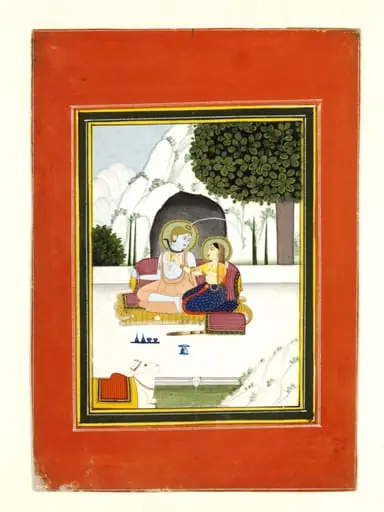
Parvati offering wine to Siva
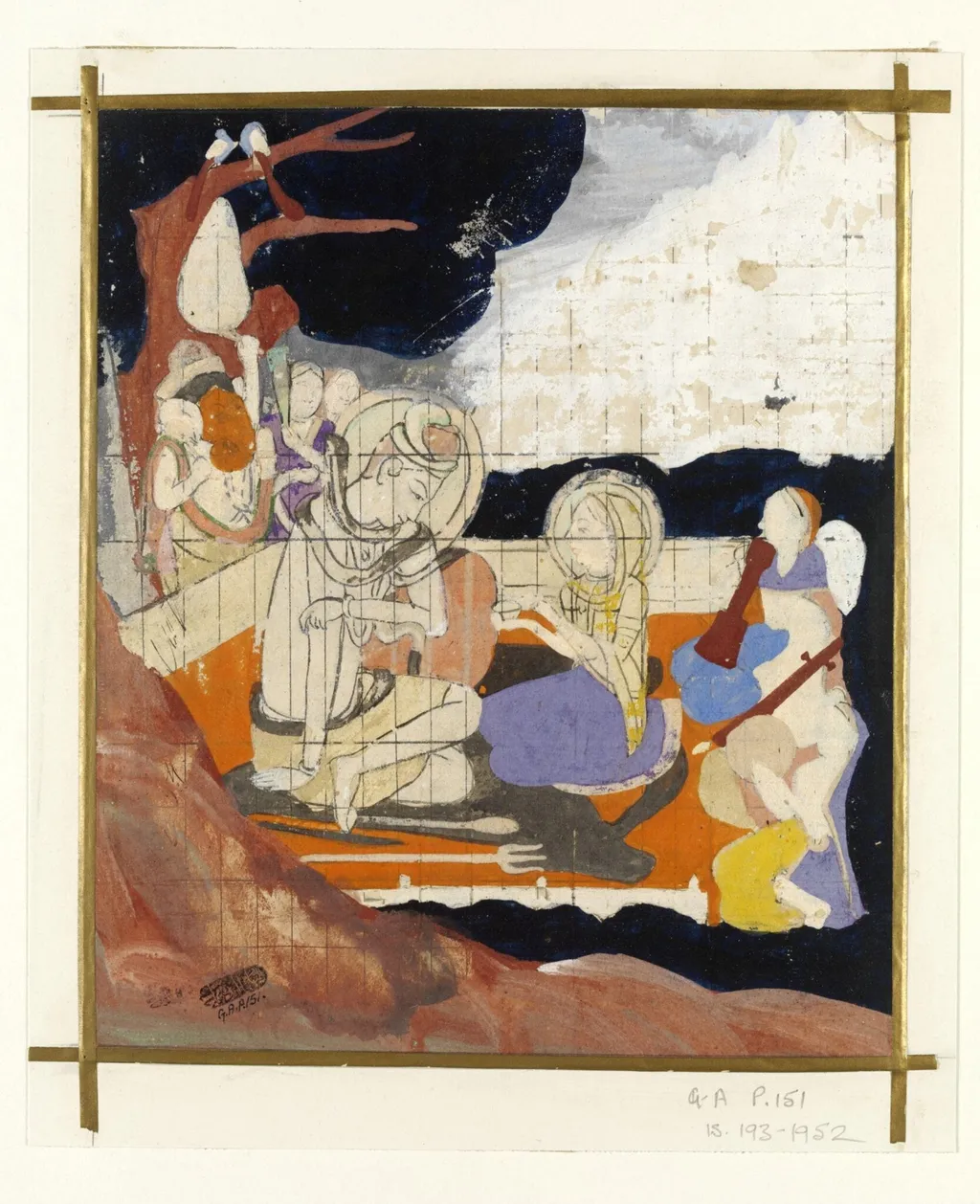
Parvati offering wine to Siva is a paint painting by the Patna School of Painting artist Unknown. It dates from 1850 and is held in the collection of the Victoria and Albert Museum. This opaque watercolor on paper, dated around 1850, portrays a moment from Hindu devotional tradition in which Parvati offers wine to Shiva.
About this work
Overview
This opaque watercolor on paper, dated around 1850, portrays a moment from Hindu devotional tradition in which Parvati offers wine to Shiva.
This opaque watercolor on paper, dated around 1850, portrays a moment from Hindu devotional tradition in which Parvati offers wine to Shiva. Executed in a stylized regional manner, the composition features flattened forms and unmodulated hues against a dark, sparse background. The scene lacks detailed rendering, suggesting it may have been left incomplete, yet its bold design conveys ritual significance through symbolic arrangement rather than naturalism.
Subject & Meaning
The scene illustrates Parvati, consort of Shiva, presenting wine as an act of devotion, interrupting his meditative state. Shiva, seated centrally, accepts the offering while surrounded by attendants and musicians, symbolizing the harmony between asceticism and worldly ritual. The presence of instruments and servants underscores the sacredness of the moment, blending spiritual stillness with ceremonial celebration in a visual metaphor for divine balance.
Technique & Style
The artist employed opaque watercolor with strong, black outlines to define figures and forms, avoiding gradation or perspective. Colors—vivid oranges, purples, and blues—are applied in flat, unshaded areas, creating a decorative, almost graphic effect. Background elements are minimal: abstract shapes float ambiguously, enhancing the otherworldly tone. The simplification of anatomy and spatial depth reflects a regional aesthetic prioritizing symbolic clarity over realism.
History & Provenance
The painting likely originated in a north Indian atelier, possibly linked to Pahari or Rajasthani traditions, where devotional themes were commonly rendered in miniature formats. Its unfinished state suggests it may have been a study, a commission interrupted, or a work intended for private use rather than public display. It entered the Victoria and Albert Museum’s collection as part of a broader acquisition of South Asian decorative arts in the 19th century.
Context
Produced during a period when regional courts patronized devotional art, this work aligns with a tradition of illustrating Hindu myths in portable formats for personal or temple use. While Mughal influence introduced greater detail elsewhere, this piece reflects a more indigenous style, emphasizing ritual symbolism over narrative complexity. Similar compositions appear in manuscripts and album paintings from the same era, often used in devotional or performative settings.
Legacy
Though not widely exhibited, the painting contributes to understanding how Hindu iconography was adapted in 19th-century regional painting. Its stylistic choices—flat color, bold outlines, symbolic composition—continue to inform modern interpretations of Indian miniature traditions. Scholars reference it as an example of how spiritual themes were visually distilled into accessible, emotionally resonant forms outside elite courtly norms.
Artist & collection

 Domestic Scene
 Giacomo and Cardinal Marco, investing Andrea, Abbot of San Zeno, with his Benefice
 The Nymph of Fontainebleau
 Portrait of a Woman
 Madonna and Child with Saints in the Enclosed Garden
 Venus and Minerva
 Family Group of Four on Sofa
 Wall painting from Room H of the Villa of P. Fannius Synistor at Boscoreale
 The Virgin and Child Attended by Angels
 Todi Ragini
 Krishna and Radha Under Mt. Govardhan
 Untitled
 Krishna Ferrying Radha Across the Yamuna River (recto)
 Untitled
 Krishna Ferrying Radha Across the Yamuna River (recto)
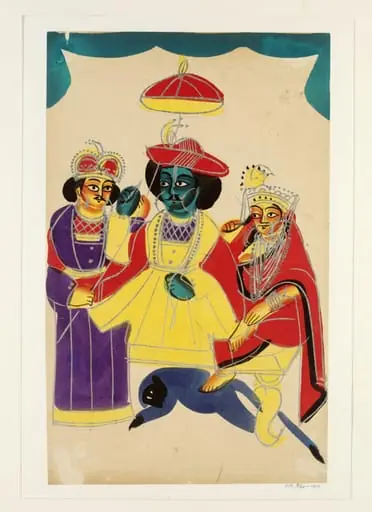 Rama, Sita, Lakshmana and Hanuman
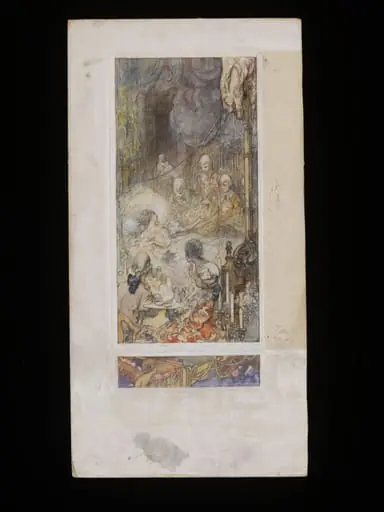 The Port of Pride
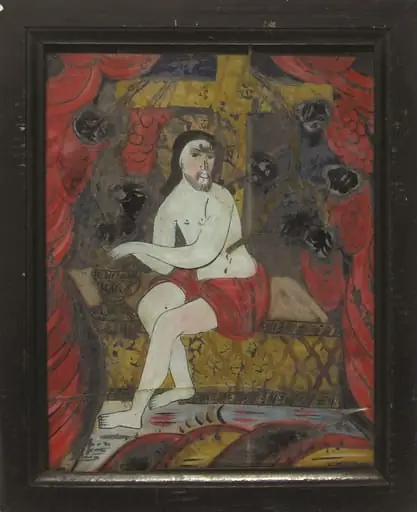 Iisus vița vieții
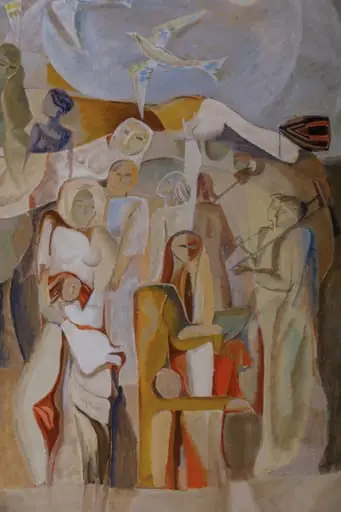 Spre lumină
 Shiva and Parvati