Artwork
Iisus vița vieții
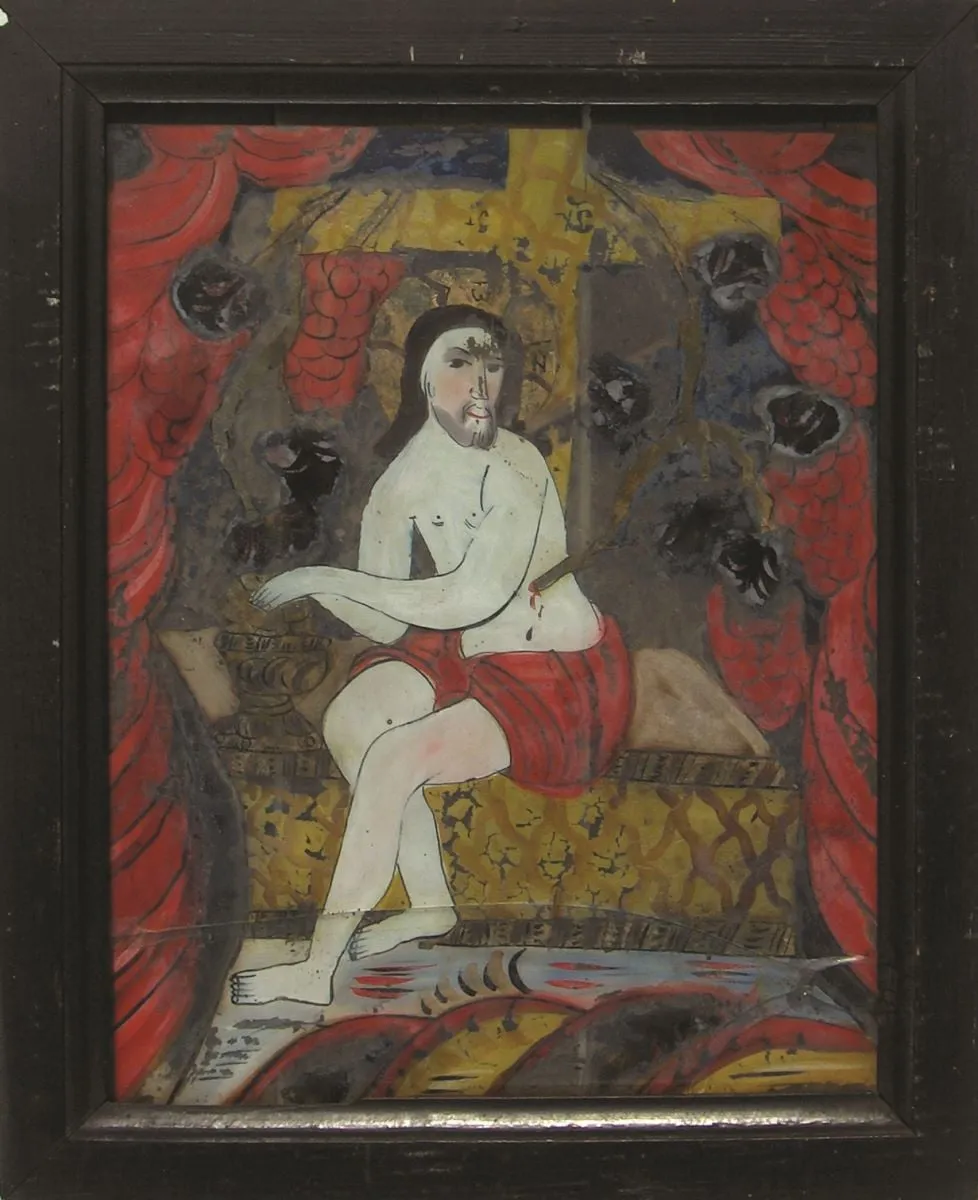
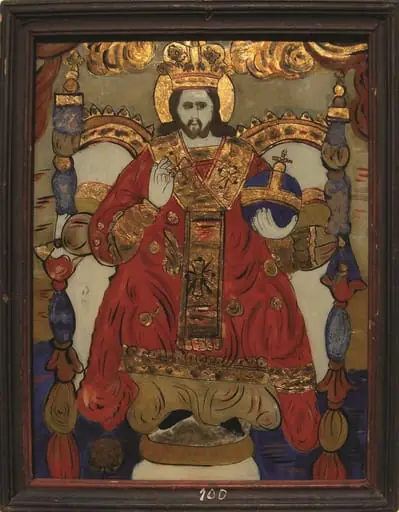
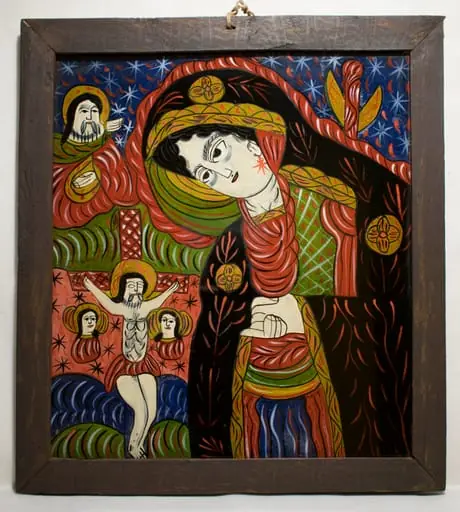
Iisus vița vieții is a drawing by Petru Prodan. It is held in the collection of the Alba Iulia Unification National Museum.
About this work
Overview
The figure occupies the center of a vividly colored composition, with a yellow background and red drapery framing the scene.
This work, titled Iisus vița vieții, is a painted representation of a seated male figure, rendered in a stylized manner. The figure occupies the center of a vividly colored composition, with a yellow background and red drapery framing the scene. A cross is positioned behind the figure’s head, suggesting a religious association. The figure’s posture and attire, along with his downward gaze, convey a mood of quiet introspection.
Subject & Meaning
The figure is interpreted as Christ, depicted in a non-traditional form—shirtless, wearing red shorts, with long dark hair. The absence of conventional iconographic elements like a halo or robe shifts focus to the figure’s physical presence and solemn expression. His gaze toward an unseen object in his hand implies a moment of personal or divine reflection, possibly symbolizing sacrifice or contemplation of life.
Technique & Style
The painting employs flat, unmodulated color fields and simplified forms, avoiding realistic shading or perspective. The background and curtains are rendered in uniform hues of yellow and red, creating a symbolic rather than spatial environment. The figure’s anatomy is stylized, with deliberate proportions that emphasize stillness over naturalism, reinforcing the image’s ritualistic tone.
History & Provenance
The painting resides in the Museum of Ethnography, indicating its classification as a cultural artifact rather than a fine art object. Its origins are likely tied to local religious or folk traditions, possibly created by an untrained artist within a community context. The work’s preservation in an ethnographic collection suggests it was collected as an expression of vernacular spirituality.
Context
Created outside mainstream ecclesiastical traditions, the image reflects a localized interpretation of Christian imagery, blending symbolic elements with indigenous visual habits. The use of bright, non-naturalistic colors and the figure’s unconventional dress may stem from regional artistic practices or limited access to canonical religious models, resulting in a unique devotional expression.
Legacy
As a preserved example of folk religious art, the painting contributes to understanding how Christian iconography is adapted in non-urban settings. Its presence in an ethnographic museum underscores its value as a cultural record rather than an artistic innovation. It remains a quiet testament to personal and communal modes of spiritual representation beyond institutional norms.
Artist & collection
Artist
Petru Prodan painted religious scenes in the icon tradition. His works include *Sf. Nicolae* and *Prohodul lui Iisus*, showing saints and biblical figures in gold-leaf settings. The figures are stiff and frontal,…
Museum
Alba Iulia Unification National Museum
Continue through works from the same source collection.
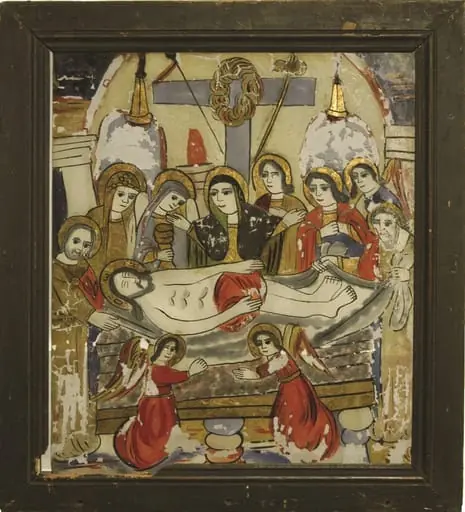
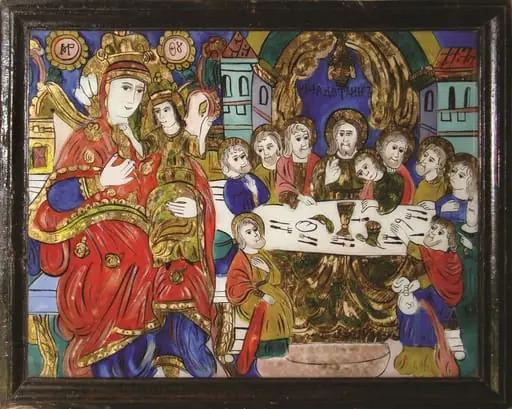
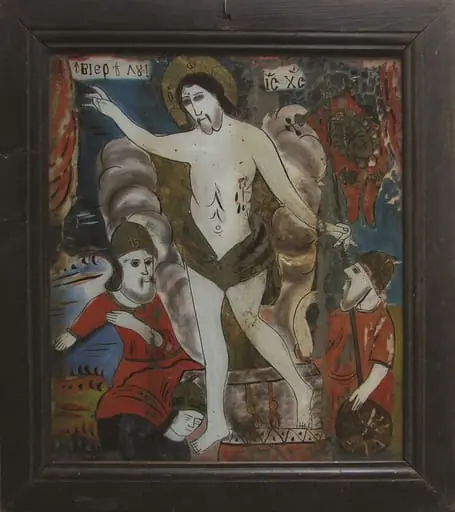 Învierea lui Iisus
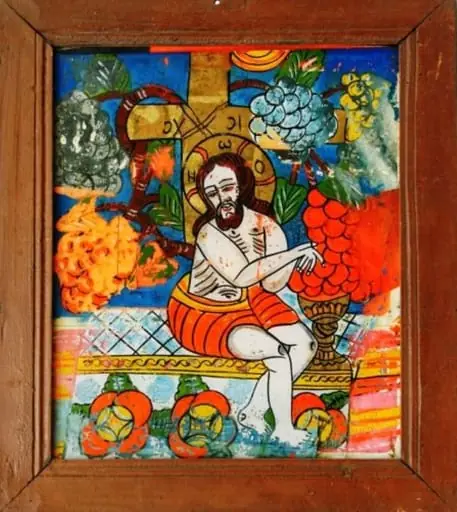 Iisus viță de vie
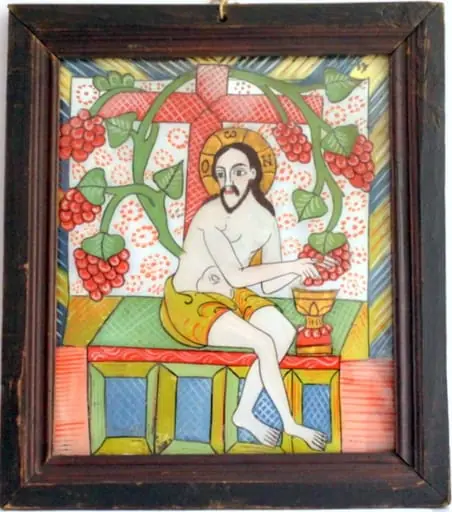 Iisus Cristos viță-de-vie
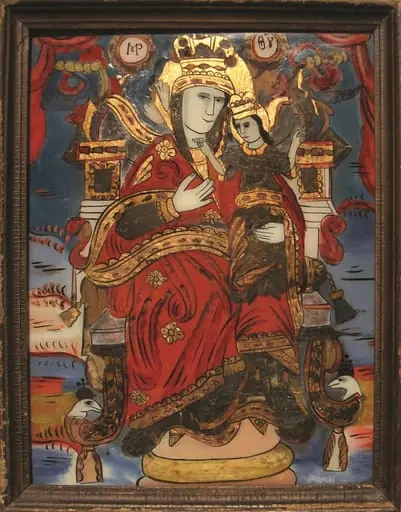
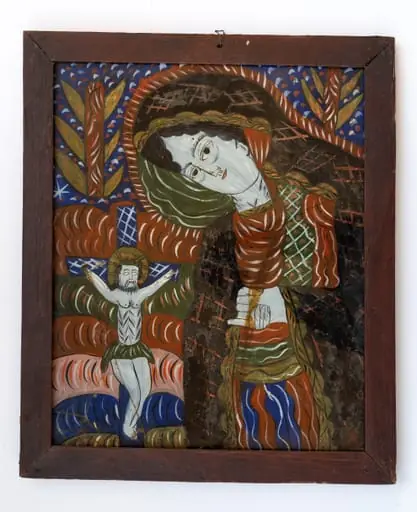 Maica Domnului îndurerată
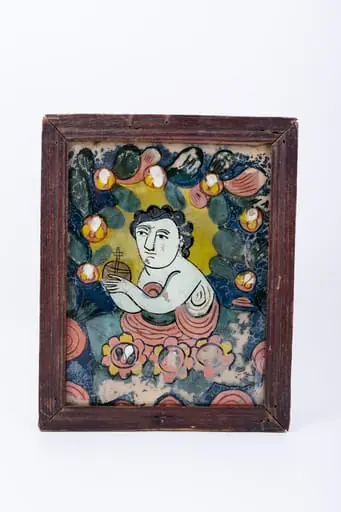 Icoana îl reprezintă pe Pruncul Iisus Hristos care ține în mânuțe globul pământesc cu o cruce deasupra, asemenea unui chivot sfințit. Este înfășurat cu o țesătură roșie, culoarea pătimirii și a jertfei. În interiorul icoanei este un nucleu de lumină galbenă. Întreaga tematică iconografică este încadrată de un chenar decorativ fitomorf, format dintr-o ghirlandă de trandafiri, ruje roșii. Icoana este de Nicula, având o cromatică luminoasă: roșu vermillon, albastru ceruleum, gaben chihlimbar, roz palid, gri, alb, negru. Fondul este albastru cobalt, în combinație cu gri. Icoana este ușor deteriorată, nuanțele neputându-se bine descifra.
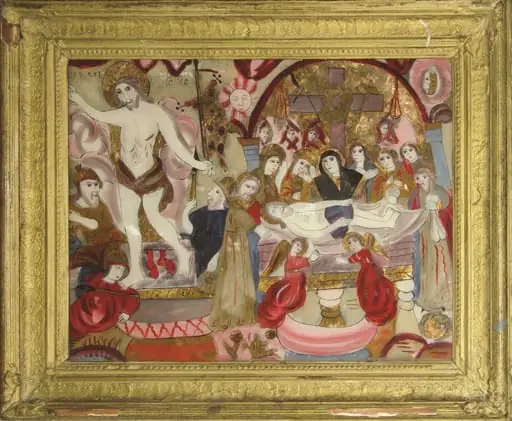 Învierea și Prohodul lui Iisus
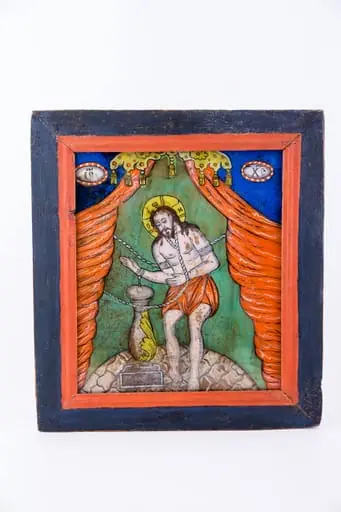 Icoana reprezintă una dintre Patimile Mântuitorului Iisus Hristos. Locul este din curtea casei lui Pilat din Pont, unde a fost chinuit, biciuit și judecat Domnul Iisus Hristos, legat fiind de stâlpul infamiei, pe locul numit pe vremuri Gavata, adică pardosit cu pietre. Iisus Hristos are mijlocul și coapsele înfășurate într-o pânză-țesătură roșie -roșu culoarea muceniciei și a jertfei. Are trupul plin de răni și urme roșii de biciuire. Este legat cu lanțuri și funii. Este într-o poziție mai aplecată, din durere și smerenie. Întreaga narațiune iconografică este dezvăluită și arătată prin gestul ridicării unor draperii albastre cu interiorul roșu, reprezentând și cerurile deschizându-se printr-o înțelegere concret de umană. Deasupra este un candelabru galben de lumină, sugerând Soarele dreptății. Icoana este din Mărginimea Sibiului. Cromatica este vie și directă: roșu, albastru, galben, verde olive. Inscripția din registrul superior în româno-chirilică se traduce IC XC Iisus Hristos.
 Icoa
Icoa