Artwork
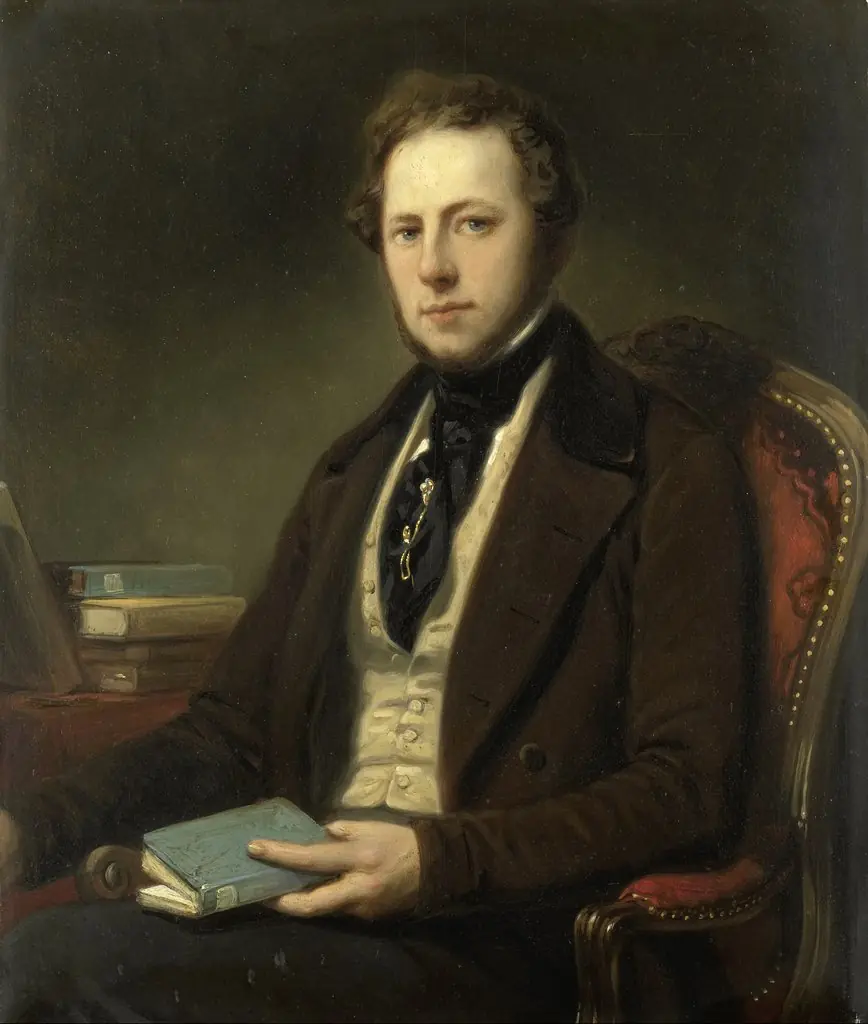
Portrait of a Man, perhaps Petrus Augustus de Genestet (1829-1861)
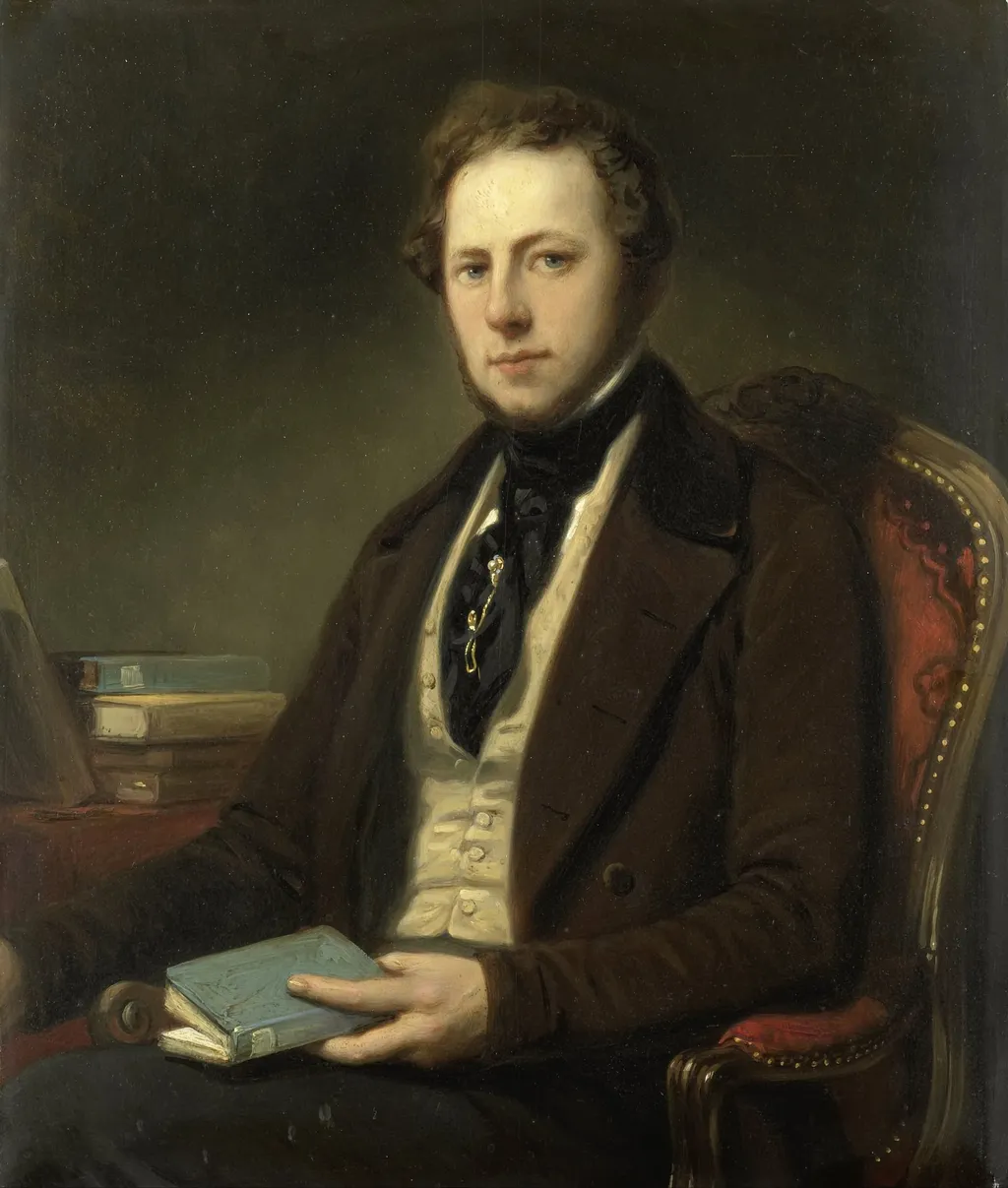
Portrait of a Man, perhaps Petrus Augustus de Genestet (1829-1861) is an unspecified painting by the Dutch Golden Age artist Unknown. It dates from 1845 and is held in the collection of the Rijksmuseum. A half-length portrait depicts a man seated in a dark armchair, facing slightly to the viewer’s left.
About this work
Overview
The painting’s date aligns with the poet Petrus Augustus de Genestet’s lifetime, though the artist remains unidentified.
A half-length portrait depicts a man seated in a dark armchair, facing slightly to the viewer’s left. He holds a book in his left hand; additional volumes rest on a table beside him. The composition is intimate, with muted tones and soft lighting that emphasize stillness. The sitter’s expression is subdued, suggesting introspection. The painting’s date aligns with the poet Petrus Augustus de Genestet’s lifetime, though the artist remains unidentified.
Subject & Meaning
The figure is commonly associated with Petrus Augustus de Genestet, a Dutch poet who died at age thirty-two. His posture and the presence of books imply a contemplative, literary identity. The quiet demeanor and lack of ostentation suggest a personal, rather than ceremonial, portrayal. The scene conveys solitude and intellectual engagement, possibly reflecting the poet’s inner life or the artist’s perception of him.
Technique & Style
The painting employs a restrained palette of browns, grays, and deep blacks, with subtle variations in tone to model form. Brushwork is smooth and controlled, avoiding dramatic contrasts or embellishment. Light falls gently across the face and hands, drawing attention to the book and the sitter’s gaze. The background recedes into shadow, isolating the figure and enhancing the sense of quiet intimacy.
History & Provenance
The work’s origin is undocumented; no record confirms the painter’s identity or the circumstances of its creation. It entered the Rijksmuseum’s collection in the 19th century, attributed tentatively to de Genestet based on physical resemblance and temporal proximity. No contemporary documents link it to a specific commission or exhibition, leaving its early history obscure.
Context
Created during a period when Dutch portraiture favored restrained, psychologically nuanced depictions over grandeur, the painting reflects a shift toward intimate, domestic realism. Literary figures were increasingly portrayed as thinkers rather than nobles, aligning with broader cultural interests in individuality and inner life. Similar works by lesser-known artists of the era share this quiet, book-centered aesthetic.
Legacy
The portrait endures as an example of understated 19th-century Dutch portraiture, valued for its emotional restraint and textual symbolism. Though unattributed, it contributes to the visual record of literary figures in the Netherlands. Its presence in the Rijksmuseum invites ongoing scholarly attention, particularly regarding the intersection of literature and visual culture in the period.
Artist & collection

 Domestic Scene
 Giacomo and Cardinal Marco, investing Andrea, Abbot of San Zeno, with his Benefice
 The Nymph of Fontainebleau
 Portrait of a Woman
 Madonna and Child with Saints in the Enclosed Garden
 Venus and Minerva
 Family Group of Four on Sofa
 Wall painting from Room H of the Villa of P. Fannius Synistor at Boscoreale
 Portrait of an unidentified cleric
 Griffith Evans
 Portrait of Carl Adolf Feilberg
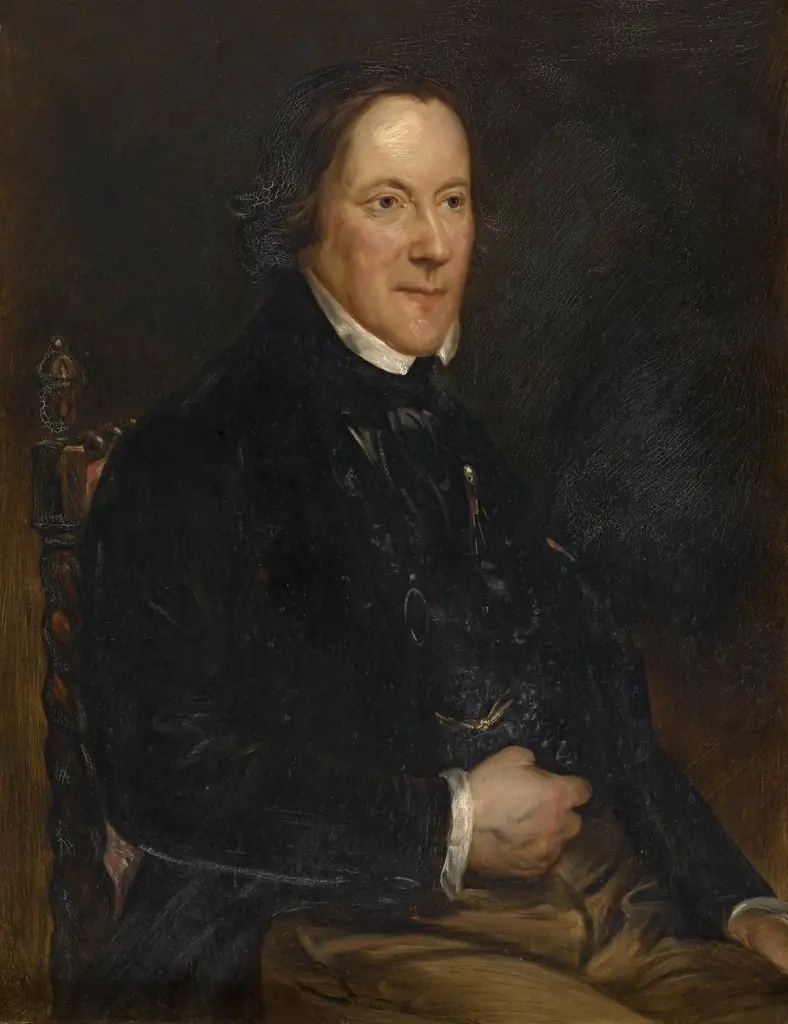 Constant van den Nest, Secretary of the Royal Academy of Fine Arts Antwerp
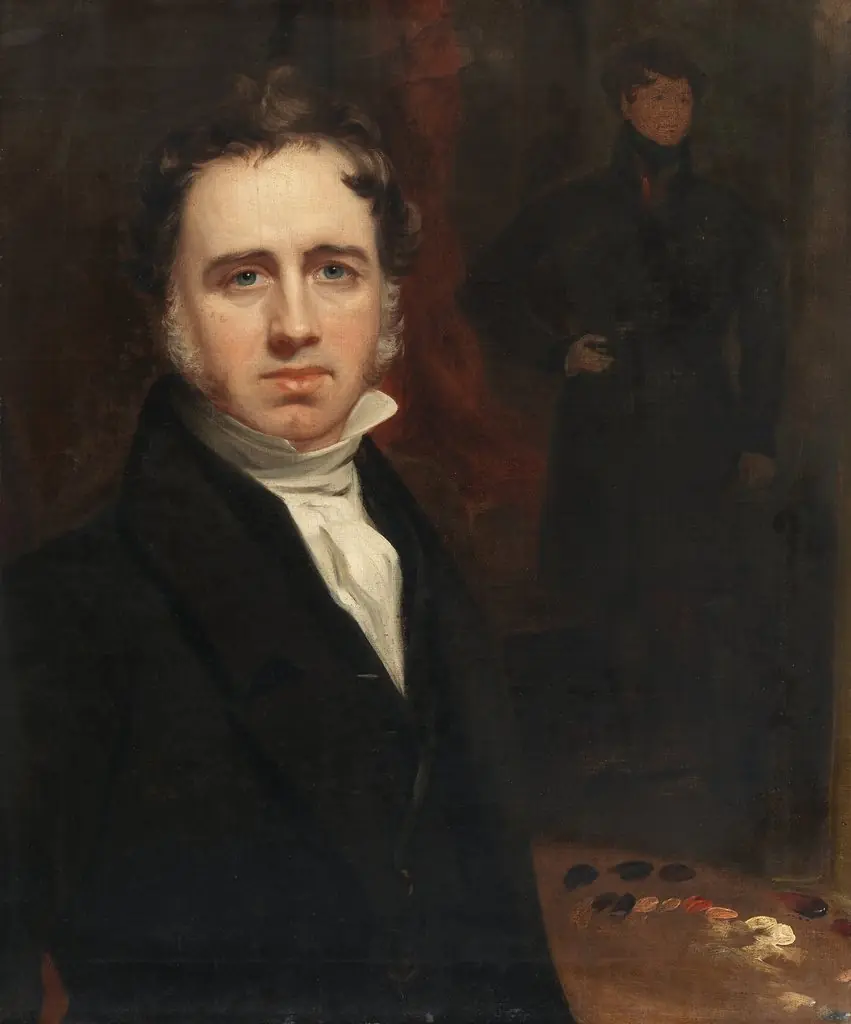 Self-Portrait
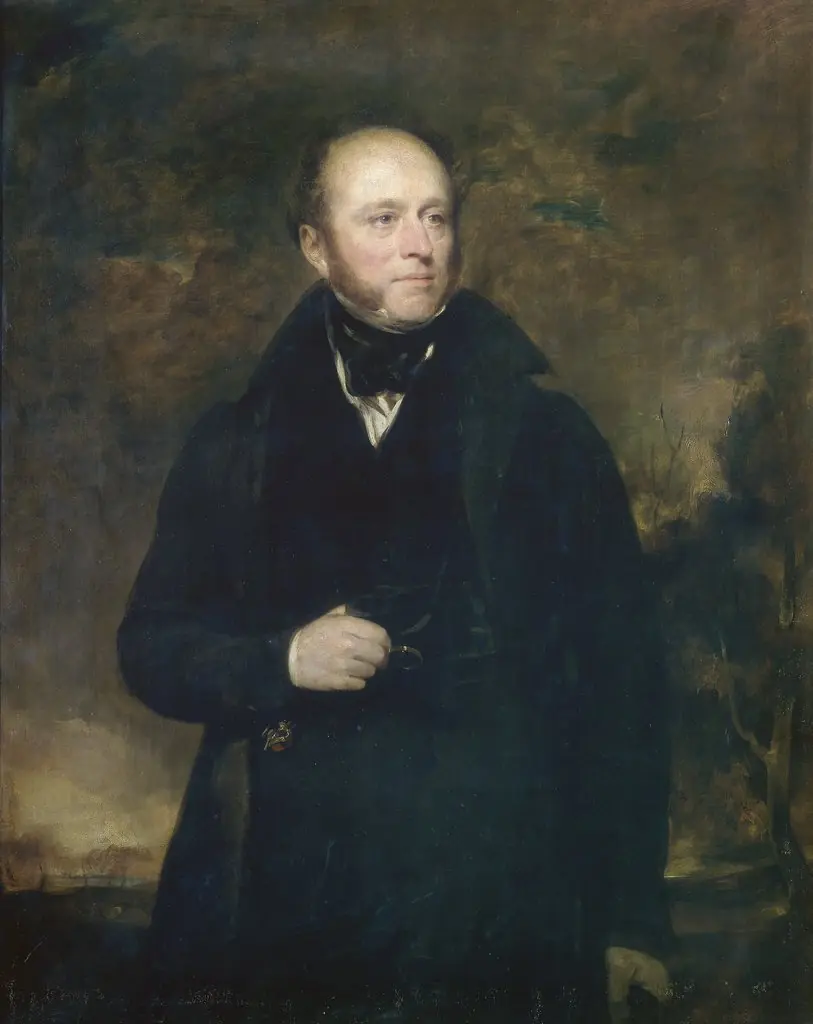 An English gentleman
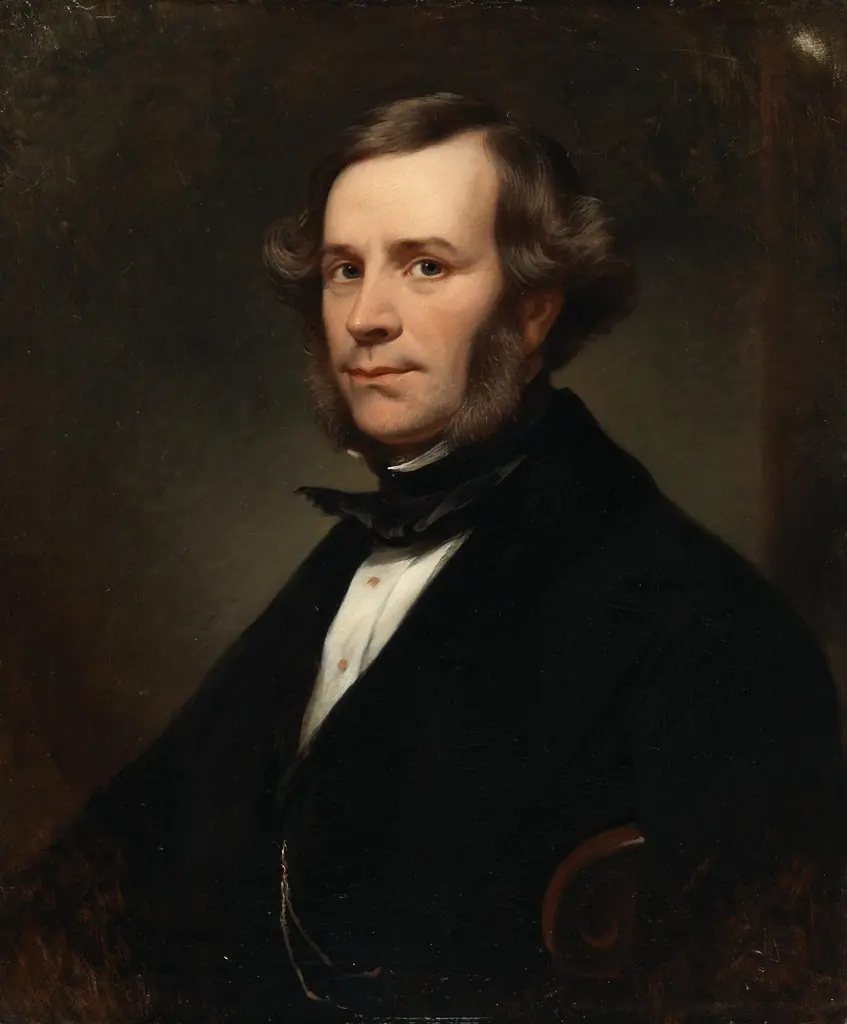 Self-Portrait
 Jacob Houseman
 Portrait of Denis Florence McCarthy (1817-1882), Poet
 Portrait of William Dargan (1799-1867), fragment of picture
 John Childe
 Portrait of a Man, perhaps the Poet Petrus Augustus de Genestet