Artwork
Portrait of Man Leaning Away from Camera
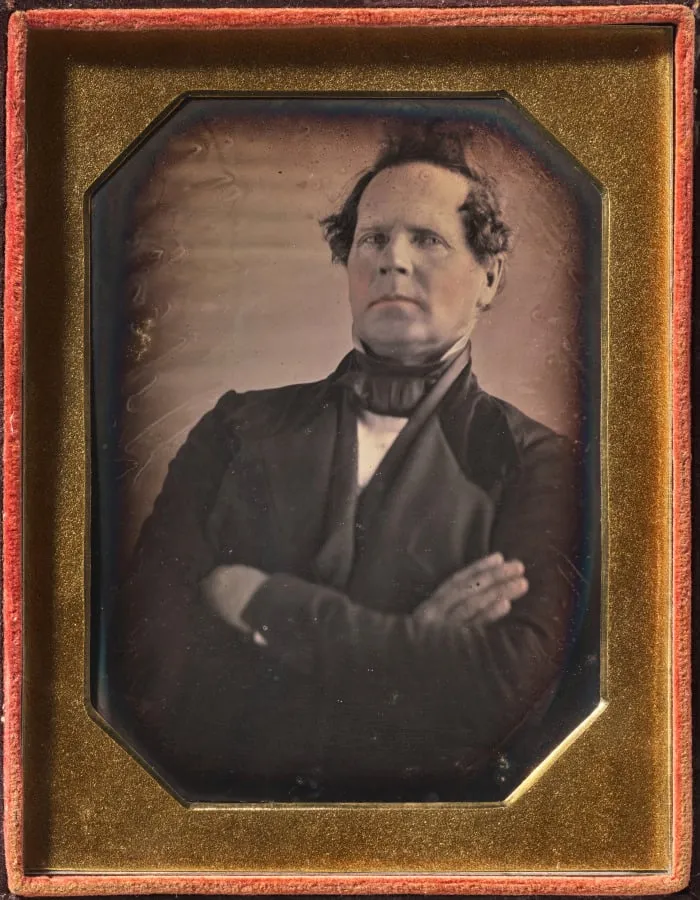
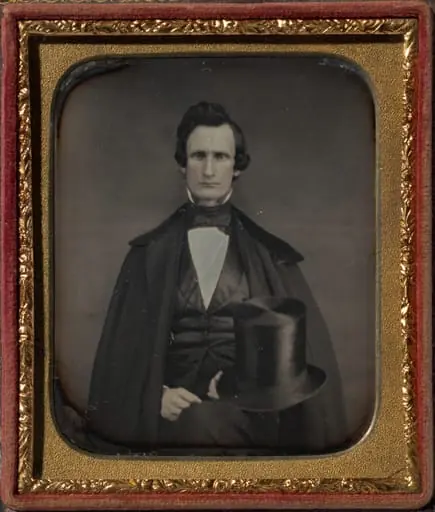
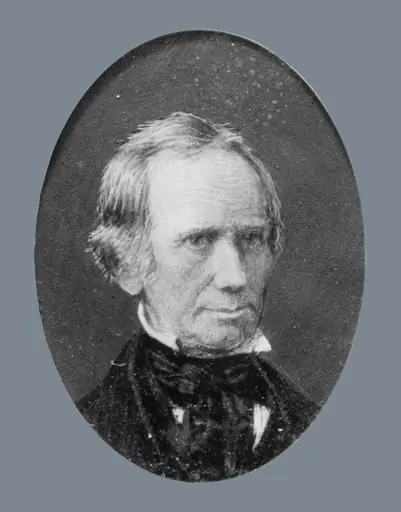
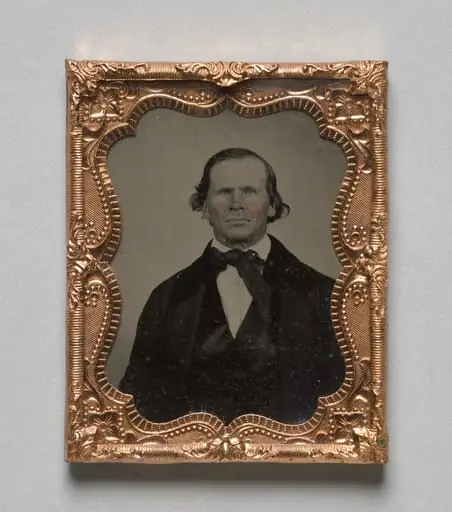
Portrait of Man Leaning Away from Camera is a photography by the Romanticist artist Unknown. It dates from 1844 and is held in the collection of the Cleveland Museum of Art. This early photographic portrait captures a man in formal attire, seated in a wooden chair with a restrained, upright posture.
About this work
Overview
This early photographic portrait captures a man in formal attire, seated in a wooden chair with a restrained, upright posture.
This early photographic portrait captures a man in formal attire, seated in a wooden chair with a restrained, upright posture. His body leans slightly backward, breaking the rigidity typical of early studio sessions. The image was hand-tinted to add subtle color to his clothing and skin, a common practice to enhance realism. Unlike painted portraits, photographs were rare and deliberate, often made to commemorate significant life events.
Subject & Meaning
The man’s serious expression and formal suit suggest a desire to project dignity and social standing. His posture, while composed, reveals a subtle humanizing gesture—the slight lean away from the camera—that softens the formality. Unlike portraits with symbolic objects, this image relies on attire and demeanor to convey identity, reflecting a personal choice to present oneself with quiet authority rather than external markers of profession or status.
Technique & Style
The photograph was taken using a long-exposure process, requiring the subject to remain still for extended periods. Hand-tinting was applied with precision, adding muted tones to fabric and skin to simulate natural color. The wooden chair and plain background emphasize the subject, avoiding distractions. The technique balances the mechanical limitations of early photography with artisanal touch, bridging the gap between documentation and personal expression.
History & Provenance
This image originates from the mid-19th century, a period when photographic studios became accessible to the middle class. Portraits like this were often commissioned for family albums or sent to distant relatives, serving as tangible records of identity. While its specific origin is unconfirmed, its style aligns with American studio practices of the time, particularly in regions with growing demand for affordable, lasting likenesses.
Context
During the 1850s–1870s, photography was still novel, and sitting for a portrait was a rare, considered act. People dressed in their best clothes and adopted composed poses to reflect their social aspirations. Unlike painted portraits, photographs offered a new kind of truth—immediate and unidealized—yet still shaped by cultural norms of decorum and self-presentation.
Legacy
This portrait exemplifies how early photography transformed personal memory-making. Its quiet humanity—seen in the slight lean and restrained expression—resonates beyond its technical limitations. Such images, once treasured in family albums, now offer insight into the everyday dignity of ordinary individuals in a rapidly changing visual culture.
Artist & collection

 Domestic Scene
 Giacomo and Cardinal Marco, investing Andrea, Abbot of San Zeno, with his Benefice
 The Nymph of Fontainebleau
 Portrait of a Woman
 Madonna and Child with Saints in the Enclosed Garden
 Venus and Minerva
 Family Group of Four on Sofa
 Wall painting from Room H of the Villa of P. Fannius Synistor at Boscoreale