Artwork
Portrait of Pieter Salina
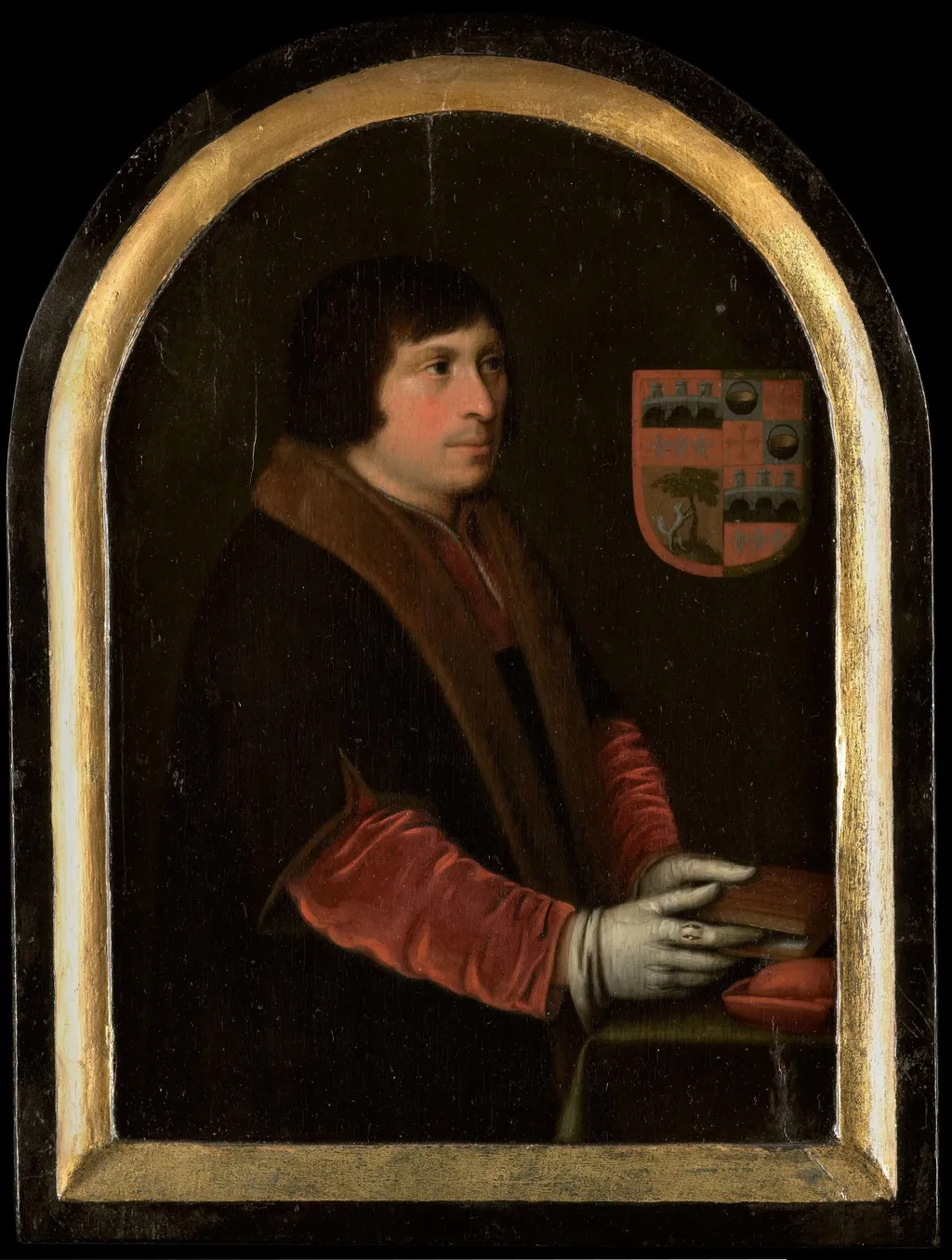
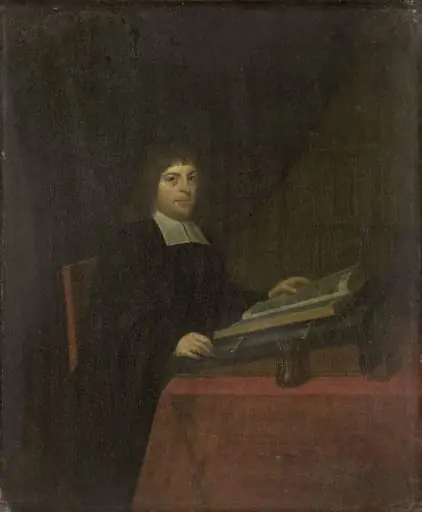
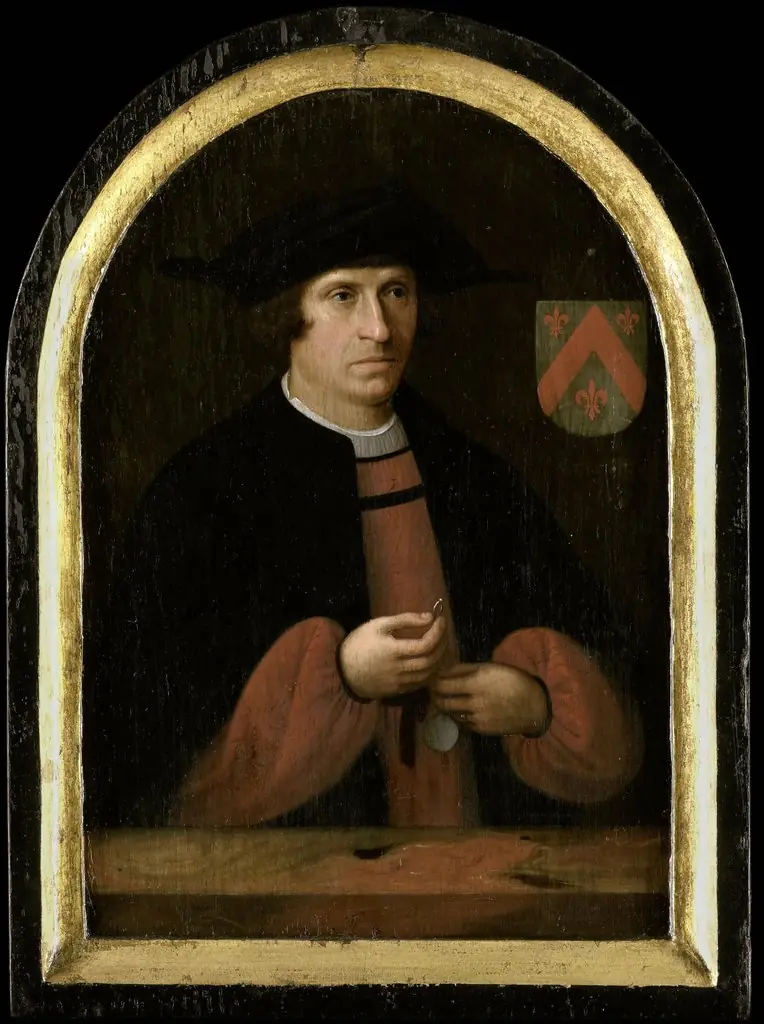
Portrait of Pieter Salina is an unspecified painting by the Northern Renaissance artist Unknown. It dates from 1620 and is held in the collection of the Rijksmuseum. The work depicts Pieter Salina in a half‑length pose, positioned to the right of a table where he clasps a sizeable book with both hands.
About this work
The original artist is lost to time, but the copyist kept the details sharp: the folds in his collar, the way light catches the book’s edges.
A man in black stands beside a table, holding a thick book with both hands. His face is calm, almost stern. A small coat of arms floats in the top corner.
This portrait was probably copied from an older painting—maybe from around 1510. The original artist is lost to time, but the copyist kept the details sharp: the folds in his collar, the way light catches the book’s edges. It’s part of a whole set of portraits, all lined up in the same style.
To see more faces like this, visit the Rijksmuseum.
Overview
The work depicts Pieter Salina in a half‑length pose, positioned to the right of a table where he clasps a sizeable book with both hands. His expression is restrained, and a modest family coat of arms occupies the upper‑right corner. The painting includes an integrated frame and forms part of a series of similarly styled portraits held by the museum.
Subject & Meaning
Salina is presented as a learned figure, the open book suggesting literacy or professional activity. The inclusion of the heraldic device identifies his familial lineage, reinforcing status and identity within a civic or mercantile context typical of early‑sixteenth‑century portraiture.
Technique & Style
The composition shows careful attention to surface detail: the crisp folds of the collar, the subtle modeling of light on the book’s edges, and the controlled chiaroscuro that isolates the figure against a neutral background. The integrated frame blurs the boundary between picture and display, a characteristic feature of the period’s portrait copies.
History & Provenance
The painting is likely a later copy executed by Cornelis Engelsz, based on an unidentified original dated to around 1510–1515. While the source image has not survived, the copy preserves the original’s compositional elements. It has been catalogued among a group of related portraits, each assigned a distinct inventory number within the museum’s collection.
Context
This portrait belongs to a larger assemblage of half‑length figures that share a uniform format, suggesting they were intended as a collective display of prominent individuals. Such series were common in Dutch civic institutions, serving both commemorative and decorative functions within public or private settings.
Artist & collection

 Domestic Scene
 Giacomo and Cardinal Marco, investing Andrea, Abbot of San Zeno, with his Benefice
 The Nymph of Fontainebleau
 Portrait of a Woman
 Madonna and Child with Saints in the Enclosed Garden
 Venus and Minerva
 Family Group of Four on Sofa
 Wall painting from Room H of the Villa of P. Fannius Synistor at Boscoreale