Artwork
Portrait of the Family of Dirck Bas Jacobsz, Burgomaster of Amsterdam
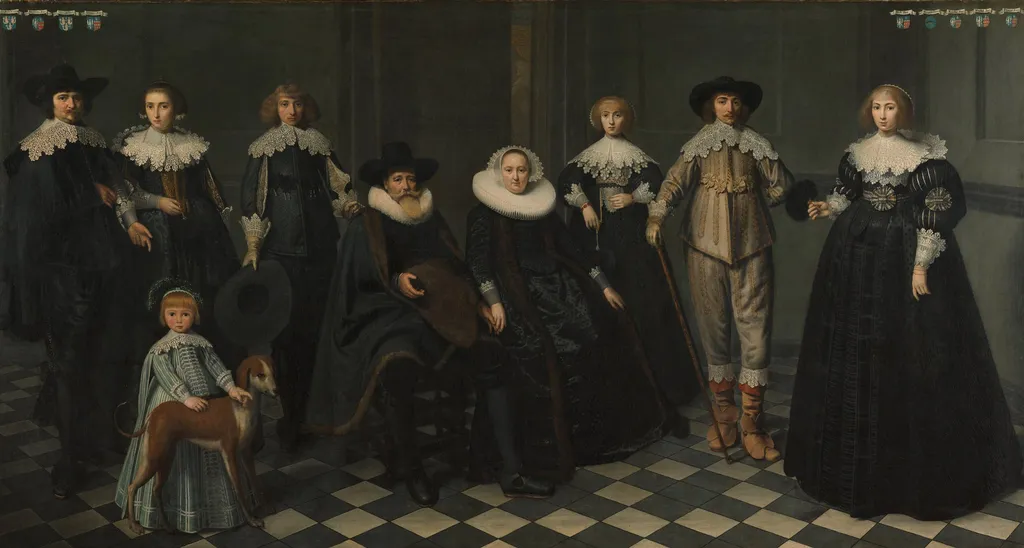
Portrait of the Family of Dirck Bas Jacobsz, Burgomaster of Amsterdam is an unspecified painting by the Dutch Golden Age artist Unknown. It dates from 1634 and is held in the collection of the Rijksmuseum. The work presents the household of Dirck Bas Jacobsz, a 17th‑century Amsterdam burgomaster, gathered within an interior space.
About this work
Overview
The work presents the household of Dirck Bas Jacobsz, a 17th‑century Amsterdam burgomaster, gathered within an interior space.
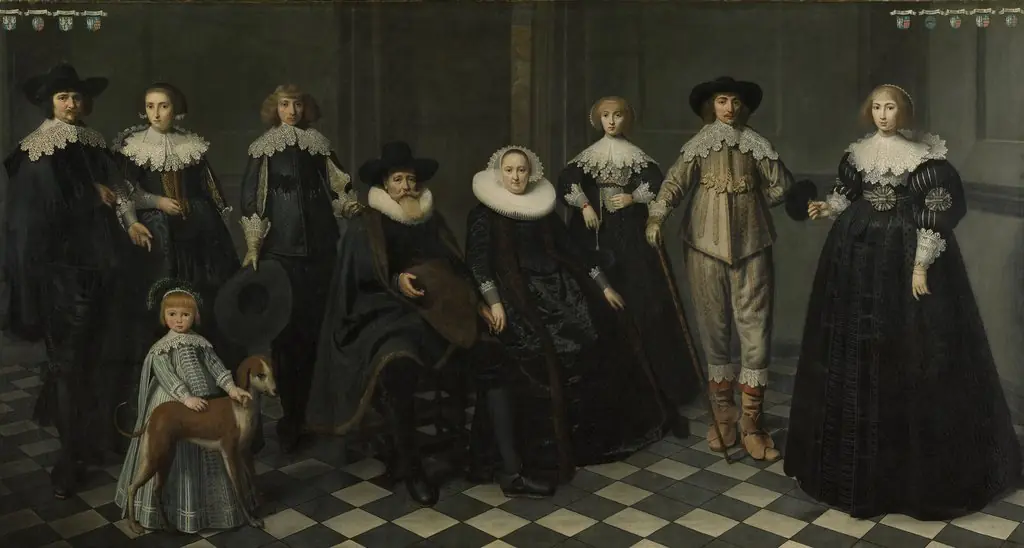
The work presents the household of Dirck Bas Jacobsz, a 17th‑century Amsterdam burgomaster, gathered within an interior space. Seven figures—two men, three women, a child and a dog—are arranged in a composition that balances standing and seated poses. Their attire reflects contemporary Dutch fashion, with broad‑brimmed hats, lace collars and long skirts, while the setting is defined by a plain wall, a window, and a checkered floor.
Subject & Meaning
The portrait functions as a visual record of civic status and family unity, emphasizing the patriarch’s role alongside his wife, children and servants. The inclusion of the kneeling child with a leashed dog underscores domestic affection and the continuity of lineage, common themes in Dutch civic portraiture of the period.
Technique & Style
The painter employs a strong chiaroscuro scheme, directing light from the left to illuminate the ruffs, fabrics and faces, while the background recedes into shadow. This contrast creates a three‑dimensional effect, rendering textures of silk and wool with subtle gradations of tone. The checkered floor adds a geometric counterpoint to the figures’ drapery.
History & Provenance
The canvas was commissioned to commemorate Dirck Bas Jacobsz’s tenure as burgomaster, a practice typical of Amsterdam’s elite in the early 1600s. Documentation traces its ownership through several private collections before entering a public museum, where it remains displayed as part of the Dutch Golden Age holdings.
Context
During the Dutch Golden Age, civic leaders often commissioned family portraits to assert their social standing and civic responsibility. The work reflects contemporary artistic trends, such as the use of dramatic lighting and detailed costume, aligning it with the output of leading Amsterdam portraitists of the time.
Legacy
The painting contributes to the broader understanding of 17th‑century Dutch portraiture, illustrating how visual strategies conveyed authority and familial cohesion. Its preservation offers scholars insight into the material culture and social hierarchies of Amsterdam’s governing class.
Artist & collection

 Domestic Scene
 Giacomo and Cardinal Marco, investing Andrea, Abbot of San Zeno, with his Benefice
 The Nymph of Fontainebleau
 Portrait of a Woman
 Madonna and Child with Saints in the Enclosed Garden
 Venus and Minerva
 Family Group of Four on Sofa
 Wall painting from Room H of the Villa of P. Fannius Synistor at Boscoreale
 The family of Dirck Bas Jacobsz, burgomaster of Amsterdam
 Family Portrait
 The directors of the Amsterdam civic guard of St. George in 1656
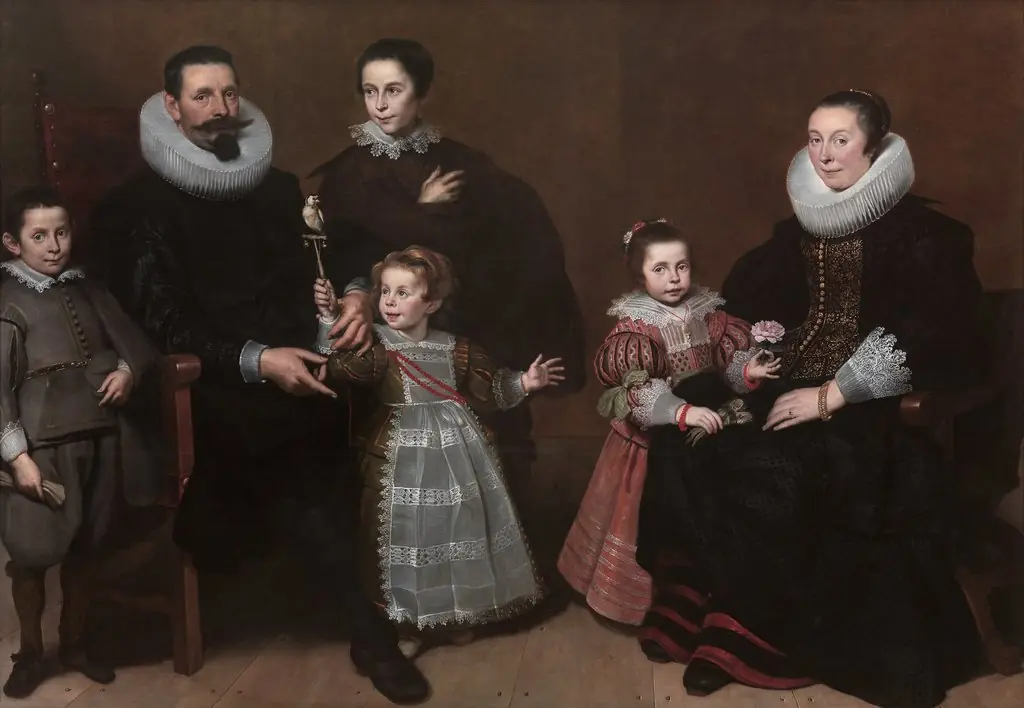 Portrait of a Family
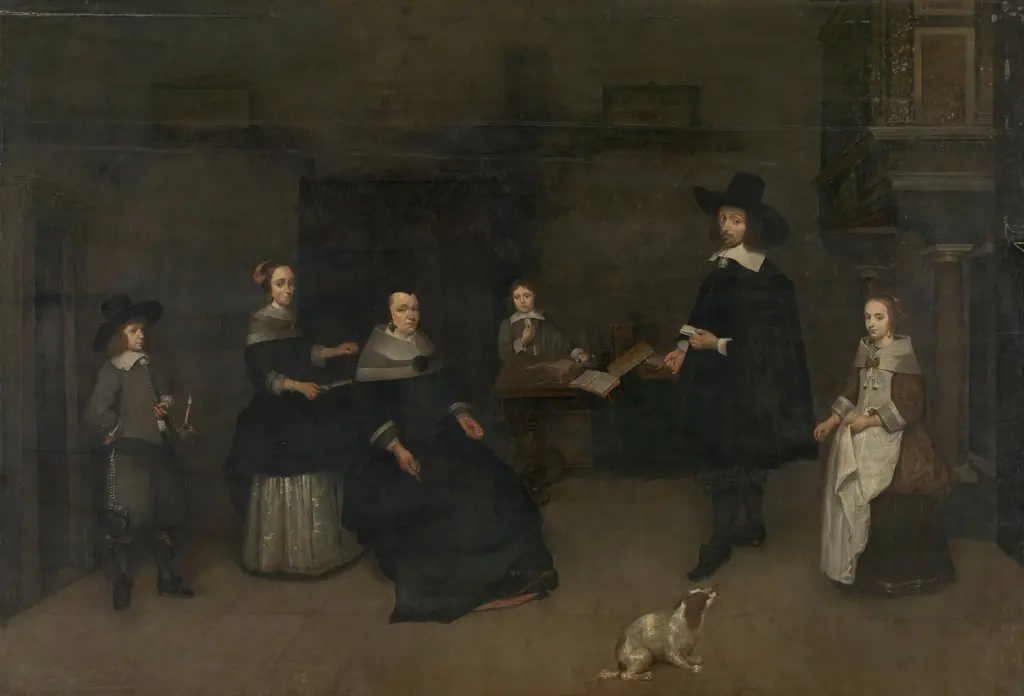 Family scene
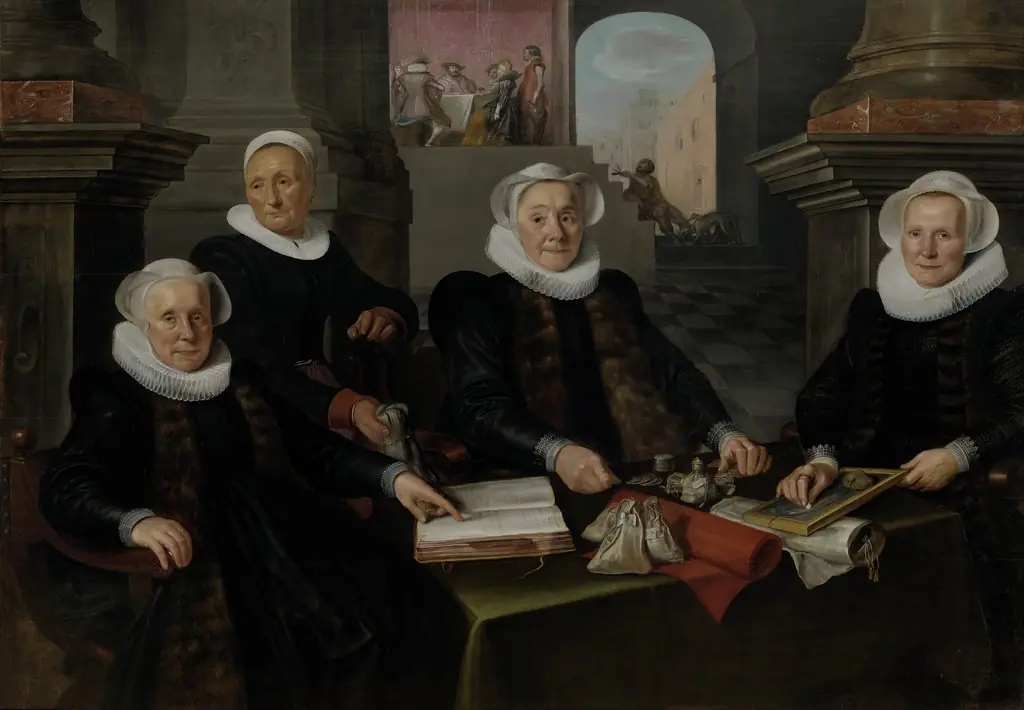 Three Regentesses and the ‘House Mother’ of the Amsterdam Lepers’ Asylum
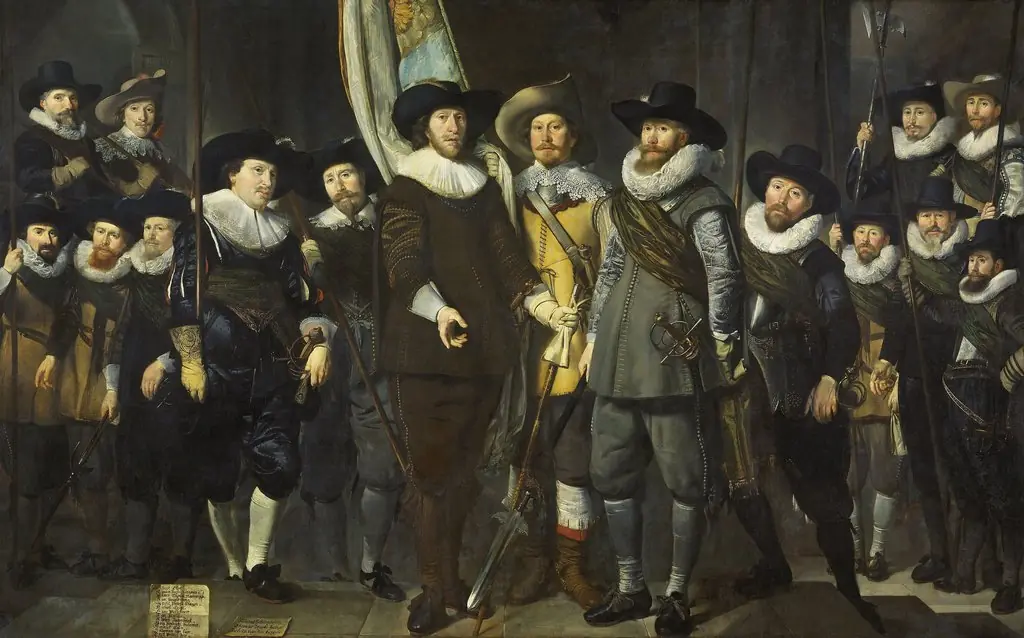 Officers and other civic guardsmen of the IIIrd District of Amsterdam, under the command of Captain Allaert Cloeck and Lieutenant Lucas Jacobsz Rotgans
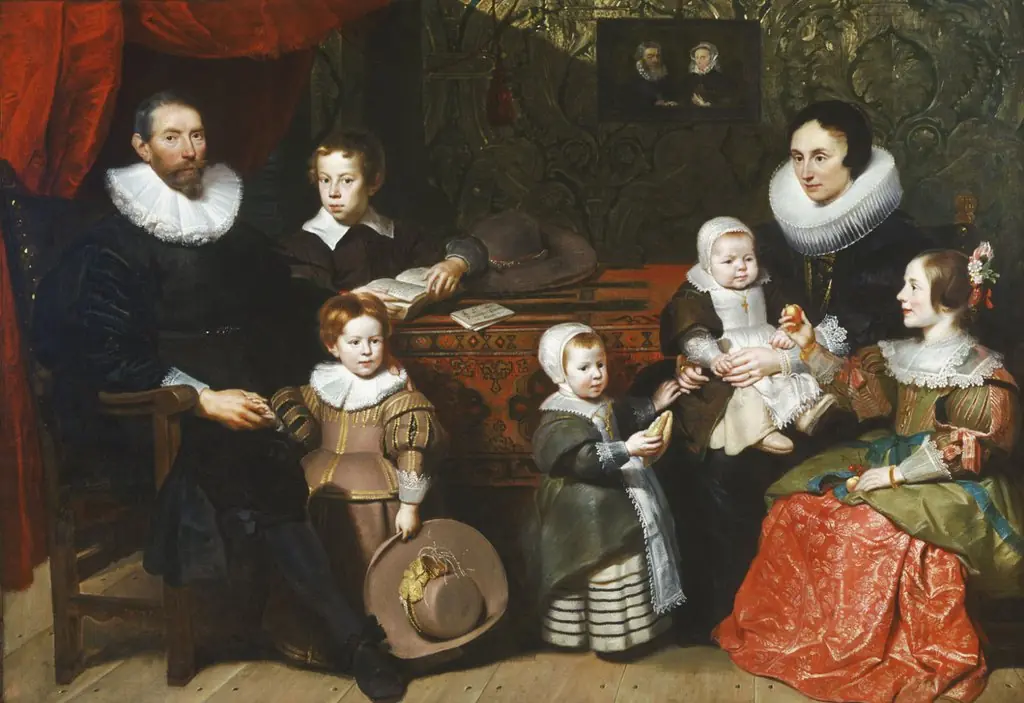 Portrait of Anthony Reyniers and His Family
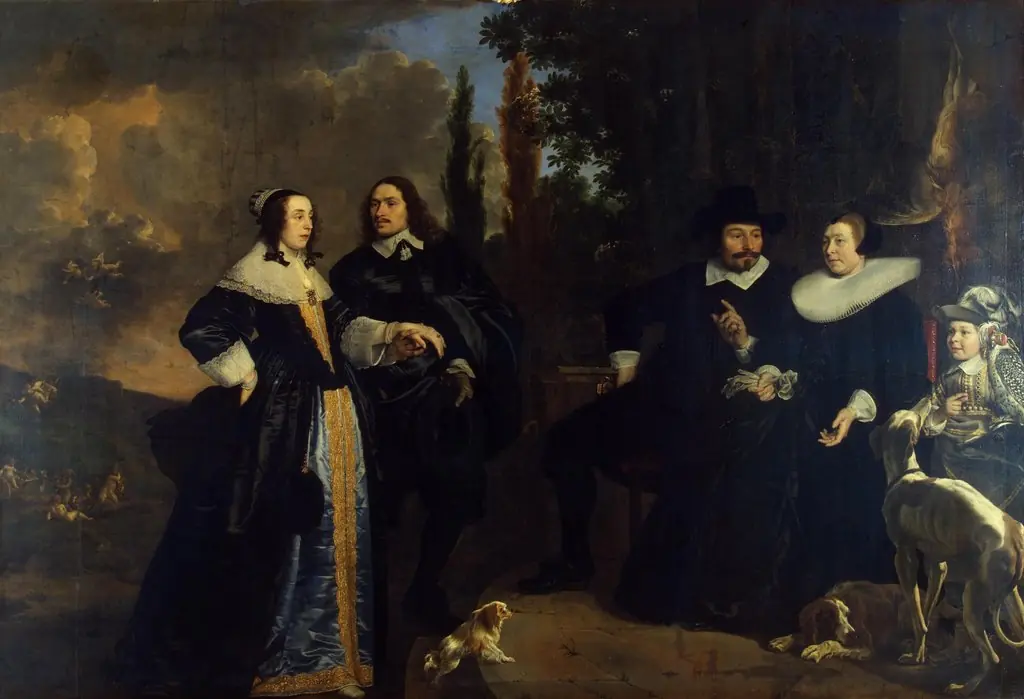 Family Portrait
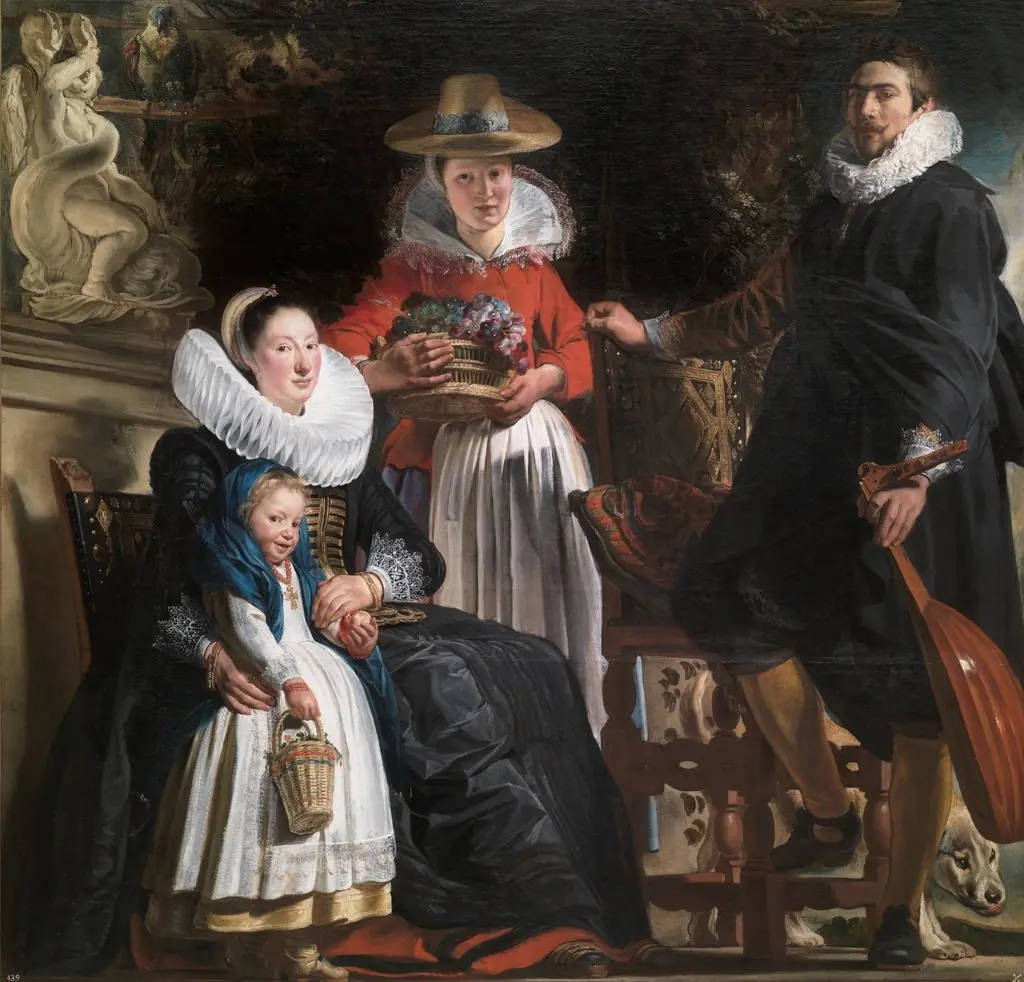 Portrait of the artist with his family
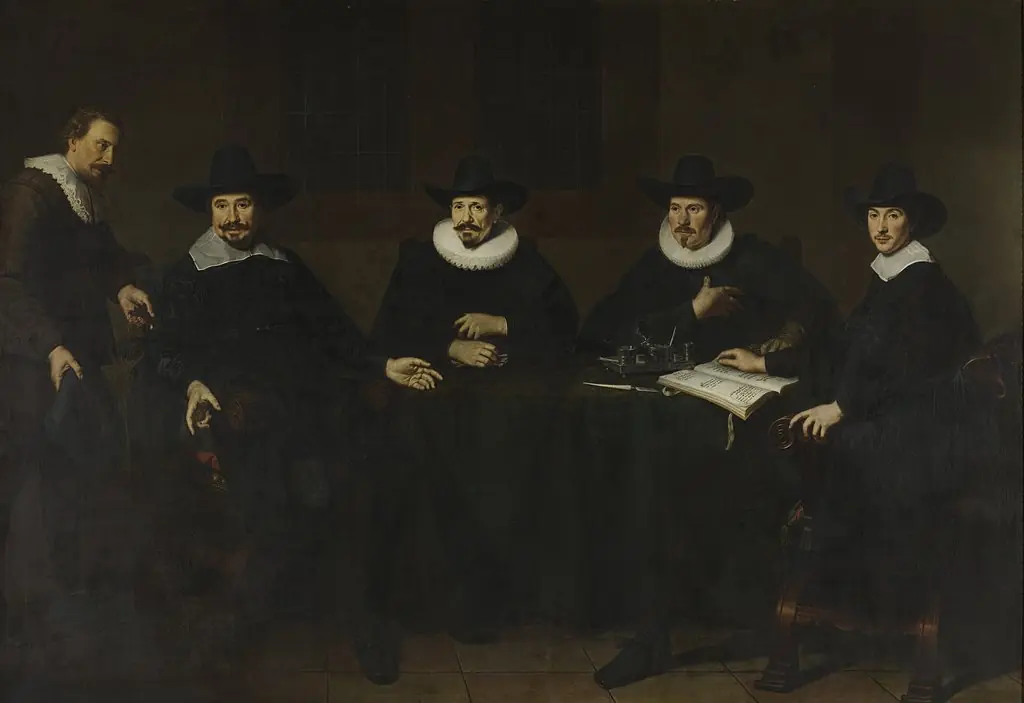 The directors of the serge cloth industry, Amsterdam, 1643
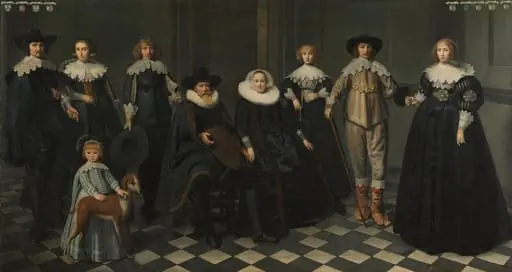 Portrait of the Family of Dirck Jacobsz Bas (1569-1637), Burgomaster of Amsterdam, and Margriet Snoeck (1588-1645)