Artwork
Prositapatika Nayika
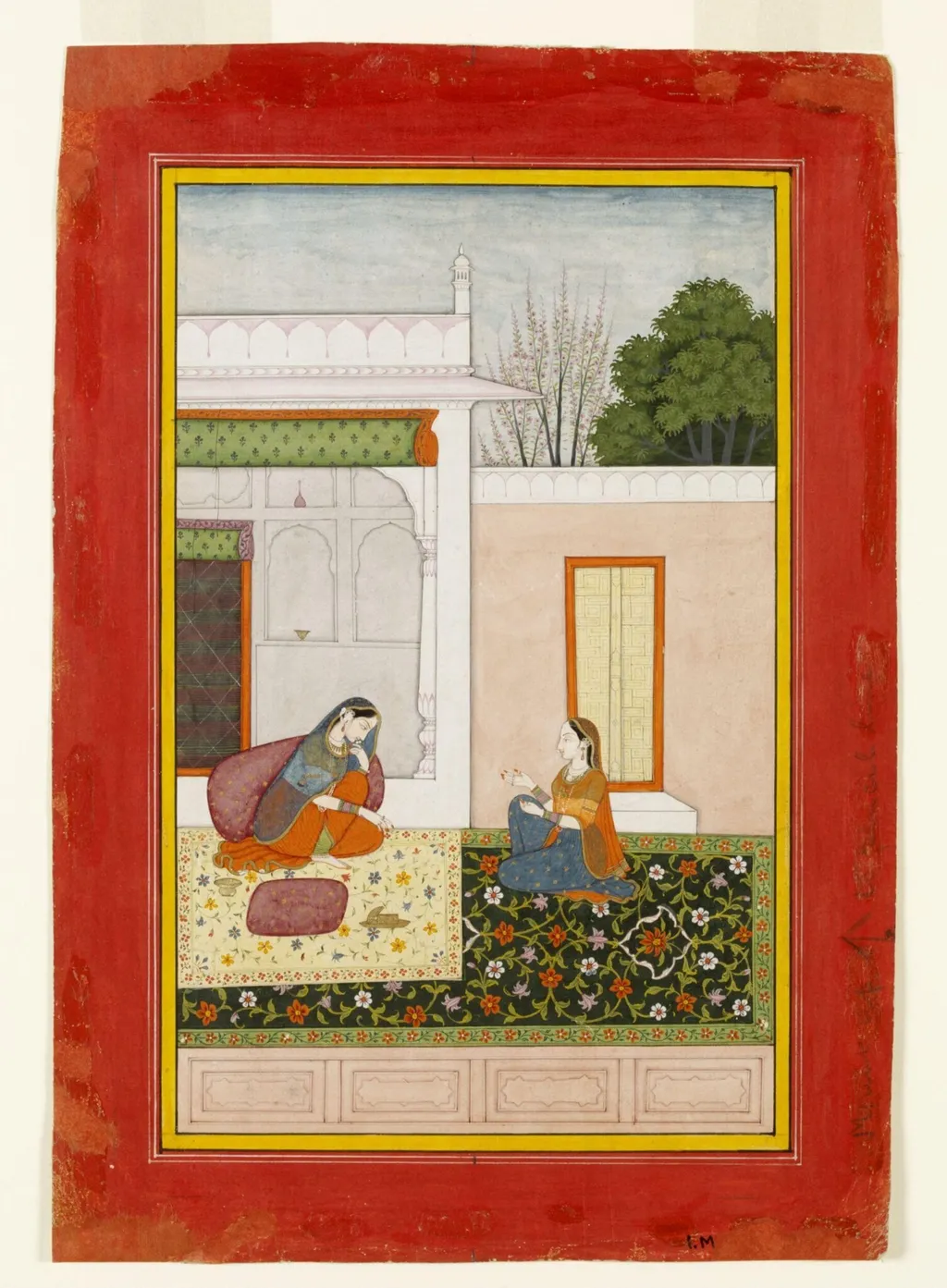
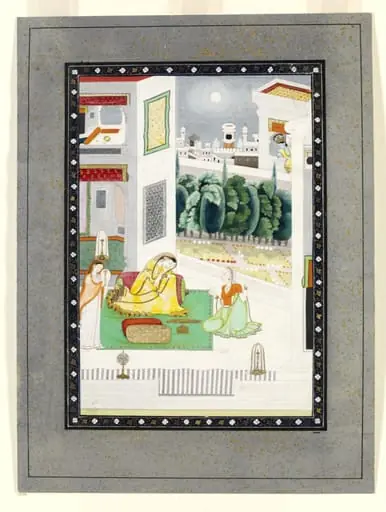
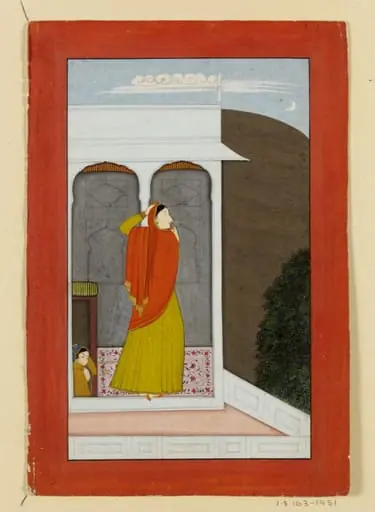
Prositapatika Nayika is a paint painting by the Rococo painting artist Unknown. It dates from 1752 and is held in the collection of the Victoria and Albert Museum.
About this work
Overview
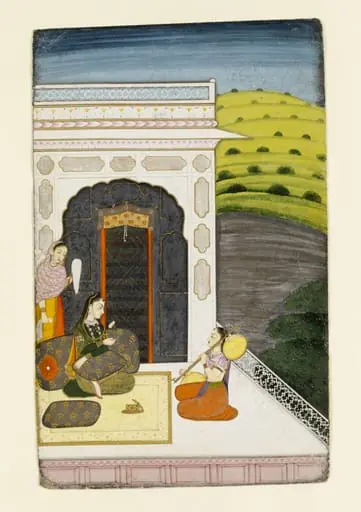
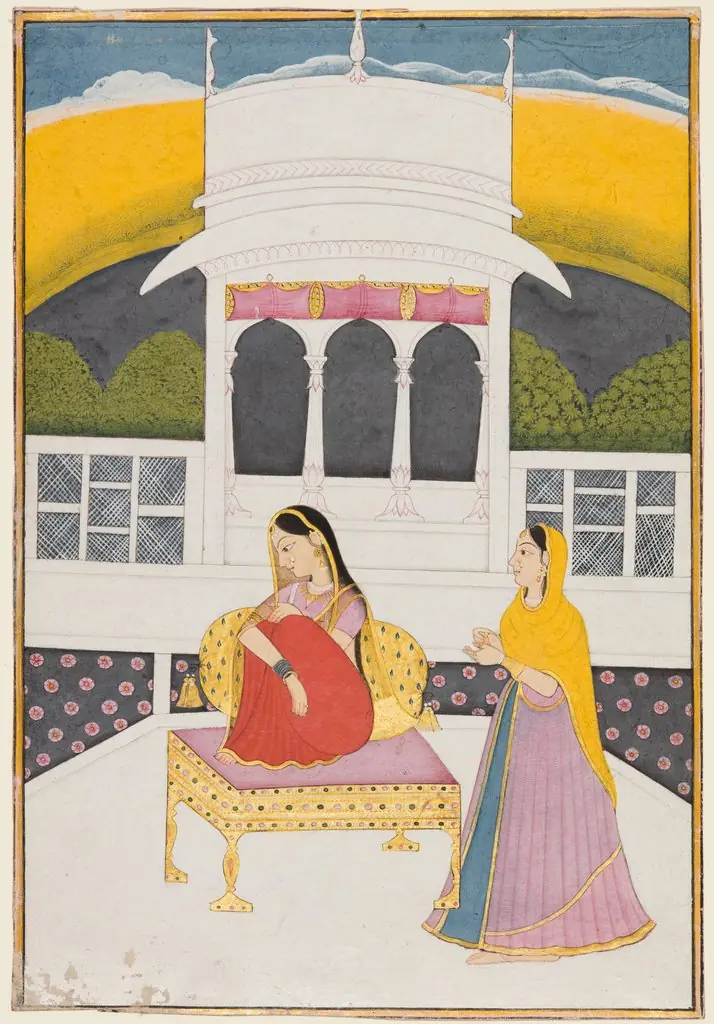
The composition places the figure on a terrace, accompanied by a servant, within an interior courtyard that opens onto a balcony and a distant landscape.
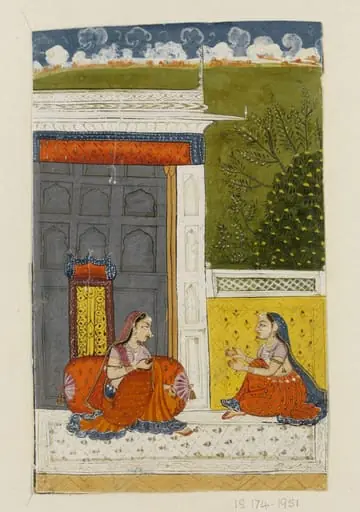
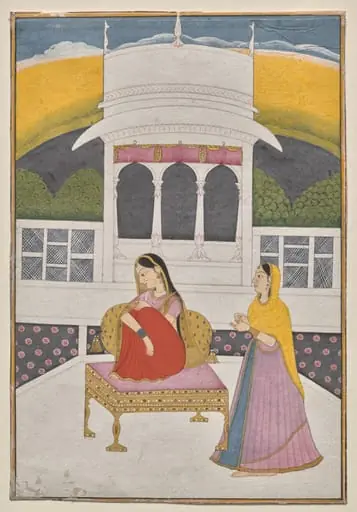
Created in 1752, this work portrays a solitary heroine in a state of neglect, known in classical Indian aesthetics as the Prositapatika mood. The composition places the figure on a terrace, accompanied by a servant, within an interior courtyard that opens onto a balcony and a distant landscape. The painting is executed on paper using opaque watercolour and gold pigments, characteristic of the period’s refined decorative approach.
Subject & Meaning
The central figure embodies the Prositapatika rasa, expressing the emotional nuance of a heroine abandoned by her lover. Her seated posture, veiled attire, and the presence of an attendant suggest a moment of quiet resignation, inviting contemplation of longing and social isolation within the narrative traditions of Indian courtly love.
Technique & Style
The artist employed opaque watercolour combined with gold leaf, achieving a luminous surface that highlights intricate patterns on the rug and architectural details. The palette features vivid blues, browns, and reds, while the fine brushwork renders delicate textures on the veil, fan, and surrounding architecture, reflecting the refined aesthetic of the Rajput, or Pahari, painting school.
History & Provenance
The painting entered the museum’s collection in 1912 after being purchased from the distinguished scholar and collector Dr. Ananda K. Coomaraswamy. Its attribution to the Rajput/Pahari tradition aligns with the regional artistic production of northern India during the mid‑18th century, a period noted for courtly patronage of narrative miniatures.
Context
Within the broader framework of Indian miniature painting, the work illustrates the thematic focus on emotional states of heroines, a motif prevalent in literary and visual culture. The architectural setting, with arched windows and a balcony overlooking a garden, reflects contemporary domestic interiors and provides a backdrop that reinforces the narrative of separation and yearning.
Artist & collection

 Domestic Scene
 Giacomo and Cardinal Marco, investing Andrea, Abbot of San Zeno, with his Benefice
 The Nymph of Fontainebleau
 Portrait of a Woman
 Madonna and Child with Saints in the Enclosed Garden
 Venus and Minerva
 Family Group of Four on Sofa
 Wall painting from Room H of the Villa of P. Fannius Synistor at Boscoreale