Artwork
Portret van Théodore-Joseph Jonet en zijn twee dochters
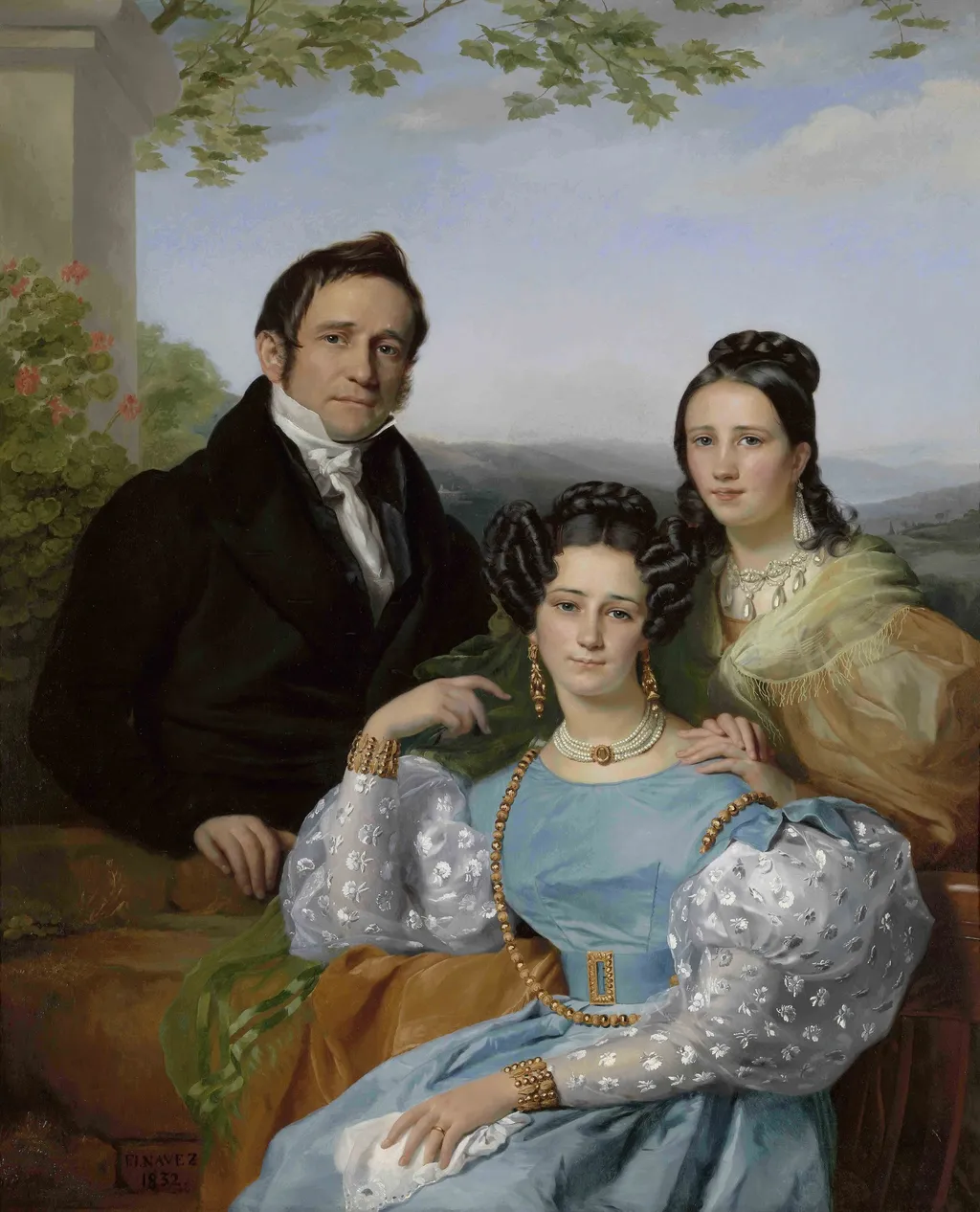
Portret van Théodore-Joseph Jonet en zijn twee dochters is an oil painting by Unknown. It dates from 1832 and is held in the collection of the Groeningemuseum. This oil painting depicts Théodore-Joseph Jonet, a man in a dark jacket and white shirt, seated with his two daughters.
About this work
Overview
The composition emphasizes stillness and familial presence, rendered in traditional oil technique with muted tones and soft lighting.
This oil painting depicts Théodore-Joseph Jonet, a man in a dark jacket and white shirt, seated with his two daughters. All three figures face the viewer directly, arranged in a calm, intimate grouping. Behind them, a gentle landscape of rolling hills and trees frames the scene, with a distant building visible to the left. The composition emphasizes stillness and familial presence, rendered in traditional oil technique with muted tones and soft lighting.
Subject & Meaning
The painting presents a private domestic moment, capturing Jonet and his daughters in a pose that suggests quiet dignity rather than formal grandeur. Their direct gaze invites the viewer into their space, reinforcing a sense of personal connection. The absence of overt symbols or narrative cues points to an emphasis on identity and kinship, typical of bourgeois portraiture in the early 19th century.
Technique & Style
Executed in oil on canvas, the work employs a restrained palette dominated by earth tones and soft contrasts. Brushwork is precise yet unobtrusive, with attention to fabric texture and subtle shifts in light across skin and clothing. The background landscape is rendered with loose, atmospheric strokes, balancing the solidity of the figures without competing for focus.
History & Provenance
The painting was created in the early 1800s and remained within the Jonet family until its acquisition by the Groeningemuseum in Bruges. Its documented provenance traces back to the artist’s circle in Flanders, though the painter’s identity remains unconfirmed. The work entered the museum’s collection as part of a broader effort to preserve regional portraiture from the period.
Context
During the early 19th century, Flemish middle-class families increasingly commissioned portraits to assert social standing through visual representation. Unlike aristocratic commissions, these works favored naturalism and domestic settings. This painting reflects that trend, situating its subjects within a familiar environment rather than a staged or symbolic backdrop.
Legacy
Though not attributed to a major artist, the painting contributes to the understanding of regional portraiture in Flanders during the post-Napoleonic era. Its preservation in the Groeningemuseum allows scholars to study how non-elite families expressed identity through art, offering insight into the visual culture of everyday life in early 19th-century Belgium.
Artist & collection

 Domestic Scene
 Giacomo and Cardinal Marco, investing Andrea, Abbot of San Zeno, with his Benefice
 The Nymph of Fontainebleau
 Portrait of a Woman
 Madonna and Child with Saints in the Enclosed Garden
 Venus and Minerva
 Family Group of Four on Sofa
 Wall painting from Room H of the Villa of P. Fannius Synistor at Boscoreale
 Portret van een vrouw met haar twee kinderen
 Portrait of a Woman and a Man
 Portrait of Count Nikolai Repnin-Volkonsky with His Family
 Portrait of a Man and children
 Untitled
 A Family Group
 Portrait of Rutger Jan Schimmelpenninck and his Family
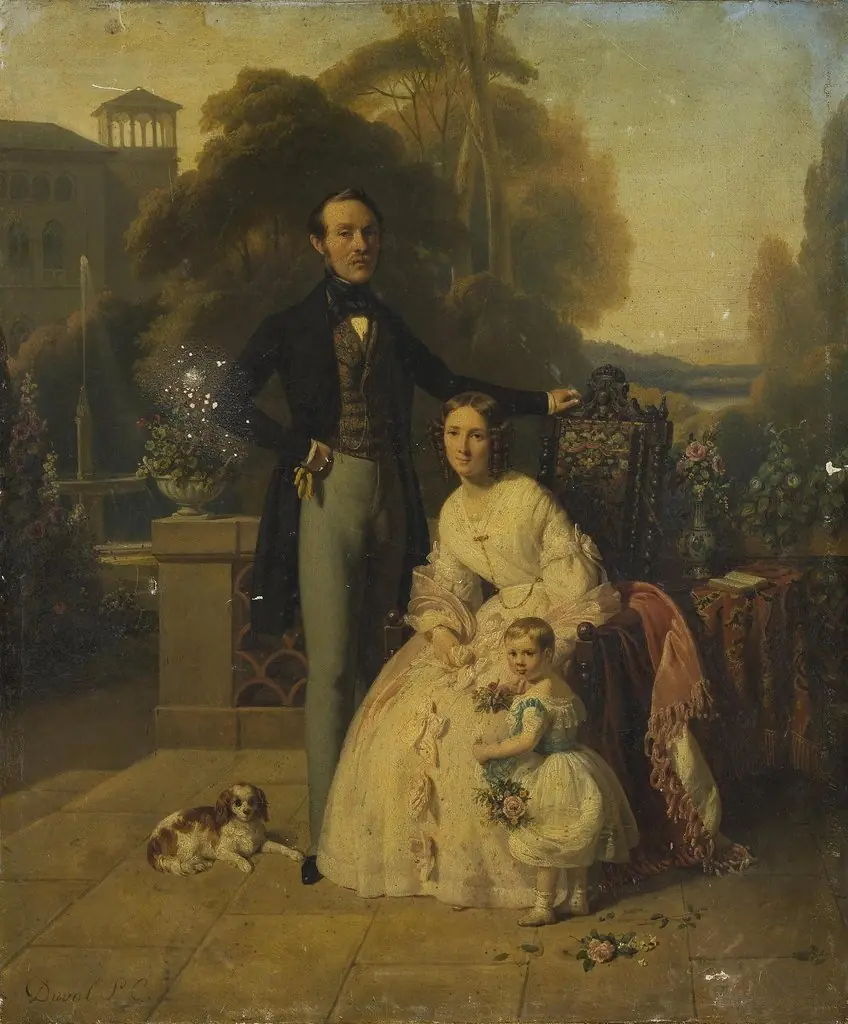 Family Portrait
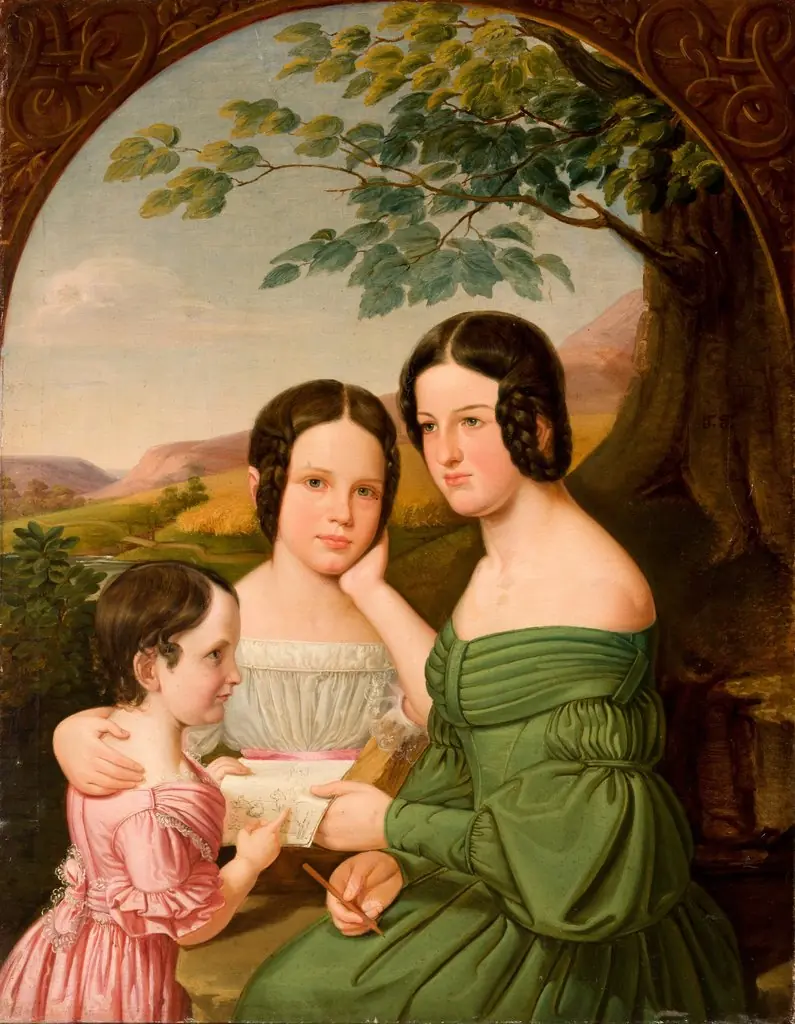 Portrait of Three Sisters from the Hausner Family
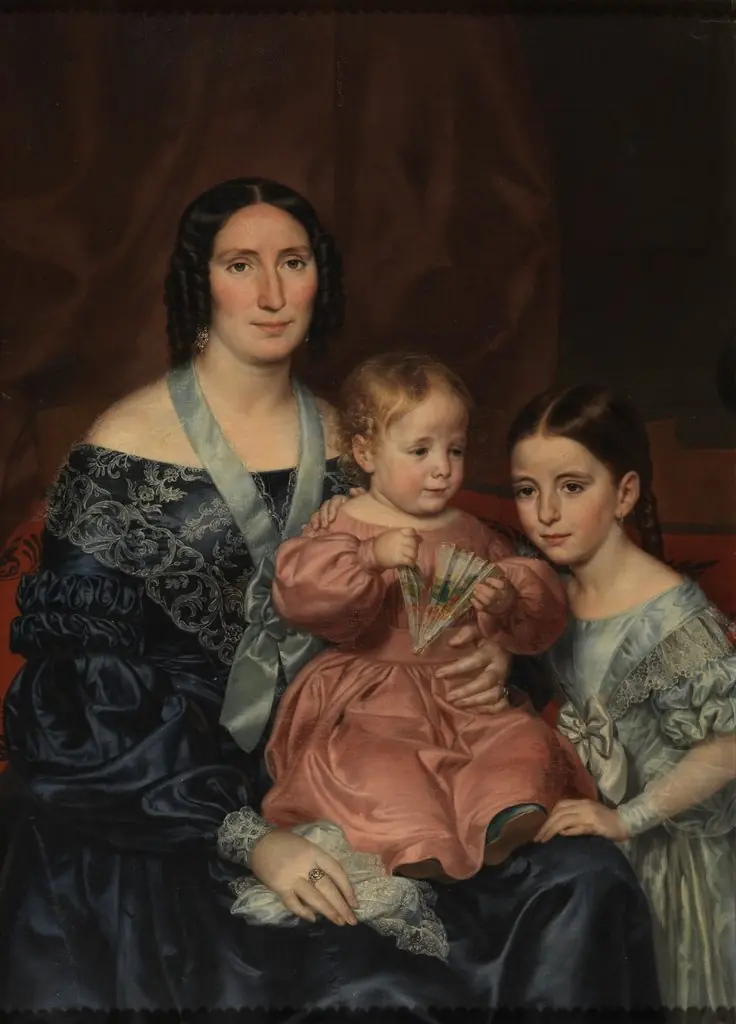 The Barrio Family
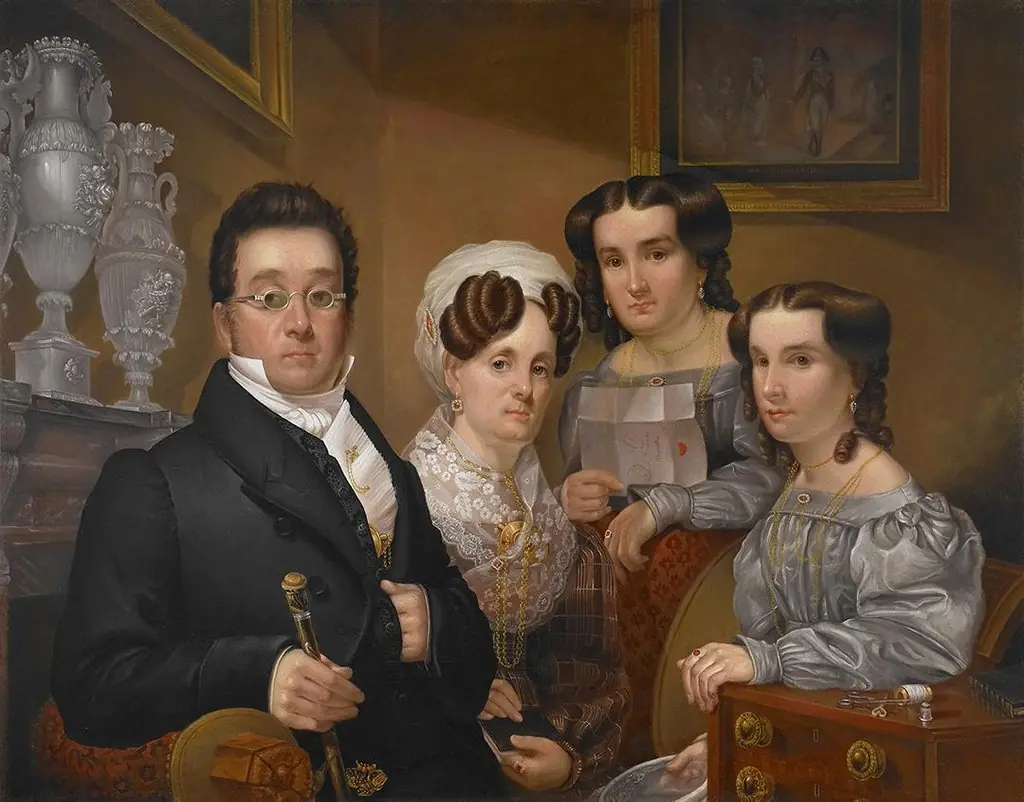 Samuel Beals Thomas, with His Wife, Sarah Kellogg Thomas, and Their Two Daughters, Abigail and Pauline
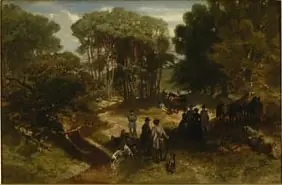 Jagershalte in een bos.