Artwork
Qasr al-Ayni, Cairo
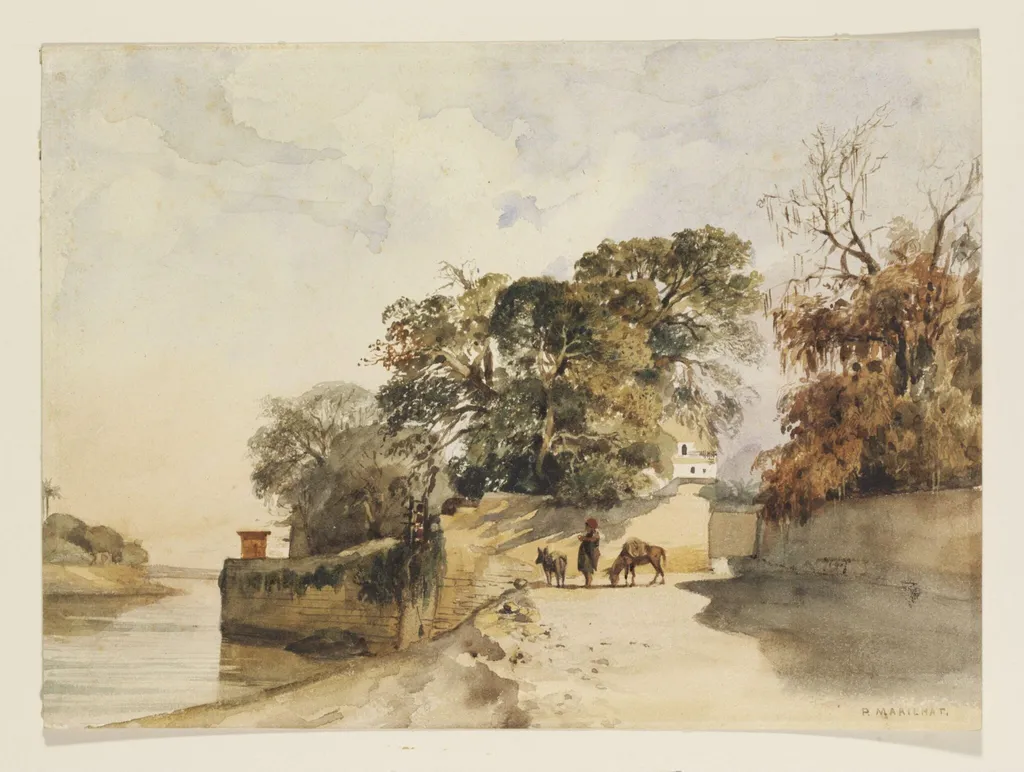
Qasr al-Ayni, Cairo is a watercolor work on paper by the Orientalist artist Unknown. It dates from 1811 and is held in the collection of the Victoria and Albert Museum. This 1811 watercolor depicts Qasr al-Ayni, a historic site along the Nile in Cairo.
About this work
Overview
The work reflects an early 19th-century European interest in Egyptian landscapes, though its authorship remains unconfirmed.
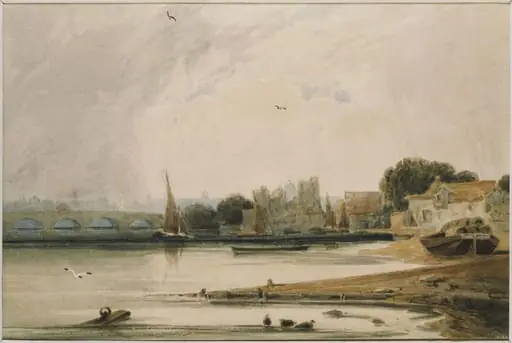
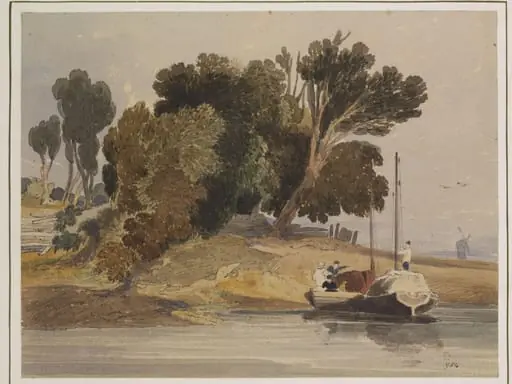
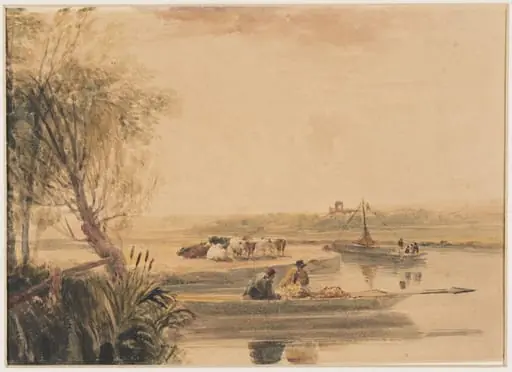
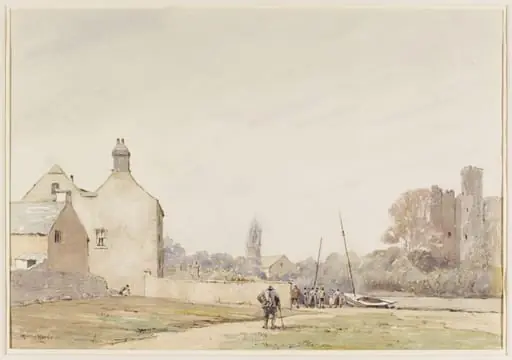
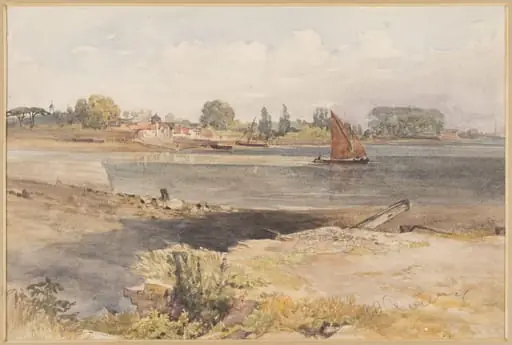
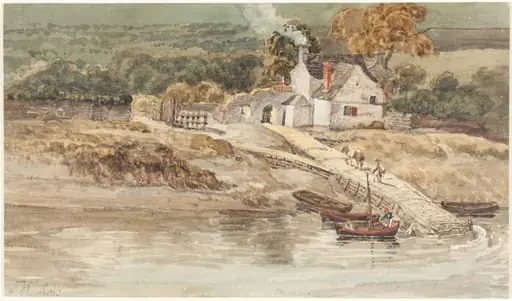
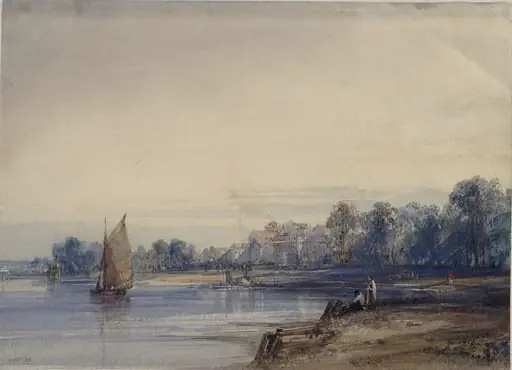
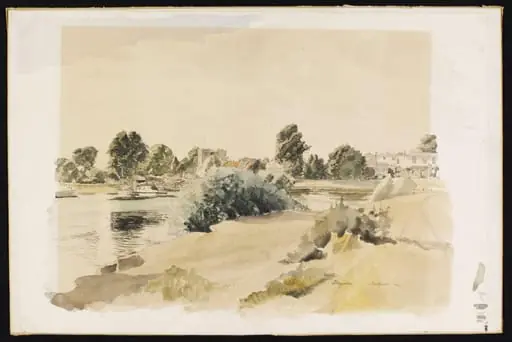
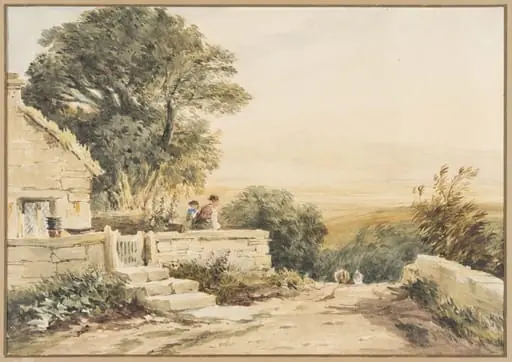
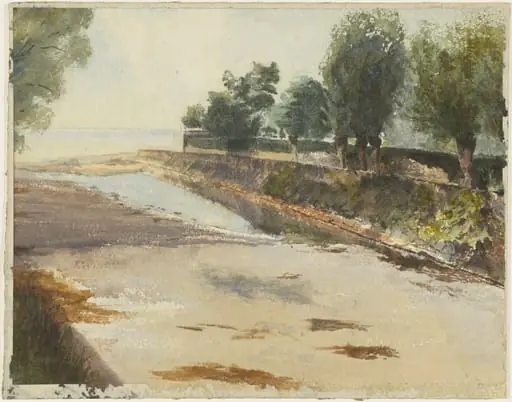
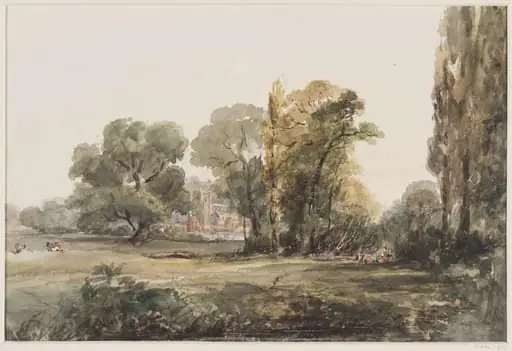
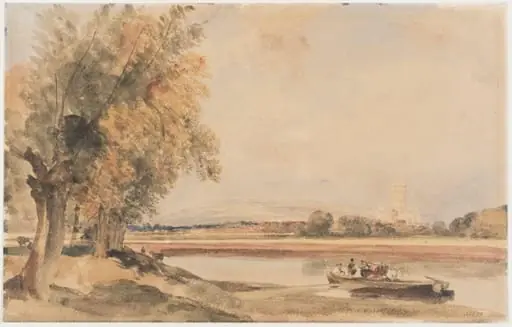
This 1811 watercolor depicts Qasr al-Ayni, a historic site along the Nile in Cairo. Rendered with delicate washes and muted tones, the scene captures a quiet riverside setting with a stone wall, scattered trees, and a distant structure partially veiled by foliage. A solitary figure and two animals traverse a path, reinforcing the calm, contemplative mood. The work reflects an early 19th-century European interest in Egyptian landscapes, though its authorship remains unconfirmed.
Subject & Meaning
The painting presents a tranquil view of Qasr al-Ayni, a location historically associated with medical and religious institutions. The inclusion of a tekke—likely the Baktashi Sufi lodge—and the distant outline of Rawdah Island situates the scene within a specific topographical context. The minimal human presence and subdued activity suggest a meditative observation of place, aligning with Romantic-era tendencies to evoke solitude and natural harmony over narrative drama.
Technique & Style
Executed in watercolor, the work employs soft layering and subtle gradations to suggest atmospheric depth. The palette favors pale greens, browns, and ochres, with light sky tones enhancing the sense of air and distance. Unlike the sharper linear precision of contemporaries like Marilhat, this piece favors diffuse edges and gentle transitions, creating a hazy, introspective quality that prioritizes mood over topographical accuracy.
History & Provenance
The painting was recorded in a Sotheby’s sale in February 1961, where it fetched £33 and 12 shillings. Its earlier history is undocumented, though stylistic elements suggest it may have been produced by a European traveler or artist working in Egypt during the early 1800s. While possibly inspired by Marilhat’s pencil sketches, its execution diverges significantly in technique and composition, indicating an independent interpretation.
Context
In the early 19th century, European artists and travelers increasingly turned to Egypt as a subject of fascination following Napoleon’s campaign. Watercolor became a favored medium for documenting landscapes with immediacy and portability. This work fits within that trend, offering a quiet, personal response to a site of cultural and religious significance, distinct from the more monumental or archaeological depictions of the period.
Legacy
Though not widely exhibited or studied, the painting contributes to a lesser-known body of early Orientalist watercolors that emphasize atmosphere over exoticism. Its restrained aesthetic and focus on everyday stillness offer a counterpoint to later, more theatrical representations of Egypt. As a rare surviving example of intimate landscape observation from this era, it remains a quiet testament to individual perception amid broader historical currents.
Artist & collection

 Domestic Scene
 Giacomo and Cardinal Marco, investing Andrea, Abbot of San Zeno, with his Benefice
 The Nymph of Fontainebleau
 Portrait of a Woman
 Madonna and Child with Saints in the Enclosed Garden
 Venus and Minerva
 Family Group of Four on Sofa
 Wall painting from Room H of the Villa of P. Fannius Synistor at Boscoreale