Artwork
Radha and Krishna
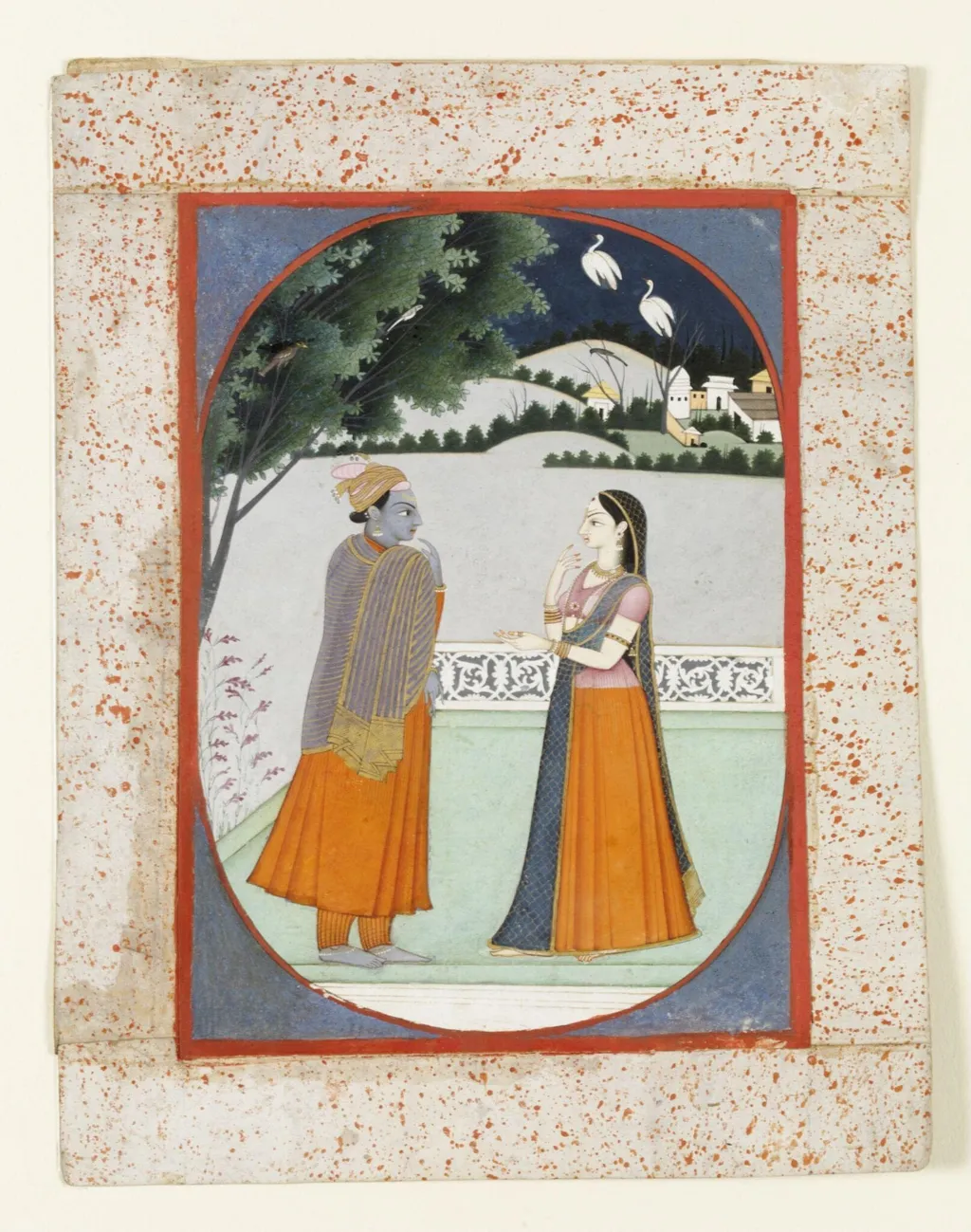
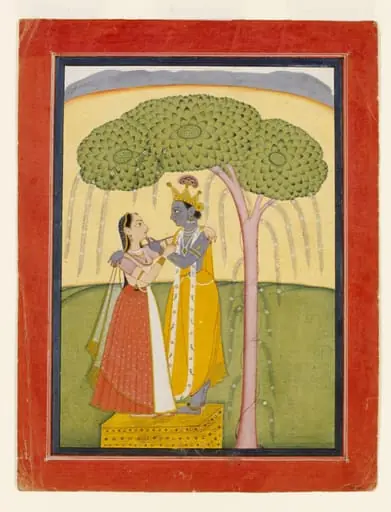
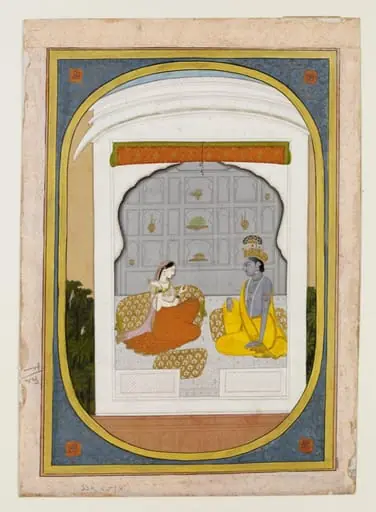
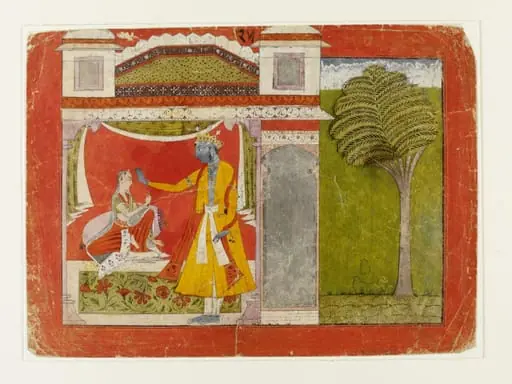
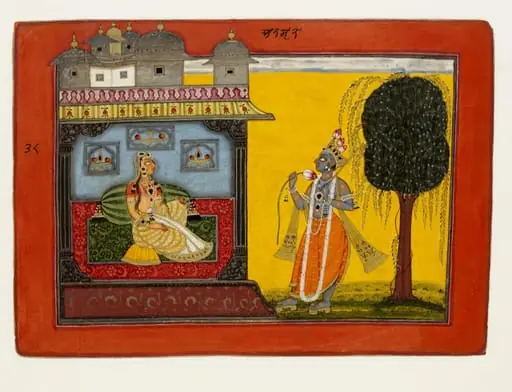
Radha and Krishna is a paint painting by the Rococo painting artist Unknown. It dates from 1780 and is held in the collection of the Victoria and Albert Museum. This opaque watercolour and gold painting on paper was created during the month of Aghan as part of a seasonal cycle known as Barahmasa.
About this work
Overview
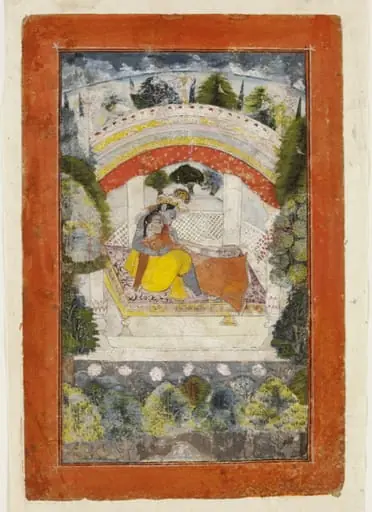
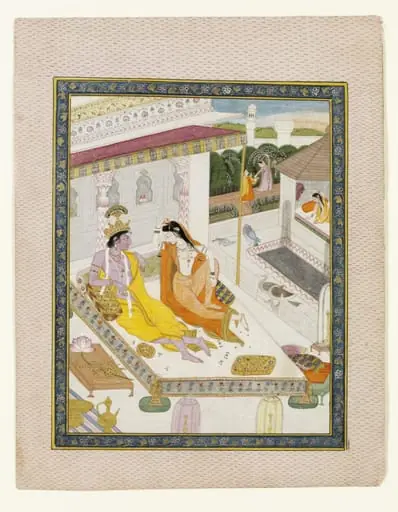
This opaque watercolour and gold painting on paper was created during the month of Aghan as part of a seasonal cycle known as Barahmasa. It captures a quiet moment between two figures against a lush, stylized landscape. The use of metallic gold and vivid pigments reflects the refined aesthetic of Pahari court painting, where natural observation blends with symbolic tradition.
Subject & Meaning
The figures represent Radha and Krishna, central deities in Vaishnavite devotion, depicted in a moment of intimate reunion.
The figures represent Radha and Krishna, central deities in Vaishnavite devotion, depicted in a moment of intimate reunion. Their encounter on a lakeside terrace evokes the seasonal theme of autumnal longing and divine love. The fan held near Radha’s face suggests modesty and quiet emotion, while Krishna’s gentle gaze conveys tenderness, reinforcing the spiritual and emotional resonance of their bond.
Technique & Style
The painting employs fine brushwork and layered opaque watercolours with gold accents to define textures and contours. Figures are rendered with delicate lines, while the background features a flattened perspective filled with stylized foliage, distant architecture, and birds. The palette—dominated by orange, blue, and green—creates a harmonious yet vibrant atmosphere characteristic of Pahari miniatures from the late 17th or early 18th century.
History & Provenance
This work belongs to a series illustrating the twelve months of the year, commissioned by a Rajput or Pahari royal court. Such series were often created for private devotion or courtly enjoyment. Though its exact origin remains unconfirmed, stylistic elements align with workshops in the hills of northern India, particularly around Kangra or Guler, where poetic and devotional themes were favored.
Context
The Barahmasa tradition linked seasonal changes with human and divine emotions, drawing from Sanskrit poetry and Bhakti literature. Paintings like this served both as visual poetry and devotional aids, reflecting a cultural milieu where nature, time, and spirituality were deeply intertwined. The presence of birds and architecture suggests an idealized realm, blending earthly beauty with celestial narrative.
Legacy
Works from this series influenced later Indian miniature traditions and remain key references in the study of regional painting. Their intimate scale and emotional nuance contrast with larger courtly narratives, offering insight into personal devotion and aesthetic refinement. Many examples are held in major collections, preserving their role as quiet yet enduring expressions of spiritual love.
Artist & collection

 Domestic Scene
 Giacomo and Cardinal Marco, investing Andrea, Abbot of San Zeno, with his Benefice
 The Nymph of Fontainebleau
 Portrait of a Woman
 Madonna and Child with Saints in the Enclosed Garden
 Venus and Minerva
 Family Group of Four on Sofa
 Wall painting from Room H of the Villa of P. Fannius Synistor at Boscoreale