Artwork
Radha’s Confidante Brings Her to Krishna, based on poetry of Bihari (Indian, 1595–1663)
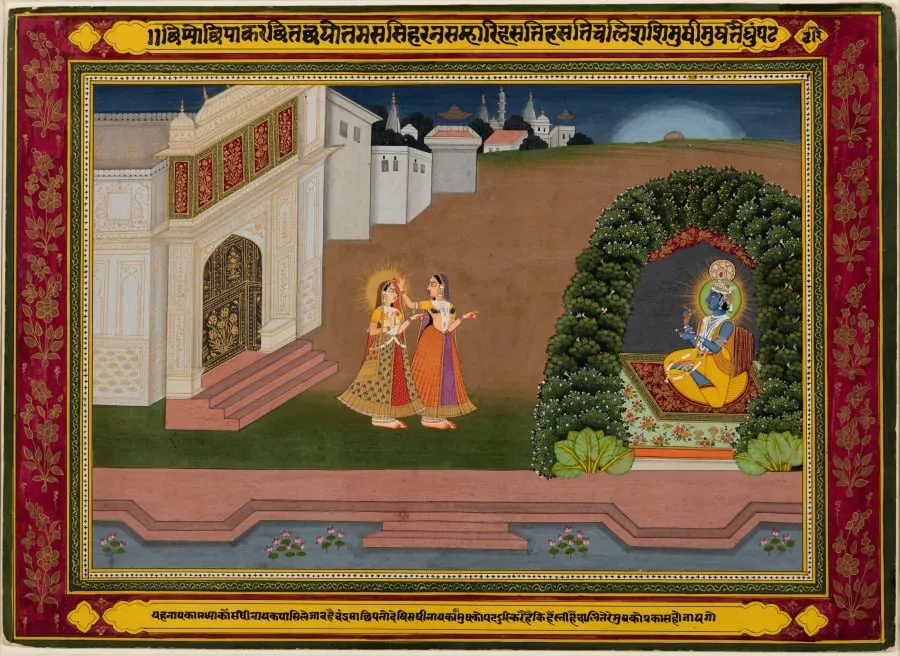
Radha’s Confidante Brings Her to Krishna, based on poetry of Bihari (Indian, 1595–1663) is an unspecified painting by the Mughal Painting artist Unknown. It dates from 1795 and is held in the collection of the Cleveland Museum of Art.
About this work
Overview
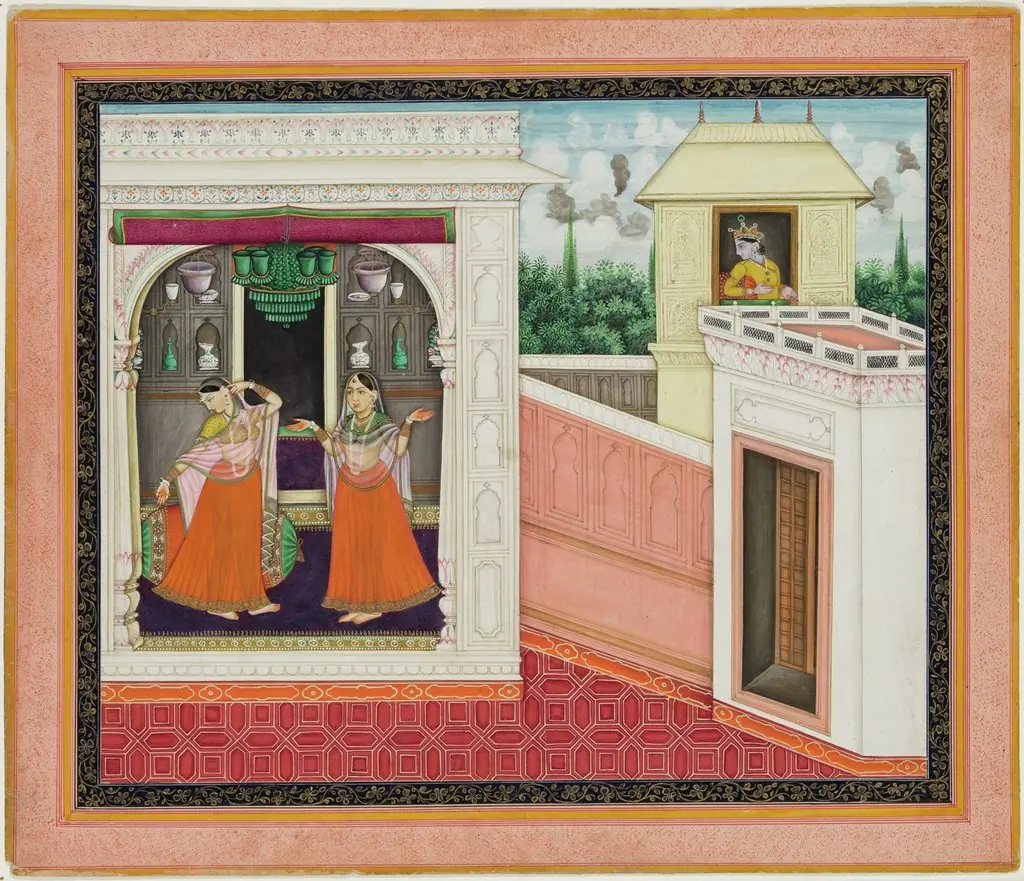
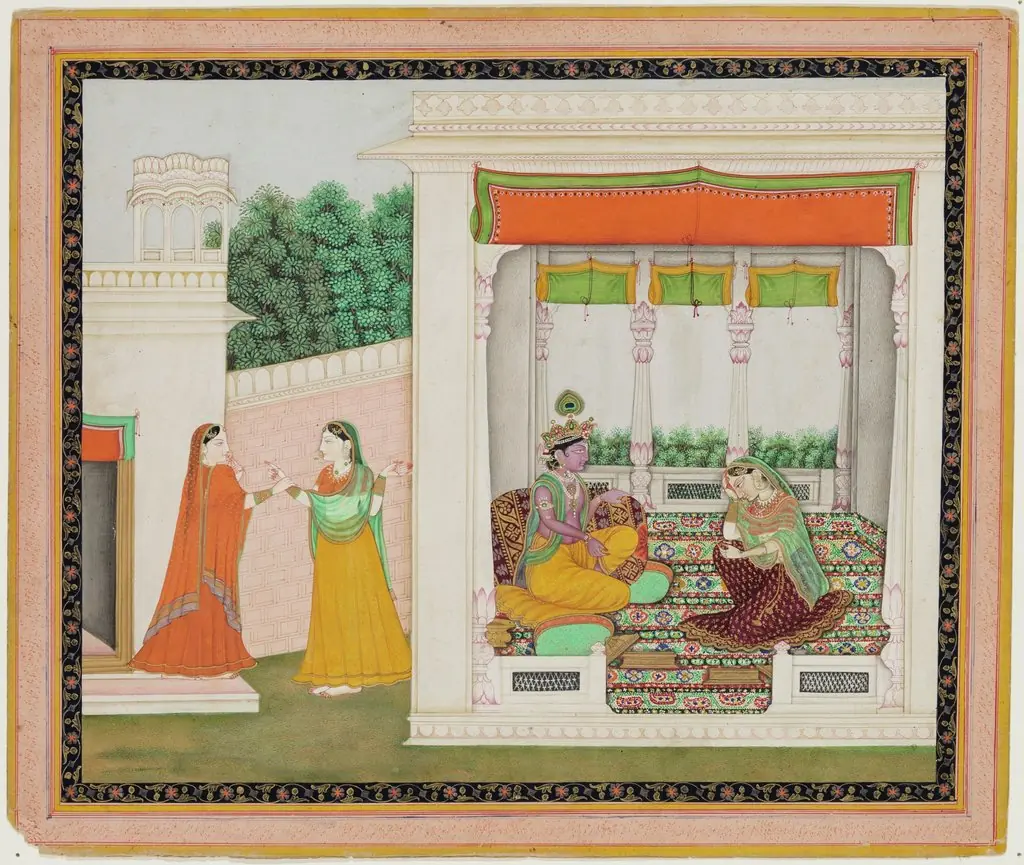
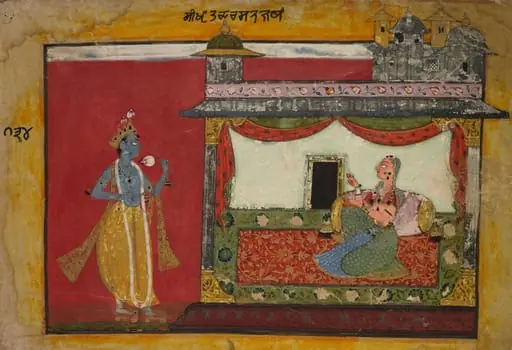
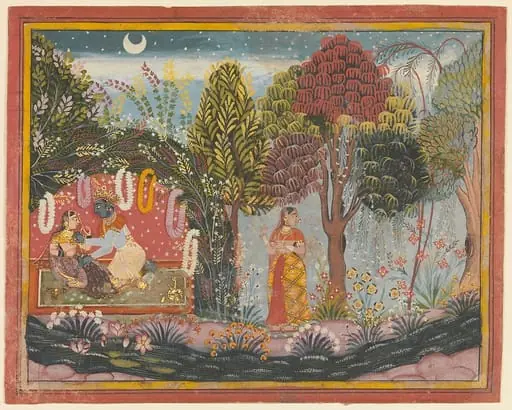
The painting depicts a nocturnal garden scene in which two women move stealthily toward a blue‑skinned deity seated beneath a richly patterned canopy. The setting is illuminated by deep reds, golds and greens, suggesting lantern light. The composition draws on a verse from the Hindi poet Bihari, portraying a secret meeting between the lover Radha and the god Krishna.
Subject & Meaning
The work visualises a moment from Bihari’s love poetry, where Radha, accompanied by a confidante, approaches Krishna for a clandestine encounter. The concealed garden and the veiled curtains behind them emphasize the theme of hidden romance and the transgression of social boundaries in the devotional tradition.
Technique & Style
Executed in a delicate Rajasthani manner, the artist renders figures with softened facial features and meticulous, miniature detailing. The carpet and canopy display Persian‑inspired floral motifs, while the palette of wine‑red, gold and emerald hues creates a luminous, intimate atmosphere.
History & Provenance
The painting is believed to have been commissioned by the ruler of Jaipur in the seventeenth century, a patron known for his collection of Persian textiles. The inclusion of Persian carpet designs reflects his taste and the cultural exchange between the Rajput court and Persian artistic traditions.
Context
Set within the Hindu devotional narrative of Radha and Krishna, the scene reflects the syncretic aesthetic of the Jaipur court, where indigenous religious themes were rendered with imported Persian decorative elements, illustrating the region’s artistic hybridity during the Mughal period.
Artist & collection

 Domestic Scene
 Giacomo and Cardinal Marco, investing Andrea, Abbot of San Zeno, with his Benefice
 The Nymph of Fontainebleau
 Portrait of a Woman
 Madonna and Child with Saints in the Enclosed Garden
 Venus and Minerva
 Family Group of Four on Sofa
 Wall painting from Room H of the Villa of P. Fannius Synistor at Boscoreale
![The Marriage of Rukmini [Mangal], by Unknown](https://artifactworldgallery.com/img/unknown--the-marriage-of-rukmini-mangal--7178947364f7bdb5-w320.webp)