Artwork
Rama, Sita and Lakshmana
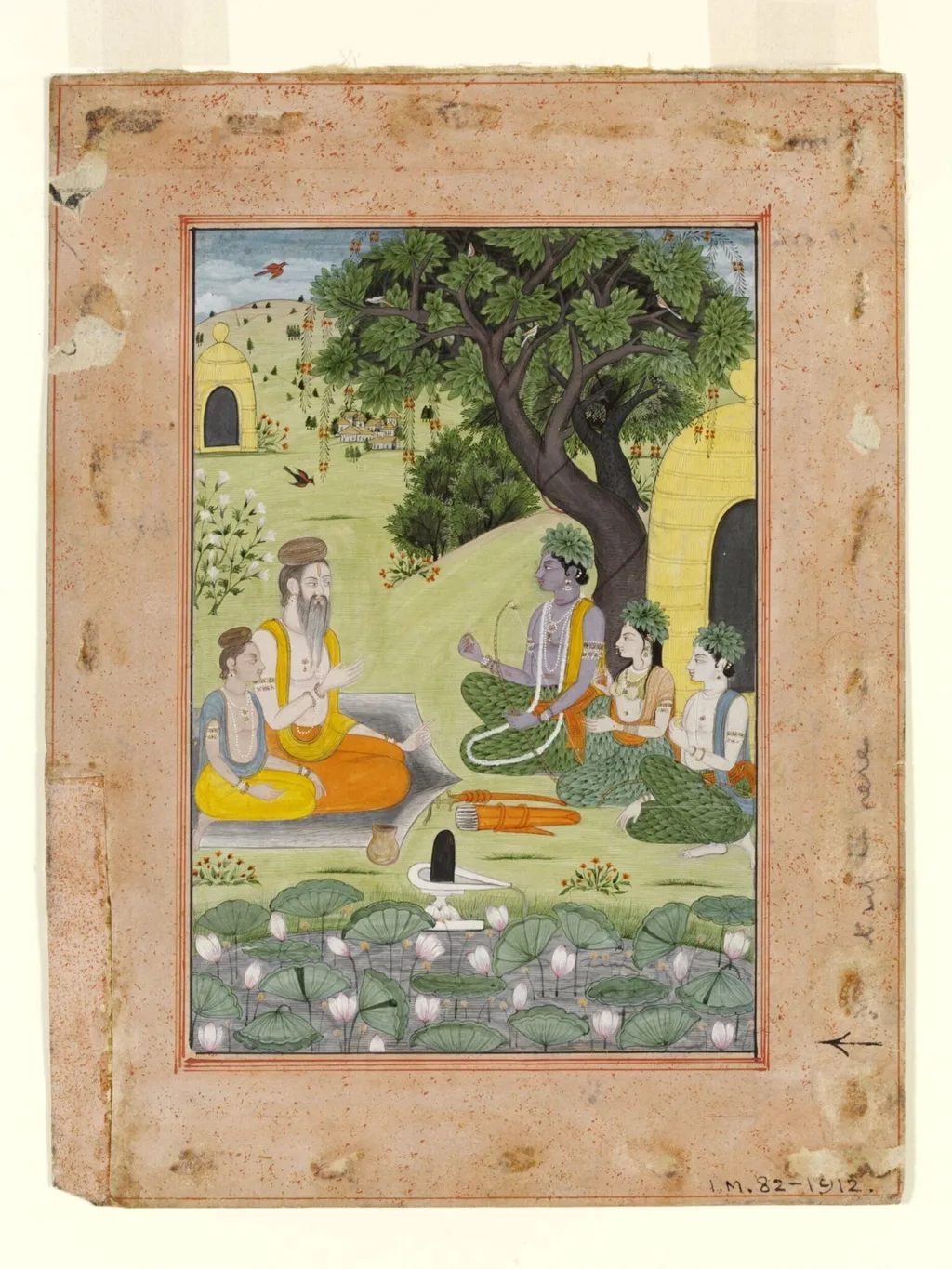
Rama, Sita and Lakshmana is a paint painting by the Romanticist artist Unknown. It dates from 1830 and is held in the collection of the Victoria and Albert Museum.
About this work
Overview
The work’s luminous pigments and intricate details reflect the conventions of Indian miniature painting, not European Romanticism as mistakenly suggested.
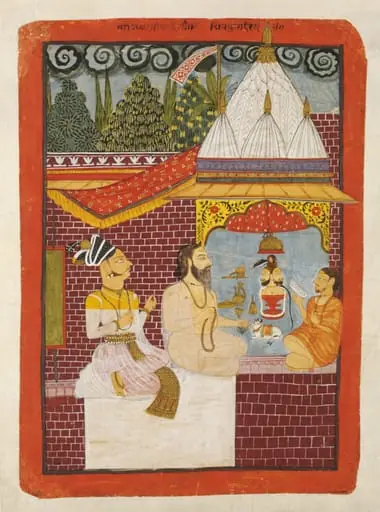
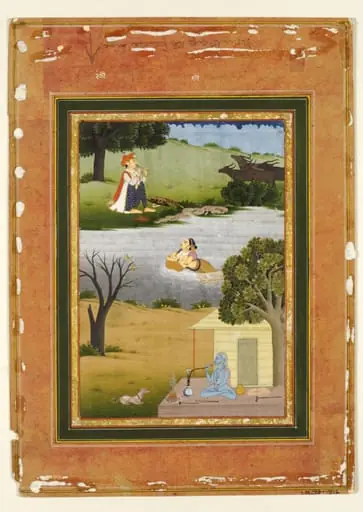
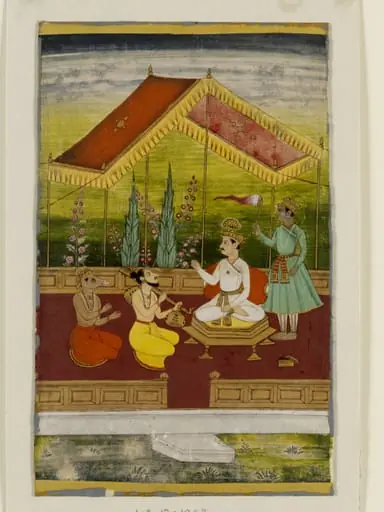
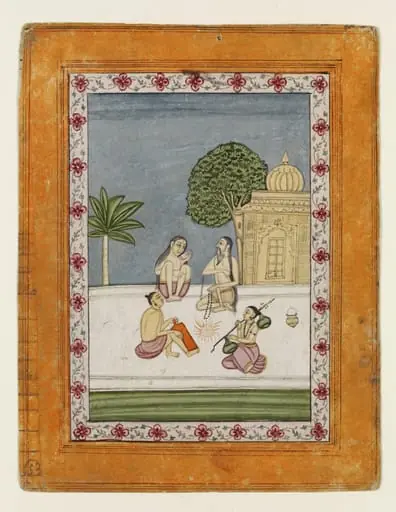
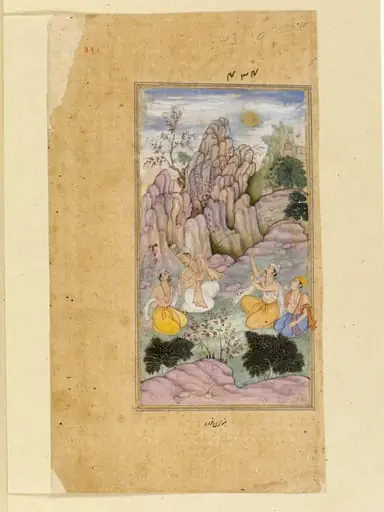
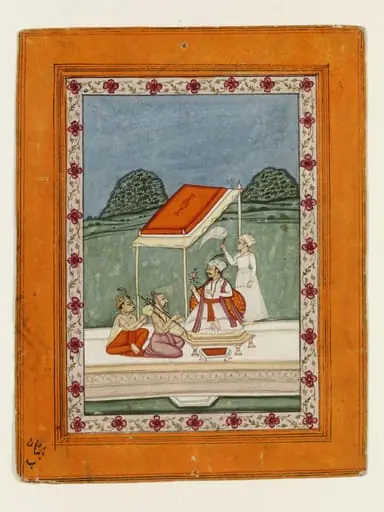
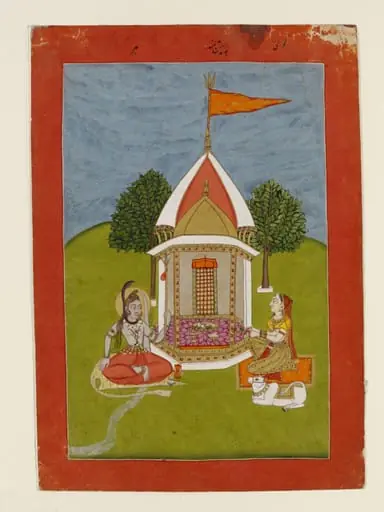
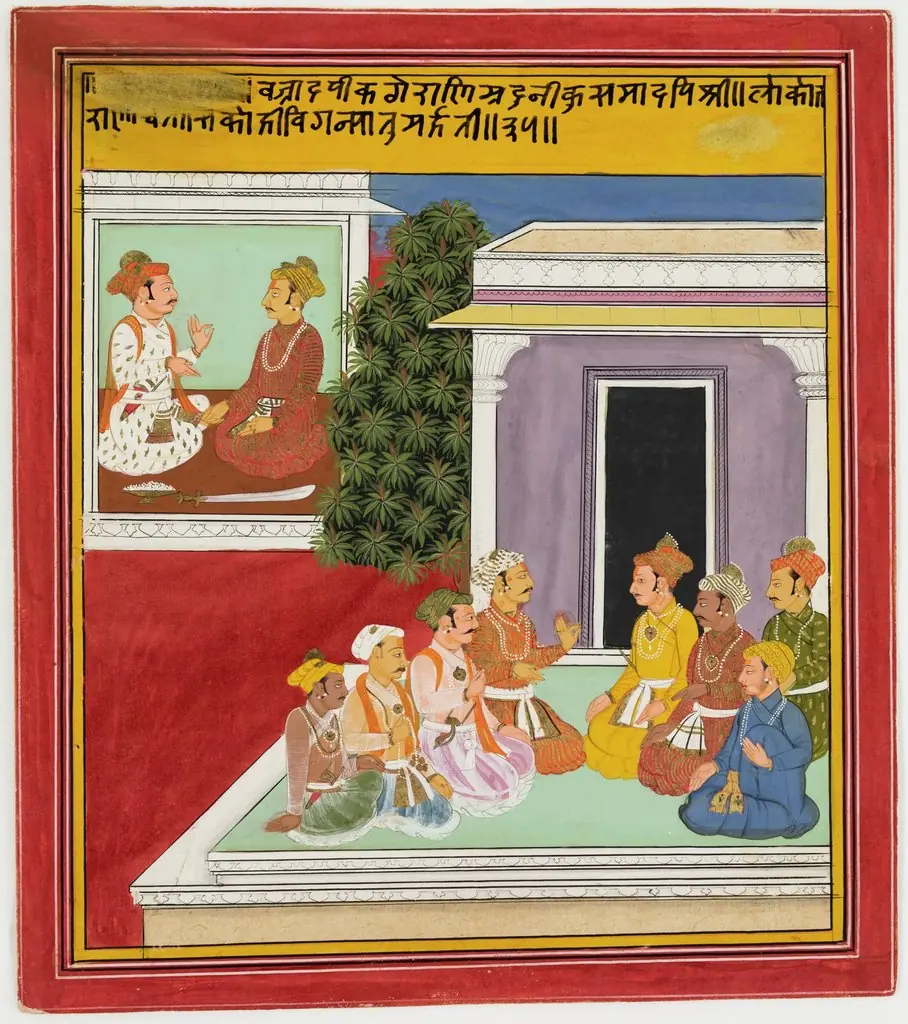
This opaque watercolor and gold painting on paper illustrates a scene from the Ramayana, depicting Rama, Sita, and Lakshmana in a forest hermitage. The figures are shown in quiet dialogue with two Brahmin sages beneath a large tree beside a pond. The work’s luminous pigments and intricate details reflect the conventions of Indian miniature painting, not European Romanticism as mistakenly suggested. It entered a museum collection in 1912 after acquisition from Dr. A. K. Coomaraswamy.
Subject & Meaning
The scene captures a moment of spiritual counsel, with Rama, the exiled prince, consulting Brahmin sages during his forest exile. Sita, his consort, and Lakshmana, his devoted brother, are present, reinforcing themes of dharma and duty. The blue-skinned figure is Rama, identified by his crown and divine association in Hindu tradition. The lotus pond and birds symbolize purity and the sacredness of nature, common motifs in devotional narratives of the Ramayana.
Technique & Style
Executed in opaque watercolor with gold leaf on paper, the painting employs fine brushwork and flat, decorative planes typical of Pahari or Rajasthani miniature traditions. Colors are vivid but restrained, with careful attention to textile patterns and natural elements. The composition is intimate and hierarchical, with figures arranged to emphasize spiritual authority. Gold accents highlight divine presence without excessive ornamentation.
History & Provenance
The painting was acquired by a museum in 1912 from Dr. Ananda Coomaraswamy, a pioneering scholar of Indian art. His collection helped introduce South Asian visual culture to Western institutions. The work’s prior history is undocumented, but its style suggests it originated in a royal atelier in northern India, likely between the late 17th and early 18th centuries, during a period of flourishing illustrated manuscripts.
Context
This painting belongs to a broader tradition of illustrated Ramayana manuscripts commissioned by Hindu rulers and patrons. Such works served both devotional and didactic purposes, reinforcing moral and cosmic order through visual storytelling. The setting—a forest hermitage—reflects the exile phase of Rama’s journey, a pivotal episode emphasizing virtue amid hardship. Similar scenes appear across regional schools, each adapting local aesthetics to the epic’s universal themes.
Legacy
As part of early 20th-century museum acquisitions of Indian art, this painting contributed to the scholarly recognition of miniature painting as a serious artistic tradition. Its preservation and display helped shift perceptions away from colonial-era dismissals of non-Western art forms. Today, it remains a reference for understanding how narrative, spirituality, and aesthetics converged in pre-colonial Indian visual culture.
Artist & collection

 Domestic Scene
 Giacomo and Cardinal Marco, investing Andrea, Abbot of San Zeno, with his Benefice
 The Nymph of Fontainebleau
 Portrait of a Woman
 Madonna and Child with Saints in the Enclosed Garden
 Venus and Minerva
 Family Group of Four on Sofa
 Wall painting from Room H of the Villa of P. Fannius Synistor at Boscoreale