Artwork
Sri Raga
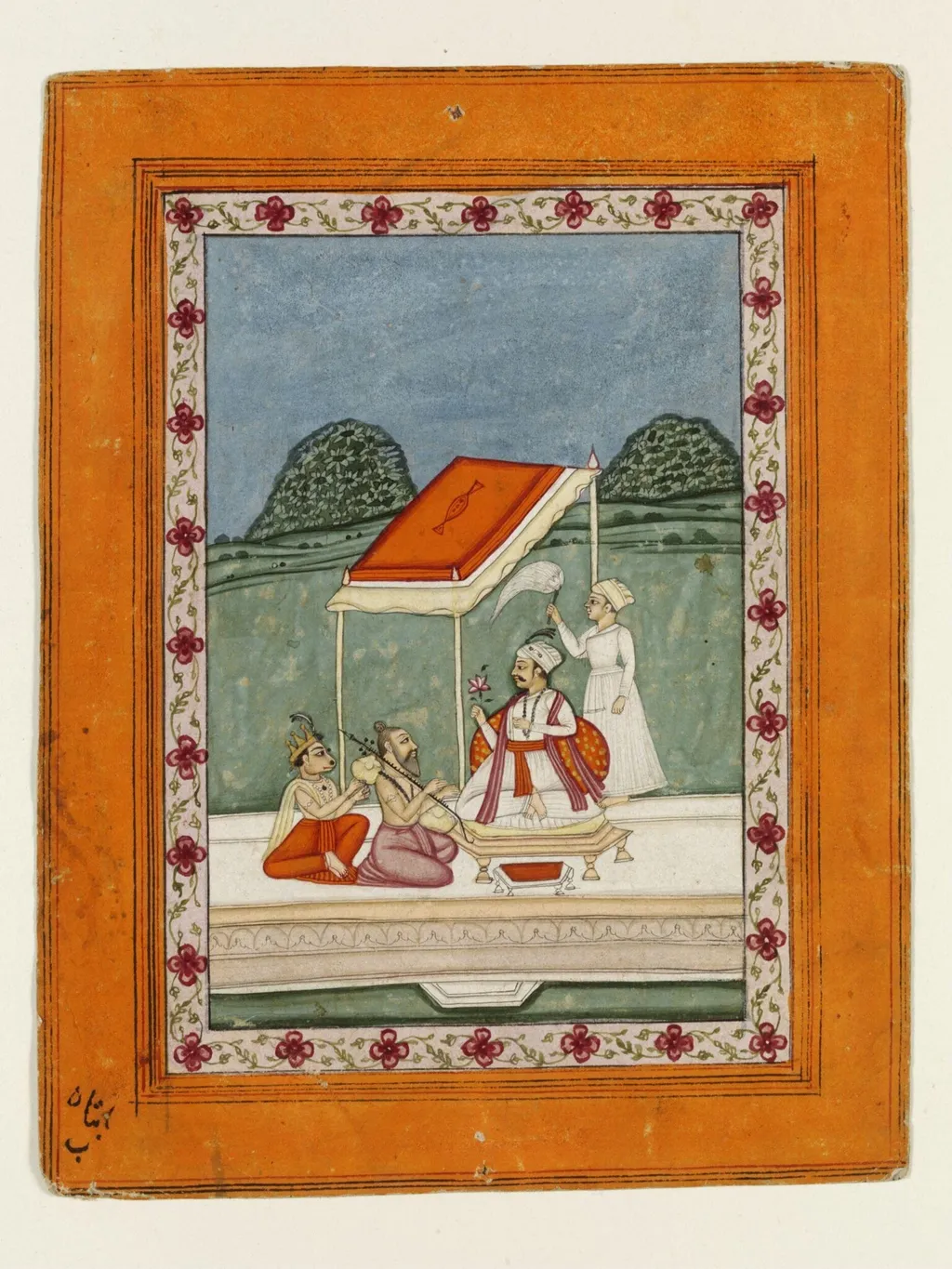
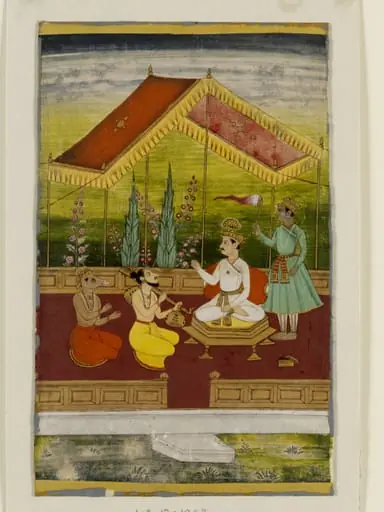
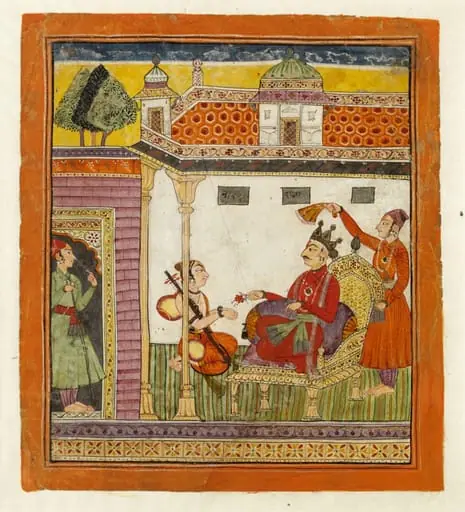
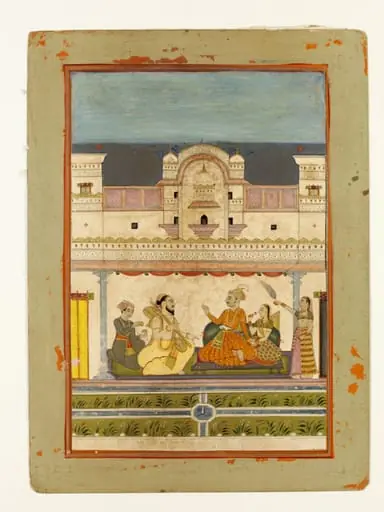
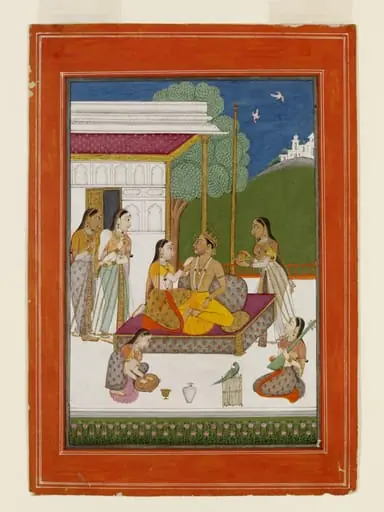
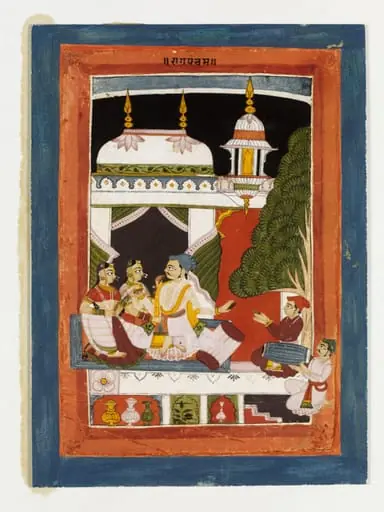
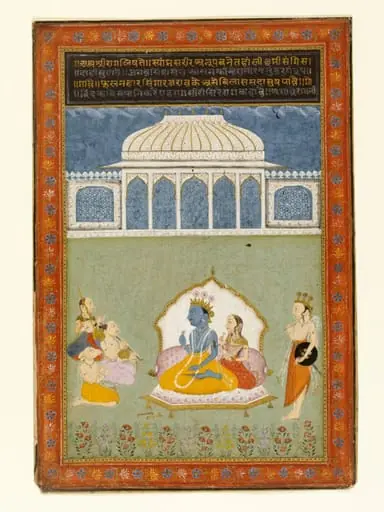
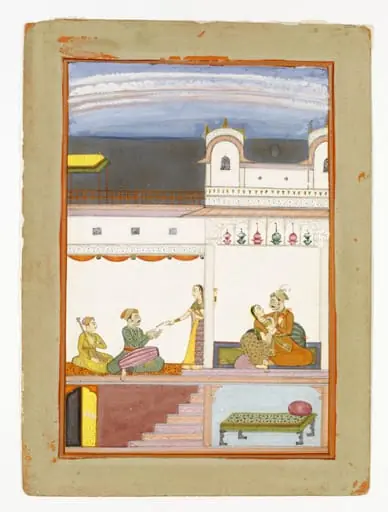
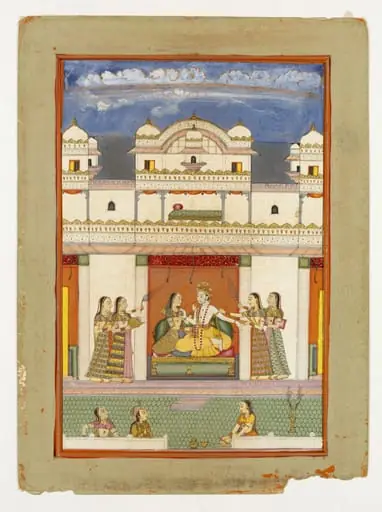
Sri Raga is a paint painting by Unknown. It dates from 1850 and is held in the collection of the Victoria and Albert Museum.
About this work
Overview
It portrays Sri Raga, one of the melodic frameworks in North Indian classical music, rendered through a narrative scene rather than abstract symbols.
This 1850 painting, executed in opaque watercolour on paper, belongs to the Ragamala tradition, a visual system linking musical modes to poetic and emotional states. It portrays Sri Raga, one of the melodic frameworks in North Indian classical music, rendered through a narrative scene rather than abstract symbols. The composition centers on a reclining figure, surrounded by attendants, set against a quiet landscape and ornamental borders.
Subject & Meaning
The central figure, likely representing the raga personified, lies on a low bed, attended by a figure holding an umbrella and another with an animal-headed form, possibly symbolizing a guardian spirit or mythic attendant. The red book he holds may signify sacred knowledge or the raga’s textual source. The scene evokes contemplation and stillness, aligning with Sri Raga’s association with evening serenity and introspective mood.
Technique & Style
The painting uses rich, opaque watercolours to create vivid hues in garments and decorative elements, with fine brushwork defining textures and patterns. The background features soft, muted hills and a pale sky, contrasting with the detailed, ornate borders of orange and red floral motifs. Figures are stylized, with elongated proportions and expressive gestures, typical of Pahari school conventions.
History & Provenance
Created in the mid-19th century, likely in a Pahari court workshop, the work reflects the enduring patronage of Ragamala themes in Himalayan hill states. Its survival suggests it was preserved in a collector’s archive, possibly within a royal or aristocratic collection, before entering institutional hands. The Victoria and Albert Museum holds related examples, indicating its place within a broader corpus of regional miniature painting.
Context
Ragamala paintings emerged as a fusion of devotional, musical, and literary traditions in early modern India. Each raga was assigned a visual identity, often as a figure in a specific time of day or emotional state. Sri Raga, linked to twilight, was depicted with calm, melancholic imagery, reinforcing its role in meditative practice and courtly aesthetic culture.
Legacy
Though no longer performed in original ritual contexts, such paintings remain vital to the study of Indian musical iconography. They offer insight into how abstract sonic structures were made tangible through visual symbolism. Contemporary scholars and conservators continue to analyze these works for their cultural, artistic, and historical significance within South Asian visual traditions.
Artist & collection

 Domestic Scene
 Giacomo and Cardinal Marco, investing Andrea, Abbot of San Zeno, with his Benefice
 The Nymph of Fontainebleau
 Portrait of a Woman
 Madonna and Child with Saints in the Enclosed Garden
 Venus and Minerva
 Family Group of Four on Sofa
 Wall painting from Room H of the Villa of P. Fannius Synistor at Boscoreale