Artwork
Rao Raja Budh Singh
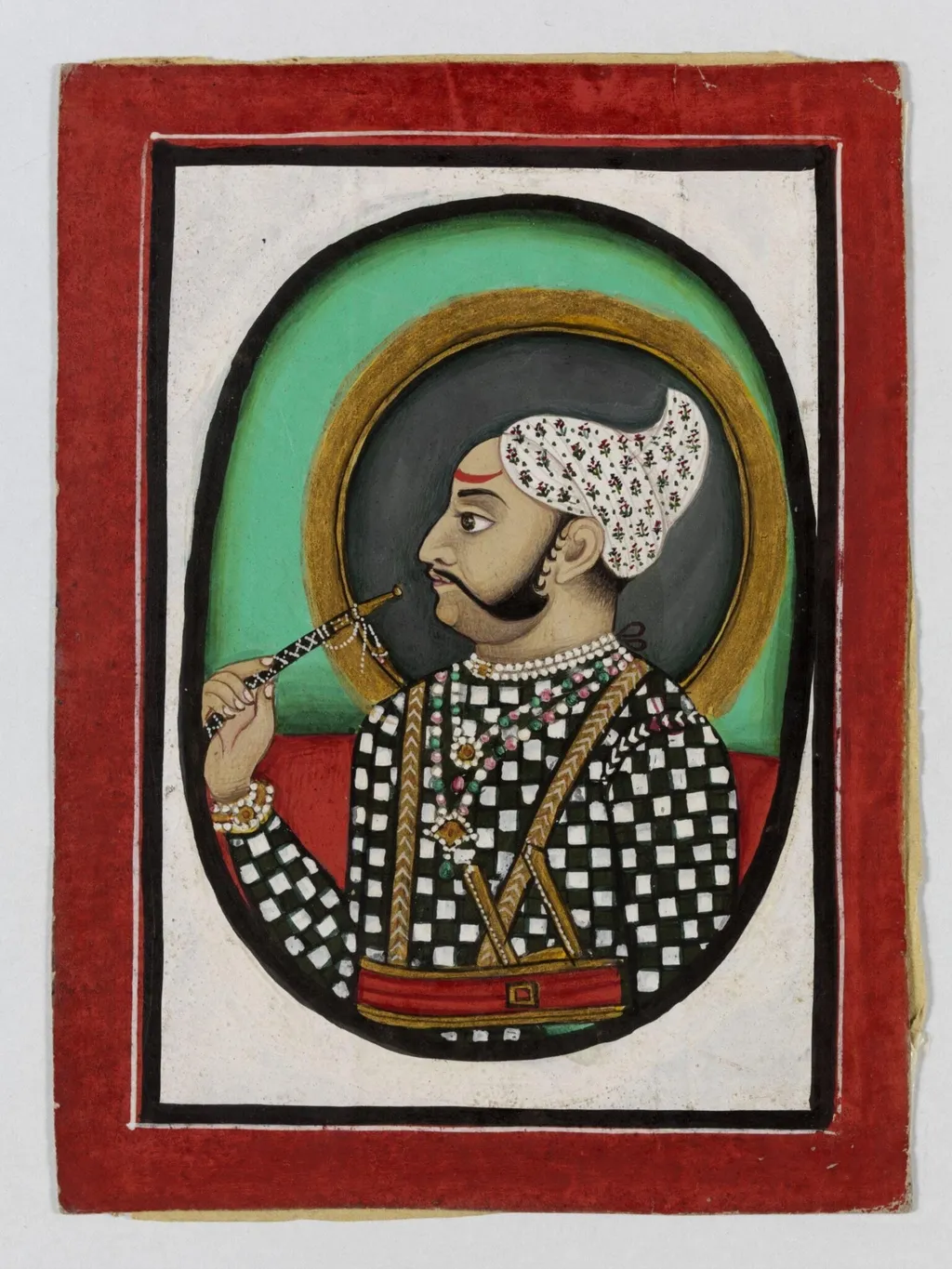
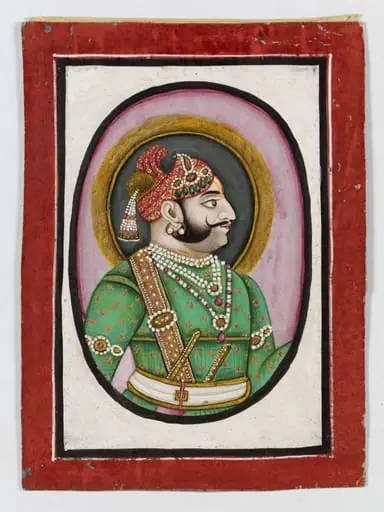
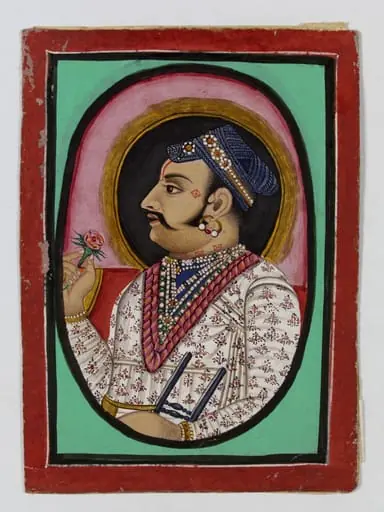
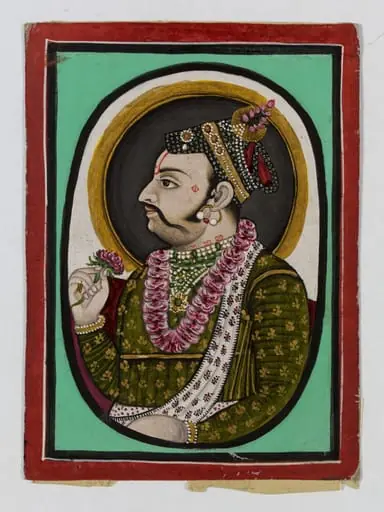
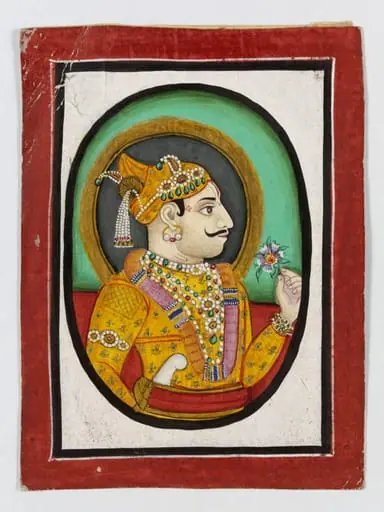
Rao Raja Budh Singh is a paint painting by Unknown. It dates from 1850 and is held in the collection of the Victoria and Albert Museum.
About this work
Overview
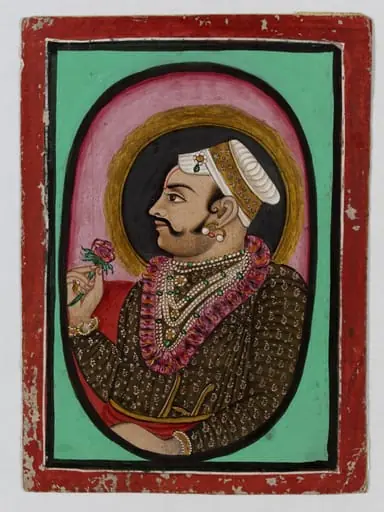
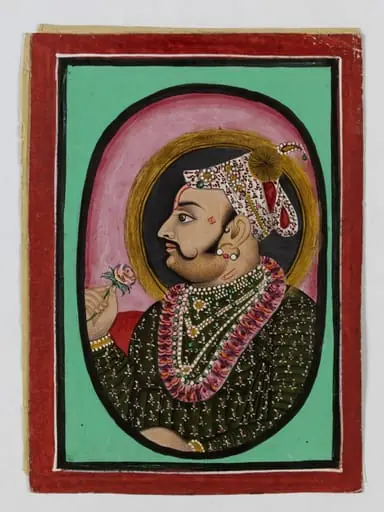
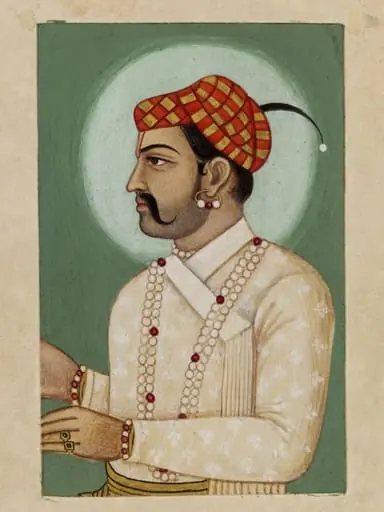
This opaque watercolour and gold painting on paper, dated circa 1850, portrays Rao Raja Budh Singh in a formal bust composition. Created by an anonymous artist, the work reflects the refined aesthetic of Rajput court portraiture. The subject is rendered with meticulous detail against a simplified green circular background edged in red, emphasizing the figure without distraction.
Subject & Meaning
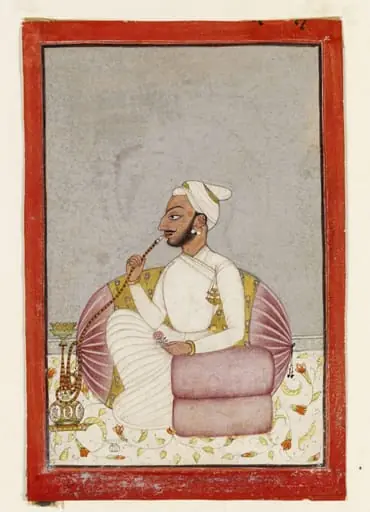
Rao Raja Budh Singh is depicted holding a huqqa pipe, a symbol of status and leisure among Indian nobility. His composed demeanor and direct gaze convey authority and self-assurance, typical of royal portraiture meant to affirm lineage and power. The ornate attire and jewelry reinforce his social position, while the quiet intensity of his expression suggests introspection alongside dominance.
Technique & Style
The artist employed fine brushwork in opaque watercolour and gold leaf to render intricate textile patterns and metallic accents. Strong chiaroscuro models the face, lending volume and psychological presence. The background’s flat, circular form contrasts with the detailed figure, a common Rajput convention that isolates the subject as the sole focus of attention and meaning.
History & Provenance
The painting’s origin lies within the courts of Rajasthan, likely commissioned by or for the ruling family of Bundi or a related principality. Its survival into modern collections suggests it was preserved within royal households or later acquired by colonial-era collectors. No documented provenance beyond its 19th-century Rajput context is currently established.
Context
Produced during a period of shifting political power under British influence, such portraits maintained traditional Rajput visual codes to assert cultural continuity. The emphasis on personal regalia and controlled posture aligned with indigenous ideals of nobility, even as external forces reshaped governance. These works served as both personal mementos and public assertions of identity.
Legacy
This painting exemplifies the enduring tradition of Indian court portraiture, influencing later collections in institutions like the Victoria and Albert Museum. Its preservation highlights the value placed on regional artistic practices during colonial times. While the artist remains unnamed, the work contributes to broader scholarship on the visual language of Rajput rulers in the 19th century.
Artist & collection

 Domestic Scene
 Giacomo and Cardinal Marco, investing Andrea, Abbot of San Zeno, with his Benefice
 The Nymph of Fontainebleau
 Portrait of a Woman
 Madonna and Child with Saints in the Enclosed Garden
 Venus and Minerva
 Family Group of Four on Sofa
 Wall painting from Room H of the Villa of P. Fannius Synistor at Boscoreale