Artwork
Rao Raja Surjan
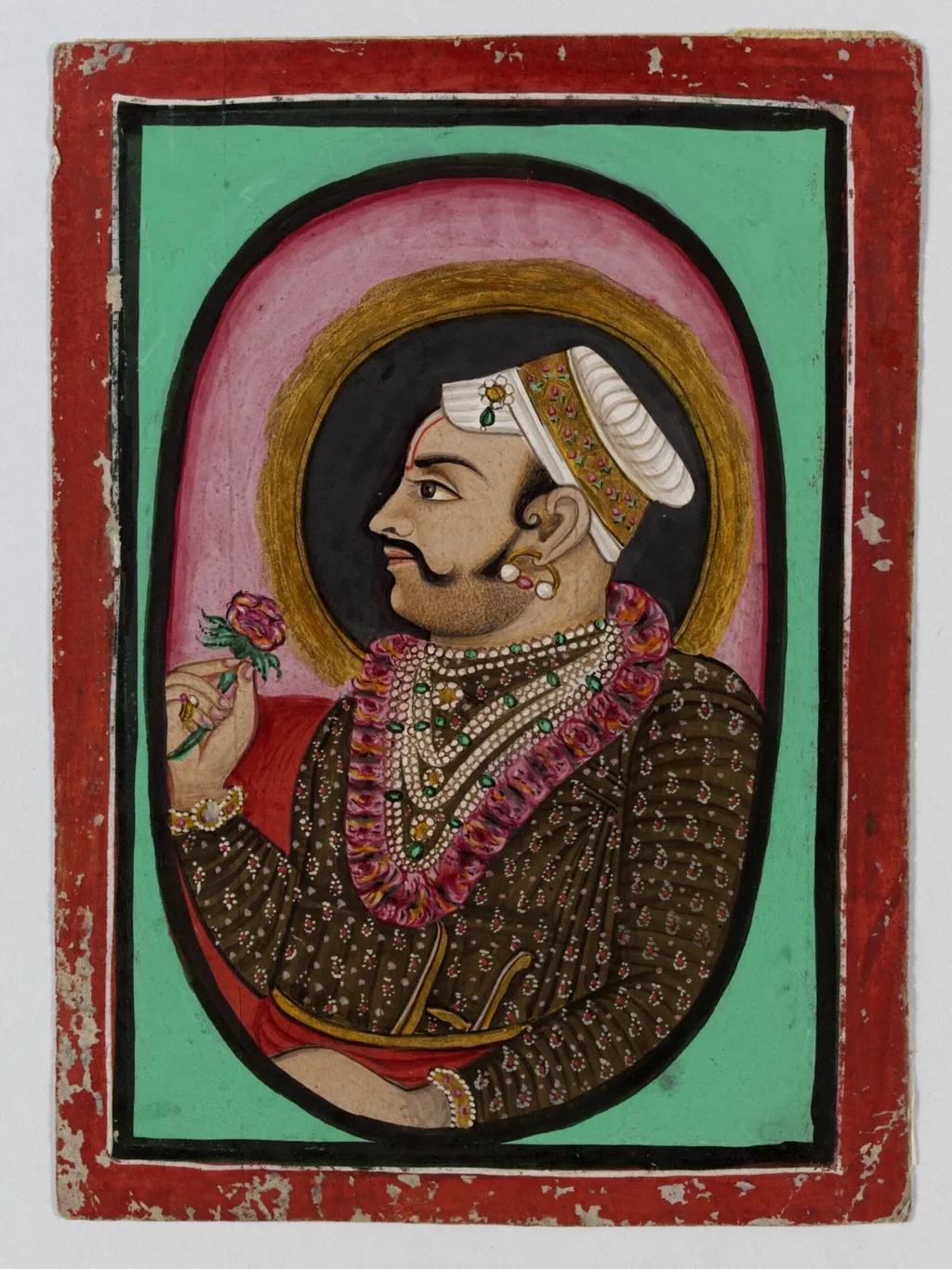
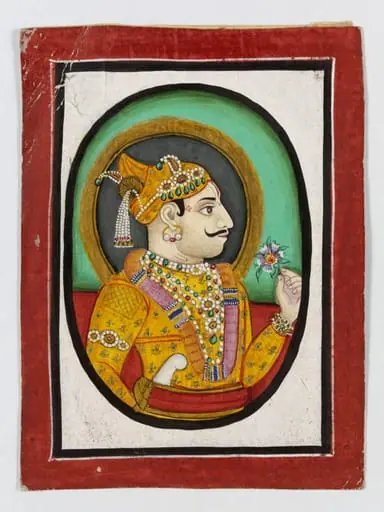
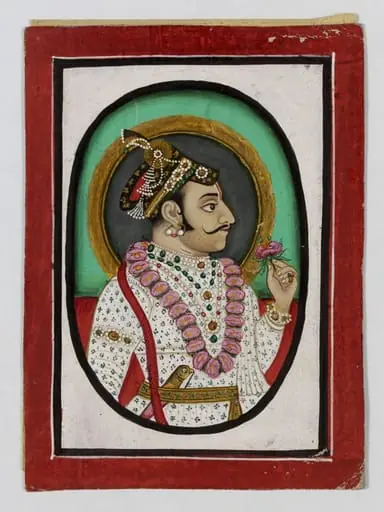
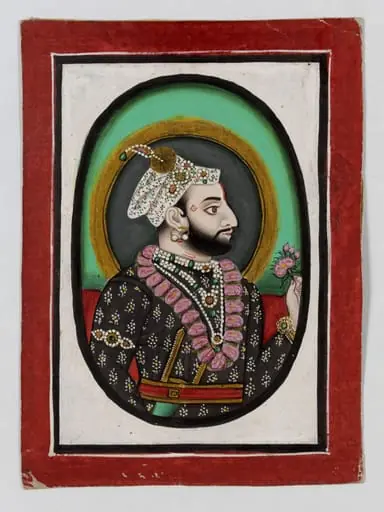
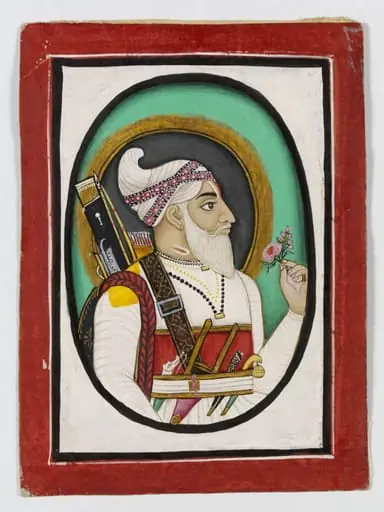
Rao Raja Surjan is a paint painting by Unknown. It dates from 1850 and is held in the collection of the Victoria and Albert Museum.
About this work
Overview
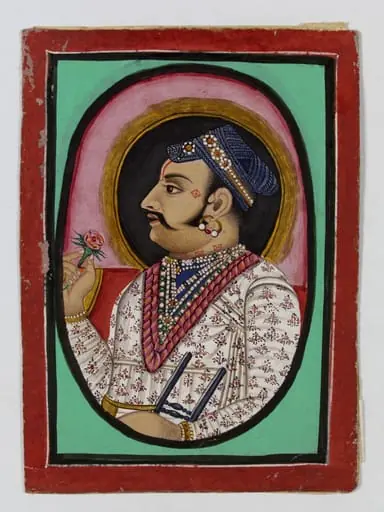
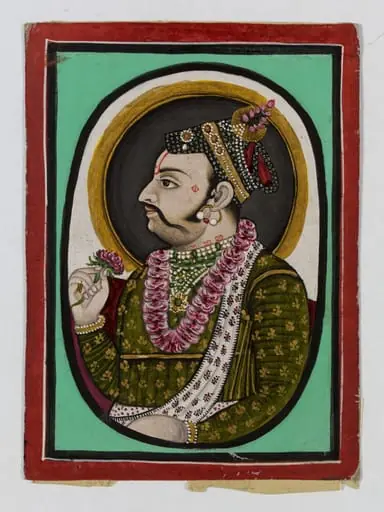
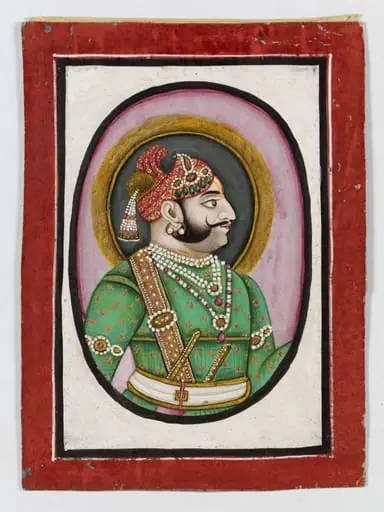
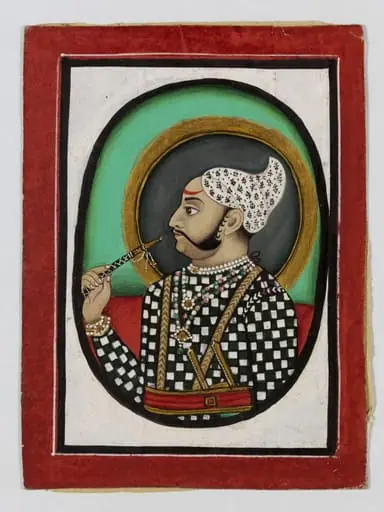
Created in 1850, this portrait depicts Rao Raja Surjan in opaque watercolour and gold on paper. The composition centers on a formal bust view, emphasizing regal attire and symbolic adornments. The use of metallic pigments and intricate detailing reflects the conventions of Rajput court portraiture, where visual luxury conveyed social rank and authority.
Subject & Meaning
Rao Raja Surjan is portrayed holding a red rose, a gesture that may signify refinement, transient beauty, or personal devotion. His elaborate robe, adorned with minute dots and jeweled motifs, signals wealth and status. The ornate headpiece and radiant halo-like background reinforce his elevated position, aligning the image with ideals of noble dignity in 19th-century Rajput courts.
Technique & Style
The artist employed fine brushwork to render patterns of dots and metallic accents across the robe, using gold leaf and opaque watercolour for luminous effect.
The artist employed fine brushwork to render patterns of dots and metallic accents across the robe, using gold leaf and opaque watercolour for luminous effect. The background is a soft pink oval, framed by a bold red and green border, creating a stylized aura. This technique prioritizes symbolic richness over naturalism, typical of regional Indian painting traditions focused on ceremonial representation.
History & Provenance
The painting originates from a Rajput court in northern India, likely commissioned to commemorate the ruler’s authority. It entered the Victoria and Albert Museum’s collection as part of a broader acquisition of South Asian artworks in the 19th century, reflecting colonial-era interest in Indian courtly culture and material heritage.
Context
During the mid-19th century, Rajput rulers maintained artistic traditions despite increasing British political influence. Portraits like this one served as visual assertions of identity and continuity. The emphasis on textiles, jewelry, and symbolic objects aligned with longstanding Indian conventions of depicting power through adornment rather than landscape or narrative.
Legacy
This portrait remains a representative example of late Rajput painting, illustrating how indigenous styles persisted under colonial rule. Its preservation in major institutions highlights its role in documenting regional aesthetics and the enduring value placed on ceremonial imagery in Indian courtly life during a period of political transition.
Artist & collection

 Domestic Scene
 Giacomo and Cardinal Marco, investing Andrea, Abbot of San Zeno, with his Benefice
 The Nymph of Fontainebleau
 Portrait of a Woman
 Madonna and Child with Saints in the Enclosed Garden
 Venus and Minerva
 Family Group of Four on Sofa
 Wall painting from Room H of the Villa of P. Fannius Synistor at Boscoreale