Artwork
Rocky Inlet with Boats and Buildings (recto)
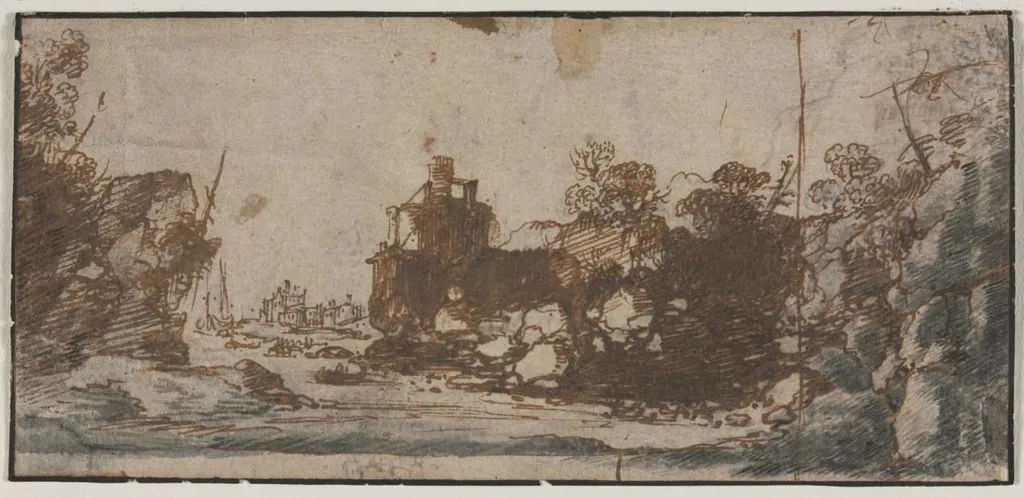
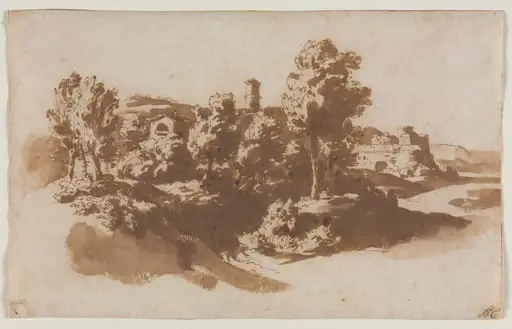
Rocky Inlet with Boats and Buildings (recto) is a drawing by the Baroque artist Unknown. It dates from 1604 and is held in the collection of the Cleveland Museum of Art. This drawing captures a coastal inlet framed by rugged cliffs and dense foliage.
About this work
Overview
This drawing captures a coastal inlet framed by rugged cliffs and dense foliage. Small boats rest near the shore, while modest structures cling to the rocky terrain. Figures, barely discernible in the distance, suggest quiet human activity. The composition emphasizes spatial depth through subtle shifts in tone, guiding the viewer’s eye from foreground to distant horizon.
Subject & Meaning
The scene presents an unidealized coastal landscape, neither grand nor romanticized. The presence of boats and buildings implies local livelihoods tied to the sea, while the sparse human figures convey solitude rather than narrative. The mood is contemplative, rooted in observation rather than symbolism, reflecting an interest in everyday environments.
Technique & Style
The artist employs chiaroscuro to model form and suggest atmosphere, using graded washes and hatching to define rock surfaces and tree masses. Light falls unevenly, enhancing texture and depth without dramatic contrast. Lines are restrained, favoring tonal variation over outline, aligning with observational drawing traditions of the period.
History & Provenance
The work’s origin and early ownership are undocumented. It appears to be a study or sketch, likely made on-site, given its intimate scale and direct handling. No exhibition history or collector records are known, suggesting it remained in the artist’s private circle or was never intended for public display.
Context
Created during a period when landscape drawing gained traction as an independent discipline, this piece aligns with emerging interest in naturalistic observation over idealized scenery. Artists increasingly turned to coastal and rural sites for their compositional potential, valuing authenticity over convention.
Legacy
Though not widely reproduced or studied, the drawing exemplifies a quiet strand of 19th-century landscape practice—focused on quiet observation, modest scale, and tonal nuance. It contributes to a broader understanding of how artists engaged with the natural world outside formal academic frameworks.
Artist & collection

 Domestic Scene
 Giacomo and Cardinal Marco, investing Andrea, Abbot of San Zeno, with his Benefice
 The Nymph of Fontainebleau
 Portrait of a Woman
 Madonna and Child with Saints in the Enclosed Garden
 Venus and Minerva
 Family Group of Four on Sofa
 Wall painting from Room H of the Villa of P. Fannius Synistor at Boscoreale
 Landscape with Bridge and Ruins in Background
 River Landscape with Boats
 A Bengal village hut
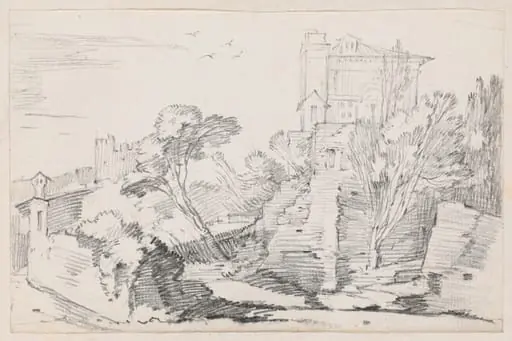 Casino Farnese on the Palatine Hill, Rome
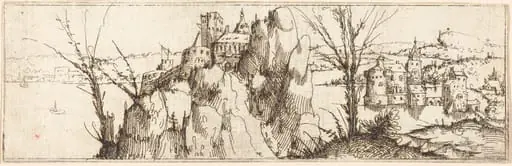 Landscape with a Lake
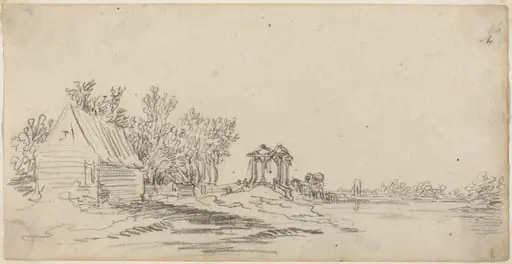 River Landscape with a Distant Bridge
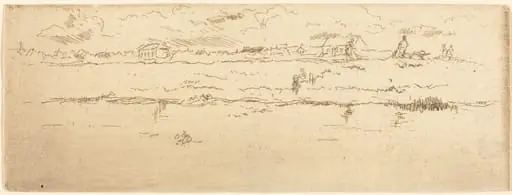 Canal, Ostend
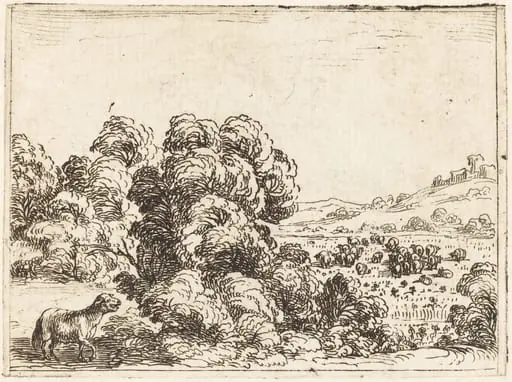 Sheep Calling Lamb
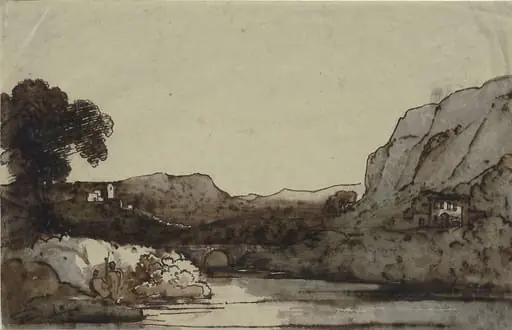 Landscape with Bridge and Mountains
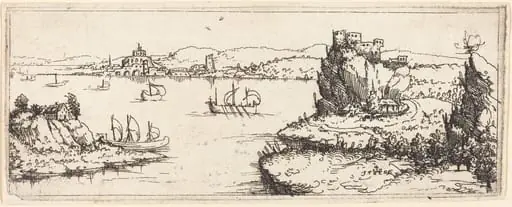 Landscape with Sail Boats
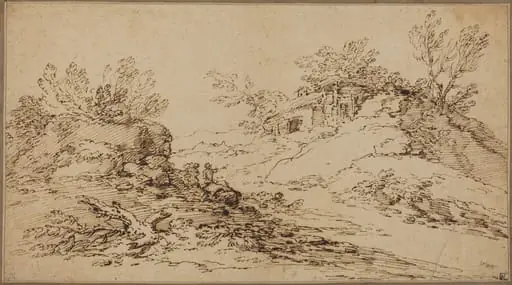 Rocky Landscape with a Rustic House
 Landscape with Fortification Between Marino and Frascati