Artwork
Saint Cosmas (or Damian)
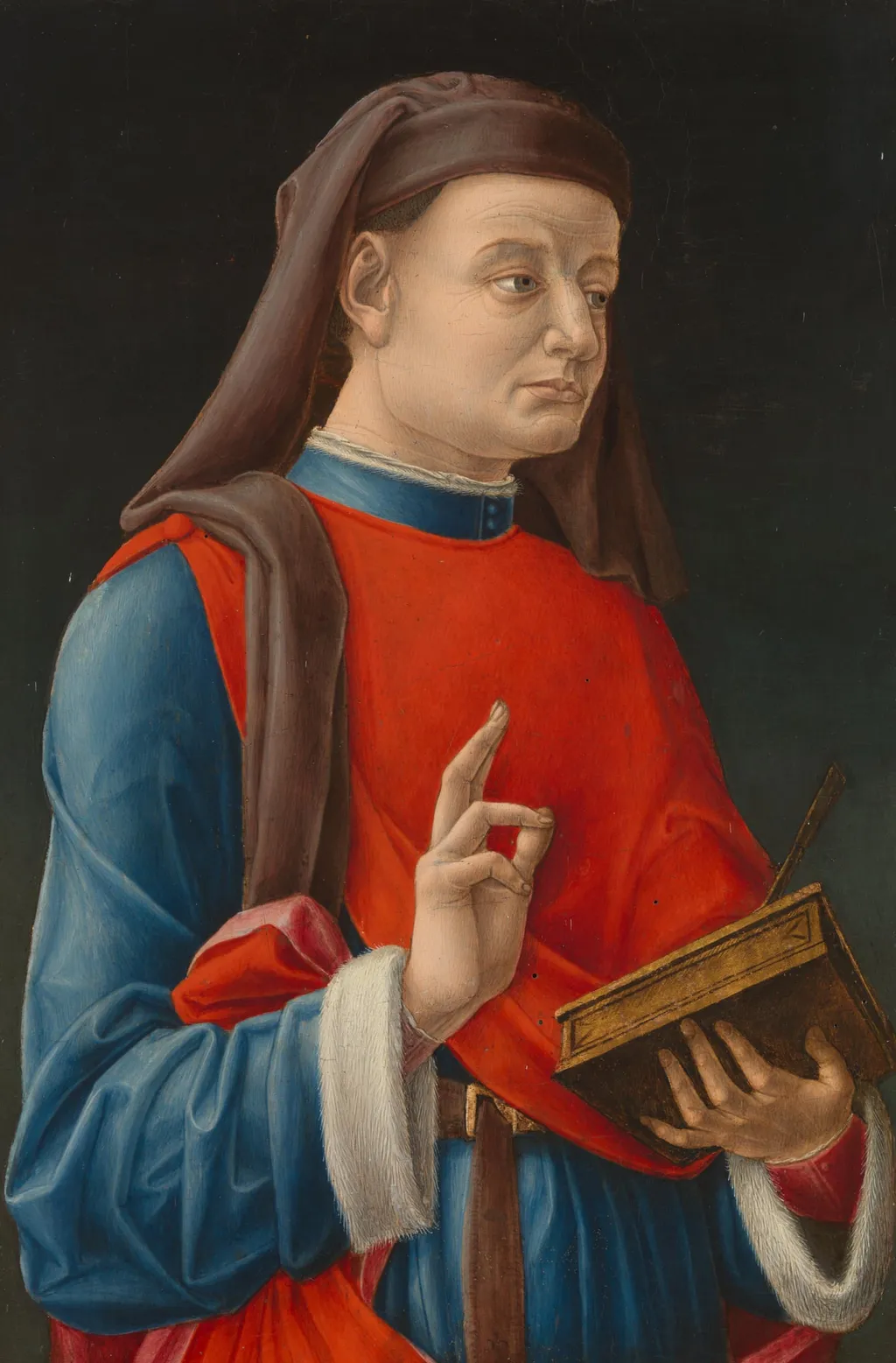
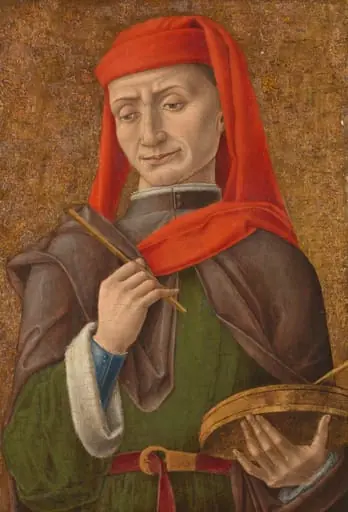
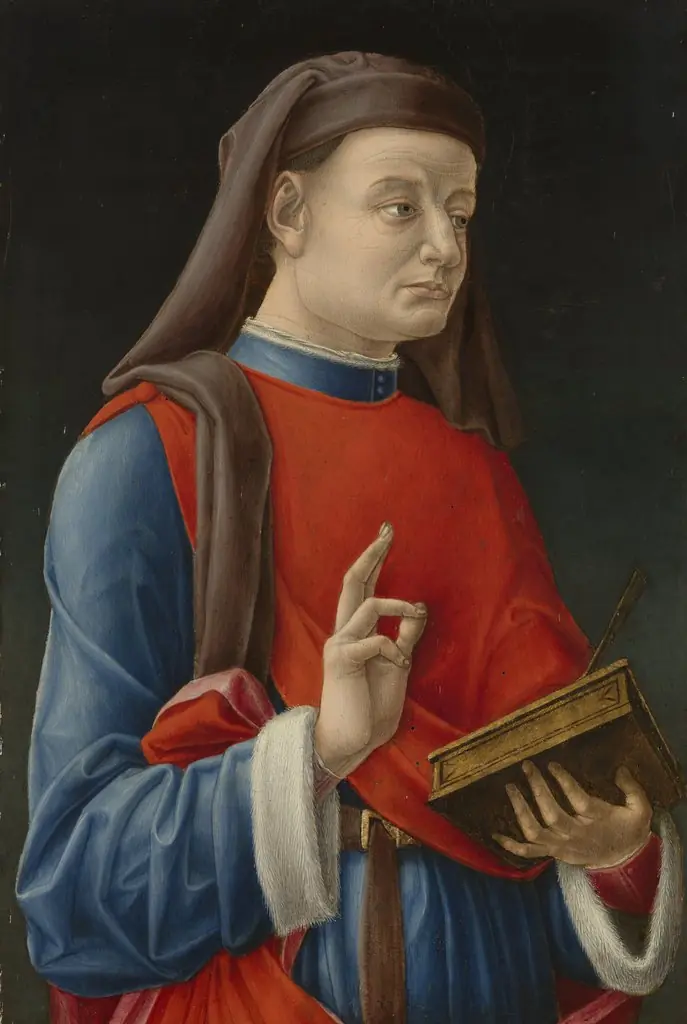
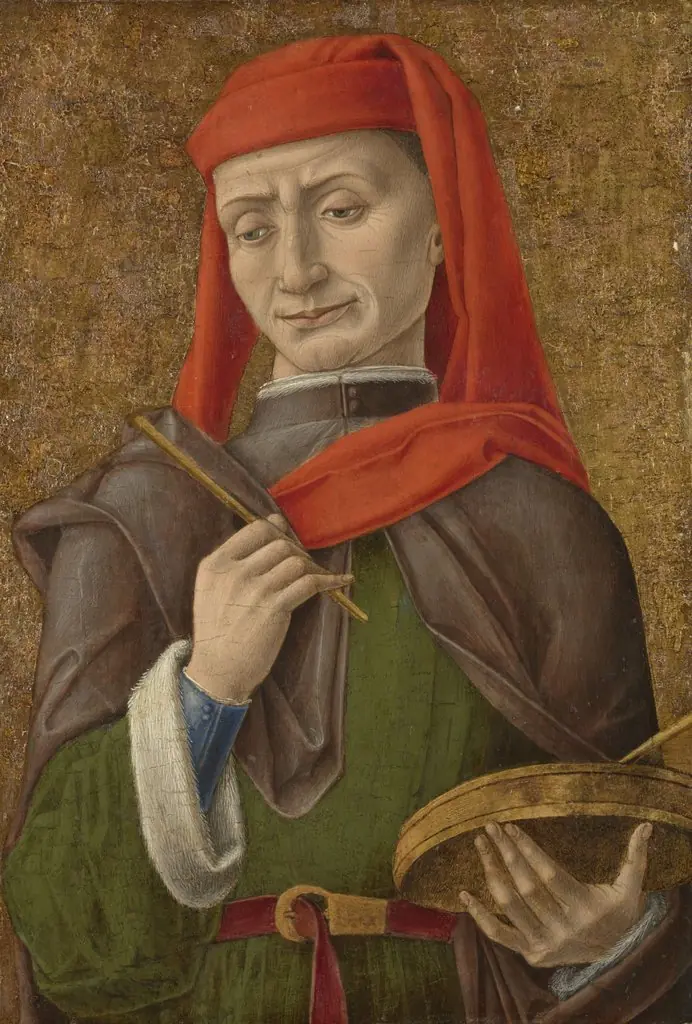
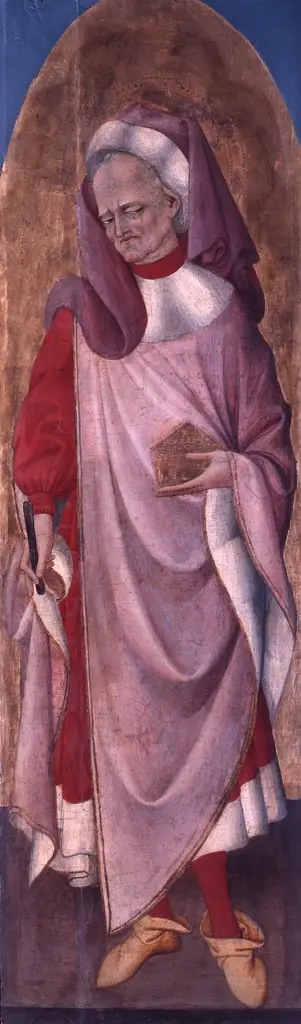
Saint Cosmas (or Damian) is an unspecified painting by Unknown. It dates from 1470 and is held in the collection of the Rijksmuseum. This painting depicts a male saint, likely Cosmas or his twin brother Damian, rendered in half-length format.
About this work
Overview
Both panels share consistent lighting and stylistic traits, suggesting they were designed to be viewed together.
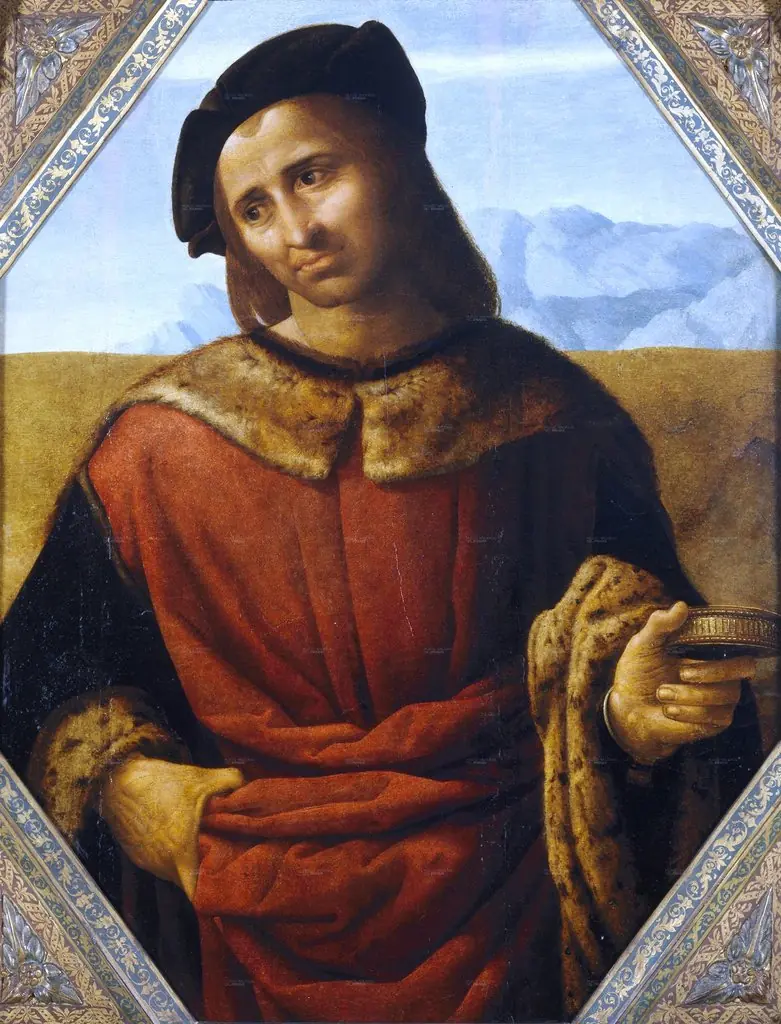
This painting depicts a male saint, likely Cosmas or his twin brother Damian, rendered in half-length format. He holds a small square container, traditionally associated with medicinal ointments. The work was created as a companion piece to another portrait in the same collection, forming a diptych. Both panels share consistent lighting and stylistic traits, suggesting they were designed to be viewed together.
Subject & Meaning
Cosmas and Damian were early Christian physicians and martyrs, venerated as patrons of medicine and healing. The square box he holds symbolizes the remedies they administered, blending earthly skill with divine intercession. Their dual identity as healer-saints made them popular subjects in devotional art, especially in regions where medical care was closely tied to spiritual faith.
Technique & Style
The figure is rendered with subtle chiaroscuro, using soft transitions between light and shadow to model the face and drapery. The red robe is painted with layered pigments to suggest texture and volume, while the calm, frontal gaze conveys stillness and solemnity. Brushwork is controlled and precise, avoiding dramatic expression in favor of quiet dignity.
History & Provenance
The painting was originally paired with a portrait of its twin saint, now held in the same institution. Both works likely originated in a Northern European workshop during the late medieval or early Renaissance period. Their preservation together suggests they remained as a set since creation, possibly commissioned for a church or private chapel dedicated to healing saints.
Context
In the late Middle Ages, saints associated with medicine were frequently depicted in pairs, reflecting their historical bond as twin brothers. Their imagery appeared in altarpieces, hospital chapels, and private devotional panels. The inclusion of a medicine box aligns with contemporary iconographic conventions, reinforcing their role as intercessors for the sick and practitioners of healing arts.
Legacy
This painting contributes to a broader tradition of saintly portraiture that emphasized quiet authority over theatricality. Its paired format reflects a devotional practice centered on symmetry and balance. Though unsigned and undated, its stylistic coherence with contemporaneous works helps situate it within regional artistic networks focused on religious narrative and symbolic clarity.
Artist & collection

 Domestic Scene
 Giacomo and Cardinal Marco, investing Andrea, Abbot of San Zeno, with his Benefice
 The Nymph of Fontainebleau
 Portrait of a Woman
 Madonna and Child with Saints in the Enclosed Garden
 Venus and Minerva
 Family Group of Four on Sofa
 Wall painting from Room H of the Villa of P. Fannius Synistor at Boscoreale