Artwork
San Geronimo: santo de retablo
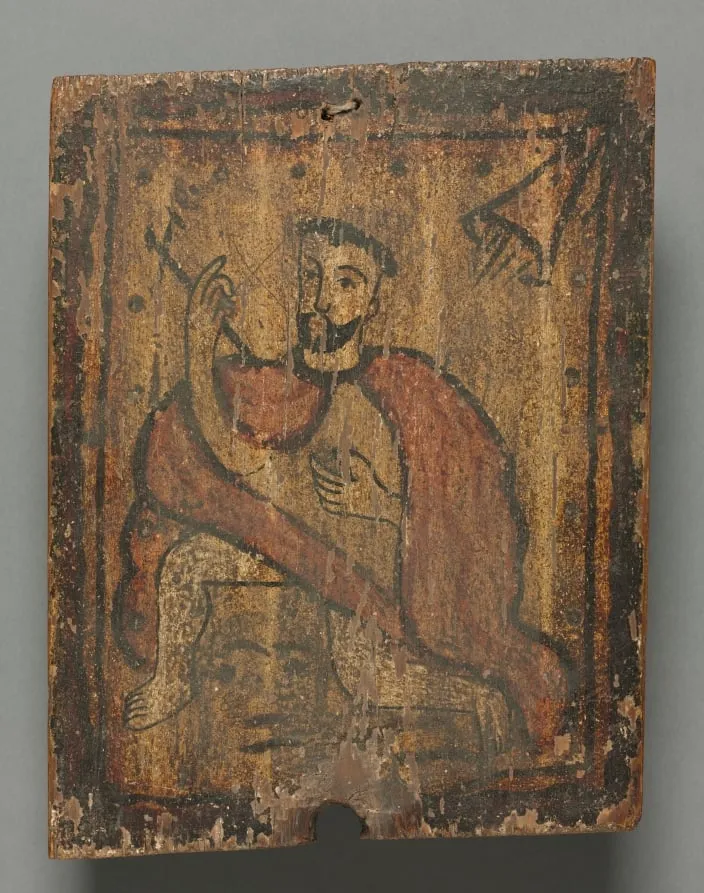
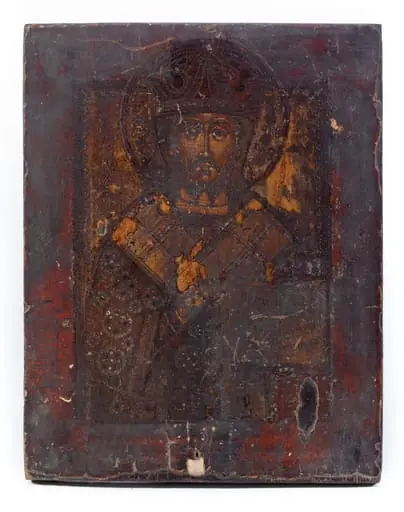
San Geronimo: santo de retablo is an unspecified painting by the Baroque artist Unknown. It dates from 1700 and is held in the collection of the Cleveland Museum of Art. This wooden panel painting depicts a bearded male figure in a red robe, seated with one hand raised in a gesture of blessing or address.
About this work
Overview
This wooden panel painting depicts a bearded male figure in a red robe, seated with one hand raised in a gesture of blessing or address.
This wooden panel painting depicts a bearded male figure in a red robe, seated with one hand raised in a gesture of blessing or address. The background is a flat, unmodulated gold field, typical of devotional art from colonial Latin America. The figure’s facial expression is solemn, and the colors are applied without shading, emphasizing symbolic presence over naturalism. The panel’s edges show signs of age, with cracking and wear consistent with long-term religious use.
Subject & Meaning
The figure is identified as Saint Jerome, a Church Father known for translating the Bible into Latin. His raised hand and scholarly attire align with traditional iconography of the saint as a teacher and spiritual authority. The gold background signifies divine presence, while the lack of spatial depth focuses attention on the figure’s sacred role. The image likely served as a focal point for prayer or veneration in a domestic or chapel setting.
Technique & Style
Painted in a flat, linear style with bright, unshaded pigments, the work reflects regional adaptations of European Baroque devotional models. The absence of chiaroscuro and perspective indicates a preference for symbolic clarity over illusionistic depth. The brushwork is deliberate and restrained, suited to mass-produced religious imagery. The wooden support, though worn, suggests the piece was handled and displayed over generations.
History & Provenance
Created in the 17th or early 18th century, likely in a workshop in New Spain or the Andes, this painting was probably made for private devotion or local church use. Its condition—cracked paint, worn edges—suggests prolonged exposure to ritual handling and environmental changes. No documented ownership prior to modern collection is known, but similar works were commonly produced for Catholic households during colonial rule.
Context
During the colonial period, religious imagery like this was widely distributed to reinforce Catholic doctrine among indigenous and mestizo populations. Artists adapted European models using local materials and aesthetic preferences, resulting in a distinctive hybrid style. The emphasis on clear, frontal figures with minimal depth suited liturgical needs and visual literacy in communities with limited access to formal education.
Legacy
This painting exemplifies the enduring influence of Spanish religious iconography in the Americas. Though not by a named master, its survival reflects the cultural weight of devotional objects in colonial society. Today, such works are studied as records of syncretism, craftsmanship, and the material expression of faith beyond European centers of art production.
Artist & collection

 Domestic Scene
 Giacomo and Cardinal Marco, investing Andrea, Abbot of San Zeno, with his Benefice
 The Nymph of Fontainebleau
 Portrait of a Woman
 Madonna and Child with Saints in the Enclosed Garden
 Venus and Minerva
 Family Group of Four on Sofa
 Wall painting from Room H of the Villa of P. Fannius Synistor at Boscoreale
 Saint Gertrude
 Arhanghelul Mihail
 Small coffered ceiling panel with scenes of gallantry and dancing
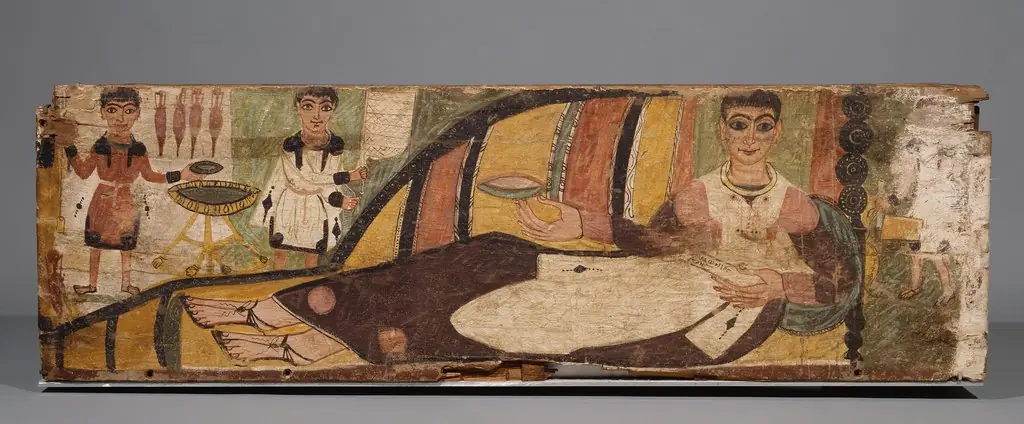 Sarcophagus of Ammonios
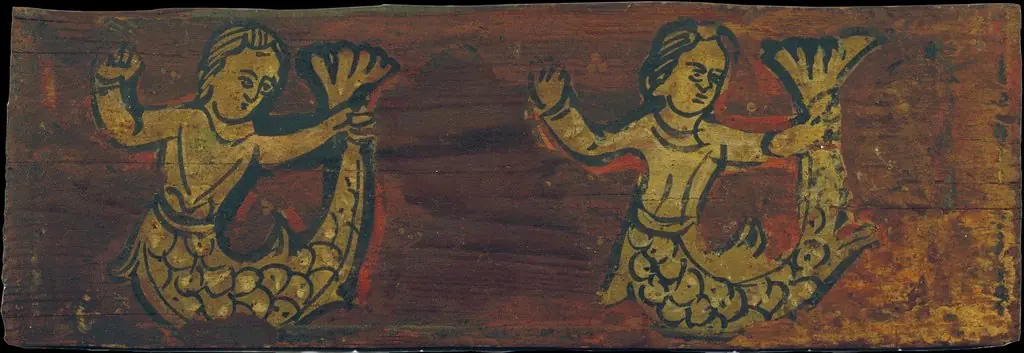 Small coffered ceiling panel with mermaids
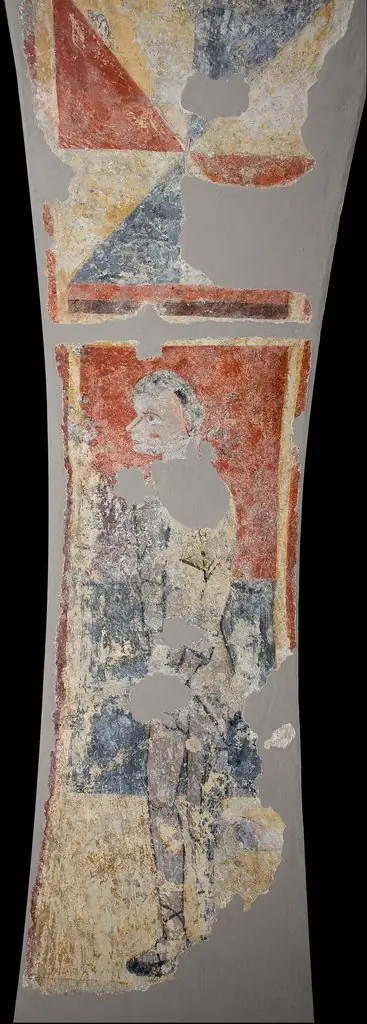 Lame man and sinner from Boí
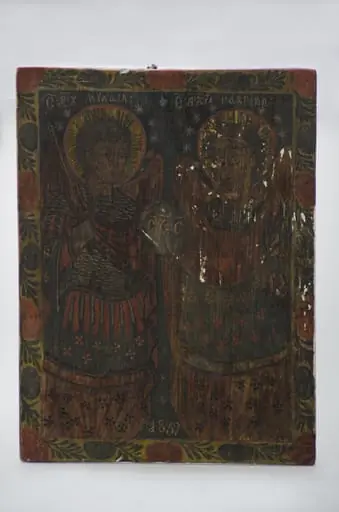 Icoană pe lemn, datată 1839, reprezentând pe Sfinții Arhangheli Mihail și Gavriil ținând în mână globul pământesc pe care sunt literele „S S S (Sfânt Sfânt Sfânt)” - cântarea îngerilor din ceruri. În registrul superior sunt scrise numele îngerilor în românește cu caractere chirilice: „Sf Arh Mihail – Sf Arh Gabriil”. Cu îmbrăcăminte ostășească, îngerii au aoreolă împrejurul capului, Mihail are sabie în mâna dreaptă iar Gavriil are crinul în mâna stângă. Icoana are un chenar realizat cu o linie subțire. Un al doilea chenar exterior cu motive florale și vegetale. Cromatică: roșu, alb, bleumarin; auriu; alb; negru.
 Sfântul Nicolae