Artwork
Sarcophagus of Ammonios
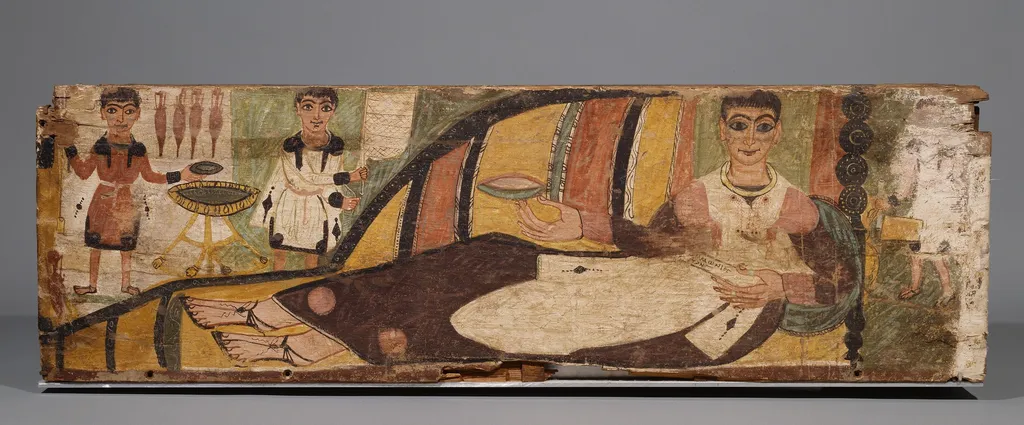
Sarcophagus of Ammonios is a wood painting by the Byzantine icon painting artist Unknown. It dates from 400 and is held in the collection of the J. Paul Getty Museum.
About this work
Overview
This wooden sarcophagus panel features a painted scene centered on a large, stylized fish, rendered in dark brown and white with prominent eyes and open mouth.
This wooden sarcophagus panel features a painted scene centered on a large, stylized fish, rendered in dark brown and white with prominent eyes and open mouth. Surrounding figures hold plates, suggesting a ritual or banquet setting. The background blends yellow, green, and brown hues, contributing to a sense of motion. The composition is asymmetrical and energetic, guiding the viewer’s gaze through the arrangement of bodies and objects.
Subject & Meaning
The imagery likely references funerary rites tied to sustenance in the afterlife, with the fish as a symbolic offering or spiritual emblem. Figures holding plates may represent mourners or servants providing food for the deceased. The dynamic arrangement implies an ongoing ceremonial act, reinforcing beliefs in continued nourishment beyond death. The fish’s central placement elevates its significance beyond mere food to a metaphysical marker.
Technique & Style
Paint was applied directly onto the wooden surface using flat, opaque pigments with minimal shading. Outlines define forms clearly, and figures are rendered in simplified, elongated proportions. Colors are applied in broad areas without gradation, emphasizing pattern over realism. The lack of perspective and stacked positioning of figures reflect a symbolic, rather than naturalistic, approach common in regional funerary art.
History & Provenance
The sarcophagus originates from a Hellenistic or Roman-period burial site in the eastern Mediterranean, likely dating to the first few centuries CE. Its wooden construction suggests local craftsmanship, as stone sarcophagi were more common in elite contexts. The panel was likely part of a larger coffin ensemble, now mostly lost. Its survival is rare due to wood’s perishable nature in humid climates.
Context
Depictions of fish in funerary art of this era often linked to resurrection, abundance, or divine provision. Similar scenes appear in mosaic floors and wall paintings from Syria and Egypt, where communal meals symbolized eternal fellowship. This panel reflects a blend of indigenous traditions with Greco-Roman funerary customs, illustrating how local communities adapted broader cultural motifs to express personal beliefs about the afterlife.
Legacy
As a rare surviving example of painted wooden funerary furniture, it offers insight into non-elite burial practices where materials were less durable. Its iconography contributes to understanding regional variations in religious expression during late antiquity. Though not widely influential in later traditions, it remains a valuable artifact for reconstructing the visual language of everyday spiritual life in antiquity.
Artist & collection

 Domestic Scene
 Giacomo and Cardinal Marco, investing Andrea, Abbot of San Zeno, with his Benefice
 The Nymph of Fontainebleau
 Portrait of a Woman
 Madonna and Child with Saints in the Enclosed Garden
 Venus and Minerva
 Family Group of Four on Sofa
 Wall painting from Room H of the Villa of P. Fannius Synistor at Boscoreale
 Man Making a Net, Tomb of Ipuy
 Untitled
 Funerary Portrait of a Young Girl
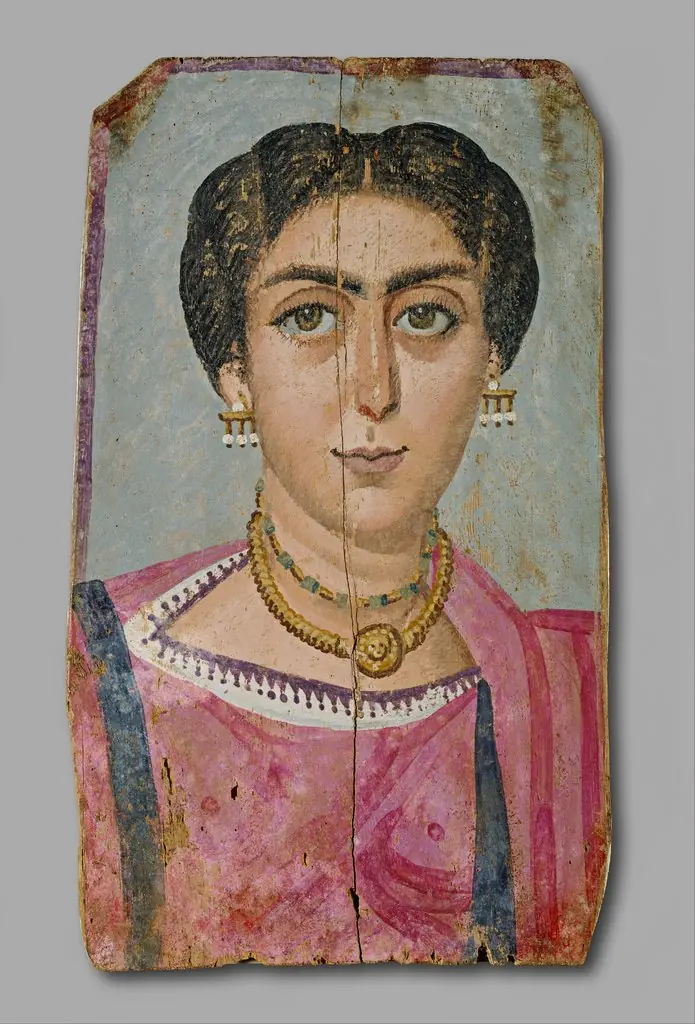 Mummy Portrait - Woman with Necklace
 Untitled
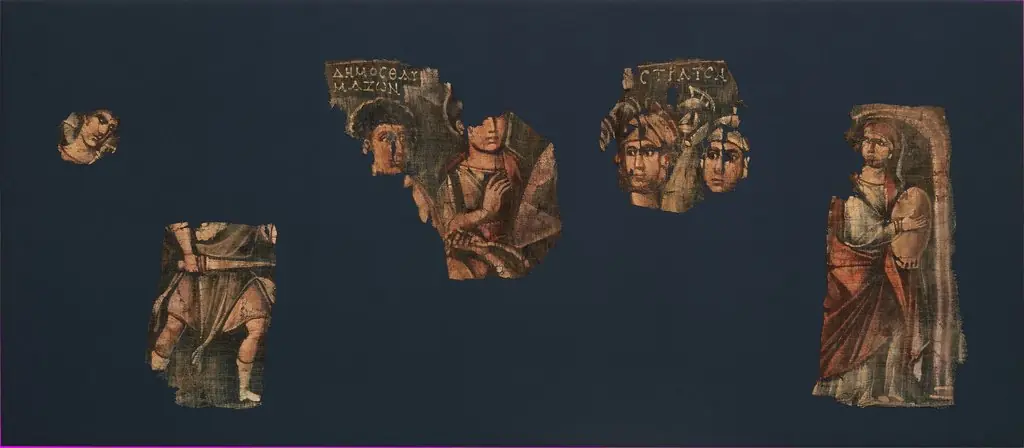 Exodus Painting, five elements from a painted hanging depicting the Crossing of the Red Sea
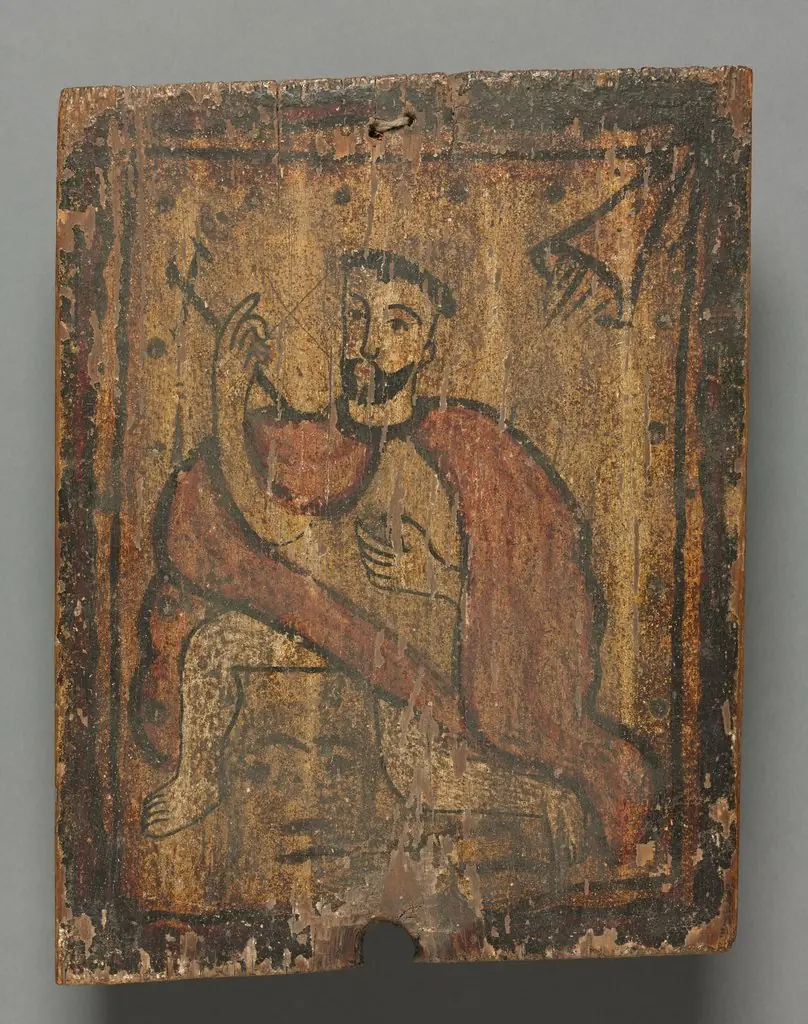 San Geronimo: santo de retablo
 Portrait of a young woman with a gilded wreath
 Head of a Woman
 San Geronimo: santo de retablo
 Gifts from Western Asia, Tomb of Rekhmire
 Sfinții Mihail și Gavriil