Artwork
Seven Leaves from a Manuscript of the Gandavyuha-sutra (Scripture of the Supreme Array)
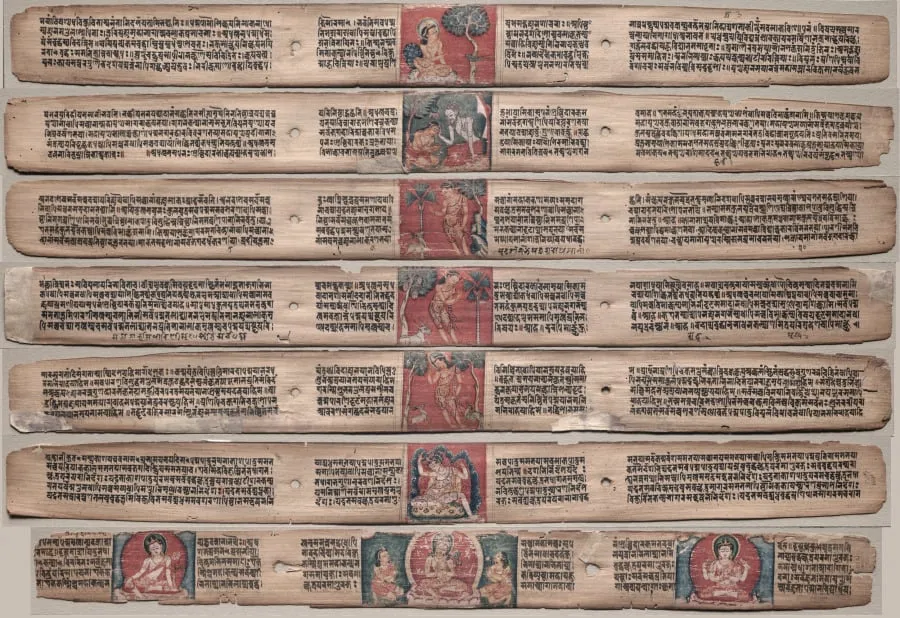
Seven Leaves from a Manuscript of the Gandavyuha-sutra (Scripture of the Supreme Array) is an unspecified painting by Unknown. It dates from 1100 and is held in the collection of the Cleveland Museum of Art. These seven narrow palm‑leaf sheets are fragments of a once‑continuous manuscript comprising 355 leaves.
About this work
Overview
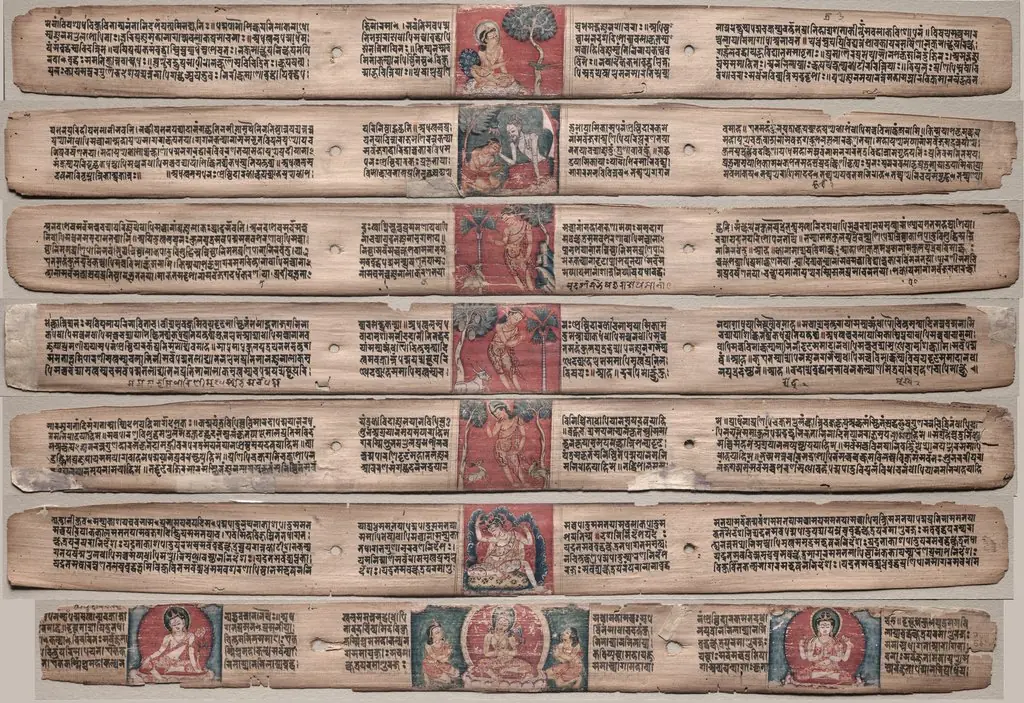
These seven narrow palm‑leaf sheets are fragments of a once‑continuous manuscript comprising 355 leaves. The work illustrated the Gandavyuha‑sutra, a Sanskrit Buddhist text recounting the pilgrim Sudhana’s quest for enlightenment. The surviving leaves are the only illustrated examples known from the original Sanskrit version of this scripture.
Subject & Meaning
Each leaf portrays a distinct episode in Sudhana’s journey, showing the youthful seeker in a red robe encountering various teachers, deities, and spirits. The scenes unfold beneath trees or within temple interiors, emphasizing the pilgrim’s progressive acquisition of wisdom through diverse encounters.
Technique & Style
The illustrations were executed on thin palm leaves, a traditional medium in South‑Asian manuscript production. The images employ fine line work and modest coloration, with the figure of Sudhana highlighted by his red garment, while surrounding figures and architectural elements are rendered in subdued tones that suggest depth within the limited surface.
History & Provenance
The original codex was disassembled in antiquity, and its individual leaves have since entered numerous museum collections worldwide. The seven leaves presented here represent the sole extant illustrated portion of the complete Sanskrit manuscript, offering a rare glimpse into the visual culture of early Buddhist textual transmission.
Context
The Gandavyuha‑sutra played a pivotal role in the diffusion of Mahayana Buddhism across East Asia, shaping doctrinal development and artistic representation of the Sudhana narrative. The manuscript’s origin lies within the broader tradition of Nepalese Buddhist art, where palm‑leaf books were a common vehicle for religious education.
Legacy
As the only surviving illustrated Sanskrit version of the Gandavyuha‑sutra, these leaves provide essential evidence for scholars studying the interplay of text and image in early Buddhist pedagogy. Their rarity underscores the importance of preserving fragmented manuscript materials for reconstructing historical religious practices.
Artist & collection

 Domestic Scene
 Giacomo and Cardinal Marco, investing Andrea, Abbot of San Zeno, with his Benefice
 The Nymph of Fontainebleau
 Portrait of a Woman
 Madonna and Child with Saints in the Enclosed Garden
 Venus and Minerva
 Family Group of Four on Sofa
 Wall painting from Room H of the Villa of P. Fannius Synistor at Boscoreale
 Seven Leaves from a Manuscript of the Gandavyuha-sutra (Scripture of the Supreme Array)
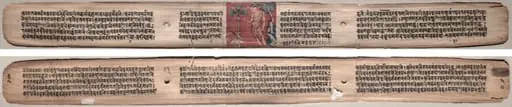 Folio 73 from a Gandavyuha-sutra (Scripture of the Supreme Array): Sudhana and an antelope (recto); text (verso)
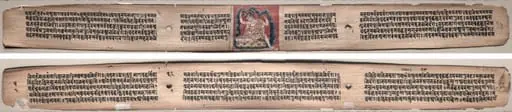 Folio 22 from a Gandavyuha-sutra (Scripture of the Supreme Array): Samantabhadra spinning clouds of things (recto); Text (verso)
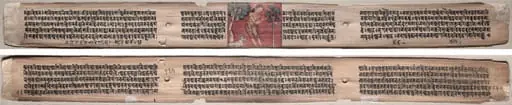 Folio 115 from a Gandavyuha-sutra (Scripture of the Supreme Array): Sudhana and a buffalo (recto); text (verso)
 Text, folio 73 (verso) from a Gandavyuha-sutra (Scripture of the Supreme Array)
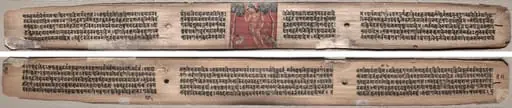 Folio 37 from a Gandavyuha-sutra (Scripture of the Supreme Array): Sudhana and a pair of antelopes (recto); text (verso)
 Sudhana and a parrot, folio 20 (recto) from a Gandavyuha-sutra (Scripture of the Supreme Array)