Artwork
筆者不詳 竹林七賢図|Seven Sages of the Bamboo Grove
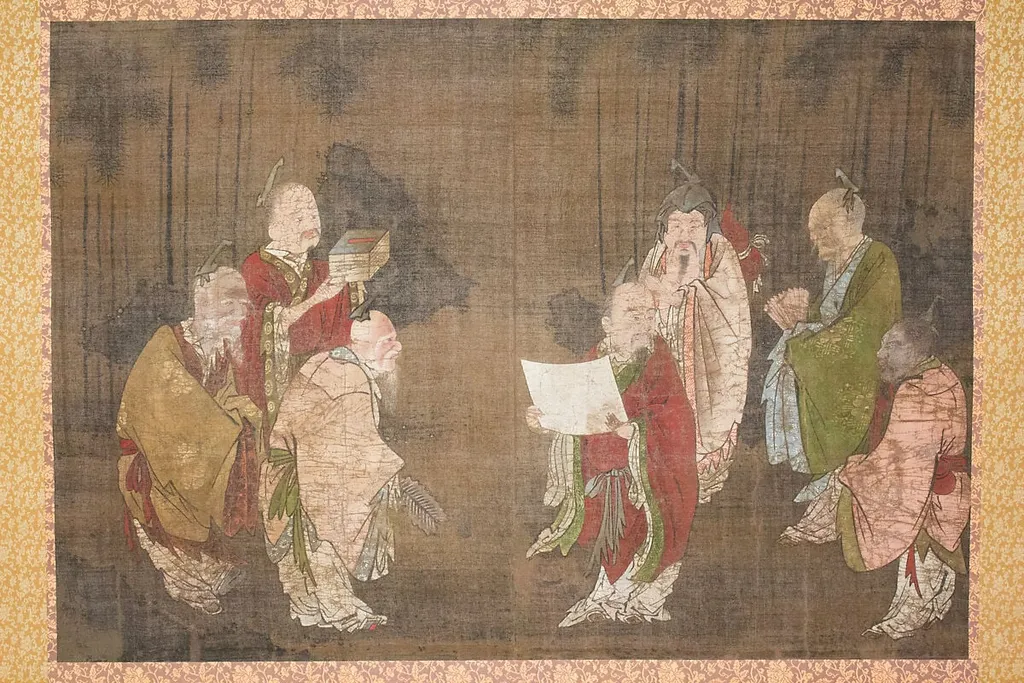
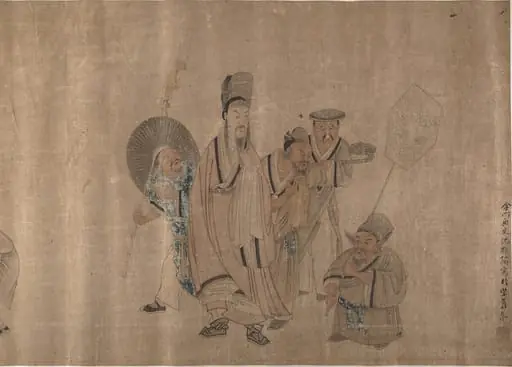
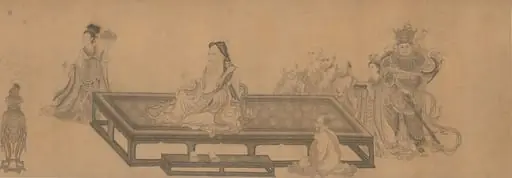
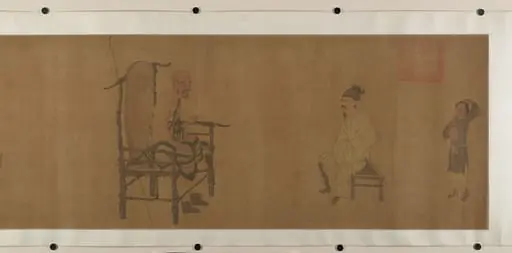
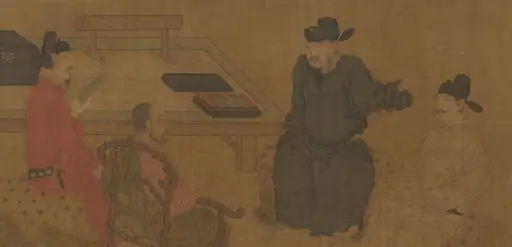
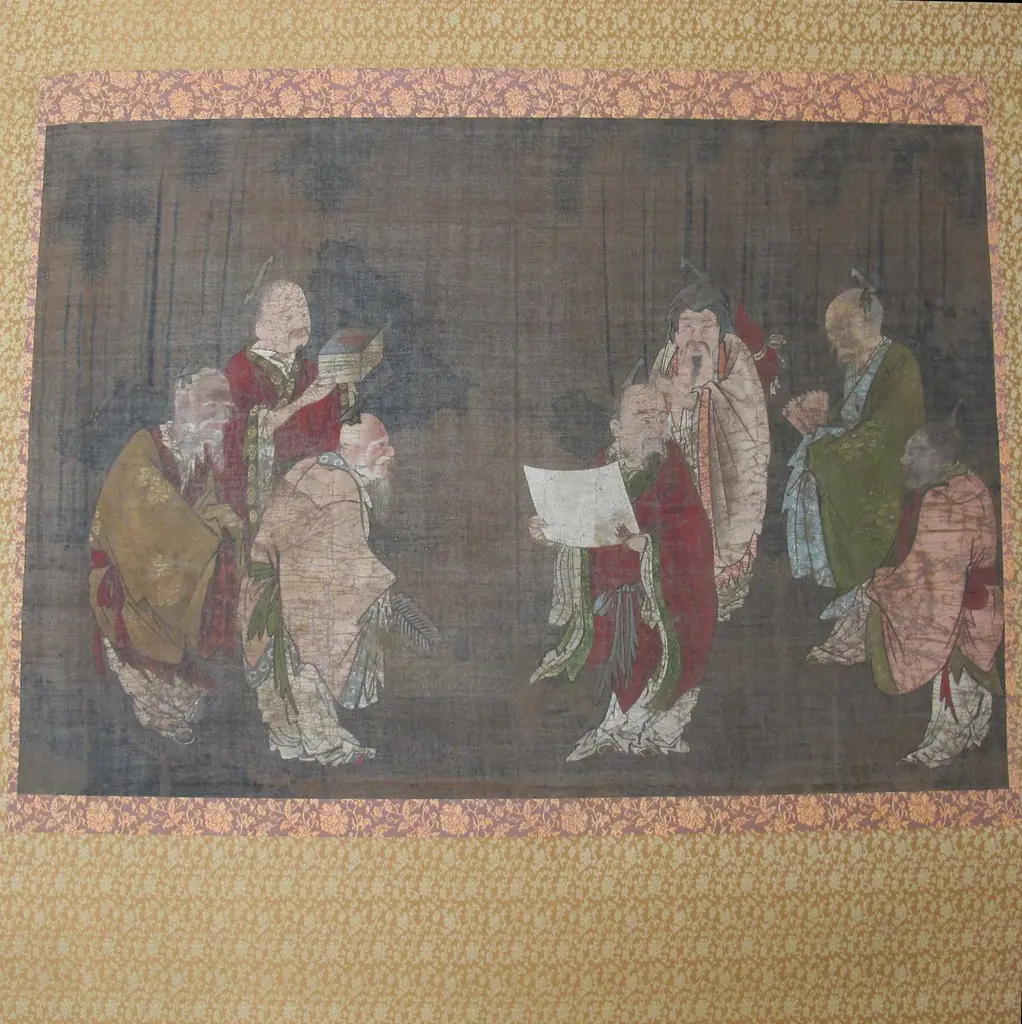
筆者不詳 竹林七賢図|Seven Sages of the Bamboo Grove is an ink painting. It dates from 1741 and is held in the collection of the Metropolitan Museum of Art. A hanging scroll rendered in ink and color on silk portrays seven figures gathered beneath a stand of bamboo.
About this work
Overview
A hanging scroll rendered in ink and color on silk portrays seven figures gathered beneath a stand of bamboo. The men are shown reclining, drinking, playing instruments, and conversing, evoking a leisurely retreat. The work is attributed to an anonymous hand and belongs to the Japanese tradition of painting Chinese literary themes.
Subject & Meaning
The scene illustrates the legendary Seven Sages of the Bamboo Grove, a group of Chinese scholars who withdrew from official life to seek personal freedom and spontaneity. The bamboo setting underscores virtues of resilience and pliancy, qualities the sages prized as they embraced a life removed from courtly constraints.
Technique & Style
Executed with brushwork characteristic of East Asian silk painting, the composition combines monochrome ink outlines with subtle color washes. The figures are rendered with delicate, flowing lines, while the bamboo stalks are depicted through rhythmic strokes that convey both texture and movement, creating a balanced interplay of form and space.
History & Provenance
Although the narrative originates in Chinese literature, the scroll was produced in Japan, reflecting the long‑standing cultural exchange between the two regions. The artist remains unidentified, and the piece has circulated within Japanese collections, where it has been valued as an example of cross‑cultural literary illustration.
Context
During the period when Chinese literary motifs were popular in Japanese visual arts, the Seven Sages theme served as a moral exemplar, encouraging scholars to prioritize personal integrity over bureaucratic ambition. The work thus aligns with broader Japanese interest in Chinese classical stories as vehicles for ethical reflection.
Artist & collection