Artwork
Sfânmati
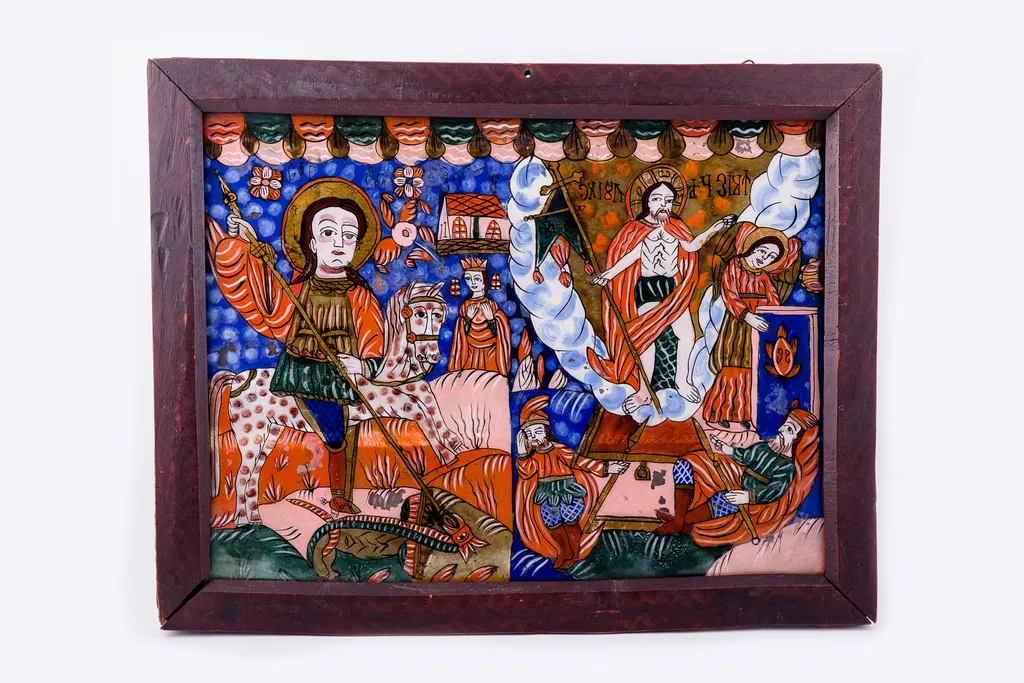
Sfânmati is a drawing by Unknown. It dates from 1850 and is held in the collection of the ASTRA National Museum Complex.
About this work
Overview
The palette throughout is characterized by flat, bold colors.
Sfânmati is a painting that juxtaposes two distinct religious scenes within a single frame, a common narrative device in religious art to convey multiple lessons simultaneously. The left side depicts a robed, haloed figure accompanied by a group in vibrant orange and green attire, set against a serene landscape of rolling hills and simple foliage. In contrast, the right side shows a haloed figure emerging from a tomb, cross in hand, observed by a kneeling onlooker, beneath a blue sky adorned with gold stars. The palette throughout is characterized by flat, bold colors.
Subject & Meaning
The painting combines two religious narratives. The left scene likely represents a saint or religious leader among followers, possibly illustrating a moment of teaching or gathering. The right scene unequivocally depicts a resurrection, with the cross-bearing, haloed figure symbolizing triumph over death. The juxtaposition may serve to contrast earthly community with divine redemption, or to highlight the connection between spiritual leadership and the promise of resurrection.
Technique & Style
Technically, the work is marked by the use of flat, bold colors, suggesting a focus on symbolic clarity over naturalistic depth. The simple, geometric forms of the trees and the flat, two-dimensional quality of the figures point towards a style prioritizing immediacy of message over illusionistic representation. The inclusion of an ancient script above the rising figure adds a layer of cultural and possibly liturgical depth, though its specific meaning is not immediately clear without further contextualization.
History & Provenance
Unfortunately, specific details regarding the painting's history and provenance are not provided in the available information. The origins, date of creation, and the artist's identity remain unclear, leaving a gap in understanding the work's historical context and evolution.
Context
The practice of combining multiple narratives in a single artwork was a common didactic strategy in religious art, aiming to educate viewers on various aspects of faith simultaneously. The use of bold colors and simple forms may also reflect the influence of regional or period-specific artistic traditions, though without more specific historical context, pinpointing these influences is challenging.
Legacy
The legacy of Sfânmati, in the absence of detailed historical and provenance information, is difficult to assess in terms of its impact on subsequent art or its reception over time. However, as an example of composite narrative religious art, it contributes to the broader understanding of how religious themes were communicated through visual juxtapositions in the past.
Artist & collection

 Domestic Scene
 Giacomo and Cardinal Marco, investing Andrea, Abbot of San Zeno, with his Benefice
 The Nymph of Fontainebleau
 Portrait of a Woman
 Madonna and Child with Saints in the Enclosed Garden
 Venus and Minerva
 Family Group of Four on Sofa
 Wall painting from Room H of the Villa of P. Fannius Synistor at Boscoreale
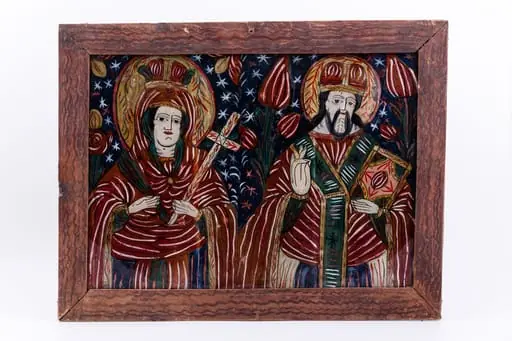 Icoana îi reprezintă pe Sfânta Mare Cuvioasă Parascheva de la Iași și pe Sfântul Ierarh Vasile cel Mare. Preacuvioasa este îmbrăcată în veșmânt roșu stacojiu-bordo-acajou, cu interiorul căptușit cu albastru și verde închis, ornat cu dungi albe subțiri. Peste maforionul roșu, sfânta cuvioasă are coroniță și aureolă. Mantia este prinsă la gât cu o fibulă aurie. În mâna dreaptă are un mănunchi de finic și în mâna stângă ține crucea. Alături de Sfânta Parascheva este Sfântul Ierarh Vasile cel Mare, îmbrăcat în veșminte liturgice arhierești cu felon-omofor roșu stacojiu, cu interiorul indigo închis, ornat cu striații albe fine, și cu epitrahil verde cu trei cruci negre. Cu mâna dreaptă Binecuvântează, iar în mâna stângă ține Sfânta Evanghelie închisă. Fondul icoanei este albastru ultramarin bleumarin închis înspre violet-indigo, cu elemente decorative fitomorfe și astrale albe și roșii. Cromatica este armonioasă, deși întunecată și rece: roșu stacojiu, bordo, acajou, albastru ultramarin bleumarin închis, violet-indigo, galben chihlimbar, brun, bej, verde de China, alb. Icoana este de Făgăraș și aparține Anei Deji.
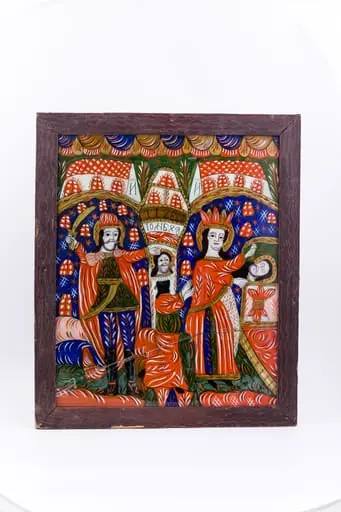 Icoana reprezintă Tăierea capului Sfântului Ioan Botezătorul și Înaintemergătorul Domnului Iisus Hristos. Central este capul Sfântului Ioan tăiat de mâna călăului și dat, prin mâinile Salomeiei în mâinile Irodiadei. În registrul inferior central sunt redate mâinile și poala rochiei dansânde, amintind de dansul Salomeiei, în fața nemilosului împărat Irod. În partea dreaptă este Irodiada, paralelă cu oșteanul călău, având pe tipsie capul Sfântului Ioan Botezătorul. În registrul superior, sunt două dealuri, cu grupuri de elemente de arhitectură - case cu ferestre - formând și alte deschideri-închideri, concavități convexe alternativ cromatizate, cu o bogăție de elemente decorative geometrizante și puncti-fitomorfe. Icoana are o compoziție simetrică și bine-organizată scenografic, cu o cromatică vie, armonioasă, deosebit de picturală: roșu vermillon, înspre trandafiriu, albastru cobalt, verde-brad, de China, roz, kaki, brun, negru, alb, galben citronne. Icoana este pictată de Ana Deji, din Făgăraș, Țara Făgărașului. Inscripția din româno-chirilică se traduce Tăierea Ioan Botez.
 Icoaînve
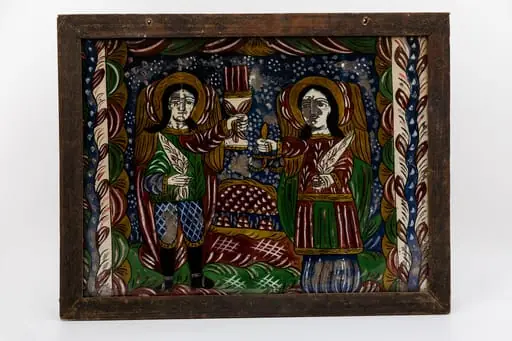 Sfinții Arhangheli Mihail și Gavriil sunt reprezentați împreună, fiind mai-marii voievozi ai oștilor cerești. În această icoană, este Sfântul Arhanghel Gavriil, supranumit îngerul aducător de dar și bunăvestire, iar al doilea este Sfântul Arhanghel Mihail, slujitorul Legii. Sfântul Gavriil este înveșmântat în sacos albastru cobalt, cu tunică și mantie roșie vermillon, cu interiorul verde văratic și are în mână frunzele crinului, iar Sfântul Mihail este îmbrăcat în haine de oștean militar, cavaler, cu pantaloni albaștri și vestă de zale, cu solzi aurii. Sfântul Arhanghel Mihail ridică Potirul Sfintei Împărtășanii. Fondul este cerul albastru ceruleum-cobalt, bogat ornamentat cu elemente decorative punctiflorale roșii și albe. Icoana este încadrată în chenar de linii ondulatorii și vălurite roșii și albastre. Cromatica armonioasă este alcătuită din: roșu stacojiu, albastru ceruleum, cobalt, verde văratic, nuanța de spanac-avocado, galben chihlimbar, crem, acajou, negru, alb. Icoana este pictată de Ana Deji. Icoana este din Țara Făgărașului, Făgăraș.
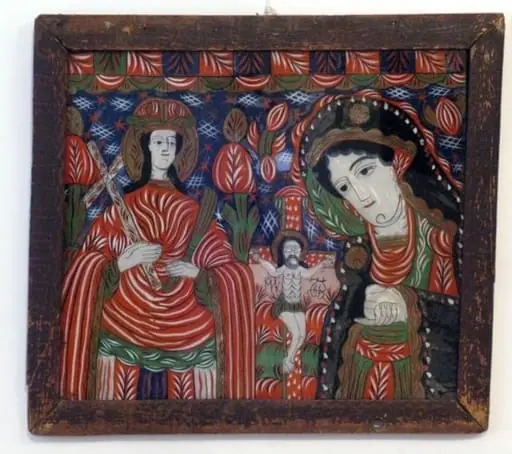 Sfânta Cuvioasă Paraschiva; Maica Domnului îndurerată
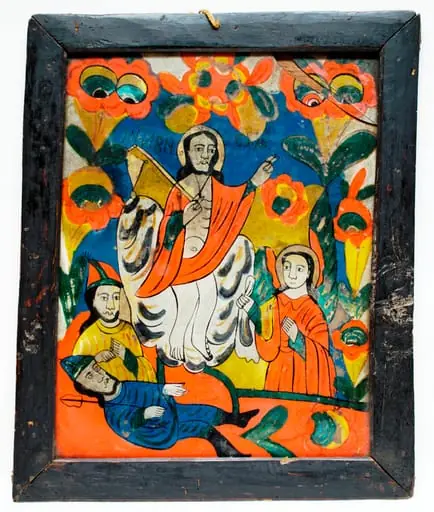 Icoaorat
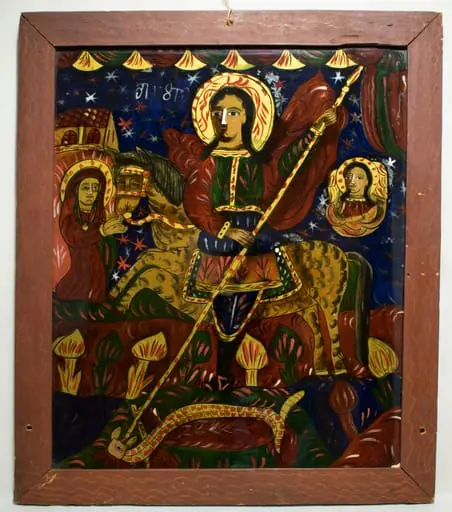
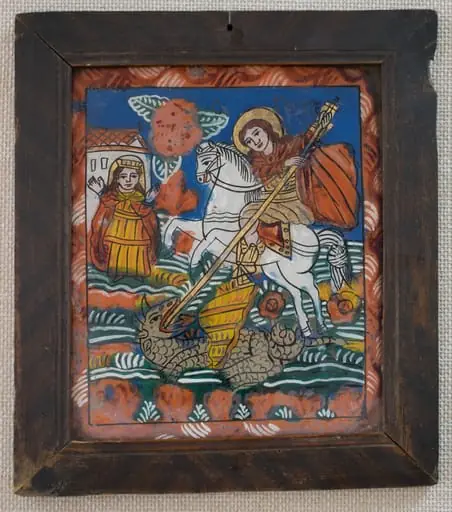 Icoana îl reprezintă pe sfântul Gheorghe omorând balaurul. Sfântul, călare pe cal alb, plasat central. Veșmintele sunt asemănătoare celor ale soldaților chezaro-crăiești, cizme înalte, tunică scurtă, zale, mantie roșie fluturând în vânt. Are capul descoperit, plete lungi, castanii, ochi mari, gura roșie, trăsăturile bine definite, expresive. În mână ține o suliță lungă, cruciformormă,aurită, cu care omoară balaurul înaripat, căzut la pământ, scoțînd limbi ascuțite. Calul este alb, capul mic, coada înnodată. Relieful este realizat prin linii albe) și vrâste de culoare(verde, galben,roșu), marcate cu motive fitomorfe. Câmp albastru închis, înviorat de o floare roșie cu frunze delimitate de nervuri albe. În partea stângă, în plan îndepărtat, în fața palatului sugerat printr-o clădire simplă,albă, înaltă, cu acoperiș de olane roșii, se află fata de împărat pe care o salvează sfântul conform legendei. Întreaga compoziție este încadrată de un chenar rectangular de culoare roșie, traversat longitudinal de o linie spiralată ale cărei meandre sunt însoțite de blicuri albe și verzui. Desenul complicat, tușa groasă, culorile intense, asemănător vitraliilor. Umplerea cu culoare neglijentă indică o producție de serie. Rama din lemn de brad este vopsită în cafeniu închis și decorată cu u motiv în formă de V Dosul este realizat din două scândurele de brad dispuse orizontal.
 IcoaȚări
 Icoaată