Artwork
Sfânta Treime prezentă în această icoană este inedită pentru că Dumnezeu-Tatăl și Dumnezeu-Fiul sunt foarte asemănători. Fiul după Chiul și Asemănarea! Sunt înveșmântați în roșu vermillon, galben și verde. Dumnezeu-Fiul are mantia roșie peste umăr - omofor și ține Crucea Răstignirii în mână. Dumnezeu-Tatăl și Dumnezeu-Fiul susțin împreună sfera globului pământesc cu mâinile. În registrul superior, deasupra, este Sfântul Duh care se Pogoară sub forma unui porumbel alb, prin Cerurile deschise, pe un mănunchi de stele bronzii. Fondul este cerul albastru ceruleum cu elemente astrale: stele roșii și albe. Cromatica este armonioasă, luminoasă și puternic-vie, speifică Țării Oltului: roșu vermillon, verde, ocru, galben chihlimbar, albastru ceruleum, roșu stacojiu, alb, negru. Inscripția din româno-chirilică se traduce Sfânta Treime Dumnezeu Tatăl.
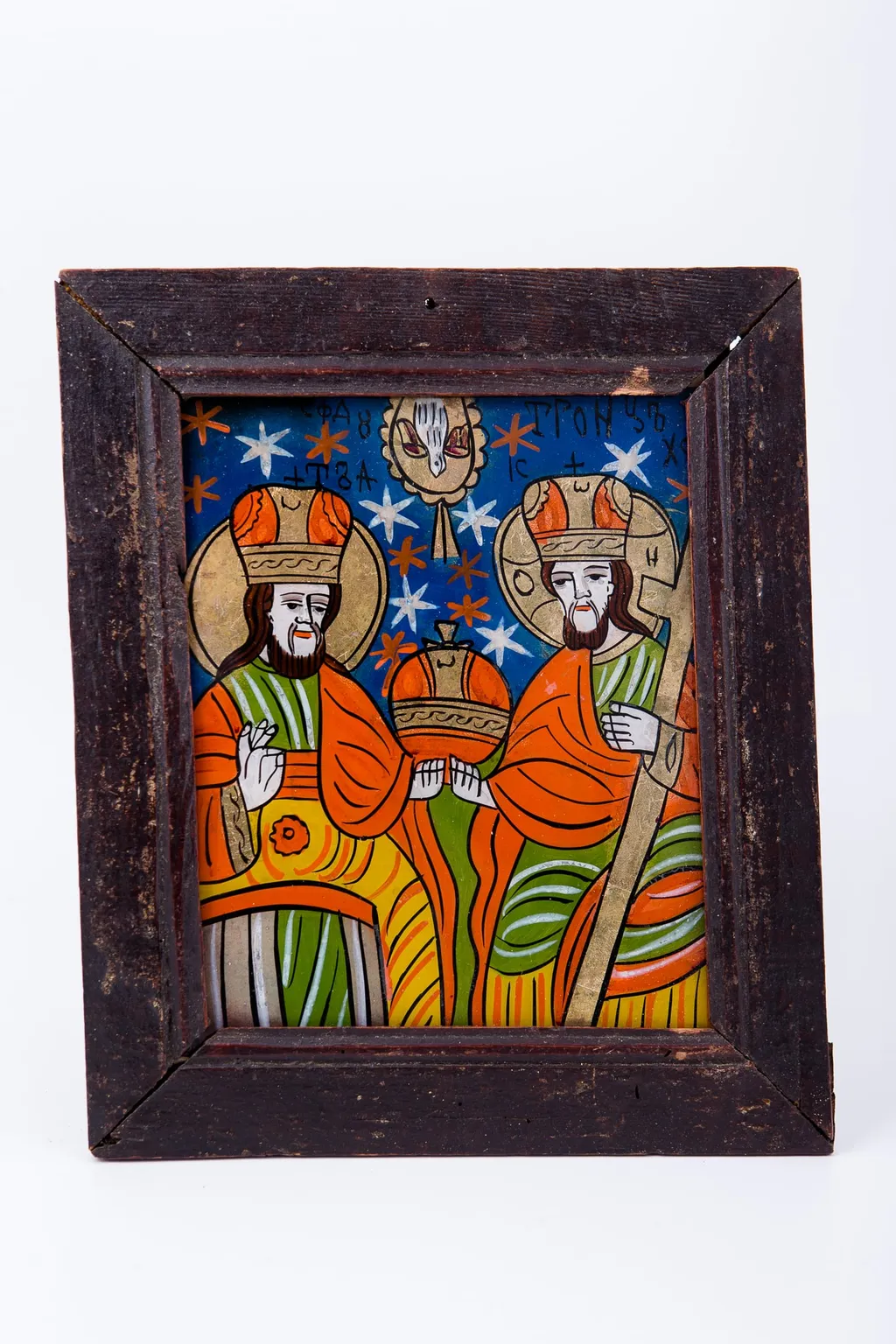
Sfânta Treime prezentă în această icoană este inedită pentru că Dumnezeu-Tatăl și Dumnezeu-Fiul sunt foarte asemănători. Fiul după Chiul și Asemănarea! Sunt înveșmântați în roșu vermillon, galben și verde. Dumnezeu-Fiul are mantia roșie peste umăr - omofor și ține Crucea Răstignirii în mână. Dumnezeu-Tatăl și Dumnezeu-Fiul susțin împreună sfera globului pământesc cu mâinile. În registrul superior, deasupra, este Sfântul Duh care se Pogoară sub forma unui porumbel alb, prin Cerurile deschise, pe un mănunchi de stele bronzii. Fondul este cerul albastru ceruleum cu elemente astrale: stele roșii și albe. Cromatica este armonioasă, luminoasă și puternic-vie, speifică Țării Oltului: roșu vermillon, verde, ocru, galben chihlimbar, albastru ceruleum, roșu stacojiu, alb, negru. Inscripția din româno-chirilică se traduce Sfânta Treime Dumnezeu Tatăl. is a drawing by Unknown. It dates from 1850 and is held in the collection of the ASTRA National Museum Complex. This icoană (icon) uniquely depicts the Holy Trinity with God the Father and God the Son bearing a strong resemblance.
About this work
Overview
This icoană (icon) uniquely depicts the Holy Trinity with God the Father and God the Son bearing a strong resemblance. Both figures are adorned in vermilion red, yellow, and green, with the Son wearing a red omophor (mantle) over his shoulder and holding the Cross of Crucifixion. Together, they support a terrestrial globe with their hands.
Subject & Meaning
The icon's central theme is the unity and harmony of the Holy Trinity. God the Father and God the Son, nearly indistinguishable, emphasize their shared divine nature. The globe they hold signifies their dominion over the earth, while the descending white dove (Holy Spirit) from the open heavens above, amidst bronze stars, completes the Trinity.
Technique & Style
The artwork features a vibrant, harmonious color palette characteristic of the Olt Country region: vermilion red, green, ochre, amber yellow, cerulean blue, crimson, white, and black. The bold lines and bright hues imbue the piece with energy and vitality. The style blends traditional iconography with a distinctive, lively interpretation.
Context
The use of romano-chirilic inscription ('Sfânta Treime Dumnezeu Tatăl') and the specific color choices suggest the icon's origins are deeply rooted in the cultural and religious practices of its region of creation, likely intended for devotional use.
Legacy
While not widely recognized beyond its regional context, this icon contributes to the broader tradition of religious art exploring the Holy Trinity. Its unique depiction of the Father and Son's similarity adds a distinct interpretation to the thematic canon.
Artist & collection

 Domestic Scene
 Giacomo and Cardinal Marco, investing Andrea, Abbot of San Zeno, with his Benefice
 The Nymph of Fontainebleau
 Portrait of a Woman
 Madonna and Child with Saints in the Enclosed Garden
 Venus and Minerva
 Family Group of Four on Sofa
 Wall painting from Room H of the Villa of P. Fannius Synistor at Boscoreale
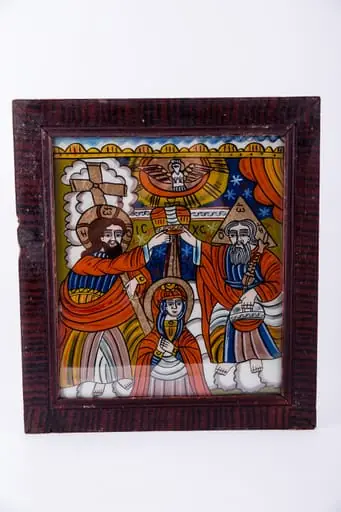 Dumnezeu Tatăl, Fiul Iisus Hristos așează dimpreună coroana de împărăteasă pe capul Maicii Domnului, iar din cerurile deschise se pogoară Sfântul Duh, printr-un porumbel, pe o rază luminoasă de soare. Compoziția se împarte simetric și echilibrat în patru părți, asemenea unei cruci. Fiul - Tatăl; Sfântul Duh - Maica Domnului. Maica Domnului are înălțimea mică a unei fetițe, fiind aleasă dintre oameni. Dumnezeu-Fiul are în mâna dreaptă Crucea, iar Dumnezeu-Tatăl are globul pământesc. Maica Domnului are mâinile împreunate în rugăciune și ascultare, smerenie și primire de bunăvoie. Sunt înveșmântați în roșu vermillon-galben-albastru. În registrul îndepărtat superior este cerul albastru cu stele albe, iar în registrul inferior sunt nori albi, toată narațiunea desfășurându-se în Împărăția Cerurilor, Maica Domnului fiind ridicată de pe pământ - Adormirea Maicii Domnului. În registrul superior, tematica iconografică este încadrată de un segment decorativ, geometrizant, asemenea unor colțișori de dantelărie. Inscripția în chirilică se traduce ICXC MP Iisus Hristos Maica Domnului. Cromatică: roșu vermillon, galben, albastru, alb. Icoana ste din Țara Oltului, Șcheii Brașovului.
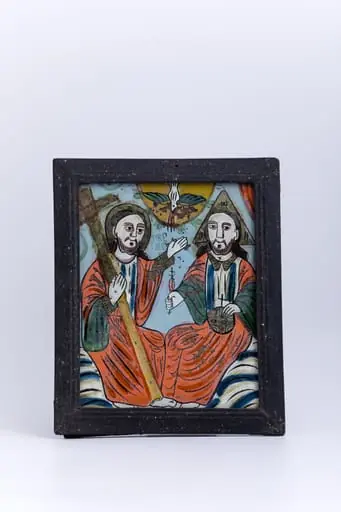 Icoana reprezintă Sfânta Treime. Dumnezeu-Tatăl are globul pământesc albastru pe genunchi și arătă către Fiul Iisus Hristos Binecuvântând lumea. Dumnezeu-Fiul are Crucea galbenă-aurie pe umărul drept și arătă către Dumnezeu-Tatăl. Dumnezeu-Tatăl și Dumnezeu-Fiul sunt înveșmântați în roșu vermillon și verde smarald cu albastru cobalt. Deasupra, în registrul superior este un soare galben, din care pe un mănunchi de raze luminoase, se pogoară Sfântul Duh, sub forma porumbelului alb. Astfel este prezentă întreaga Sfântă Treime. Între Dumnezeu-Tatăl și Fiul este un spațiu luminos de galben. Fondul icoanei este cerul albastru cobalt-regal, înconjurat de lumina galbenă-solară. Cromatica este luminoasă și armonioasă: roșu vermillon, albastru regal și cobalt, galben chihlimbar, verde smarald, gri, alb, negru.Inscripția din româno-chirilică se traduce Treime. Icoana este din Nordul Transilvaniei, Nicula.
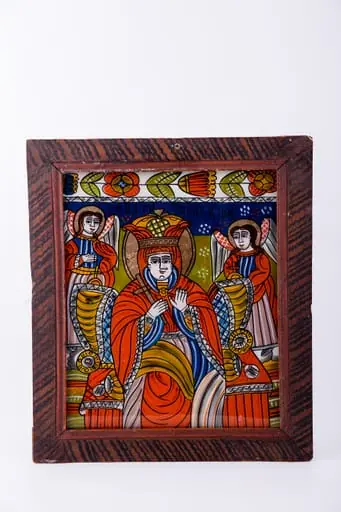 Sfânta Mare Cuvioasă Parascheva de la Iași este așezată pe tron împărătesc, având crucea în mâna dreaptă. Este îmbrăcată în veșmânt roșu vermillon, cu interiorul căptușit cu galben și albastru. Peste maforionul roșu, sfânta cuvioasă are coroniță și aureolă. În spatele tronului, stânga și dreapta, este câte un înger păzitor. În registrul superior este un segment de ghirlandă decorativă, cu flori și frunze. Fondul icoanei este împărțit în o treime de cer albastru și doua treimi vegetație de deal verde, lipite prin stele albe. Stelele sunt desenate asemenea unor floricele stilizate. Compoziția este elaborată și detaliile se întrepătrund armonios cu alternanța cromatică: roșu vermillon, galben, albastru, verde, alb. Este o icoană cu aer luminos, specific Țării Făgărașului. Inscripția în chirilică este pe albastrul cerului, în traducere Sfânta Paraschiva. Cromatica: albastru, roșu vermillon, galben, ocru, verde olive, alb, negru.
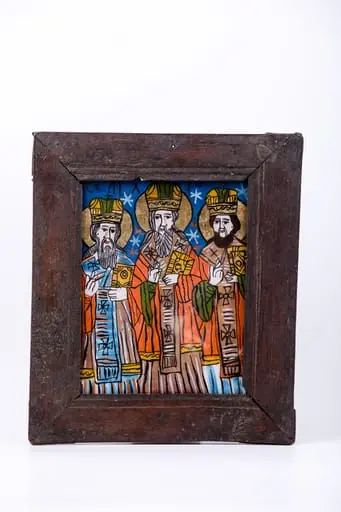 Cei Trei Sfinți Ierarhi Vasile cel Mare, Grigorie de Dumnezeu Cuvântătorul și Ioan Gură-de-Aur slujesc și săvârșesc Sfânta Liturghie împreună. Sunt înveșmântați în veșminte liturgice: sacos crem-albastru-alb-crem, felon roșu vermillon, epitrahil albastru-verde cu câte patru cruci negre. Sfântul Vasile cel Mare are Sfânta Evanghelie în mâna dreaptă. Sfântul Ierarh Grigorie de Dumnezeu Cuvântătorul Binecuvântează. Fondul registrului superior este cerul albastru-regal, bogat ornamentat cu elemente astrale - stele roșii și albe. Cromatica este luminoasă și armonioasă: verde văratic, alb, roșu vermillon, galben-ocru, bej, crem, albastru regal și bleu-ciel, negru. Este o icoană specifică picturii de Țara Oltului, cu un desen fin cu conturul negru și cromatica pastelată. Inscripția din româno-chirilică se traduce Vasile Grigorie Ioan.
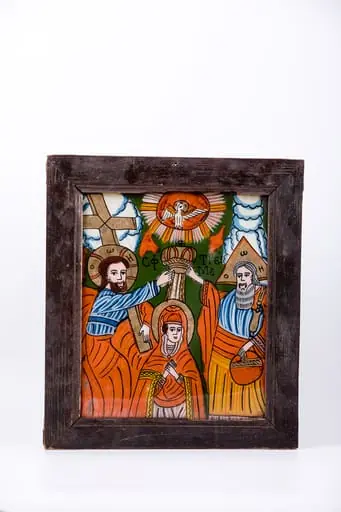 Icoana reprezintă Sfânta Treime - Sfânta Troiță și Încoronarea Maicii Domnului. Dumnezeu-Tatăl are sceptrul Împărăției Cerurilor și globul pământesc sprijinit pe genunchii părintești și Dumnezeu-Fiul are Crucea pe umărul stâng. Maica Domnului este ridicată în timpul de rugăciune și ascultare, smerenie și primire de bunăvoie. Dumnezeu-Tatăl, Dumnezeu-Fiul și Maica Domnului sunt înveșmântați în roșu vermillon-orange, alb, galben și albastru bleu-ciel. În registrul îndepărtat superior este cerul albastru, Dumnezeu-Fiul ține pe brațul stâng Crucea, iar Maica Domnului are mâinile împreunate în cruce pe piept. Dumnezeu-Tatăl și Dumnezeu-Fiul așează împreună coroana de împărăteasă a Cerurilor pe capul Fecioarei Maria. În registrul superior, printr-o mandorlă de nouri și un disc roșu de raze solare, deschizându-se cerurile, se coboară Sfântul Duh, sub forma unui porumbel, pe un mănunchi de raze de lumină. Maica Domnului este încoronată ca Împărăteasa Cerurilor de către Dumnezeu-Tatăl și Dumnezeu-Fiul. În registrul superior, icoana este încadrată de nori albi-albaștri bleu-ciel. Inscripția din româno-chirilică se traduce Sf Treime. Cromatica este luminoasă și armonioasă: roșu vermillon, orange, albastru bleu-ciel, verde văratic, galben, alb, auriu, negru. Trăsăturile chipurilor sunt rafinat desenate. Fondul icoanei este văzduhul verde-văratic, decorat de mandorle de nouri rotunzi albi-albaștri. Este o icoană de Țara Oltului.
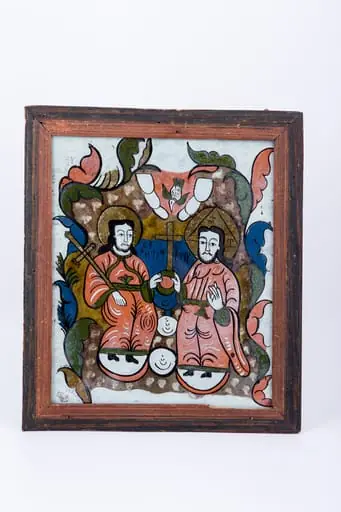 Dumnezeu-Fiul ține Crucea pe umărul drept, Dumnezeu-Tatăl are globul pământesc cu cruce, pe care îl susține, împreună cu Dumnezeu-Fiul. Veșmintele sunt roz cu verde. Deasupra este Sfântul Duh, sub forma porumbelului alb pogorât din Cerurile deschise, dintr-o mandorlă de nouri albi rotunzi, pe un mănunchi de raze luminoase. Inscripția din româno-chirilică se traduce Sfânta Treime. Cromatica este armonioasă: roz zmeuriu din roșu vermillon pal, albastru cobalt și regal, brun, bronziu, alb, negru. Trăsăturile chipurilor sunt rafinat desenate. Chenarul decorativ este format dintr-o alternanță de aripi roșii, albastre, verzi - elemente fitomorfe stilizate. Este o icoană de Nicula.
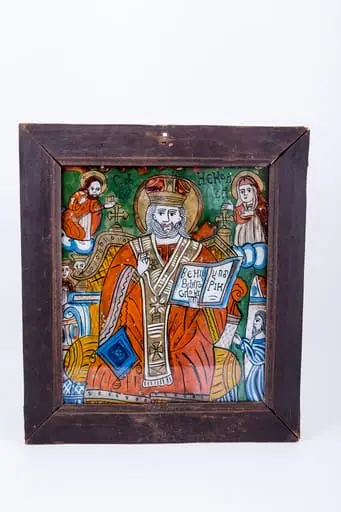 Sfântul Mare Ierarh Nicolae Făcătorul de minuni este redat central, fiind așezat pe un tron arhieresc, ținând în mâna stângă Sfânta Evanghelie deschisă și binecuvântează cu mâna dreaptă. Veșmintele arhierești liturgice ale sfântului ierarh sunt într-o alternanță cromatică de orange-albastru regal-brun-bronziu și alb și negru. Epitrahilul, patrafirul este brun-bronziu, cu patru cruci pe el, sacosul orange-roșu vermillon. Poartă mithră și are aureolă. În registrul superior îndepărtat sunt Dumnezeu-Tatăl și Maica Domnului, care binecuvântează și ocrotesc întreaga narațiune iconografică. Pe fondul verde, Mântuitorul și Maica Domnului au veșminte brune-crem și roșu-vermillon-orange. În registrul inferior sunt cele trei fete salvate de la sărăcie și păcat și tatăl fetelor mulțumind, în genunchi, pentru ajutorul primit. Inscripția din româno-chirilică se traduce Sf Nicolae ICXC MP Iisus Hristos Maica Domnului. Icoana are o cromatică puternic-vie, specifică Țării Oltului: roșu vermillon-orange, verde spanac-avocado, albastru regal, brun, gri,bronziu, alb, negru.