Artwork
Sfântul Arhidiacon Ștefan și Sfântul Ierarh Nicolae
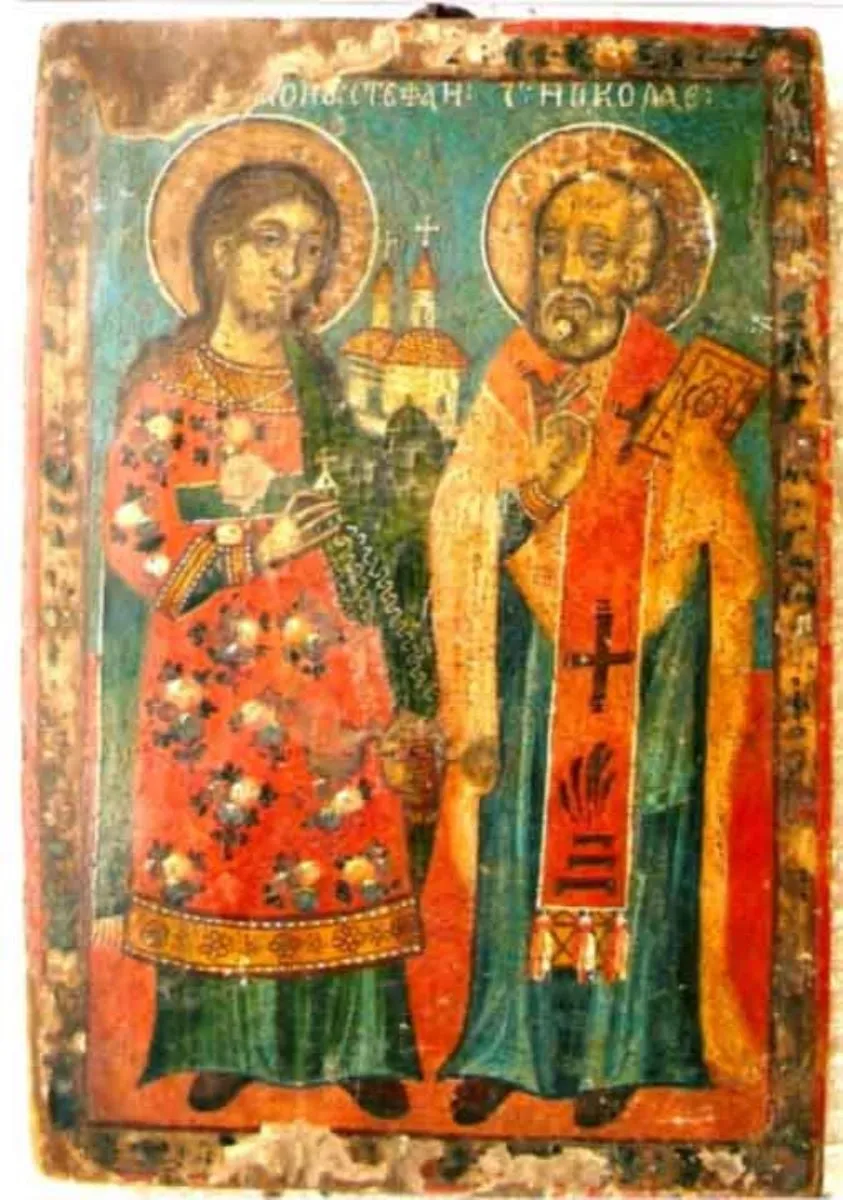
Sfântul Arhidiacon Ștefan și Sfântul Ierarh Nicolae is a drawing by Unknown. It dates from 1850 and is held in the collection of the Golești Viticulture and Pomiculture Museum. This painting depicts two Orthodox Christian saints standing together.
About this work
Overview
Beside him, Sfântul Ierarh Nicolae (Saint Nicholas the Hierarch) is dressed in an orange robe with green trim, wearing a cross and holding a book.
This painting depicts two Orthodox Christian saints standing together. The figure on the left, identified as Sfântul Arhidiacon Ștefan (Saint Archdeacon Stephen), wears a vibrant red robe adorned with gold patterns and holds an unidentified small object. Beside him, Sfântul Ierarh Nicolae (Saint Nicholas the Hierarch) is dressed in an orange robe with green trim, wearing a cross and holding a book. Both saints are haloed, set against a faded landscape background with architectural and natural elements.
Subject & Meaning
The painting honors two revered Orthodox saints. Saint Archdeacon Stephen, often associated with service and martyrdom, and Saint Nicholas, known for his piety, miracles, and protection, symbolize religious devotion and spiritual guidance. Their portrayal together may signify unity, shared values, or a specific narrative from Orthodox tradition.
Technique & Style
The work features intricate gold stitching on the saints' robes, indicative of traditional Orthodox iconography's emphasis on luxury and divinity. The faded background, slightly worn paint, and golden halos around the saints' heads contribute to an overall appearance of antiquity, suggesting an age-worn, possibly medieval or early modern, artistic approach.
History & Provenance
Limited information is provided about the painting's origins. Its style and materials suggest it could be from the medieval or early modern period, potentially originating from an Orthodox region. Further details on its creation, artist, or ownership history are not specified.
Context
This painting would have been created for veneration or decoration within an Orthodox context, possibly for a church or a devout household. The choice of saints may reflect local patronage or the artist's/patron's devotional preferences.
Legacy
The painting's legacy is not broadly outlined, but it remains a piece of cultural and religious heritage. Its preservation and display, as suggested by its presence in a mentioned museum (though the correct institution is likely the Museum of Ethnography's equivalent with relevant collections), indicates its value as a historical and artistic artifact.
Artist & collection
Museum
Golești Viticulture and Pomiculture Museum
Continue through works from the same source collection.
 Domestic Scene
 Giacomo and Cardinal Marco, investing Andrea, Abbot of San Zeno, with his Benefice
 The Nymph of Fontainebleau
 Portrait of a Woman
 Madonna and Child with Saints in the Enclosed Garden
 Venus and Minerva
 Family Group of Four on Sofa
 Wall painting from Room H of the Villa of P. Fannius Synistor at Boscoreale
 Nașterea Maicii Domnului
 Maica Domnului cu Pruncul
 Sf. Nicolae
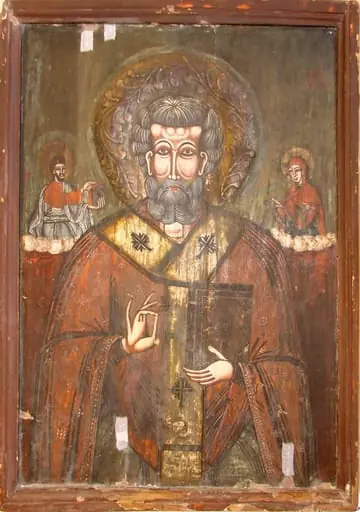 Sf. Nicolae
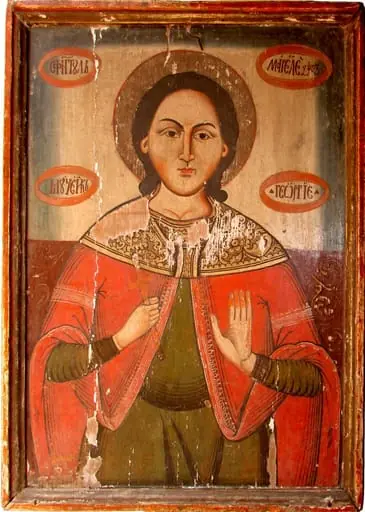 Sf. Gheorghe
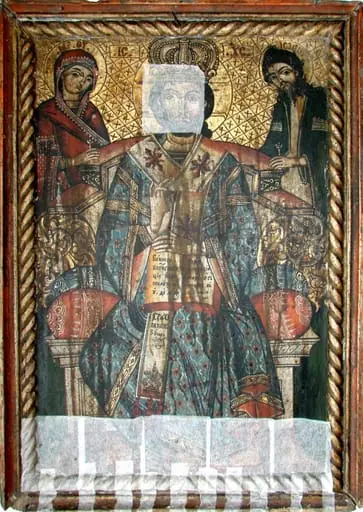 Deisis
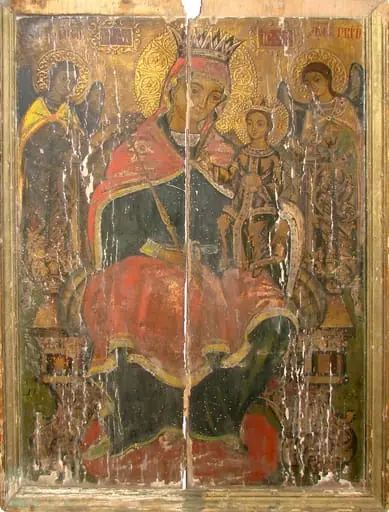 Maica Domnului cu Pruncul
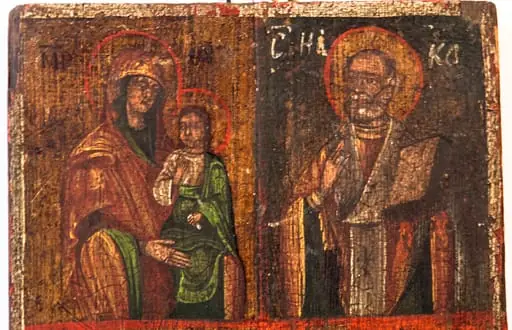 Icoana cu patru scene în care sunt reprezentați: Maica Domnului cu Pruncul(tipul Hodighitria), Sfântul Nicolae, sfântul Gheorghe, cuvioasa Paraschiva. Toți sunt redați 3/4, din semiprofil, pe un fond de culoare(galben) care servește și ca suport pentru pictură, la două casete peste acesta s-a aplicat albastru( fond la sf. Nicolae) și roșu (fond la Cuvioasa Paraschiva, continuat ca bandă de separație orizontală între registre.Pictura este ușor naivă și stângace, dar zugravul cunoștea canoanele picturi bizantine, chipurile sunt expresive, proporțiile respectate, se observă virtuozitate în realizarea faldurilor. Maica Domnului este înveșmântată cu maforion roșu deschis, drapaj galben, intradosul verde și stola bleumarin. Pruncul binecuvintează cu mâna dreaptă, în stânga ține un rotulus. Înveșmântat cu chiton alb și himation verde. Sfântul ierarh Nicolae binecuvintează cu dreapta în stânga ține Evanghelia. Are capul descoperit fruntea înaltă, barba și părul scurte. Sacos roșu cu drapaj galben, stihar bleumarin, epitrahil alb. Sfântul Gheorghe, tânăr, poartă o lorică argintie, tunică albastră, mantie roșii cu drapaj galben.. În dreapta ține o cruce, în stânga o lance.Cuvioasa Paraschiva poartă un maforion întunecat, tunică roșie cu drapaj galben și mâneci verzi.În dreapta ține o cruce mică, în stânga niște mătănii.Nimburile trasate cu o linie roșie. Chenar- bandă albă.
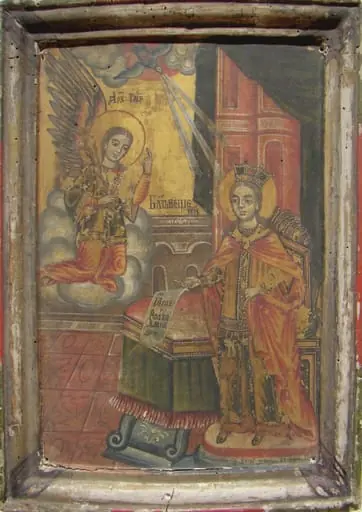 Buna Vestire