Artwork
Sfântul Mare Ierarh Nicolae
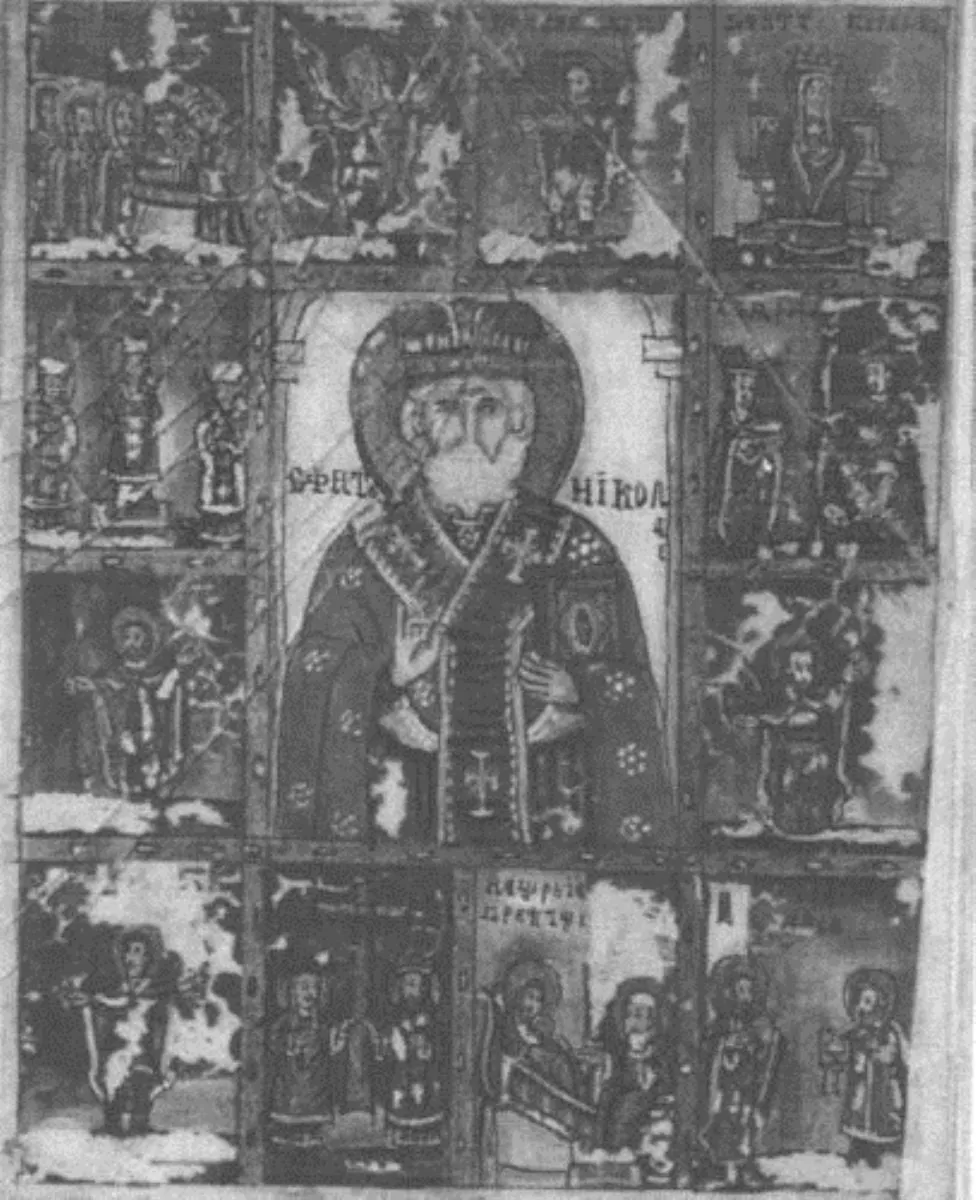
Sfântul Mare Ierarh Nicolae is a drawing by Unknown. It dates from 1850 and is held in the collection of the Colecție particulară - Sibiu.
About this work
Overview
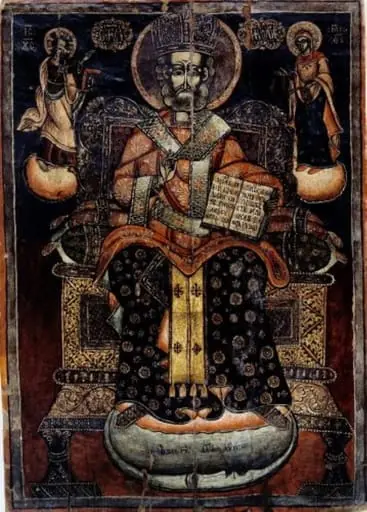
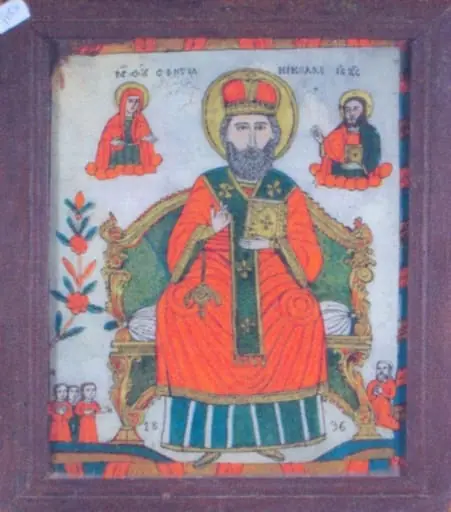
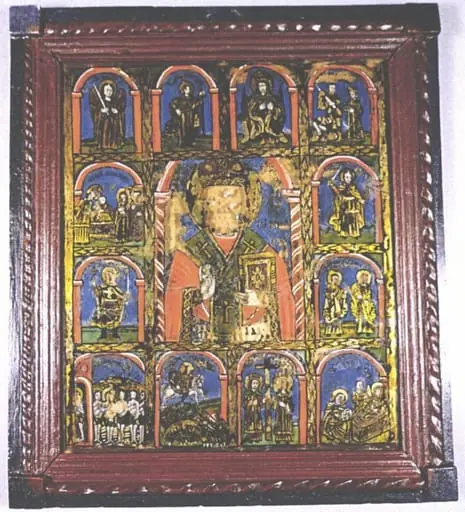
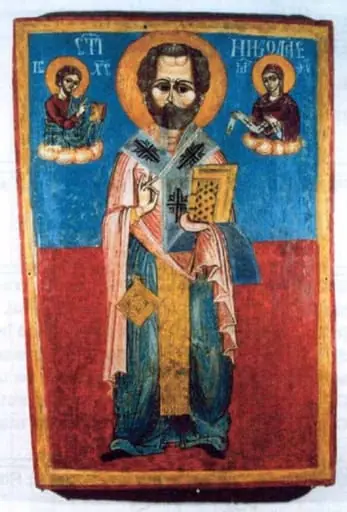
This ink drawing depicts Saint Nicholas, the Great Hierarch, as the central figure, rendered with a halo and holding a staff topped with a cross.
This ink drawing depicts Saint Nicholas, the Great Hierarch, as the central figure, rendered with a halo and holding a staff topped with a cross. Surrounding him are smaller narrative panels, each illustrating episodes from his life. The composition is stark, with no landscape or architectural detail, emphasizing the figures through strong linear contrasts and dense shading against a blank ground.
Subject & Meaning
The central figure is Saint Nicholas, venerated as a protector and miracle-worker in Eastern Christian tradition. The surrounding scenes likely depict key moments from his hagiography—such as providing dowries to impoverished girls or calming storms at sea. These vignettes serve both devotional and didactic purposes, reinforcing his role as an intercessor and model of Christian charity.
Technique & Style
The artist employs sharp, precise lines and heavy cross-hatching to define forms and create depth. The figures are outlined clearly, with minimal gradation, giving them a sculptural presence. The background remains untouched, heightening the focus on the figures and their gestures. The faded narrative panels suggest either material degradation or intentional simplification for symbolic emphasis.
History & Provenance
The drawing appears to originate from a liturgical or devotional manuscript, likely produced in a Byzantine or post-Byzantine scriptorium. Its style aligns with religious illustrations from the late medieval or early modern Balkans. The archaic script above the saint’s head indicates it was made before widespread standardization of ecclesiastical orthography, pointing to a pre-18th century origin.
Context
In Eastern Orthodox tradition, images of Saint Nicholas were common in churches and private prayer books, serving as aids for meditation and veneration. This drawing reflects a portable, intimate format—perhaps used by clergy or devout laypeople. Its emphasis on narrative episodes aligns with the broader practice of visual storytelling in religious instruction during a time of low literacy.
Legacy
Though the narrative scenes are now difficult to decipher, the drawing preserves a visual language once widely understood by its original audience. It exemplifies the enduring use of linear clarity and symbolic composition in Orthodox iconography. Its survival offers insight into how religious figures were visually encoded for spiritual contemplation across centuries.
Artist & collection
 Domestic Scene
 Giacomo and Cardinal Marco, investing Andrea, Abbot of San Zeno, with his Benefice
 The Nymph of Fontainebleau
 Portrait of a Woman
 Madonna and Child with Saints in the Enclosed Garden
 Venus and Minerva
 Family Group of Four on Sofa
 Wall painting from Room H of the Villa of P. Fannius Synistor at Boscoreale