Artwork
Sfântul Ierarh Nicolae
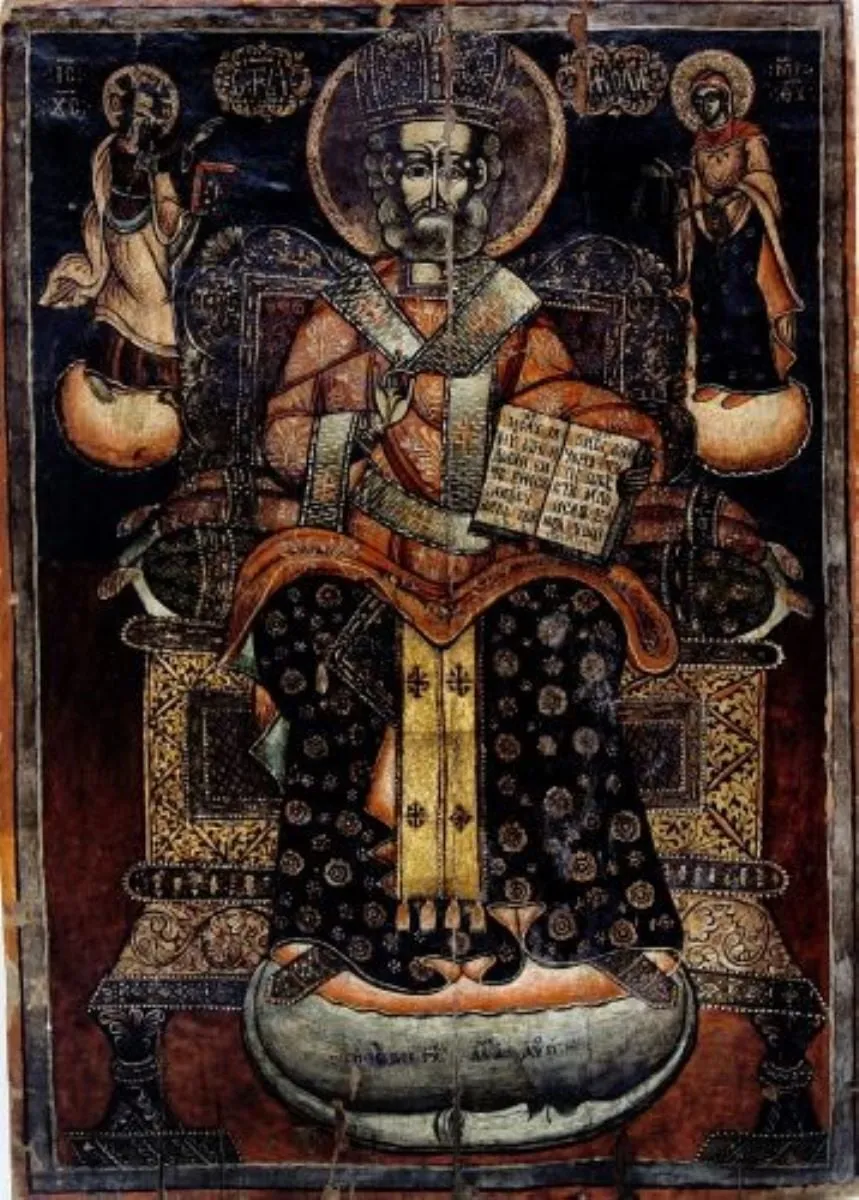
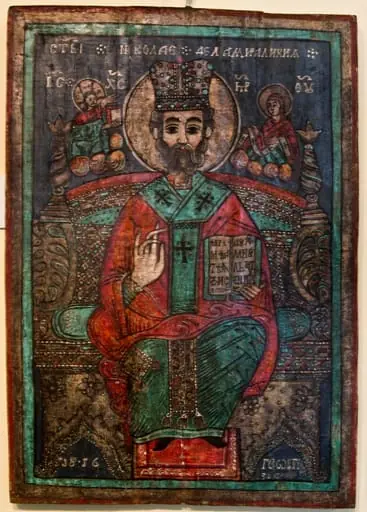
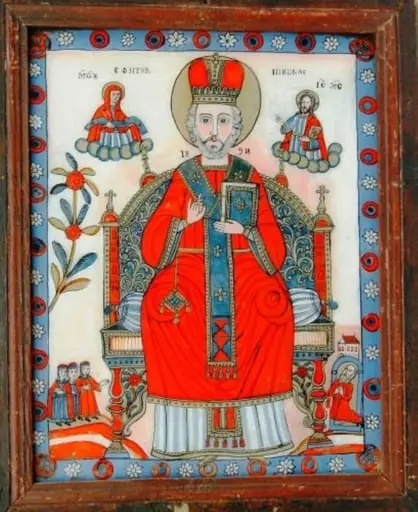
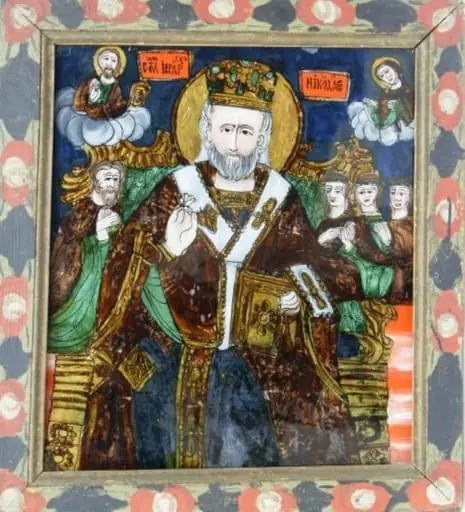
Sfântul Ierarh Nicolae is a drawing by the Romanticist artist Unknown. It dates from 1789 and is held in the collection of the Romanian Peasant Museum. This religious icon depicts Saint Nicholas, a revered bishop, seated in solemn dignity.
About this work
Overview
The composition follows established liturgical conventions, emphasizing spiritual authority over naturalistic representation.
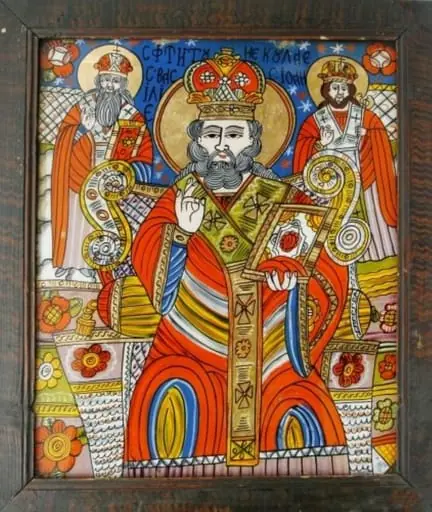
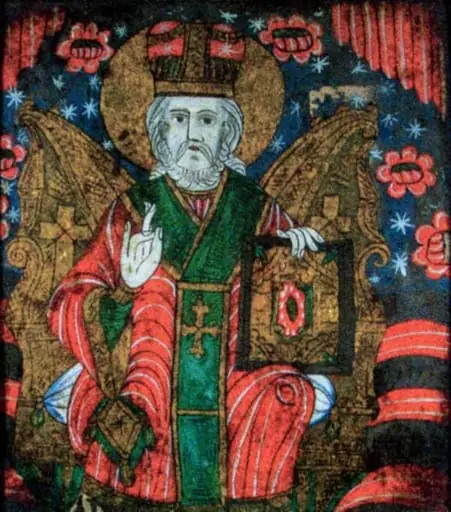
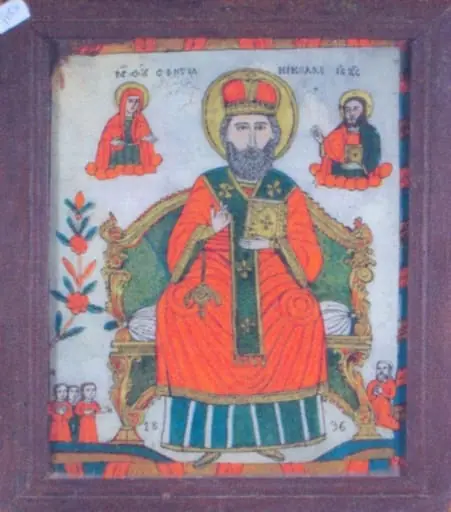
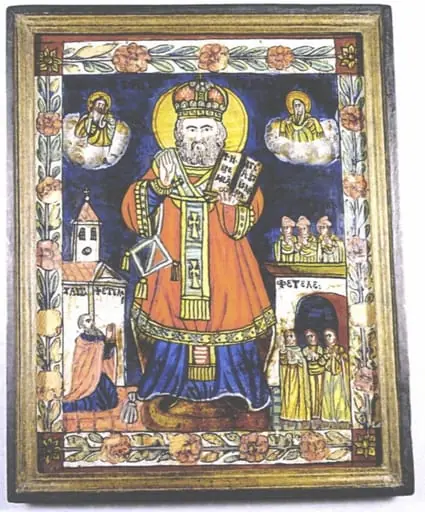
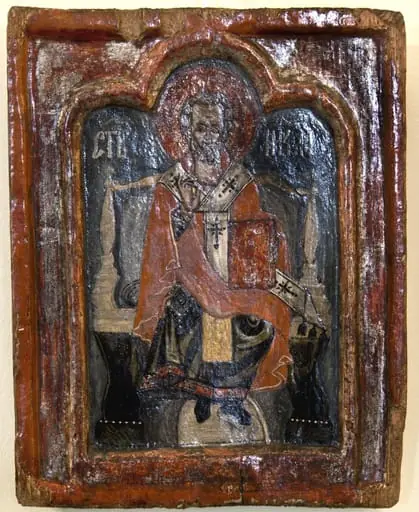
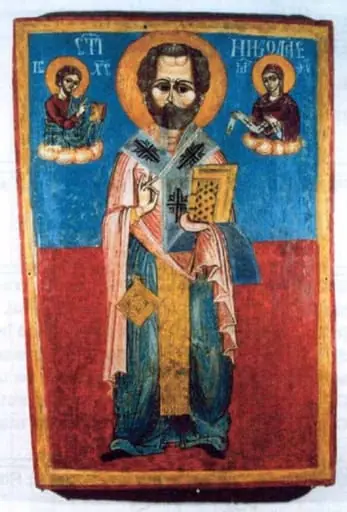
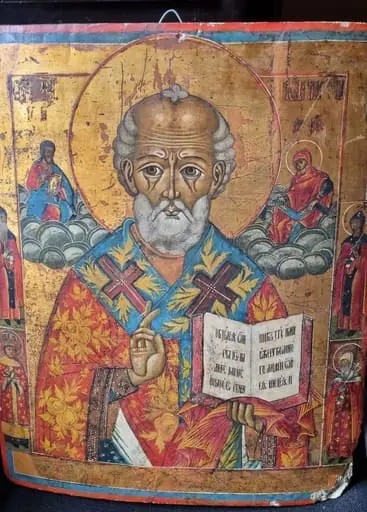
This religious icon depicts Saint Nicholas, a revered bishop, seated in solemn dignity. Rendered in a traditional Byzantine style, the figure is framed by ornamental gold patterning against a dark background. Two hovering figures, likely angels, hold scrolls, reinforcing the sacred context. The composition follows established liturgical conventions, emphasizing spiritual authority over naturalistic representation.
Subject & Meaning
Saint Nicholas, shown in episcopal regalia with crown and necklace, symbolizes both ecclesiastical power and divine intercession. The book he holds represents sacred scripture, central to his role as teacher and protector of the faith. The floating figures with scrolls may signify divine revelation or the transmission of wisdom, reinforcing his status as a holy intercessor between heaven and earth.
Technique & Style
The painting employs flat, sharply defined forms and limited tonal variation, typical of Eastern Orthodox iconography. Gold leaf accents the background and garments, creating a luminous, otherworldly atmosphere. Facial features are rendered with precise lines and minimal shading, prioritizing symbolic presence over individual likeness. The use of cross-hatching is absent; instead, clarity and hierarchy guide the visual structure.
History & Provenance
This work originates from a region with strong Byzantine artistic traditions, likely produced in a monastic workshop during the late medieval period. Such icons were commissioned for private devotion or church altars. While specific provenance is unrecorded, its stylistic features align with Orthodox practices in the Balkans or Anatolia, where icon painting remained a living tradition well into the early modern era.
Context
In Orthodox Christian communities, icons like this served as focal points for prayer and veneration. The rigid composition and symbolic elements reflect theological principles rather than secular aesthetics. Saint Nicholas, celebrated for his miracles and charity, was a popular subject in religious art across Eastern Europe, often depicted with attributes that affirmed his role as protector of the faithful.
Legacy
This icon exemplifies a centuries-old visual language that persisted despite political and cultural shifts. Its adherence to traditional forms helped preserve doctrinal continuity within Orthodox communities. Though later artistic movements embraced naturalism, such icons remained in active use, sustaining a direct link to medieval spiritual practices and aesthetic values.
Artist & collection

 Domestic Scene
 Giacomo and Cardinal Marco, investing Andrea, Abbot of San Zeno, with his Benefice
 The Nymph of Fontainebleau
 Portrait of a Woman
 Madonna and Child with Saints in the Enclosed Garden
 Venus and Minerva
 Family Group of Four on Sofa
 Wall painting from Room H of the Villa of P. Fannius Synistor at Boscoreale