Artwork
Sfinții Apostoli Matei și Simon
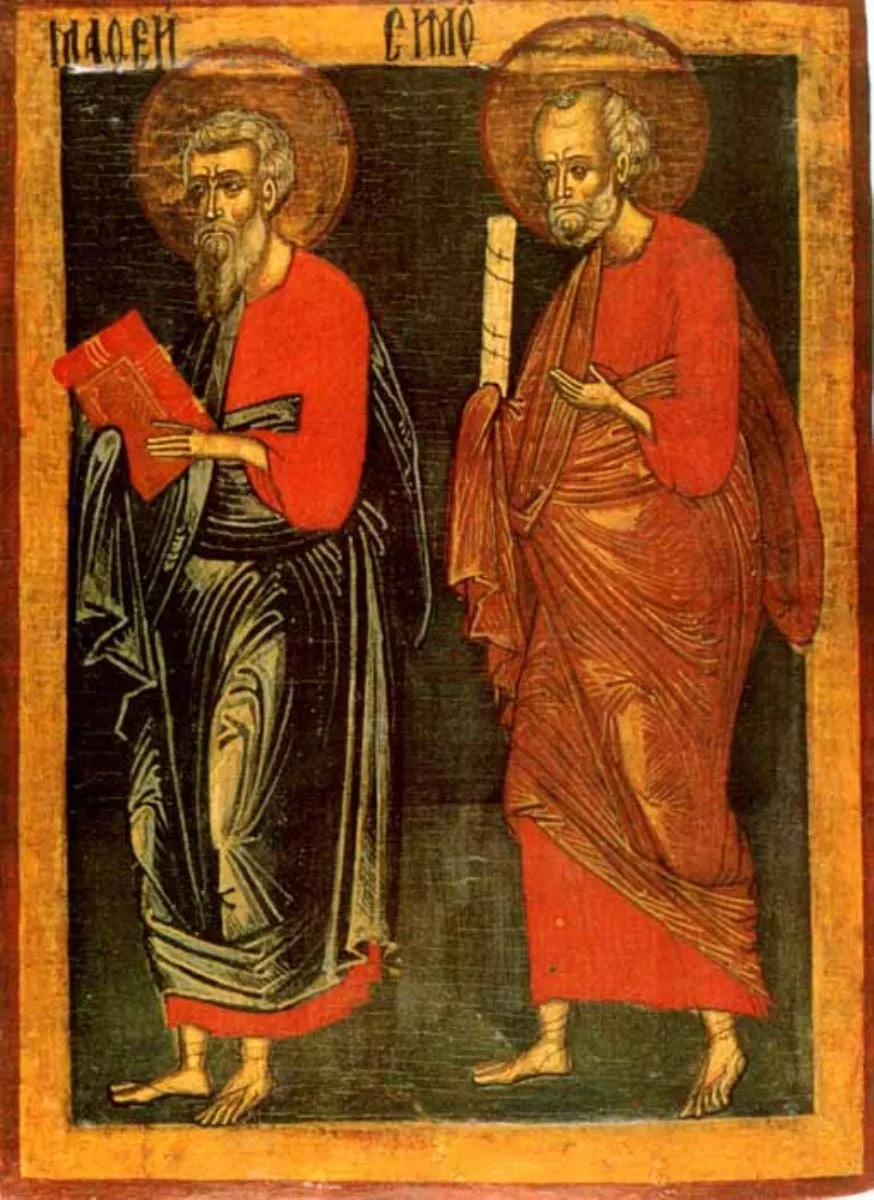
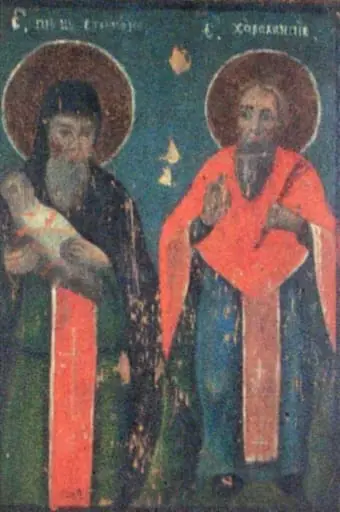
Sfinții Apostoli Matei și Simon is a drawing by Unknown. It dates from 1850 and is held in the collection of the National Museum of Art of Romania. This work portrays two apostles, Matthew and Simon, standing side by side in a solemn, frontal composition.
About this work
Overview
Their halos and bare feet signal their sacred status, while the dark background isolates them as objects of veneration.
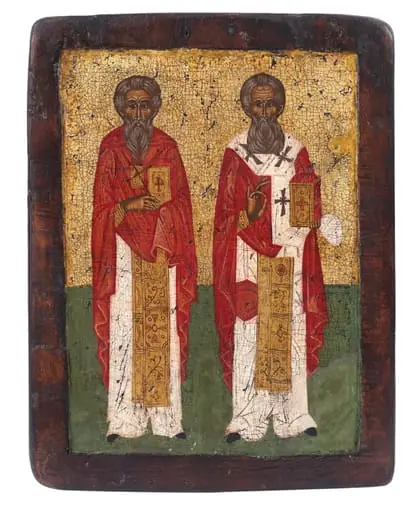
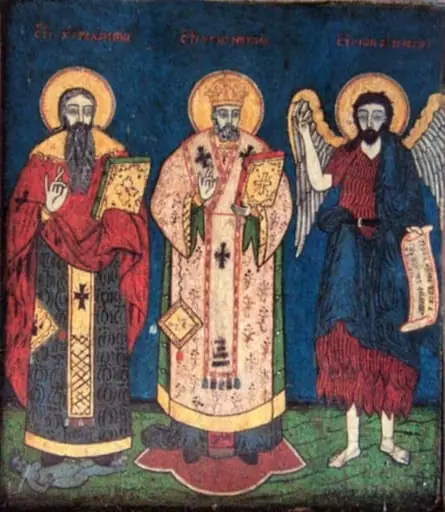
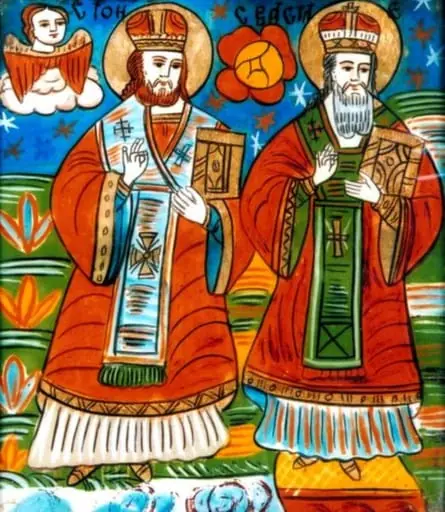
This work portrays two apostles, Matthew and Simon, standing side by side in a solemn, frontal composition. Their halos and bare feet signal their sacred status, while the dark background isolates them as objects of veneration. The figures are rendered with restrained detail, emphasizing spiritual presence over narrative action. The simplicity of the setting directs focus to their identities and symbolic attire.
Subject & Meaning
The two figures are identified as Saints Matthew and Simon, early Christian apostles traditionally associated with evangelism and martyrdom. Matthew, on the left, wears a dark outer garment over a red tunic, possibly symbolizing his former life as a tax collector; Simon, on the right, is clad entirely in red, a color often linked to martyrdom. Their halos affirm their sanctity, and their bare feet suggest humility before the divine.
Technique & Style
The painting employs a flat, two-dimensional style typical of late medieval or early Renaissance devotional art. Forms are outlined clearly, with minimal modeling to suggest volume. The dark background enhances contrast, allowing the figures to emerge with clarity. While cross-hatching is mentioned in the visual note, no visible evidence of it appears in the description; instead, the technique relies on solid color and clean contours.
History & Provenance
The origin of this work is not documented in the provided details. Its stylistic features suggest it may date from the 14th to 16th century, possibly from a region with strong Byzantine or Eastern Orthodox traditions. Without a known artist or collection history, its creation likely served a liturgical or private devotional purpose, common in ecclesiastical contexts of the period.
Context
In medieval and early Renaissance religious art, paired depictions of apostles were common in altarpieces, icons, and church decorations. These images functioned as aids to prayer and teaching, reinforcing the authority of the apostolic lineage. The lack of landscape or architectural elements reflects a focus on spiritual essence rather than earthly setting, aligning with devotional practices of the time.
Legacy
This painting contributes to a broader tradition of saintly portraiture that persisted across centuries in Eastern and Western Christian communities. Though modest in scale and detail, its clear iconography ensured its utility in worship and instruction. Such works, often anonymous and locally produced, formed the visual backbone of religious life for generations, preserving doctrinal continuity through image.
Artist & collection

 Domestic Scene
 Giacomo and Cardinal Marco, investing Andrea, Abbot of San Zeno, with his Benefice
 The Nymph of Fontainebleau
 Portrait of a Woman
 Madonna and Child with Saints in the Enclosed Garden
 Venus and Minerva
 Family Group of Four on Sofa
 Wall painting from Room H of the Villa of P. Fannius Synistor at Boscoreale