Artwork
Apostolul Ioan
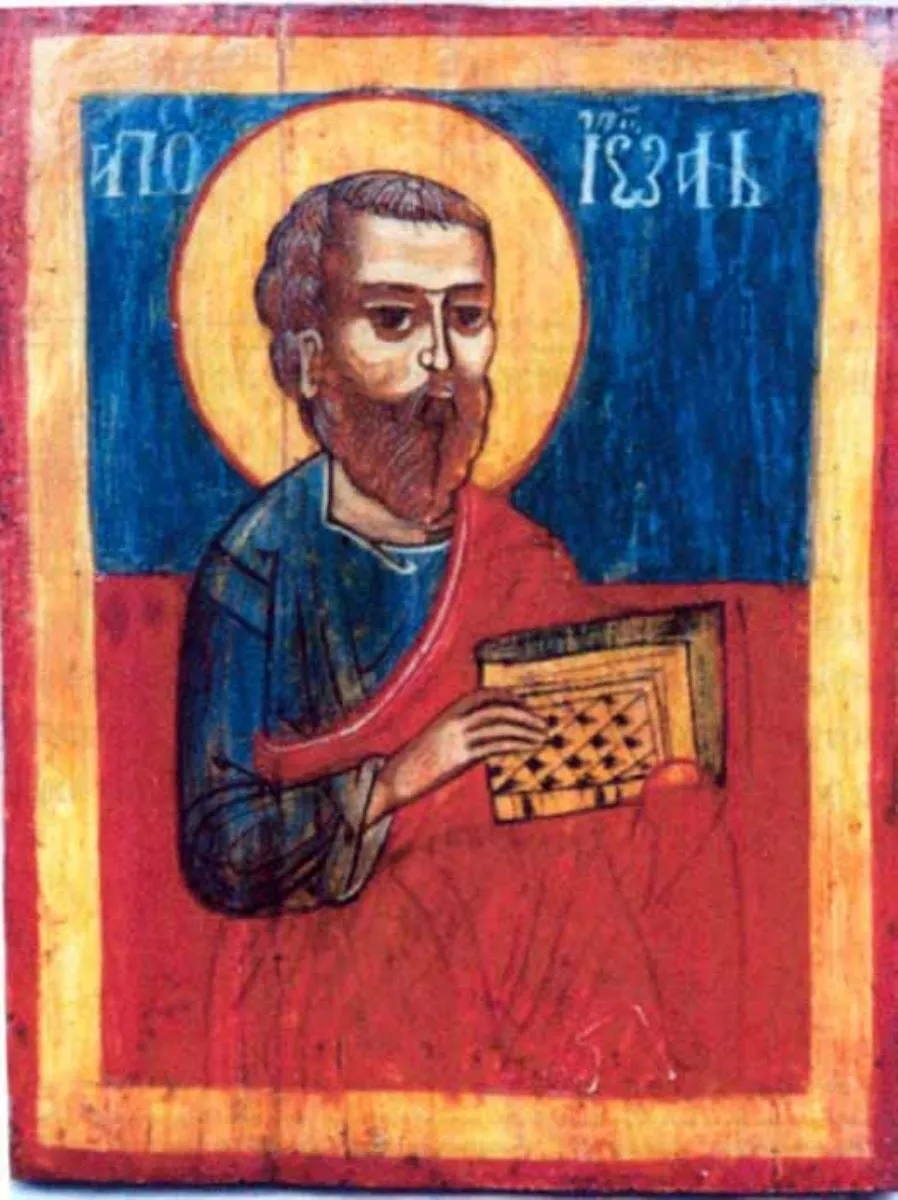
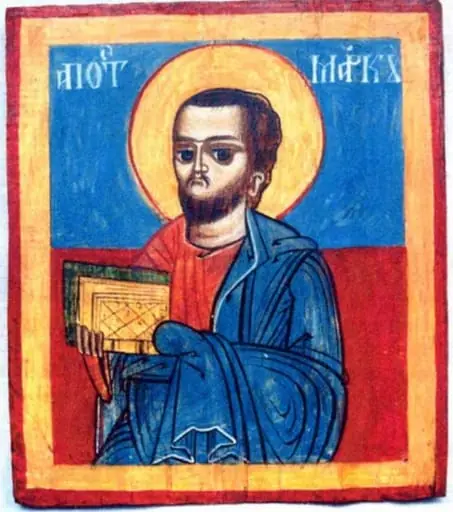
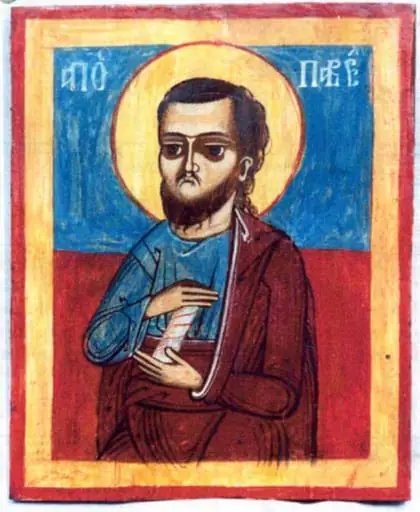
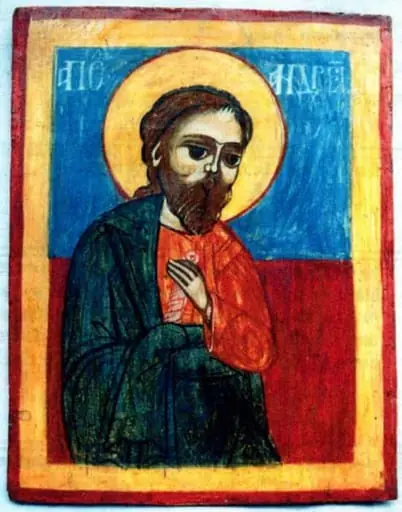
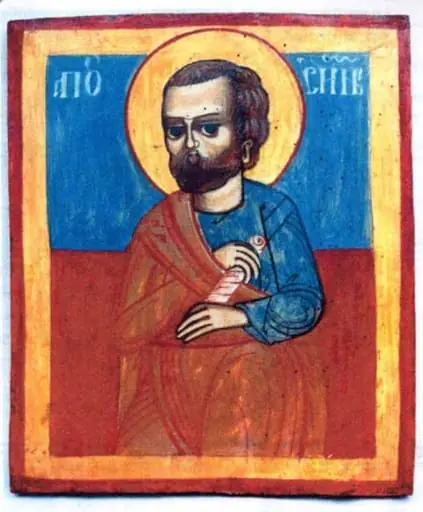
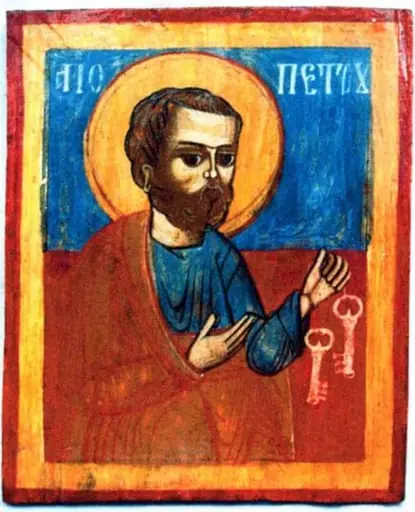
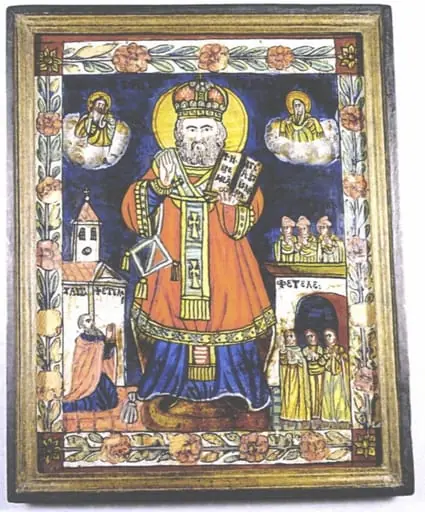
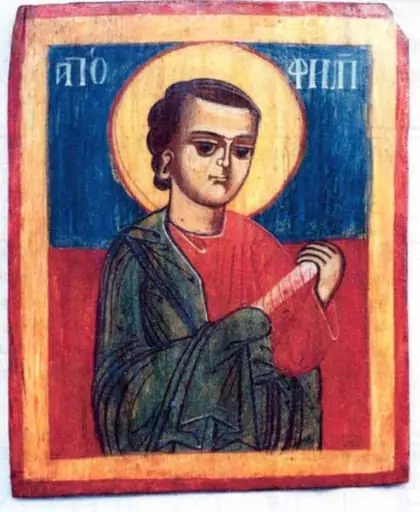
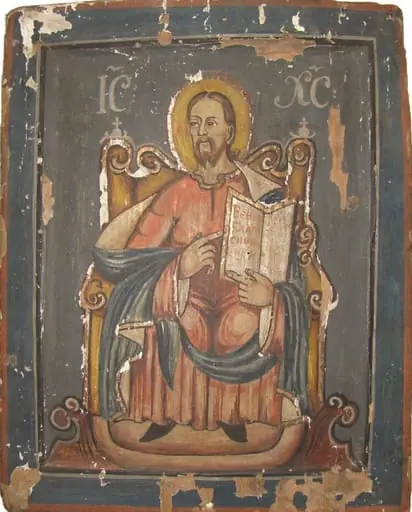
Apostolul Ioan is a drawing by the Romanticist artist Unknown. It dates from 1773 and is held in the collection of the "Dimitrie Gusti" National Village Museum. This image depicts John the Apostle, portrayed with solemn expression and a dark beard.
About this work
Overview
This image depicts John the Apostle, portrayed with solemn expression and a dark beard. He wears a blue outer robe over a red tunic, holding an open book adorned with gold ornamentation. A radiant gold halo encircles his head, signaling his sanctity. The background features bold, flat areas of blue, red, and yellow, typical of devotional imagery from medieval or early Renaissance traditions.
Subject & Meaning
John the Apostle is identified by the book he holds, likely a Gospel, symbolizing his role as a writer of sacred texts. The halo affirms his status as a holy figure within Christian tradition. His serious demeanor reflects contemplation and spiritual authority, aligning with his reputation as a witness to divine revelation and a key figure in early Christian communities.
Technique & Style
The composition employs flat, non-naturalistic color fields and stylized forms, avoiding perspective or shading. Gold detailing on the book and halo suggests sacredness through material symbolism rather than realism. The rigid posture and lack of depth emphasize spiritual presence over physical realism, characteristic of liturgical art designed for veneration rather than narrative immersion.
History & Provenance
The work’s style and iconography point to a Byzantine or post-Byzantine origin, possibly from the late medieval period. Such images were commonly produced for private devotion or church use in Orthodox Christian regions. Exact provenance is unrecorded, but similar icons were widely replicated across Eastern Europe and the Eastern Mediterranean during the 13th to 16th centuries.
Context
In medieval Christian art, apostles were frequently depicted with attributes like books or scrolls to signify their scriptural contributions. The use of gold halos and symbolic color schemes served to distinguish holy figures from ordinary mortals. This image aligns with liturgical practices that prioritized theological clarity and devotional focus over individual expression or naturalism.
Legacy
Though stylistically distinct from later Western movements like Romanticism, this image contributed to enduring visual conventions for representing saints. Its emphasis on symbolic form and spiritual presence influenced Orthodox iconography for centuries, maintaining a continuous tradition of sacred imagery that prioritized theological meaning over aesthetic innovation.
Artist & collection
Museum
"Dimitrie Gusti" National Village Museum
Continue through works from the same source collection.
 Domestic Scene
 Giacomo and Cardinal Marco, investing Andrea, Abbot of San Zeno, with his Benefice
 The Nymph of Fontainebleau
 Portrait of a Woman
 Madonna and Child with Saints in the Enclosed Garden
 Venus and Minerva
 Family Group of Four on Sofa
 Wall painting from Room H of the Villa of P. Fannius Synistor at Boscoreale