Artwork
Sfinții Ioan și Nicolae
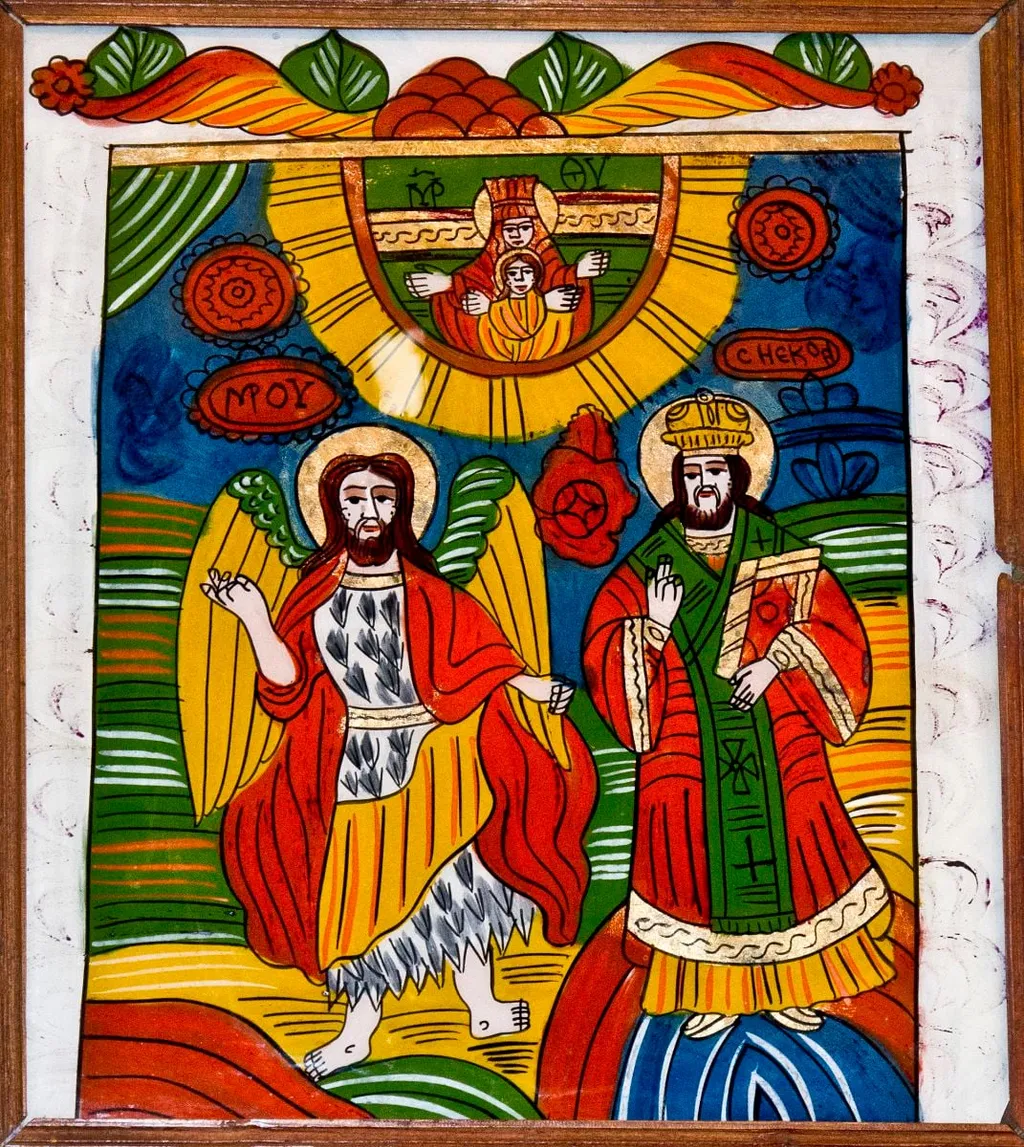
Sfinții Ioan și Nicolae is a drawing by Unknown. It dates from 1850 and is held in the collection of the National Museum of Art of Romania.
About this work
Overview
Above them hover three winged beings within a luminous yellow circle, framed by red floral motifs and blue‑green roundels bearing enigmatic lettering.
The work titled “Sfinții Ioan și Nicolae” presents a pair of solemnly attired figures standing side by side. The left figure dons a red‑white garment, grips a green staff, and bears a grave expression, while the right figure is clothed in vivid red and green robes trimmed with gold, holding a small book. Above them hover three winged beings within a luminous yellow circle, framed by red floral motifs and blue‑green roundels bearing enigmatic lettering.
Subject & Meaning
The central pair are identified as saints John and Nicholas, a common pairing in Eastern Christian iconography that underscores themes of piety and patronage. The winged figures likely represent angels, reinforcing the sacred atmosphere. The inclusion of a staff and a book alludes to the saints’ traditional attributes—John’s prophetic role and Nicholas’s reputation as a benevolent patron.
Technique & Style
The composition relies on bold, flat areas of color and strong outlines, recalling folk‑art conventions rather than academic realism. The use of decorative roundels with stylized script and the bright, contrasting palette accentuate a devotional narrative while evoking the ornamental language of earlier manuscript illumination.
History & Provenance
No specific dates, artist, or collection details accompany the image, suggesting it may derive from a regional religious workshop or a community‑produced devotional panel. The presence of Romanian‑language abbreviations such as “MOI” and “CHEKH” hints at a local origin, possibly linked to a parish or monastic setting.
Context
In Eastern Orthodox visual culture, saints are often depicted together with accompanying angels and ornamental motifs that serve both didactic and decorative purposes. The roundels echo medieval iconographic practices where textual elements were integrated into the visual field to convey names or prayers.
Legacy
Works of this type illustrate the persistence of folk‑style religious painting in the Balkans, bridging formal ecclesiastical art and popular devotional expression. Their vivid coloration and accessible symbolism continue to inform contemporary understandings of regional sacred art traditions.
Artist & collection

 Domestic Scene
 Giacomo and Cardinal Marco, investing Andrea, Abbot of San Zeno, with his Benefice
 The Nymph of Fontainebleau
 Portrait of a Woman
 Madonna and Child with Saints in the Enclosed Garden
 Venus and Minerva
 Family Group of Four on Sofa
 Wall painting from Room H of the Villa of P. Fannius Synistor at Boscoreale
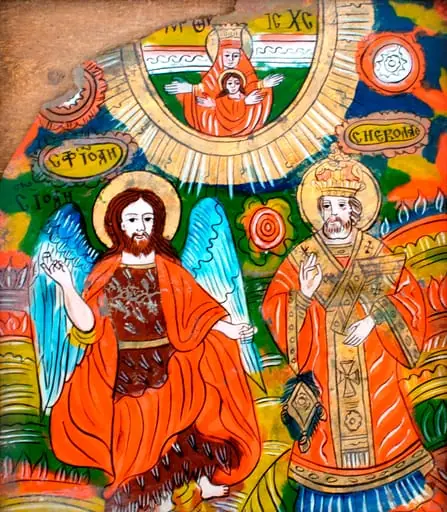 Asociere mai rar întâlnită, probabil comandată special. Icoana îi reprezintă pe în prim plan Sfinții Ioan Botezătorul și Sfântul Nicolae(1/1), deasupra lor Maica Domnului Platytera într-un medalion aurit,înconjurat de raze. Maica are coroană împărătească și îl ține pe Isus copil în poală, ambii avînd brațele desfăcute. Sfântul Ioan este în ipostaza îngerească, înaripat, desculț, binecuvântând cu dreapta, înveșmântat cu haina de păr de cămilă, deasupra mantie roșie. Sfântul Nicolae este prezentat în ipostaza de mare ierarh, cu însemnele episcopale(mitră pe cap, sacos, epitrahil decorat cu cruci și motive florale, bedernița cu franjuri și motive geometrice) Relief stilizat, alternanță de benzi ondulate multicolore, și registre cu elemente fitomorfe. Inscripțiile în chenare, numele sfântului Ioan dublat în afara chenarului. Câmp albastru ultramarin, decorat cu pete de culoare și motive astrale stilizate. Medalionul este împărțit în două zone de culoare(galben și verde) printr-o bandă albă cu motiv spiralat(funia răsucită). Cromatica este foarte variată:alb, albastru, verde, roșu, galben, ocru,culori intense. Icoana are colțul stâng lipsă.
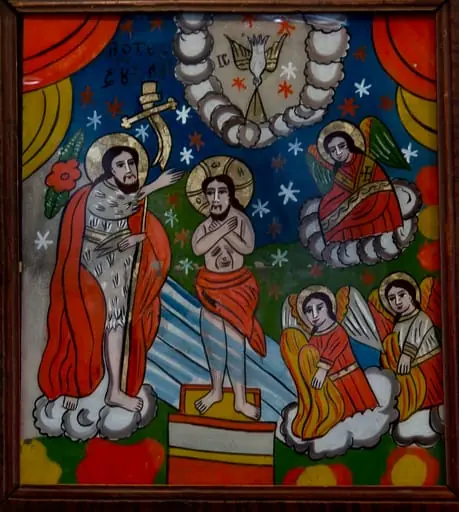 Botzezul lui IS HS
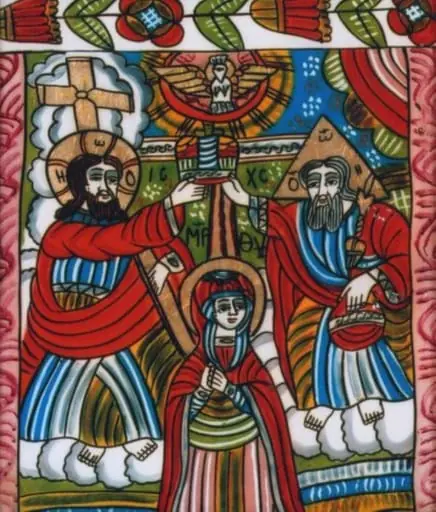 Încoronare Maicii Domnului
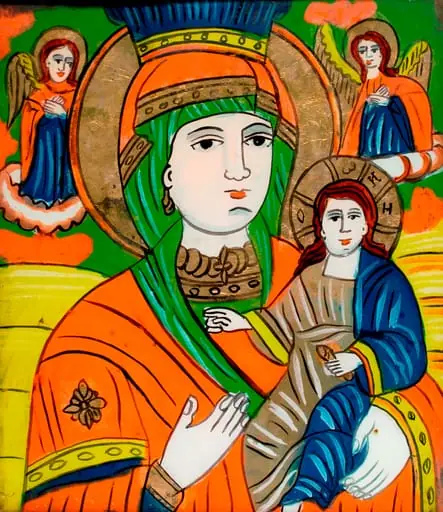 Icoagmen
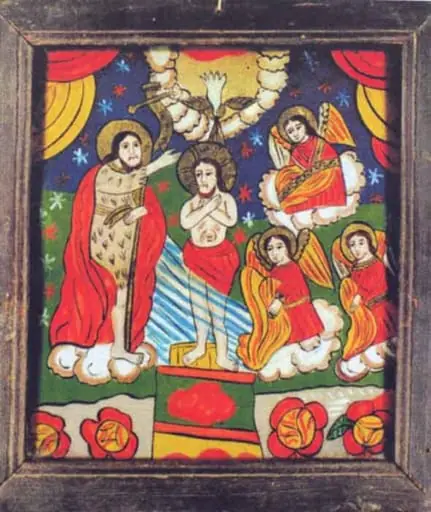 Botezul lui Iisus
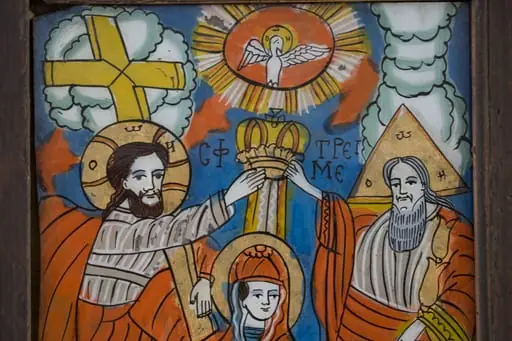 Icoalar
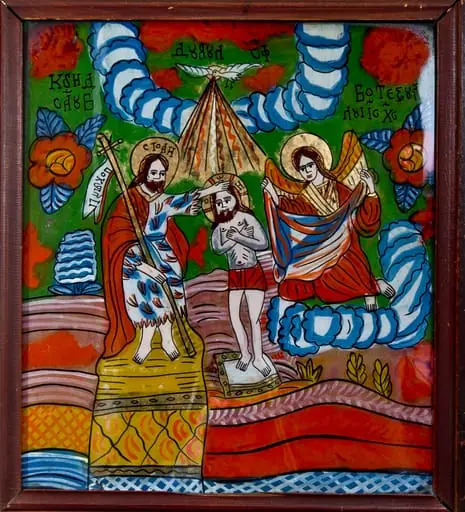 Botezul lui IS HS
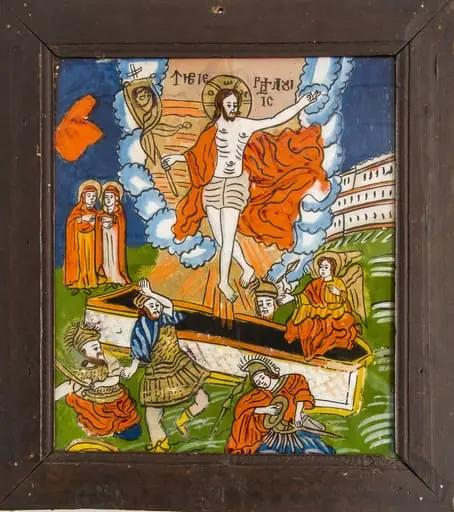 Învierea lui IS XS
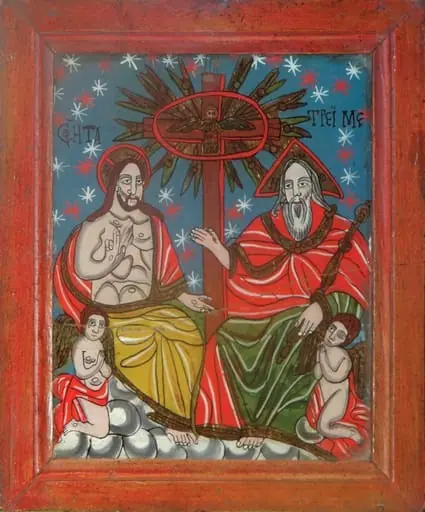 Sfânta Treime nou-testamentară