Artwork
Icoagmen
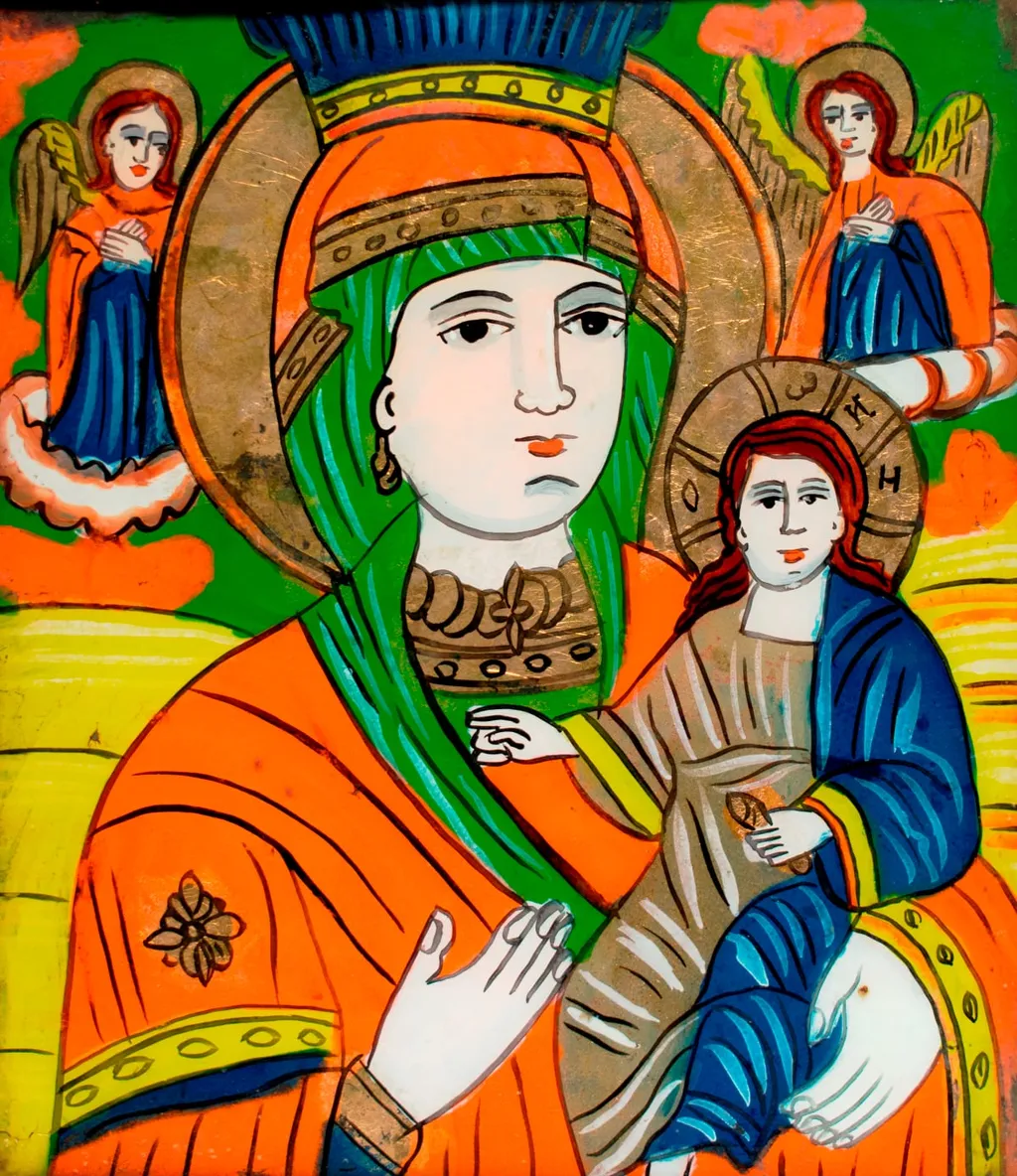
Icoagmen is a drawing by Unknown. It dates from 1850 and is held in the collection of the "Dimitrie Gusti" National Village Museum. The work presents three solemn figures, each encircled by bright halos.
About this work
Overview
The work presents three solemn figures, each encircled by bright halos. The central figure, the largest, is seated and clad in a red garment edged with gold, grasping a small object. Flanking him, two standing figures wear similar robes, one bearing a staff. The backdrop consists of vivid blocks of green, yellow and orange, punctuated by simplified cloud and sun shapes.
Subject & Meaning
The accompanying figures, positioned behind, reinforce his prominence, their halos and ceremonial accessories implying sanctity or reverence.
The composition suggests a hierarchical grouping, with the seated individual occupying a focal, possibly authoritative role, indicated by his size, attire and the object he holds. The accompanying figures, positioned behind, reinforce his prominence, their halos and ceremonial accessories implying sanctity or reverence. The overall arrangement conveys a sense of reverence toward the central character, perhaps reflecting a religious or mythological narrative.
Technique & Style
The drawing employs bold, flat areas of color contrasted with fine black outlines that define the halos and decorative motifs. Small floral patterns are rendered on the robes, adding texture. The use of cross‑hatching for shading is suggested by the linear density in certain areas, while the simplified cloud and sun forms reflect a stylized, iconographic approach rather than naturalistic representation.
Context
The piece belongs to a visual tradition that emphasizes symbolic coloration and haloed figures, common in medieval and early Renaissance devotional art. The vivid palette and flattened perspective align with manuscript illumination practices, where narrative clarity and emblematic detail were prioritized over realistic depth. Such works often served liturgical or instructional purposes within ecclesiastical settings.
Artist & collection
Museum
"Dimitrie Gusti" National Village Museum
Continue through works from the same source collection.
 Domestic Scene
 Giacomo and Cardinal Marco, investing Andrea, Abbot of San Zeno, with his Benefice
 The Nymph of Fontainebleau
 Portrait of a Woman
 Madonna and Child with Saints in the Enclosed Garden
 Venus and Minerva
 Family Group of Four on Sofa
 Wall painting from Room H of the Villa of P. Fannius Synistor at Boscoreale
 Repr
Repr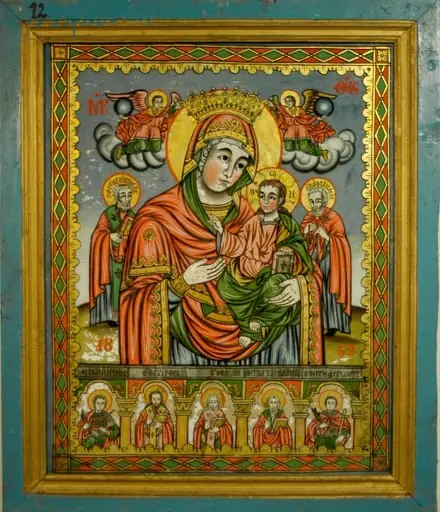 Maica Domnului cu Pruncul
 Maica Domnului cu Pruncul
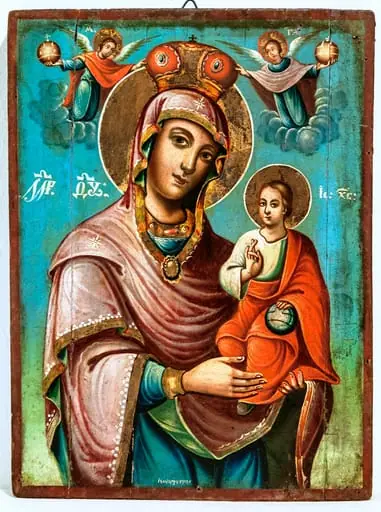 Tema
Tema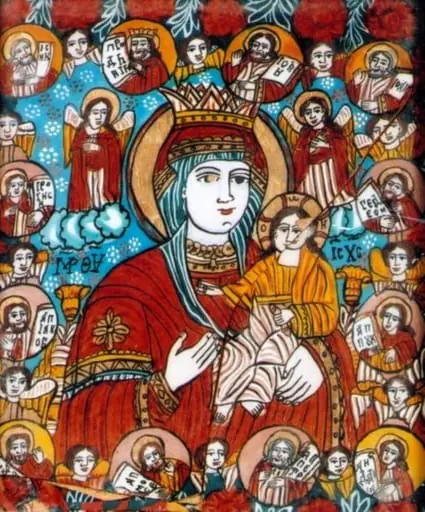 Maica Domnului cu Iisus
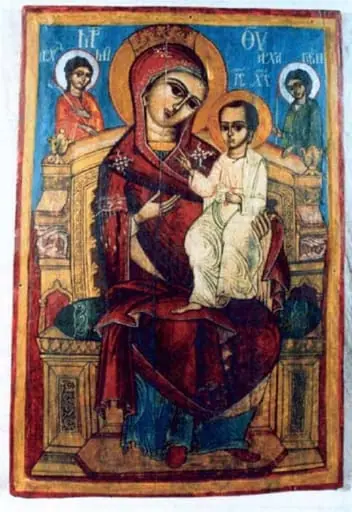 Maica cu Pruncul/Maica Împărăteasă-Doamnă
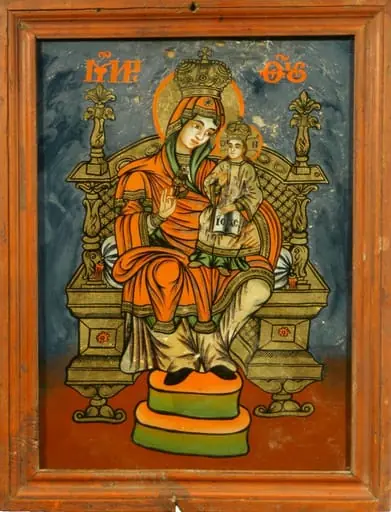 Maica Domnului cu Pruncul, floarea nevestejită
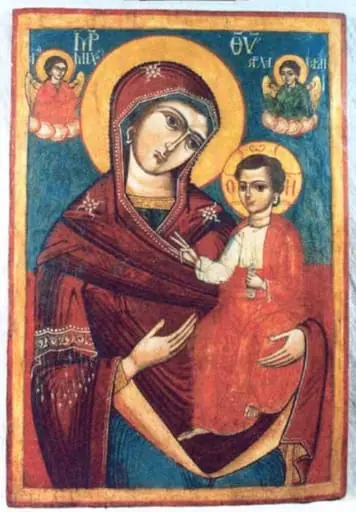 Maica cu Pruncul-Axionița
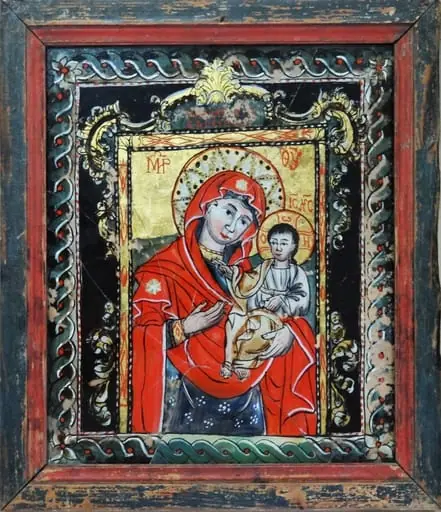 Maica Domnului cu Pruncul
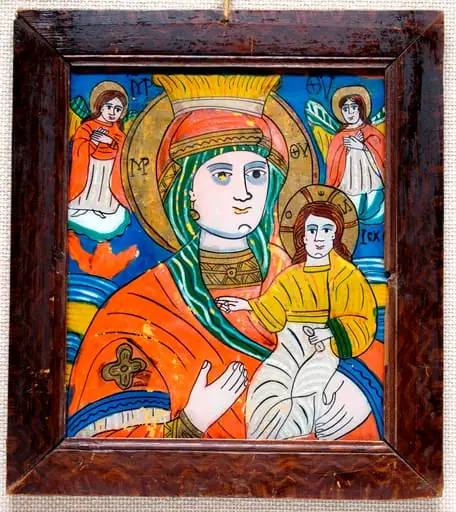
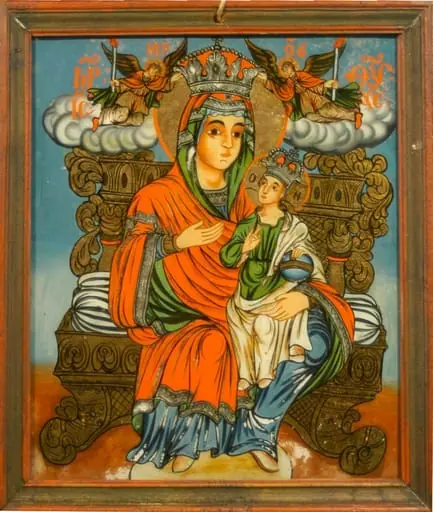
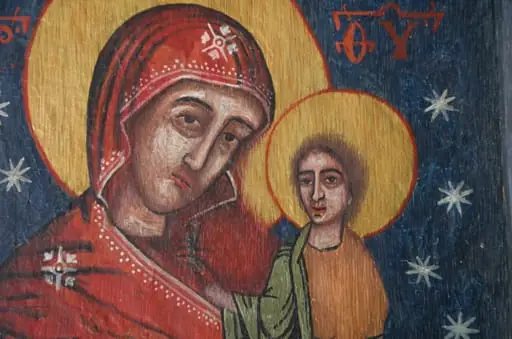 Icoana este pictată pe lemn și o reprezintă pe Maica Domnului „Îndrumătoarea” (Hodighitria), „Cea care arată calea”, cu Pruncul în brațe. Conform Tradiției Bisericii, tema a fost pictată pentru prima dată de Sfântul Apostol și Evanghelist Luca, în timpul vieții pământești a Fecioarei Maria. Maica Domnului poartă un maforion roșu și arată cu mâna dreaptă înspre Fiul său, acesta, la rândul Lui, arătând cu mâna stângă înspre Maica Sa. Pe fundal sunt pictate stele. Rama are trei chenare pictate în albastru, verde și roșu. Icoana prezintă în partea superioară câte o balama pe latura stângă și cea dreaptă, probabil deservind în trecut rolul de triptic. Cromatică: fond albastru închis; roșu; verde; portocaliu; galben; alb.
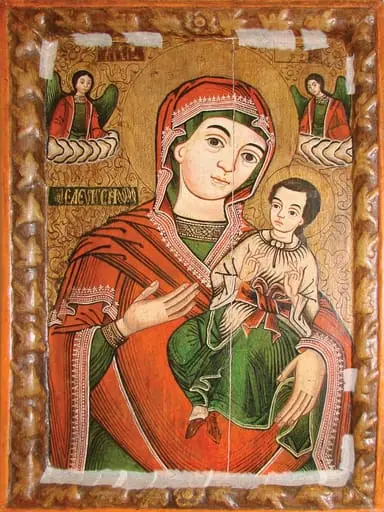 Maica Domnului cu Pruncul
 Temadisp