Artwork
Sfinții Ioan, Vasile și Grigore
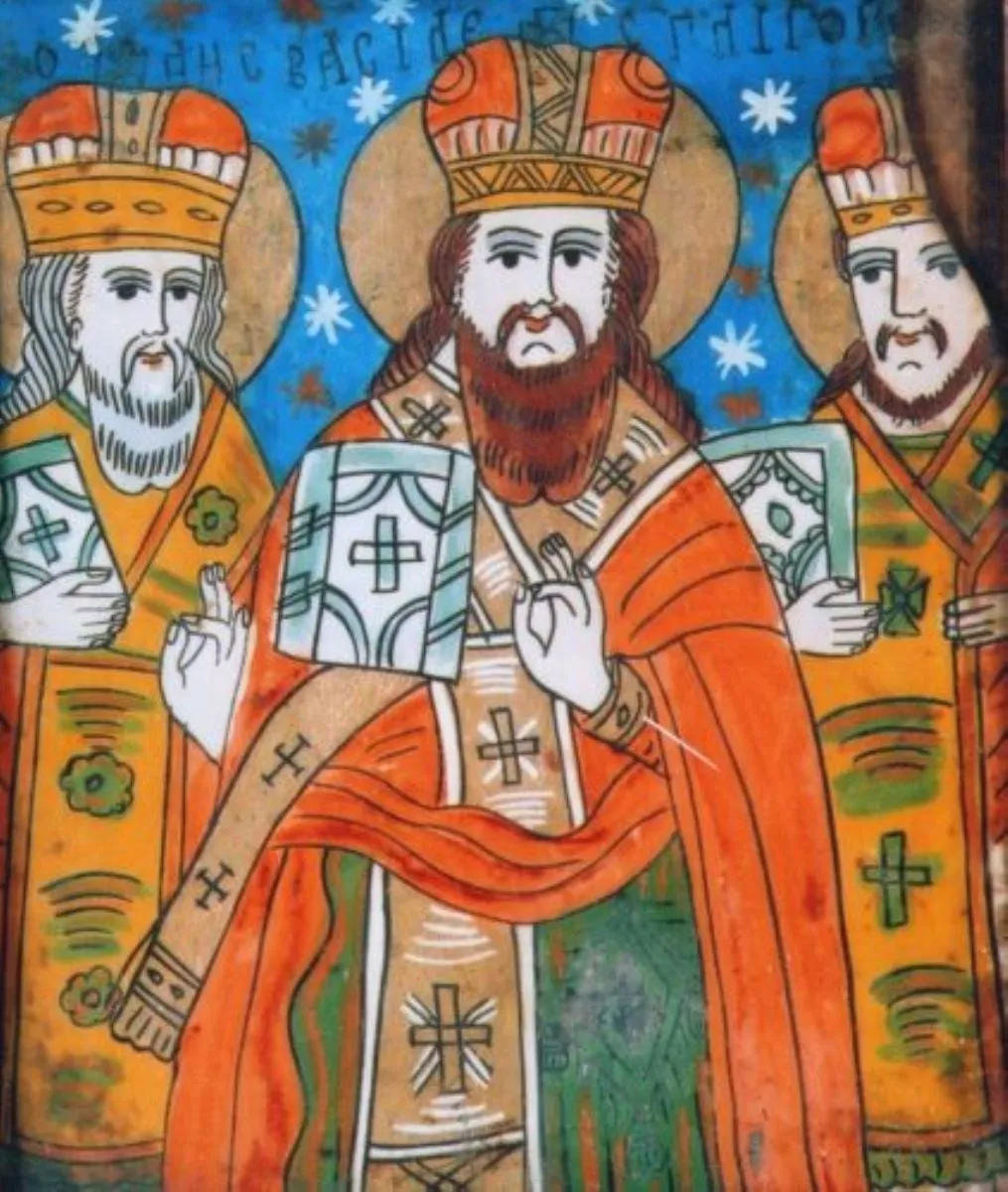
Sfinții Ioan, Vasile și Grigore is a drawing by Unknown. It dates from 1850 and is held in the collection of the Bran National Museum. This anonymous work depicts three saints in a flat, decorative composition typical of folk religious art.
About this work
Overview
The figures are arranged symmetrically against a celestial blue background adorned with white stars and stylized floral motifs.
This anonymous work depicts three saints in a flat, decorative composition typical of folk religious art. The figures are arranged symmetrically against a celestial blue background adorned with white stars and stylized floral motifs. Their elaborate robes and headgear suggest ecclesiastical rank, while the simplified forms and limited color palette reflect a regional tradition rather than academic training.
Subject & Meaning
The central figure, distinguished by his red robe and gold-and-red headdress, is likely Saint John, often associated with authority and scripture. Flanking him are Saints Basil and Gregory, identifiable by their matching yellow robes and books, symbolizing theological scholarship. The gesture of the central saint implies blessing or teaching, reinforcing the group’s role as spiritual guides in Orthodox tradition.
Technique & Style
The painting employs a deliberate flatness and minimal modeling, characteristic of folk iconography. Colors are applied in broad, unmodulated areas, with gold accents used sparingly for emphasis. Details like the floral border and starry sky are rendered with rhythmic repetition, suggesting handcrafted origins and adherence to local visual conventions rather than naturalistic representation.
History & Provenance
The artist remains unidentified, as is common with devotional works produced in rural or provincial communities. Likely created in the 18th or early 19th century, it was probably commissioned for private or small-scale church use. Its survival suggests it was valued within a local religious context, though its specific origin and early ownership are undocumented.
Context
This image belongs to a broader tradition of Orthodox Christian iconography produced outside major artistic centers. In regions where trained iconographers were scarce, local artisans adapted canonical forms using accessible materials and motifs. The inclusion of floral and celestial elements reflects a blending of sacred symbolism with folk decorative sensibilities.
Legacy
Though unsigned and unrecorded in major art historical narratives, such works preserve the devotional practices of ordinary communities. They offer insight into how religious imagery was localized and sustained beyond institutional control. Today, they are studied as cultural artifacts that reveal the diversity of spiritual expression in Eastern Europe.
Artist & collection
 Domestic Scene
 Giacomo and Cardinal Marco, investing Andrea, Abbot of San Zeno, with his Benefice
 The Nymph of Fontainebleau
 Portrait of a Woman
 Madonna and Child with Saints in the Enclosed Garden
 Venus and Minerva
 Family Group of Four on Sofa
 Wall painting from Room H of the Villa of P. Fannius Synistor at Boscoreale
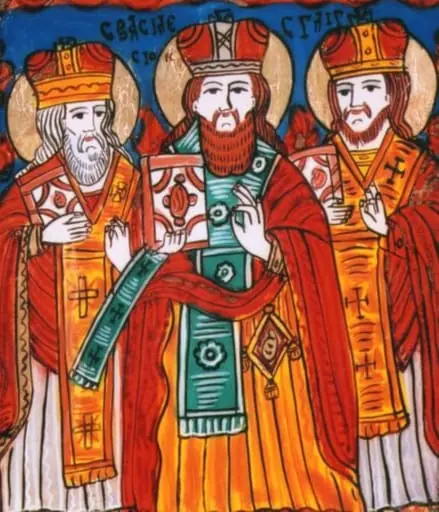 Sfinții Vasile, Ioan și Grigore
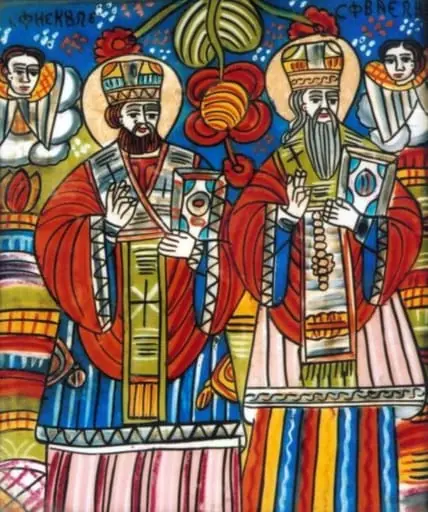 Sfinții Nicolae și Vasile
 Sf. Paisie, Sf. Vasile și Sf. Ioan
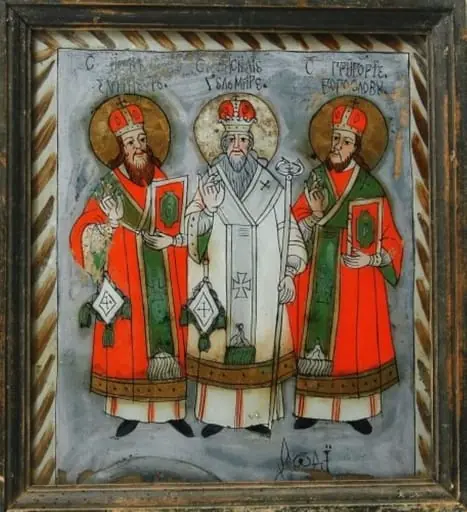 Sfinții Trei Ierarhi
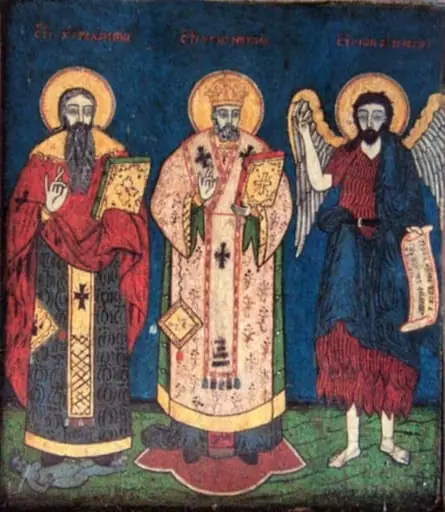 Sfinții Haralambie, Nicolae și Ioan Botezătorul
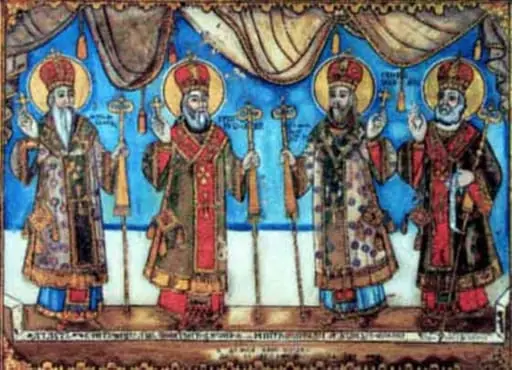 Sfinții Trei Ierarhi și Sfântul Nicolae
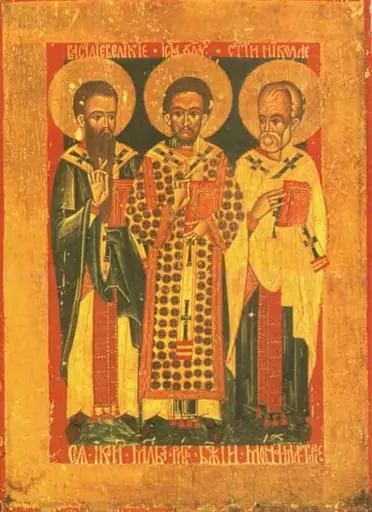 Sfinții Ierarhi Vasile, Ioan și Nicolae
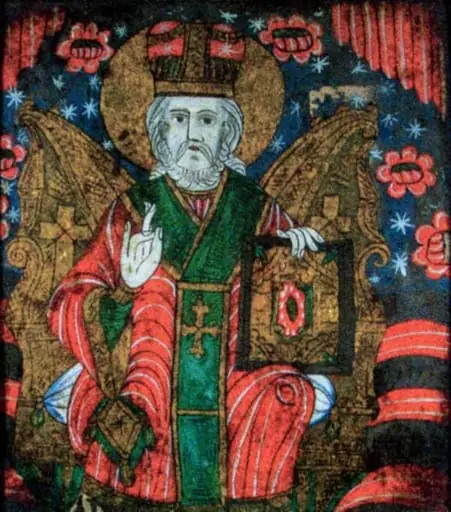 Sfântul Nicolae Ierarh
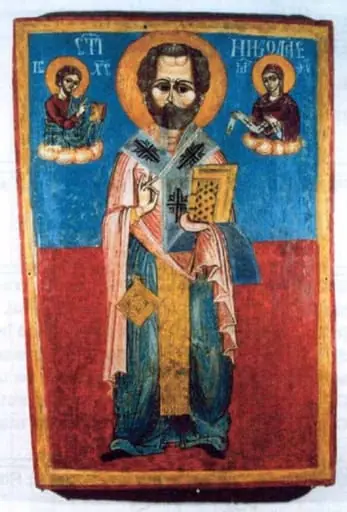 Sfântul Nicolae-Episcop
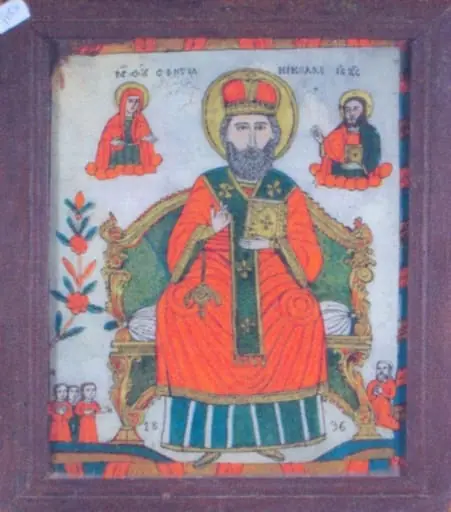 Sfântul Ierarh Nicolae