Artwork
Sfinții Trei Ierarhi și Sfântul Nicolae
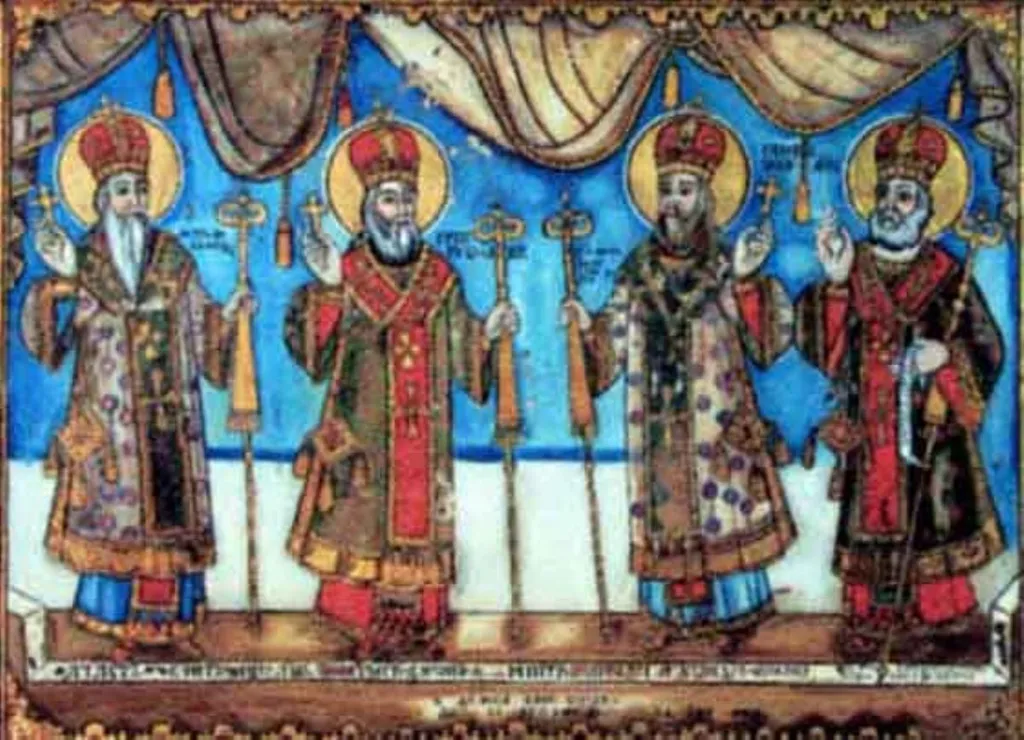
Sfinții Trei Ierarhi și Sfântul Nicolae is a drawing by the Impressionist artist Unknown. It dates from 1862 and is held in the collection of the Romanian Peasant Museum. This drawing depicts five saintly figures arranged in a row, each crowned with a golden halo and holding a staff ending in a cross.
About this work
Overview
A blue curtain and golden canopy with abstract swirls form a simplified backdrop, emphasizing the figures’ presence without environmental distraction.
This drawing depicts five saintly figures arranged in a row, each crowned with a golden halo and holding a staff ending in a cross. Their garments are rendered in vivid red, blue, and gold, adorned with detailed patterns suggesting rich textiles. A blue curtain and golden canopy with abstract swirls form a simplified backdrop, emphasizing the figures’ presence without environmental distraction. The composition is frontal and symmetrical, typical of devotional imagery designed for contemplation.
Subject & Meaning
The figures represent three major Romanian Orthodox saints—Sfinții Trei Ierarhi—and Saint Nicholas, all venerated for their spiritual authority and pastoral roles. Their identical posture and regal attire signify their shared sanctity and divine favor. The halos and staffs with crosses affirm their ecclesiastical status and connection to Christian tradition. The absence of individualizing features reinforces their collective role as intercessors rather than distinct personalities.
Technique & Style
The artist employs fine cross-hatching to model the folds of robes and suggest texture, creating subtle shading without perspective or depth. Metallic effects in the gold elements are implied through dense, parallel lines, while the bright colors remain flat and unmodulated. Facial features are minimal, conveying solemnity over individual expression. The stylized canopy and curtain serve as symbolic architecture, framing the saints within a sacred space devoid of earthly context.
History & Provenance
This drawing likely originated in a monastic or ecclesiastical workshop in Moldavia or Wallachia during the late 17th or early 18th century, a period when iconographic traditions flourished under Orthodox patronage. Such works were often used as preparatory studies for frescoes or icons, or as devotional objects in private chapels. Its survival suggests it was valued for its spiritual function rather than as a standalone artwork.
Context
In Orthodox Christian practice, images of saints served as windows to the divine, aiding prayer and reinforcing doctrinal teachings. The emphasis on frontal composition, symbolic color, and hierarchical arrangement reflects Byzantine conventions adapted to local Romanian piety. The lack of naturalistic background aligns with theological priorities that favored spiritual presence over physical realism, reinforcing the saints’ transcendence.
Legacy
This drawing exemplifies a persistent regional tradition in Romanian religious art that prioritized symbolic clarity and devotional function over innovation. Its stylistic consistency with contemporaneous icons highlights the endurance of established visual language within Orthodox communities. Though not widely known outside ecclesiastical circles, it remains a quiet testament to the continuity of sacred imagery in Eastern Christian culture.
Artist & collection

 Domestic Scene
 Giacomo and Cardinal Marco, investing Andrea, Abbot of San Zeno, with his Benefice
 The Nymph of Fontainebleau
 Portrait of a Woman
 Madonna and Child with Saints in the Enclosed Garden
 Venus and Minerva
 Family Group of Four on Sofa
 Wall painting from Room H of the Villa of P. Fannius Synistor at Boscoreale
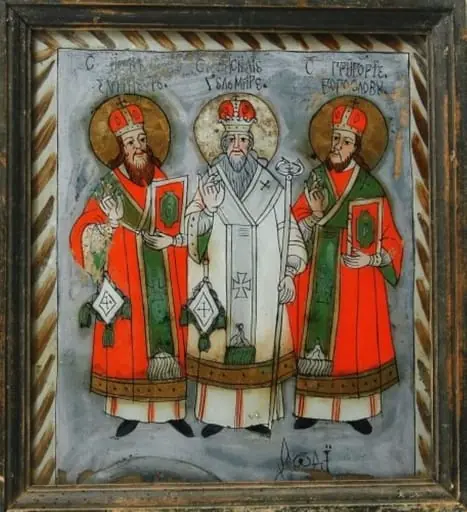 Sfinții Trei Ierarhi
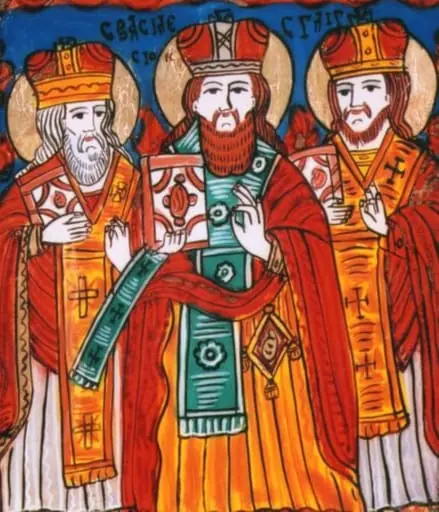 Sfinții Vasile, Ioan și Grigore
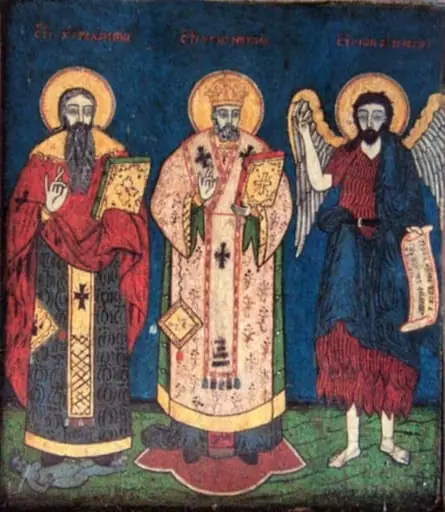 Sfinții Haralambie, Nicolae și Ioan Botezătorul
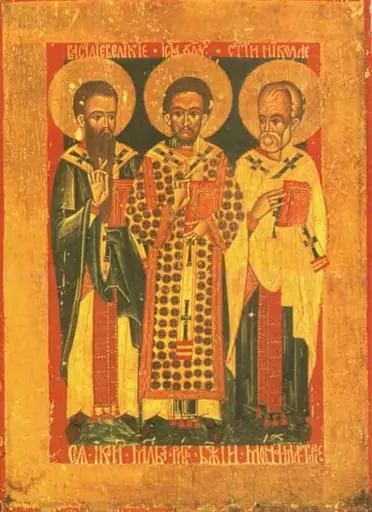 Sfinții Ierarhi Vasile, Ioan și Nicolae
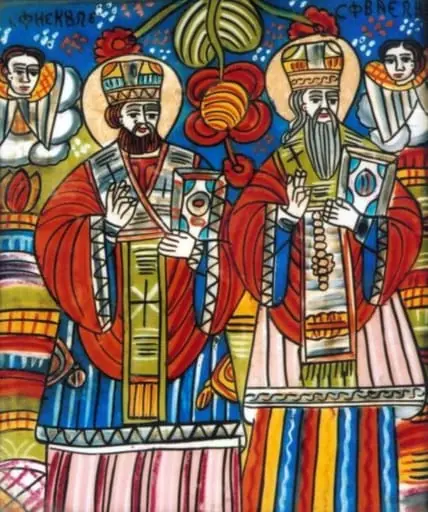 Sfinții Nicolae și Vasile
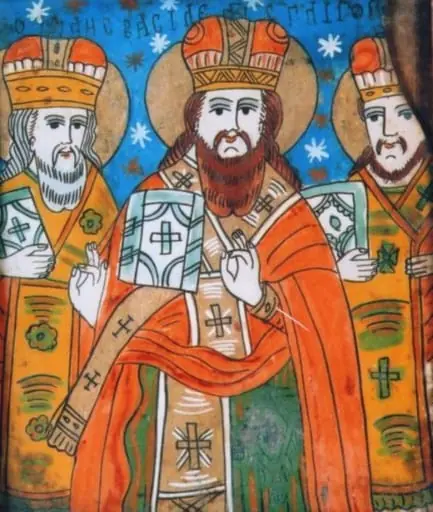 Sfinții Ioan, Vasile și Grigore
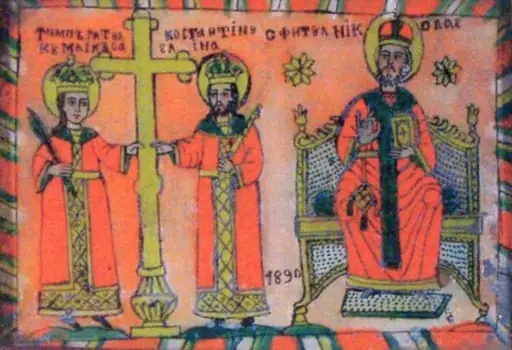 Sfinții Împărați Constantin și Elena, Sfântul Nicolae
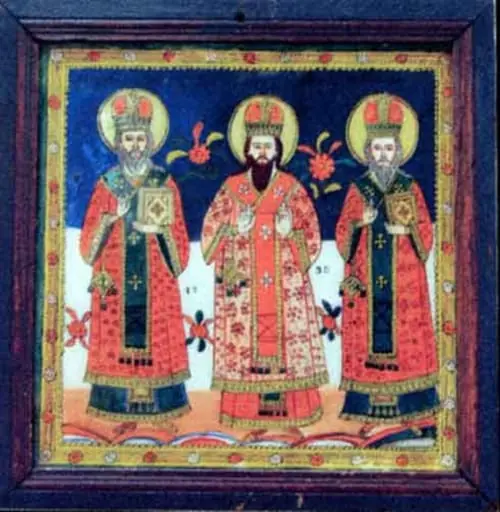 Sfinții Trei Ierarhi - Vasile, Grigore și Ioan
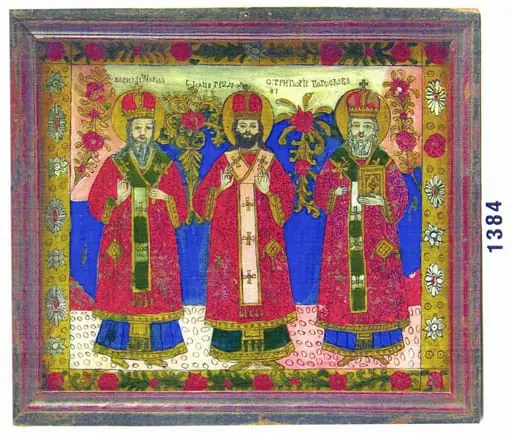 Sfinții trei ierarhi Vasile, Grigore și Ioan
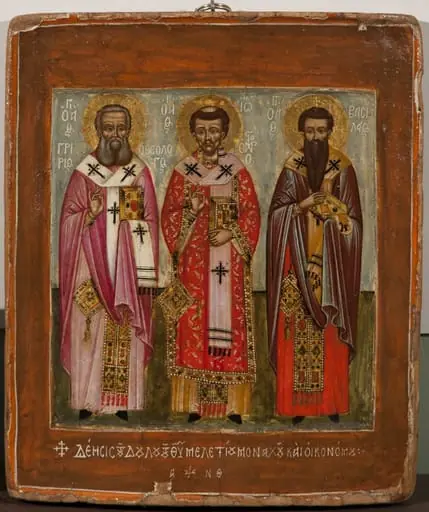 Sf. Trei Ierarhi
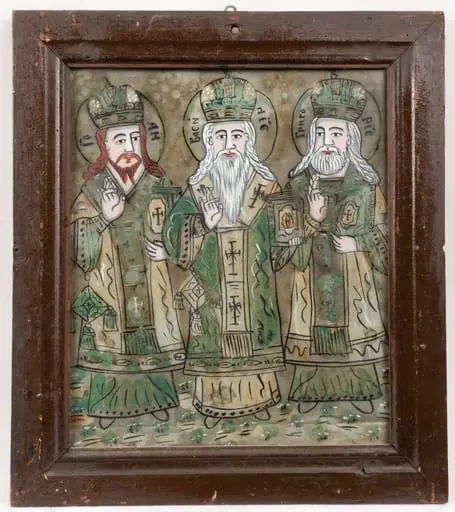 Sfinții Trei Ierarhi