Artwork
Sfinții Isaia, Pantelimon, Hristofor
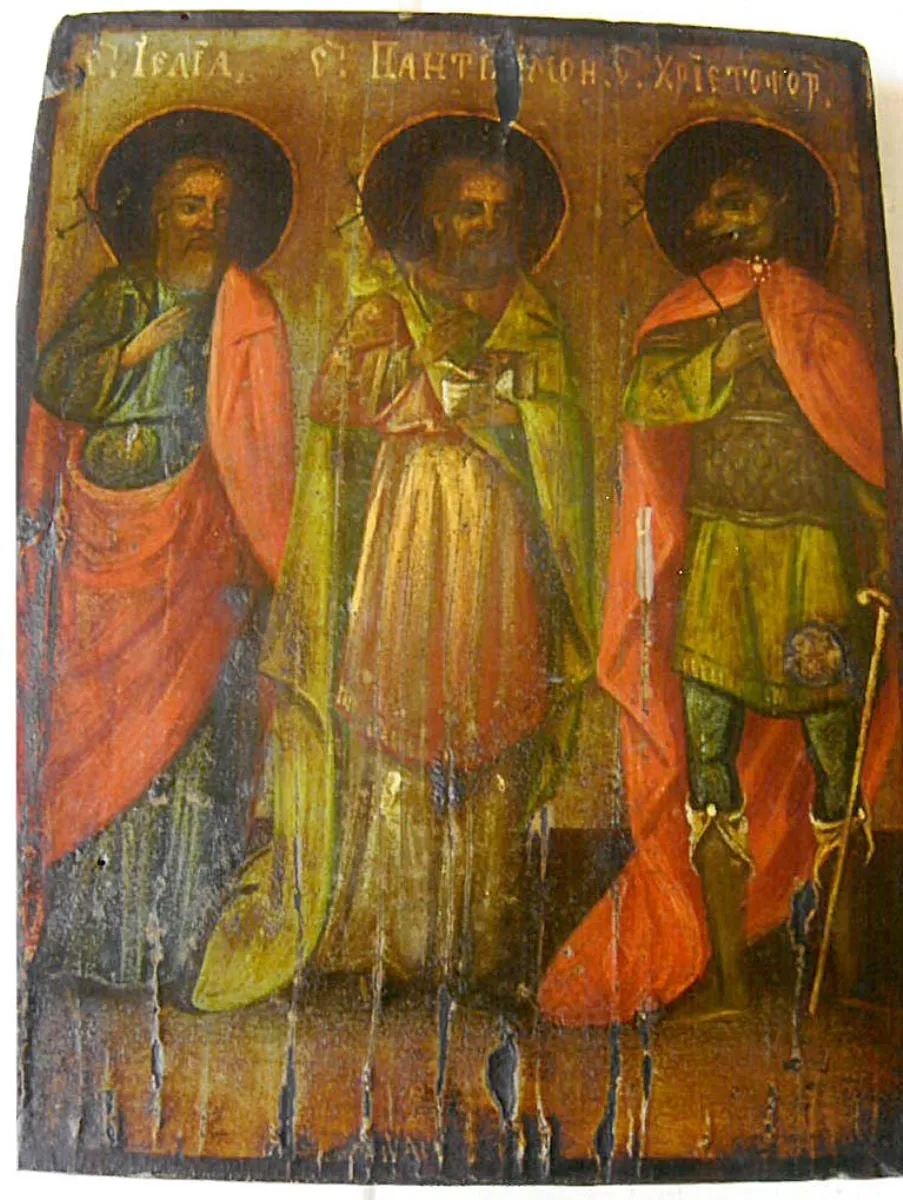
Sfinții Isaia, Pantelimon, Hristofor is a drawing by Unknown. It dates from 1850 and is held in the collection of the Botoșani County Museum. This icon depicts three saints standing in solemn alignment, rendered in a traditional Byzantine style.
About this work
Overview
Their halos signify sanctity, and their postures are frontal and static, emphasizing spiritual presence over naturalistic movement.
This icon depicts three saints standing in solemn alignment, rendered in a traditional Byzantine style. Each figure is identified by inscriptions in an archaic script above their heads. Their halos signify sanctity, and their postures are frontal and static, emphasizing spiritual presence over naturalistic movement. The background is dark, contrasting with subtle gold detailing that frames the composition and draws focus to the figures.
Subject & Meaning
The central figure, identified as Saint Isaiah, is distinguished by his richly colored robe, suggesting prophetic authority. Flanking him are Saints Pantelimon and Christopher, each holding symbolic objects: a bowl, possibly for healing, and a staff, emblematic of pilgrimage or protection. Together, they represent intercession, divine guidance, and the bridge between earthly and sacred realms, common themes in Orthodox devotional art.
Technique & Style
The painting employs tempera on wood, with flat planes of color and minimal modeling to convey spiritual rather than physical reality. Gold leaf accents highlight halos and inscriptions, while cross-hatching in the robes suggests texture without shadow. The rigid symmetry and lack of perspective reflect liturgical conventions, prioritizing theological clarity over spatial depth or individual expression.
History & Provenance
The work likely originated in a monastic or ecclesiastical setting in the Balkans during the late medieval period, possibly the 14th or 15th century. Its preservation suggests it was venerated in a local church or chapel. The faded pigments and worn surface indicate prolonged exposure to ritual use, including incense smoke and candlelight, common in Orthodox worship environments.
Context
This icon belongs to a broader tradition of Eastern Orthodox panel painting, where saints were depicted as intercessors for the faithful. Its composition aligns with liturgical calendars that honored these figures on specific feast days. The use of archaic script and symbolic attributes reflects adherence to established iconographic models, passed down through generations of iconographers trained in monastic workshops.
Legacy
Though unsigned and undocumented in major collections, the icon remains a testament to regional devotional practices. Its survival offers insight into the continuity of Byzantine artistic norms in Orthodox communities beyond Constantinople. Such works, often overlooked in Western art histories, played a vital role in shaping spiritual life and visual culture in Eastern Europe for centuries.
Artist & collection
 Domestic Scene
 Giacomo and Cardinal Marco, investing Andrea, Abbot of San Zeno, with his Benefice
 The Nymph of Fontainebleau
 Portrait of a Woman
 Madonna and Child with Saints in the Enclosed Garden
 Venus and Minerva
 Family Group of Four on Sofa
 Wall painting from Room H of the Villa of P. Fannius Synistor at Boscoreale
 Soborul Arhanghelilor
 Sfinții Stelian și Haralambie
 Sfinții Nicolae, Mihail și Gavriil
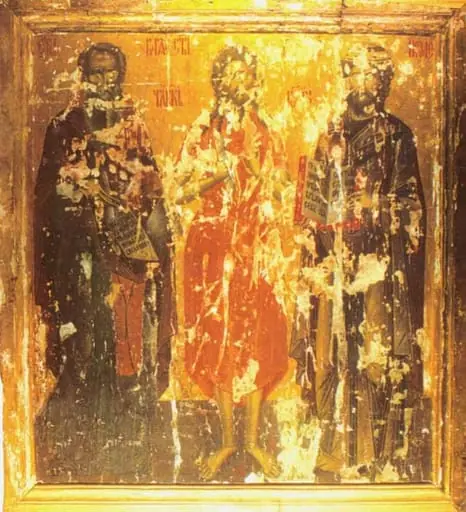 Sfântul Varlaam, Sfântul Alexie Omul lui D-zeu, Sfântul Ioasef; Sfântul militar călare - Dimitrie
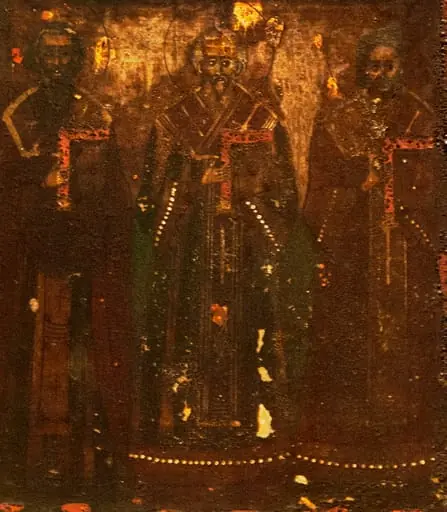 În spațiul dreptunghiular creat prin scobire(rezultă o ramă de 3 cm lățime), sunt pictați, în ax vertical, Sfinții trei ierarhi Vasile, Grigorie și Ioan. Stratul pictural fiind înnegrit, nu se pot identifica exact fiecare din cei trei sfinți. Probabil ca cel din centru să fie Sf. Ioan Gură de Aur, cu părul și barba albe, în stânga fiind sf. Vasile cel Mare iar în dreapta sf. Grigorie Noul Teolog, toți în picioare. Toți trei țin în mîini cartea Sfântă.Veșmintele sunt arhierești, patrafirele au cruci în linii subțiri, doi dintre ei au veșmântul împodobit cu șiruri de puncte albe. Fondul este aurit, aureolele trasate cu linii subțiri, negre, în stilul icoanelor lipovenești. Pe partea de sus a ramei o inscripție în același stil. La mijloc chipul lui Isus și monogramul Acestuia.
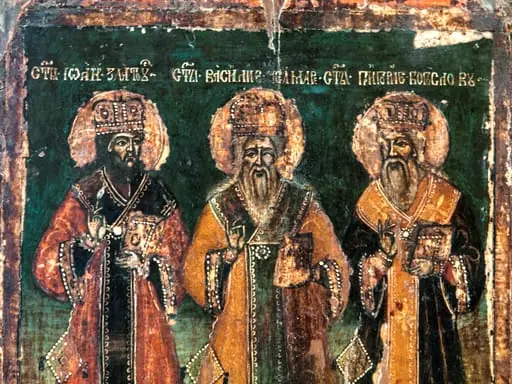 Tema icoanei este "Sfinții trei ierarhi, Vasile, Grigorie, și Ioan". Ordinea din icoană este, de la stânga la dreapta : Ioan Gură de aur(Zlotul), Vasile cel Mare și Grigore Teologul(Bogoslovul).Cei trei sfinți sunt pictați în picioare, Sf. Ioan și Grigorie ușor întorși către Sf Vasile plasat central. Redați în veșminte arhierești, cu însemne episcopale. Pe cap toți poartă mitră împodobită cu pietre scumpe, în mâna stângă țin Evanghelia iar cu dreapta binecuvintează prin atingerea degetului inelar de cel mare.De mâna dreaptă le atârnă bedernița, un veșmânt arhieresc în formă de romb. Reprezentarea celor trei respectă în mare indicațiile Erminiei, ceea ce arată că zugravul o studiase; Doar Sfântul Ioan este redat cu părul și barba negre, ceea ce nu corespunde descrierilor. Veșmintele sunt destul de simple, Sacosurile de culori diferite(roșu cărămiziu, galben ocru, brun închis) au în parte de jos o bordură lată, aurită decorată cu motive geometrice. Peste acestea este așezat omoforul mare, simplu, cu chenar pe margine . La gât poartă câte un engolpion rotund.În partea de jos se vede capătul epitrahilului deasemenea decorat cu motive geometrice și franjuri, așezat peste stihar. Aureolele sunt realizate cu foiță,delimitate de o linie albă, fină. Trăsăturile sunt foarte fine, cu aceent pe detalii, ceea ce denotă un iconar cu experiență și probabil școală. Proporțiile sunt respectate paleta cromatică dominată de culori calde valorate prin contraste cu culorile complementare și nuanțe. Fondul este realizat într-o trecere treptată, de la o culoare mai deschisă în partea de jos la un verde-albastru sus, ceea ce scoate în evidență figurile celor trei. Scrisul este caligrafic, foarte fin și ordonat, realizat cu o linie fină de culoare albă. Chenar dublu, roșu la exterior, auriu la interior. Icoana prezintă crăpături și lacune pe margine.
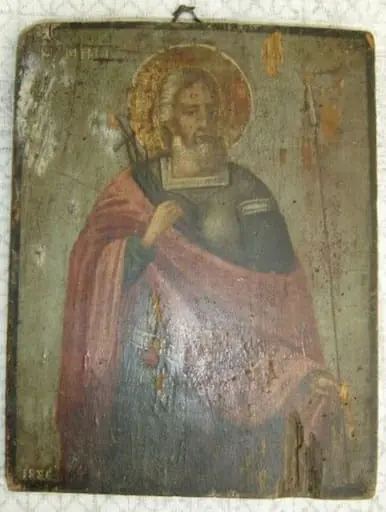 Sfântul Mina
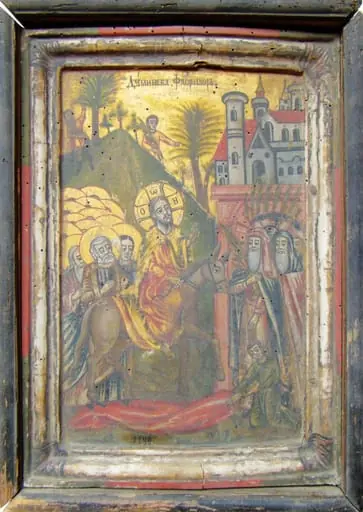 Duminica Floriilor
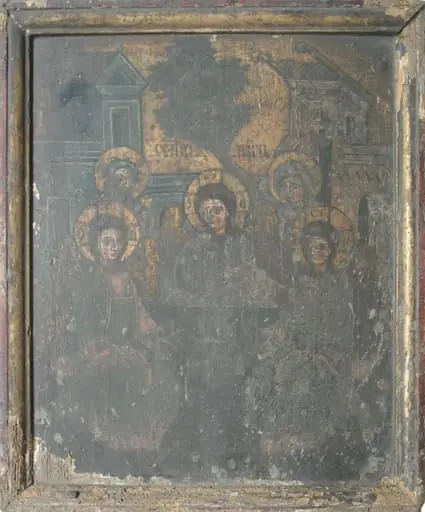 Cina de la Mamvri