Artwork
Shakyamuni Buddha with scenes from his life story
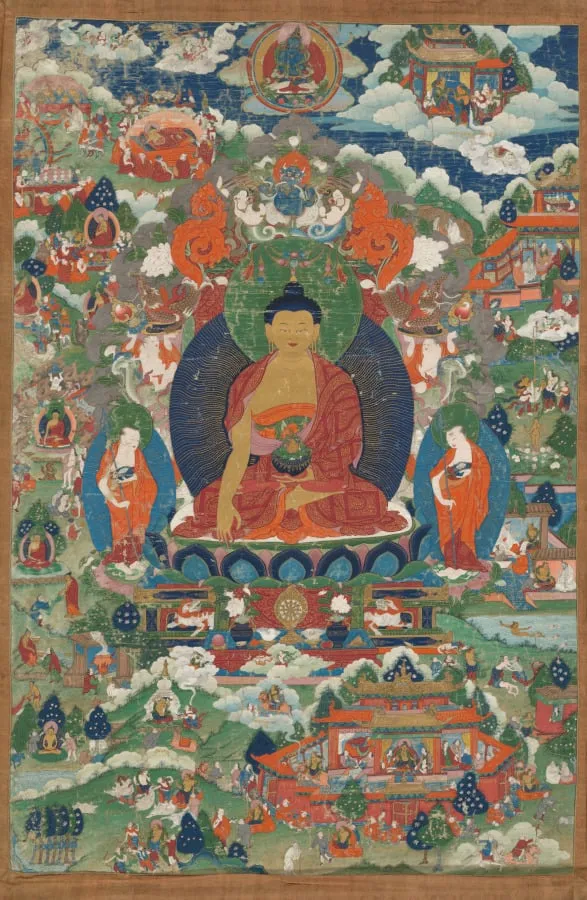
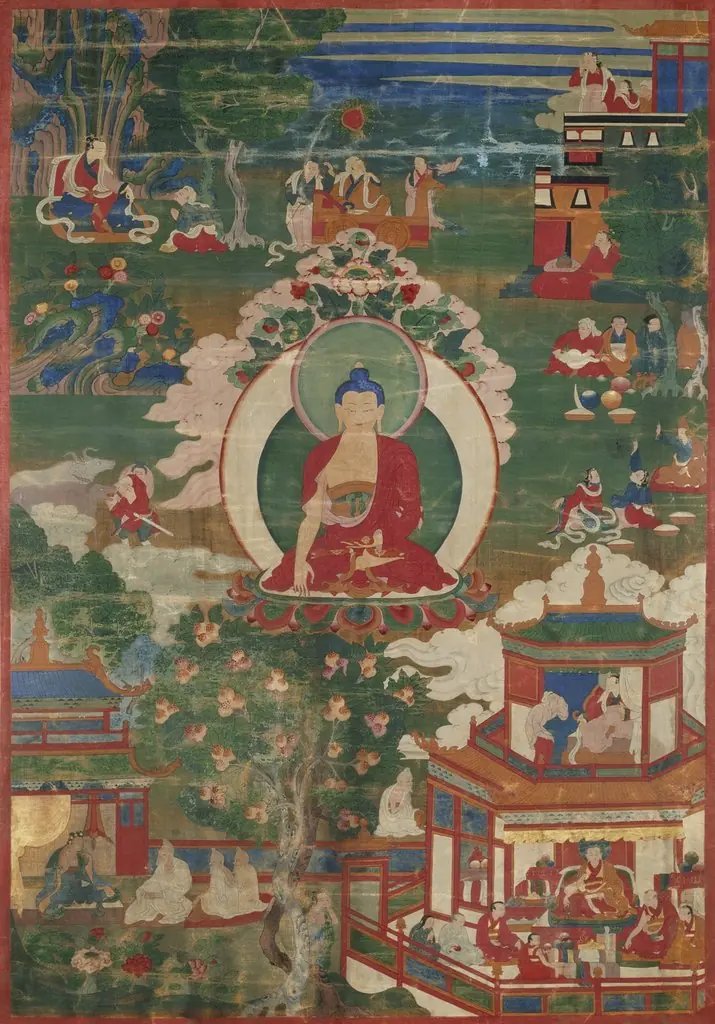
Shakyamuni Buddha with scenes from his life story is an unspecified painting by the Baroque artist Unknown. It dates from 1700 and is held in the collection of the Cleveland Museum of Art. This Tibetan thangka painting depicts Shakyamuni Buddha at its center, seated in meditation with a small object held in his hands.
About this work
Overview
Surrounding him are numerous small narrative scenes illustrating key moments from his life, arranged in a continuous visual sequence.
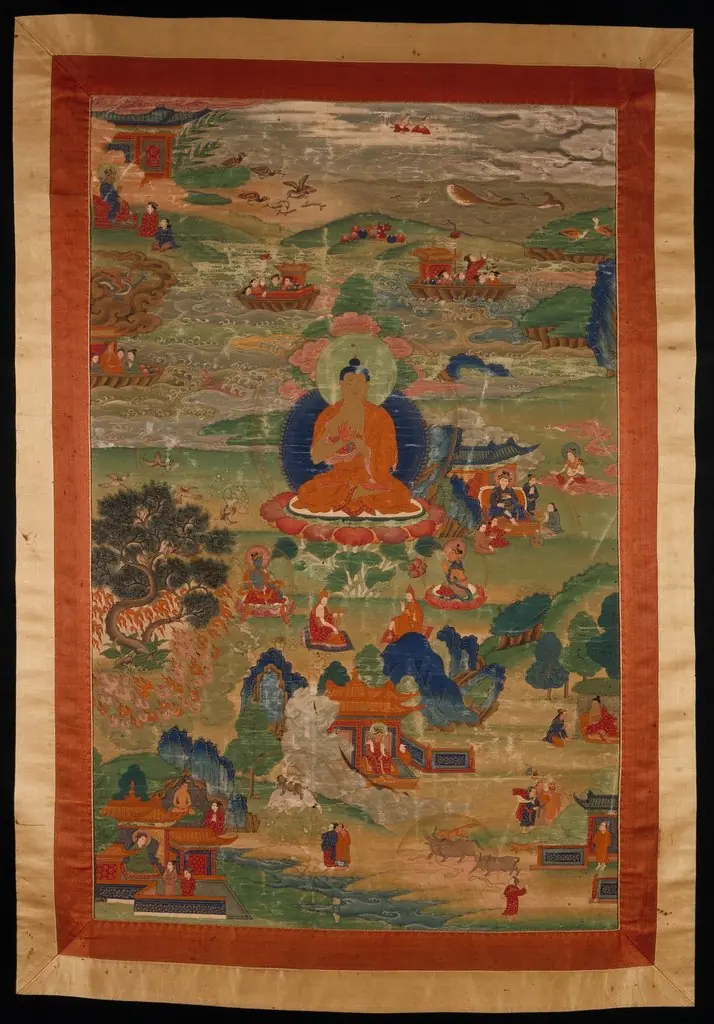
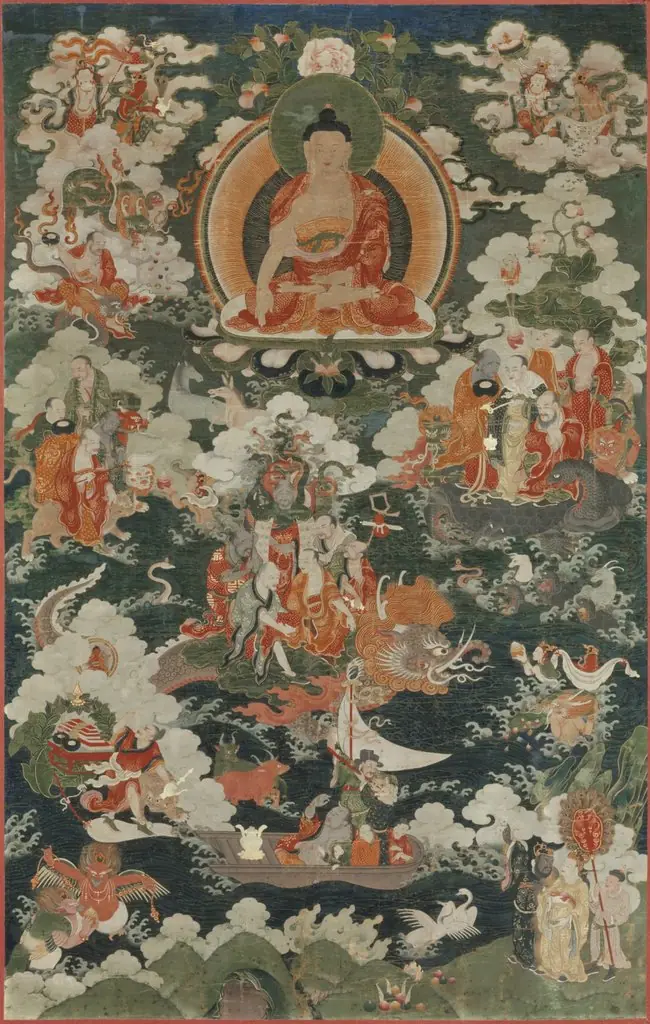
This Tibetan thangka painting depicts Shakyamuni Buddha at its center, seated in meditation with a small object held in his hands. Surrounding him are numerous small narrative scenes illustrating key moments from his life, arranged in a continuous visual sequence. The composition is richly colored with deep blues, reds, and greens, accented extensively with gold leaf, characteristic of traditional Himalayan devotional art. The background functions as a visual chronicle, blending spiritual narrative with symbolic geography.
Subject & Meaning
The central figure represents the historical Buddha, Shakyamuni, embodying enlightenment and spiritual authority. The surrounding vignettes depict pivotal events from his life—his birth, renunciation, meditation under the bodhi tree, and attainment of nirvana. These scenes serve not merely as illustration but as aids for contemplation and teaching, guiding viewers through the path of awakening. The arrangement reinforces the idea of the Buddha’s journey as both personal and universal.
Technique & Style
Executed in the traditional Tibetan thangka style, the painting uses mineral pigments and gold leaf applied with fine brushes on cotton or silk. Figures are rendered with precise, stylized proportions, and spatial depth is suggested through layered planes rather than perspective. The sky is populated with floating figures on clouds and architectural elements, creating a celestial narrative space. This method prioritizes symbolic clarity over naturalism, aligning with religious didactic aims.
History & Provenance
This work likely originated in Tibet or a neighboring Himalayan region during the late medieval or early modern period, when thangka production flourished in monastic centers. It was probably commissioned for use in meditation, ritual, or teaching within a Buddhist community. While specific provenance details are undocumented, its materials and iconography align with workshops active in Lhasa or eastern Tibet, where such devotional paintings were routinely created and preserved.
Context
Thangka paintings like this one were integral to Tibetan Buddhist practice, serving as portable altars and visual scriptures. They bridged the sacred and the everyday, used in homes, monasteries, and processions. The integration of narrative scenes reflects a cultural tradition where religious teachings were transmitted visually, especially in communities with limited literacy. This format allowed complex doctrines to be understood through imagery rather than text alone.
Legacy
The thangka tradition continues today, with contemporary artists maintaining its iconographic rules and techniques. This painting exemplifies a centuries-old visual language that preserved Buddhist teachings across generations. Its endurance speaks to the adaptability of religious art in sustaining spiritual practice amid cultural change. Modern collectors and institutions preserve these works not only as artifacts but as living instruments of contemplative discipline.
Artist & collection

 Domestic Scene
 Giacomo and Cardinal Marco, investing Andrea, Abbot of San Zeno, with his Benefice
 The Nymph of Fontainebleau
 Portrait of a Woman
 Madonna and Child with Saints in the Enclosed Garden
 Venus and Minerva
 Family Group of Four on Sofa
 Wall painting from Room H of the Villa of P. Fannius Synistor at Boscoreale