Artwork
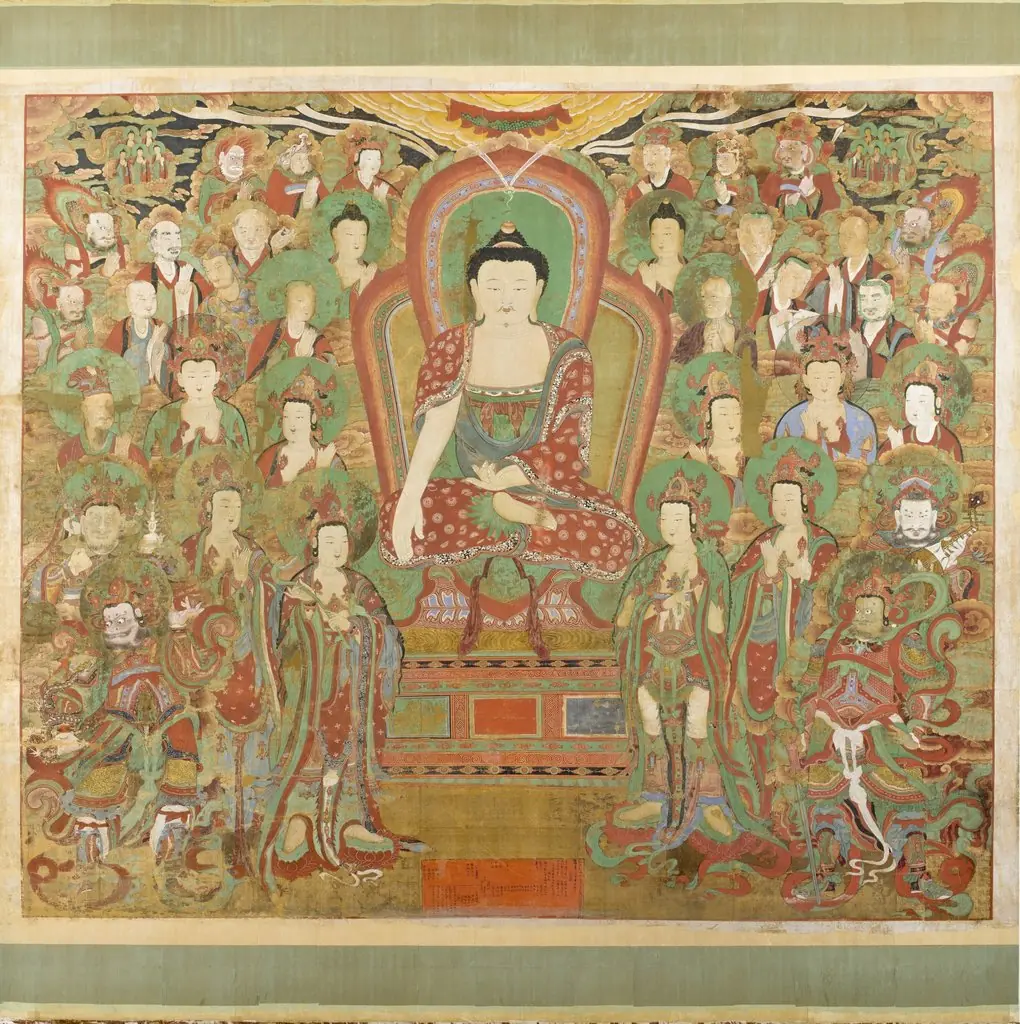
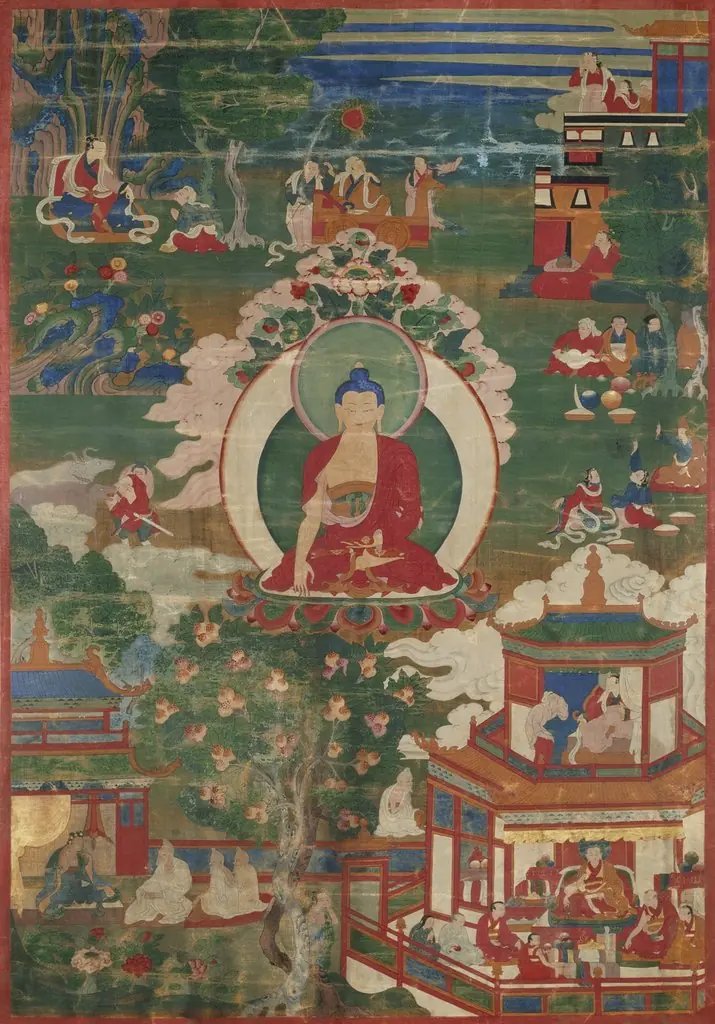
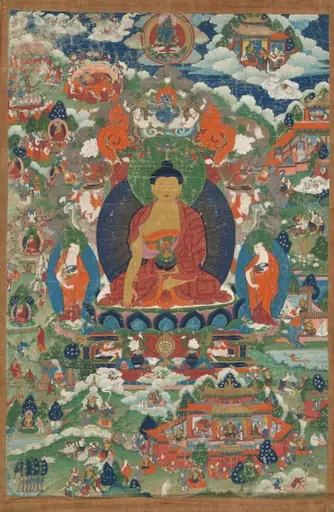
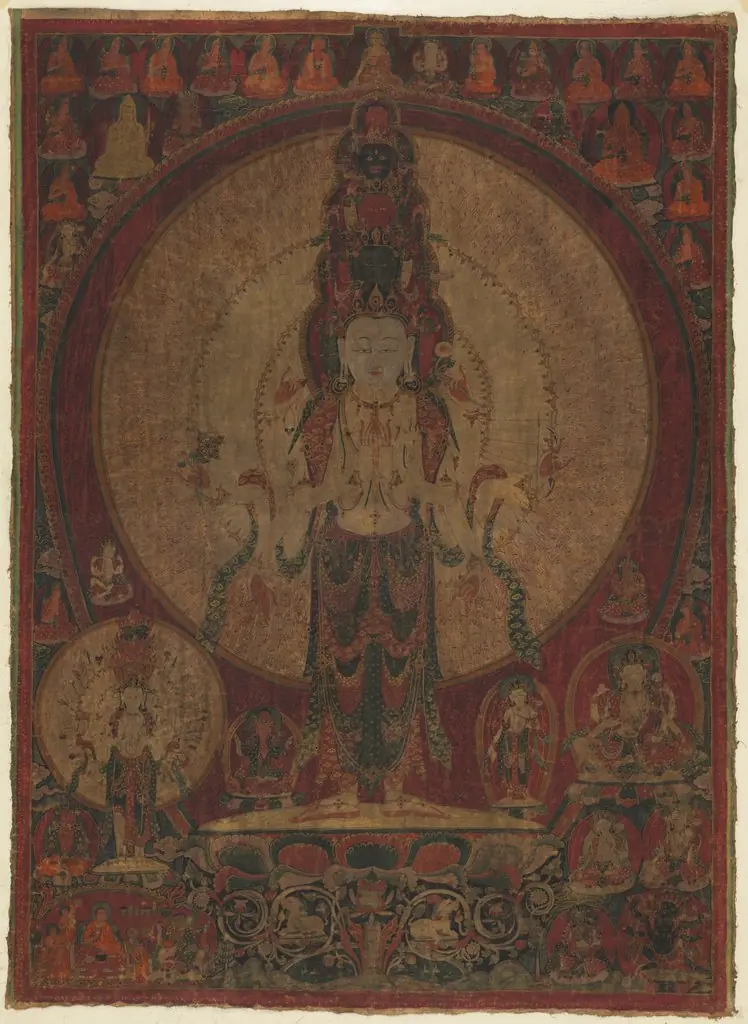
Shakyamuni with the Thirty-Five Buddhas of the Confession of Sins and the Eighteen Arhats
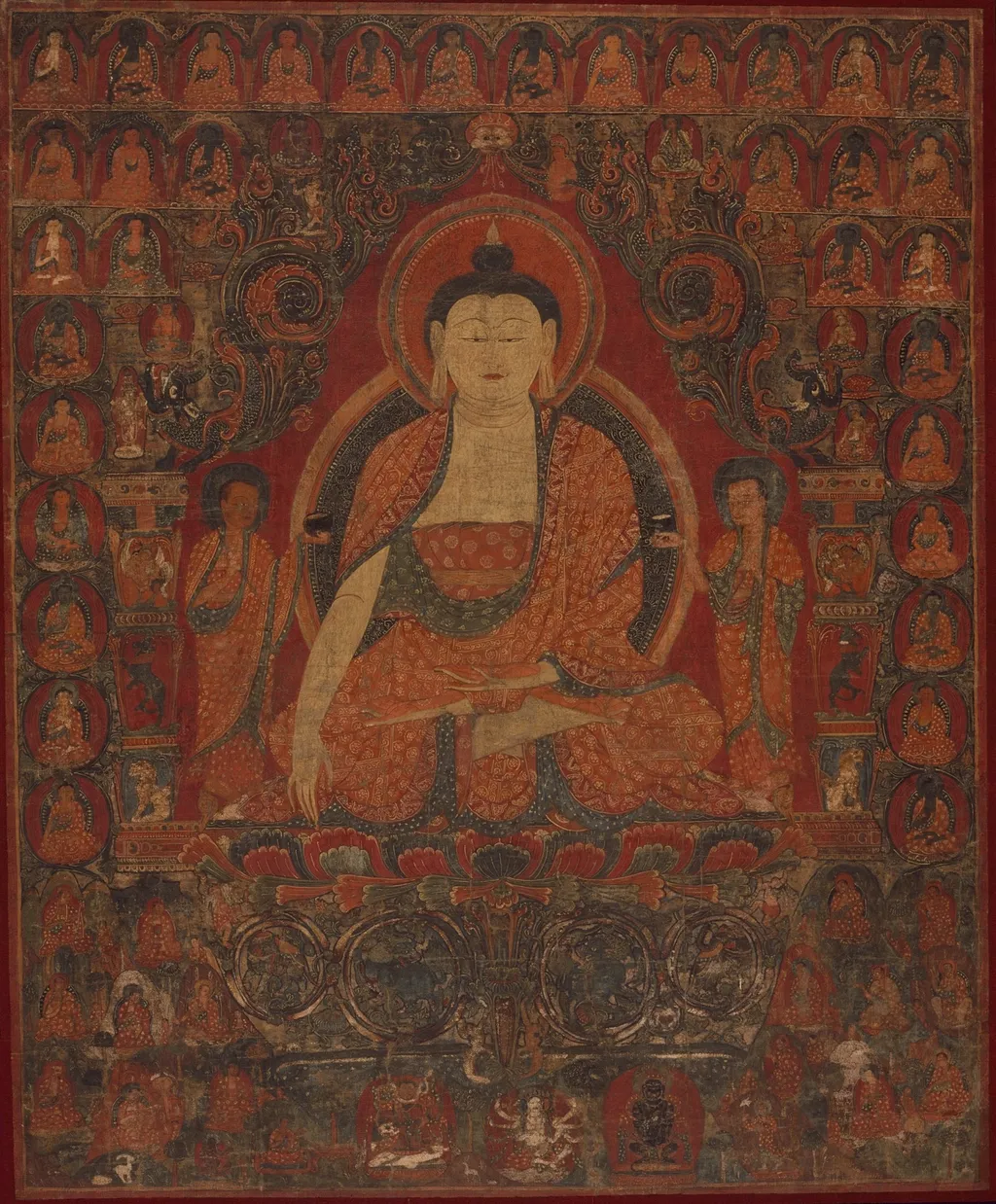
Shakyamuni with the Thirty-Five Buddhas of the Confession of Sins and the Eighteen Arhats is an unspecified painting by Unknown. It dates from 1450 and is held in the collection of the Los Angeles County Museum of Art.
About this work
This painting is titled Shakyamuni with the Thirty-Five Buddhas of the Confession of Sins and the Eighteen Arhats.
It was created in 1450.
The painting is held at the Los Angeles County Museum of Art, which suggests it's a significant work from that time period.
You can learn more about this type of art by looking at the museum: Los Angeles County Museum of Art.
Overview
It is now held in the collection of the Los Angeles County Museum of Art.
This painted scroll, dated to 1450, depicts Shakyamuni Buddha at the center, surrounded by the Thirty-Five Buddhas associated with the practice of confession and the Eighteen Arhats, enlightened disciples who guard the Dharma. Created in the Tibetan Buddhist tradition, the composition serves a devotional and ritual function, guiding practitioners through acts of repentance and spiritual purification. It is now held in the collection of the Los Angeles County Museum of Art.
Subject & Meaning
The central figure of Shakyamuni is flanked by the Thirty-Five Buddhas, each invoked to absolve specific transgressions, and the Eighteen Arhats, who embody steadfast devotion and protection of the Buddha’s teachings. Together, they form a visual mandala of moral reckoning and spiritual refuge. The arrangement reflects liturgical texts used in confession rituals, where visualizing these figures aids in the purification of negative karma.
Technique & Style
Executed in mineral pigments and gold on cotton, the painting follows the precise iconographic conventions of Tibetan thangka art. Figures are rendered with fine brushwork, symmetrical composition, and rich, flat color fields. Gold outlines define forms and enhance sacredness, while spatial depth is minimized to emphasize spiritual hierarchy over naturalism. The style reflects the late 14th- to 15th-century Tibetan aesthetic rooted in Indian and Chinese influences.
History & Provenance
Created in 1450, likely in a monastic workshop in Tibet, the painting was probably used in ritual settings by monks or lay practitioners engaged in confession ceremonies. Its journey to the Los Angeles County Museum of Art is undocumented prior to its acquisition, but its preservation suggests it was carefully maintained, possibly within a religious institution before entering a secular collection in the 20th century.
Context
This work emerged during a period of flourishing Tibetan Buddhist art under the influence of the Karma Kagyu and other schools, which emphasized meditation and ritual practice. The Thirty-Five Buddhas confession practice, derived from Indian Mahayana texts, became widespread in Tibet by the 14th century. Such paintings were not merely decorative but integral to daily spiritual discipline, reinforcing ethical conduct through visual contemplation.
Legacy
As a well-preserved example of mid-15th-century Tibetan devotional art, the painting continues to serve as a reference for understanding ritual iconography and monastic practice. Its presence in a major Western museum allows broader access to Tibetan Buddhist traditions, fostering scholarly study and cross-cultural appreciation without altering its original religious purpose.
Artist & collection

 Domestic Scene
 Giacomo and Cardinal Marco, investing Andrea, Abbot of San Zeno, with his Benefice
 The Nymph of Fontainebleau
 Portrait of a Woman
 Madonna and Child with Saints in the Enclosed Garden
 Venus and Minerva
 Family Group of Four on Sofa
 Wall painting from Room H of the Villa of P. Fannius Synistor at Boscoreale